Avenarius apple tree: characteristics of the variety and care
| Color | Reds |
|---|---|
| Ripening season | Summer |
| Size of apples | Small ones |
| Taste | Sweet |
| Crown type | Average tree height |
| Shelf life | Low shelf life |
| Application | For recycling , Fresh |
| Winter hardiness | High winter hardiness |
| Fruiting age | Up to 5 years |
 History of origin and regions of growth
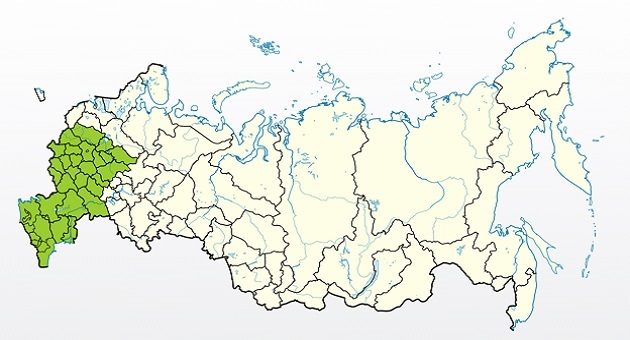
Growing regions
- Middle zone.
- Moscow region.
- North Caucasus.
- Crimea.
- Leningrad region.
Origin
This apple tree has an interesting and complex history. It's considered an old, traditional variety, but it was likely specifically bred for cultivation in the challenging conditions of the St. Petersburg area. The tree was first discovered in the garden of an estate in Tarkhovka, near the intersection of Primorskoye Highway and the road to Lake Sestroretsky Razliv near St. Petersburg.
The estate belonged to the prominent Russian entrepreneur, engineer, and privy councilor Pyotr Alexandrovich Avenarius. However, it is believed that the first apple tree was grown during the reign of his father or even grandfather. In 1910, the house was extensively restored, and the garden and park were improved. In 1923, the building became a sanatorium. It was during this period that apple trees were discovered among the plantings, later named after the estate's former owner.
Content
Description of the Avenarius variety
 The apple tree is attractive for its frost resistance, high yield, and resistance to both parasitic and bacterial/fungal diseases. Avenarius is easy to care for, able to survive not only harsh winters but also hot, dry summers without any problems, and is tolerant of various soils, weather, and climates.
The fruits are medium-sized, attractive, sweet, and aromatic. The tree produces a high yield, but it is not without its drawbacks. Firstly, the short shelf life and loose, coarse-grained flesh make them unsuitable for long-distance transport. Secondly, the fruiting cycle is intermittent, requiring regular rest periods. It is recommended for individual cultivation only.
Apples: What do they look like?
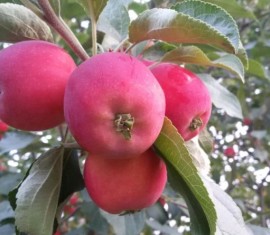
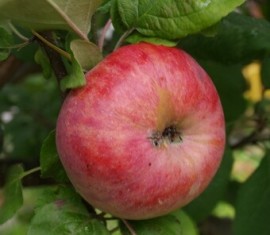
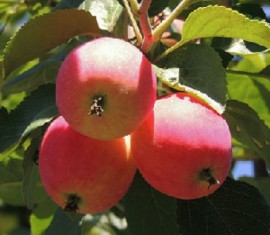
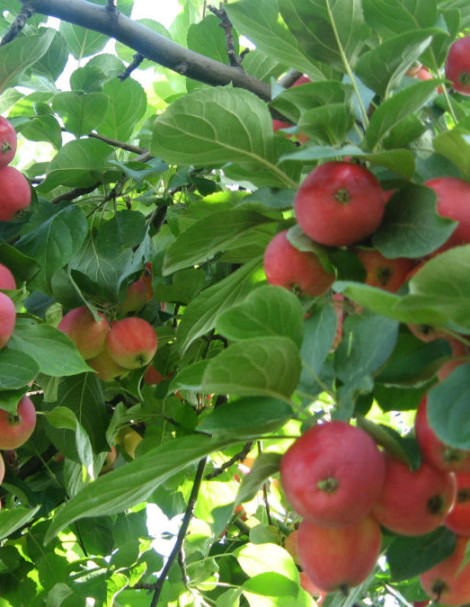
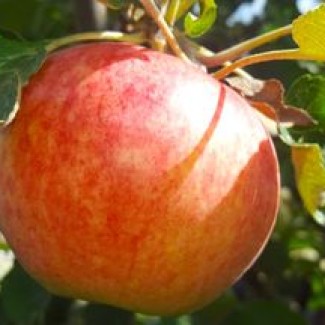
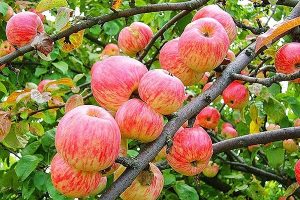 The fruits are medium to smaller than medium in size, round, and can be round-conical or slightly elongated. They grow to approximately 65-90 grams in weight, but in favorable years and with careful care, they can exceed 100-110 grams. The apples are generally uniform and symmetrical, but may be slightly slanted, with moderately smooth ribbing and no visible lateral seam.
The skin is medium-thick, thin, very fragile, smooth, glossy, and very shiny, dry. When ripe, it becomes covered with a colorless, oily coating, giving the apples a greasy appearance. The underlying color of the fruit is green or yellow-green, firm, turning yellow or golden as it ripens. The blush is carmine, brownish-red, blurred, spotted, and mottled, occupying 55-70% of the surface. Subcutaneous dots are gray, numerous, and clearly visible. It's best to assess the chemical composition using a control set of parameters:
- P-active substances (catechins) – 336 milligrams.
- Ascorbic acid (vitamin C) – 12.8 milligrams.
- Fructose (total sugars) – 16.2%.
- Pectins – 11.4%.
- Titratable acids – 0.67%.
The flesh is low-density, loose, coarse-grained, intensely aromatic, and juicy. It bites easily, is not crunchy, and is not refreshing. It has a strong, distinctive, slightly spicy aroma and a sweet flavor. The flavor is almost imperceptible, so it cannot be called balanced or harmonious. Unofficial tasting scores are 4.2 and 4.4 points for taste and appearance.
Avenarius apple tree: characteristics
Crown and root system
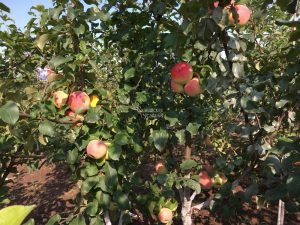 Trees are usually considered vigorous, as they can easily exceed 5-6 meters in height.In some cases, apple trees reach 6-9 meters, but this is rare. Owners often limit free growth by pruning, leaving only 3-4 meters to facilitate fruit picking and trunk maintenance. The crown is neat, rounded or broadly rounded, but over the years it can become drooping and spreading. Branches usually extend at an angle close to right angles and are covered with gray-brown or gray-brown bark.
The leaves are large, smooth, leathery, and dense. They are oval-elongated, short-pointed, with a rough, matte or slightly shiny nervation and a felt-like pubescence on the underside. The leaf blade margins are serrate-crenate, finely serrated, and can curve downwards like a boat. The root system is fibrous, branched, and well-dug, adapted to water-seeking.
Productivity and pollination
Although apples may not be produced in sufficient quantities every year, this variety can still be considered productive. However, it should be noted that it will bear fruit irregularly, sometimes every other year, sometimes two years in a row, with rest periods.
A mature Avenarius apple tree can produce approximately 60-85 kilograms of fragrant, sweet fruit per year. With proper care, timely fertilizing, and favorable conditions, yields can increase by 45-60%.
Self-sterile varieties, such as Avenarius, require external pollinators, otherwise there will be no harvest at all. Therefore, it is recommended to plant apple trees interspersed in the garden, alternating varieties that bloom at the same time. You can spray the trunk with sugar syrup and place a beehive under the tree during bud break.
Winter hardiness and disease resistance
An apple tree's tolerance to low temperatures depends largely on the rootstock and the growing conditions. Some consider it high, while others consider it average. It can be said that it tolerates temperatures of -32 to -35°C quite easily. Even if the tree does freeze, it recovers quickly.
Avenarius, like most older apple trees, lacks genetic immunity to disease. However, it has a relatively high resistance to scab, cytosporosis, powdery mildew, and other fungal and parasitic diseases. With timely and regular preventative spraying and treatments, the risk of disease is reduced to zero.
Rootstocks and subspecies
This variety doesn't have any subspecies, but it can be grown on a variety of rootstocks. This can impart some of its characteristics and qualities to the apple trees. For example, dwarf trees produce very compact trees, producing larger apples, but with reduced frost resistance. You should inquire about the specific characteristics of your chosen sapling at the nursery or retailer.
Features of growing Avenarius
 Landing
 Landing
Basic conditions
- High groundwater levels are unsuitable for growing this variety. Apple trees can have deep roots, so a site should be chosen where the water level does not rise to 2.2-2.5 meters above the surface.
- Apple trees prefer sunny, open spaces with good daytime light. In the shade, Avenarius will become stunted, spindly, and refuse to bloom or bear fruit, often even dying.
- A tree shouldn't grow in a drafty environment; strong winds can kill it in its first year. However, good crown ventilation is still important, so a balance must be maintained.
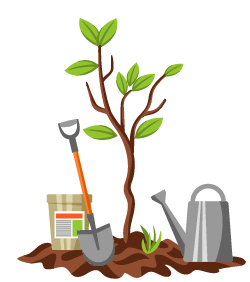
- It's not necessary to prepare holes between trees in advance; three to four weeks before planting is sufficient. Dig holes 50-60 centimeters deep, and fill the bottom with topsoil mixed with fertilizer (minerals and organic matter). If needed, you can lay a drainage layer of stones, vermiculite, or nut shells on top, and fill the entire area with water.
- Leave approximately 4-5 meters between trees, and even a little more between rows, up to 5-5.5 meters. This will prevent them from becoming crowded in the future, and will prevent them from clashing with their crowns or roots.
- Planks or stakes are driven directly into the holes, to which the young trees are then tied. Wood, metal, or plastic can be used, as long as they are firmly anchored in the soil.
- If you want to preserve the rootstock's properties, don't plant the root collar too deep. It should protrude 5-8 centimeters above the surface. Keep in mind that the soil will settle slightly after planting and will need to be replenished.
- Place the tree in the hole, directly on top of the drainage mound, spreading the rhizome out and allowing it to grow freely. Cover with soil, shaking the trunk, and compact it layer by layer. Form a rim around the hole, 5-9 centimeters high, and pour 3-4 buckets of water inside. Mulch can be applied to the surface for additional moisture retention.
Landing dates
Avenarius can be planted in either spring or fall; its survival rate is roughly the same. It all depends on the specific regional conditions. The colder the climate, the harsher the winters, and the greater the temperature fluctuations, the better choice is to plant it in spring, before the buds open in late March or early April. In warmer regions, you can choose a warm day after the leaves have fallen.
Tree care
 Tree care
Protection from frost and pests
Standard frost protection is also suitable for this variety. Young trees can be wrapped with burlap, but this won't work with mature, tall trunks. Therefore, straw or hay, and sometimes spruce branches, are thrown onto the root zone. It's important that the material is extremely dry, otherwise rotting can occur, which will kill the tree. Trunks are wrapped with burlap, roofing felt, or spunbond.
The easiest way to repel insects and rodents is to use commercially available products. These can be purchased at any gardening store. Folk remedies include whitewashing the trunks with lime, and smearing the lower bark with lard, fuel oil, or grease.
Loosening the soil, watering: proper agricultural technology
Dig around apple trees twice a year, in early spring and fall, after the final crown trimming. Some roots are located near the surface, so digging should be done carefully, no deeper than 10-12 centimeters. During the summer, you can hoe the soil, for example, breaking up the root ball into the next layer. glaze Day. Over time, you can sow grass around the apple tree, cover it with turf, plant herbs or flowers.
For the first 3-4 years, apple trees don't need additional feeding or fertilizing; they'll thrive on the nutrients provided at planting. Subsequently, nutrients can be added through irrigation. In the first few years, water frequently, every 7-12 days if there's no rain. If rainfall is regular, the time until the next irrigation is calculated from that amount. As trees mature, 3-4 irrigations per season, timed for flowering, fruit set, and fruit ripening, are sufficient.
Pruning: simple crown shaping
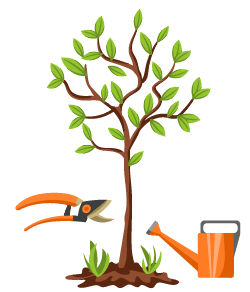
Most apple trees thrive best in a sparse, tiered arrangement, and Avenarius is a prime example. The shoots should be spaced at different heights, keeping them well apart. Subsequently, all that remains is to maintain the natural branching pattern, removing branches that protrude inward or upward.
In late fall and spring, inspect branches for damage and remove any diseased, dead, or broken ones. Treat all cuts immediately. garden pitch Or water-based paint. If you don't clean the trees and leave them to their own devices, there's a risk of developing various diseases, fungi, and parasites.
Pollinator varieties
- Arkad.
- Marina.
- Velvet.
- Antonovka.
- Korobovka.
- Lada.
- Borovinka.
- Flashlight.
- White filling.
Reproduction
- Layers.
- Grafting cuttings.
- Clones.
- Growing from seeds.
Ripening and fruiting of Avenarius
The beginning of fruiting
 The beginning of fruiting
The variety's excellent early fruiting rate prevented newer apple trees from completely displacing it from the market. Buds appear on its branches and apples begin to set as early as the second or third year. It's recommended to harvest them before the third or fourth year, when you'll be able to harvest approximately 4-6 kilograms of aromatic fruit. For older apple trees, these figures are very good, almost on par with newer varieties.
Flowering time
Blooming is always abundant, with buds densely covering the branches, gathered in clusters of 6-9. The flowers are large, beautiful, and saucer-shaped; the buds are almost red, while the open flowers are a delicate white-pink hue with a powerful, pleasant scent, slightly spicy and herbaceous. The buds open in May, but the exact timing will have to be determined experimentally. The process lasts 12-16 days, depending on the regional climate and weather.
Fruiting and growth
The tree grows quite quickly, reaching 35-50 centimeters in a single season before fruiting and 25-40 centimeters after. It reaches its maximum height very quickly, rapidly increasing its fruiting capacity. Thus, harvests become full as early as 7-9 years, provided proper care is provided. Fruiting is unpredictable, although flowering is still abundant.
The fruits can be harvested as early as the second half of July; this is a summer variety, and they are fully ripe by then. However, consumer and marketable ripeness does not occur until mid-August. The entire harvest can be harvested at once, but it cannot be stored for long. The fruits can be stored in a special refrigerator or cellar for approximately 2-4 weeks, until they completely lose their flavor, consistency, and juiciness.
Top dressing
- Compost.
- Peat.
- Manure.
- Humus.
- Superphosphate.
- Chicken manure.
- Wood ash.
- Ammonium nitrate.
What to do if it doesn't bloom or bear fruit
- Inspect for diseases or pests.
- Limit or increase watering.
- Feed or apply fertilizer.
- Transplant to a sunny place.
Why do apples fall?
- Natural weather conditions (wind, rain, hurricane, hail).
- Overripe.
- Pest damage.
- Diseases.
Share your own experience with the Avenarius apple variety so that any gardener can learn about it before planting and achieve maximum results.