Druzhba Narodov apple tree: characteristics of the variety and care
| Color | Reds |
|---|---|
| Ripening season | Summer |
| Size of apples | Average |
| Taste | Sweet and sour |
| Crown type | Tall tree |
| Shelf life | Low shelf life |
| Application | For recycling , Fresh |
| Winter hardiness | High winter hardiness |
| Fruiting age | Up to 5 years |
 History of origin and regions of growth
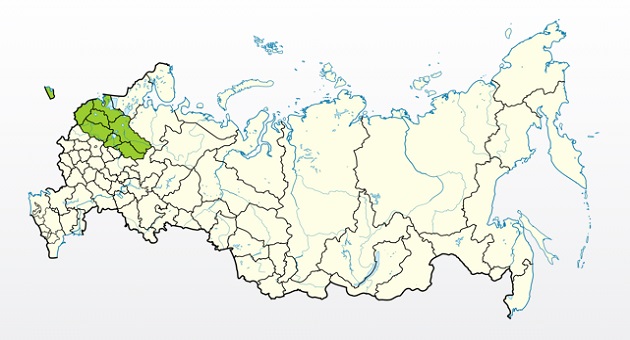
Growing regions
- Kaliningrad region.
- Vologda Oblast.
- Tver region.
- Yaroslavl region.
- Leningrad region.
- Pskov region.
- Kostroma region.
- Novgorod region.
Origin
Another unique variety, developed at the I.V. Michurin Federal Research Center, is capable of growing even in the harshest conditions of the Russian North. The variety's creators are Vasily Korneevich Zayets, Zoya Ivanovna Ivanova, and Gavriil Alekseevich Lobanov, working under the guidance of the distinguished scientist and plant breeder Sergei Ivanovich Isaev. Druzhba Narodov (Friendship of Peoples) was created by crossing the aromatic and delicious Saffron Pepin with the winter-hardy and high-yielding Antonovka.
The first application for inclusion of the variety among elite varieties was received in 1979. At that time, it was sent for official variety testing to experimental farms near the city of Michurinsk in the Tambov region. The new apple tree was only added to the State Register of Breeding Achievements in the second half of 1999, at the dawn of the twenty-first century. Druzhba Narodov was zoned for the Northwestern region.
Content
Description of the Druzhba Narodov variety
 Gardeners couldn't help but notice this variety, as it possesses a number of unique qualities and properties that are crucial to consider when growing a garden in harsh conditions. Druzhba Narodov is extremely winter-hardy, tolerates prolonged periods of drought and hot weather, easily tolerates high humidity, sudden temperature fluctuations, and is undemanding of soil, watering, and fertilizing. It grows quickly, produces consistently good yields, is rarely affected by diseases, and is easily transported even over long distances.
The fruits are very attractive, with a pleasant dessert flavor and complex aroma. They are suitable for fresh consumption and for processing into juices, jams, and compotes, and they dry well. Despite their relatively poor shelf life, this variety remains in constant demand for both commercial and home cultivation.
Apples: What do they look like?
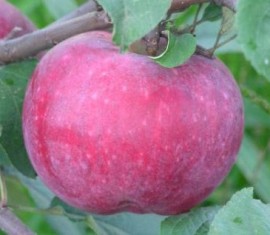
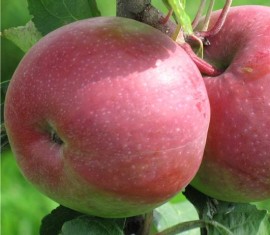
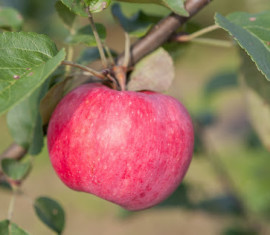
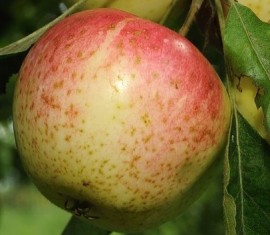
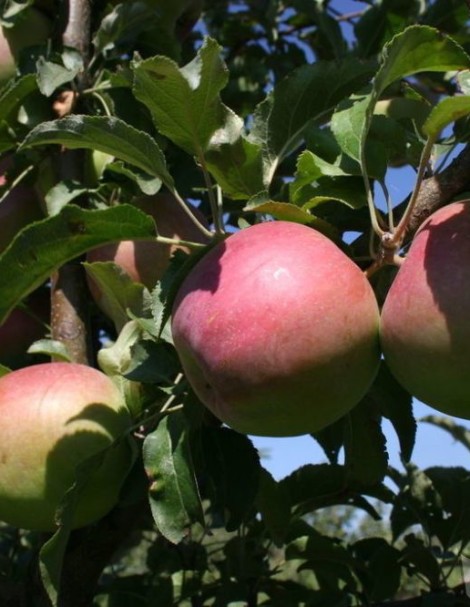
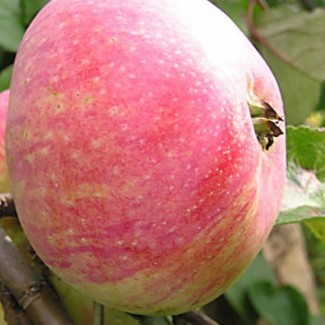
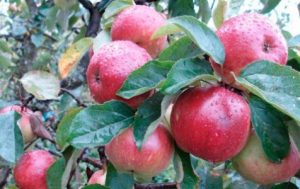 The fruits are medium to slightly larger in size, barely reaching a maximum weight of 120-160 grams, and even then, only in the most favorable years, with careful and timely care. They are round-conical, turnip-shaped, and can be symmetrical or slightly slanted, generally uniform in size. The surface is smooth, with no visible ribbing or side seam.
The fruit skin is smooth, glossy, very shiny, dense, elastic, but not thick, brittle, or delicate. At maturity, it acquires a yellowish-green color, which can become light yellow or whitish, and often has a loose waxy-oily coating. The blush is dense, thick, vaguely spotted or slightly mottled-striped, red, dark red, cherry, or beetroot, covering 85-99% of the surface, obscuring the underlying color. Subcutaneous punctures are numerous, medium-sized, gray-green, and clearly visible. The chemical composition is usually assessed based on the following parameters:
- P-active substances (catechins) – 295 milligrams.
- Ascorbic acid (vitamin C) – 18.1 milligrams.
- Fructose (total sugars) – 13.6%.
- Pectins – 4.9%.
- Titratable acids – 0.89%.
The flesh is medium-firm, creamy or slightly yellowish in color, fine-grained, and extremely juicy. The flavor is described as dessert-like, tart-sweet, balanced, and harmonious. The fruit's aroma is medium, but its distinctive, memorable, and unique. Experts give the Druzhba Narodov apple a 4.2 rating for both flavor and appearance.
Apple tree Friendship of Nations: characteristics
Crown and root system
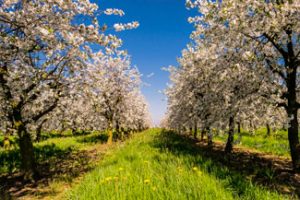 The tree is considered vigorous because it can reach 6-7 meters in height without pruning.However, in most cases, it is pruned to a more compact size to facilitate garden maintenance and fruit harvesting. The crown is oval, rounded, or broad-sided, but over the years it can become spreading, drooping, and even weeping, with a medium density. The shoots are upward-facing, thin, curved, and geniculate, covered in brown or cherry-colored bark with pubescence, and set at a nearly right angle to the central conductor. Fruiting is concentrated on the fruiting twigs, spears, and ringlets.
The leaves are large, oval, ovate, or slightly elongated, reaching a long, pointed tip that twists like a screw and hangs downward. They are smooth, shiny, glossy, leathery, and dense, dark green, green, or emerald green in color, with a downy underside. The margins are serrate-crenate, heavily serrated, the nervation is rough, and the leaf blade is wavy. The root system of the tree on vegetative rootstocks is taproot, while on dwarf and semi-dwarf varieties it is fibrous, well-developed, and well-adapted to water-seeking.
Productivity and pollination
For a frost-hardy northern apple tree, Druzhba Narodov boasts excellent fruit production, hardly comparable to its parent Antonovka. After reaching its peak, the tree begins to gradually and slightly decrease in yield year after year. There may also be irregular fruiting cycles, with yields sometimes decreasing and sometimes increasing for no apparent reason.
One mature trunk of this tree can produce approximately 45-60 kilograms of tasty, healthy fruits per year..
The variety is completely self-sterile, so external pollinators are essential. However, it thrives on bees operating within a radius of 300 to 500 meters, which significantly simplifies the search for suitable trees. Experienced gardeners simplify the task by interspersing apple trees with appropriate flowering times, spraying them with sugar syrup in the spring, and even bringing mobile apiaries to the planting sites.
Winter hardiness and disease resistance
The Druzhba Narodov apple tree can be considered extremely winter-hardy, as it can easily withstand temperatures down to -39°C to -43°C for quite long periods. With proper and timely care, these trees can withstand any cold or winter. Furthermore, thanks to their deep, extensive root system, apple trees can survive virtually any drought without additional watering.
Trees are virtually immune to fungal infections. They are very rarely affected by parasitic or bacterial diseases. However, prevention is essential to minimizing the risk. Spraying with fungicides and insecticides should become a mandatory "ritual" for every self-respecting gardener.
Rootstocks and subspecies
There are no subspecies of the Druzhba Narodov variety, nor are there any columnar or creeping varieties, although the latter can be formed from a dwarf, semi-dwarf, or even tall tree with some knowledge. The most popular are dwarf rootstocks, which allow for more compact trees that take up much less space in the garden.
Peculiarities of Growing Friendship of Nations
 Landing
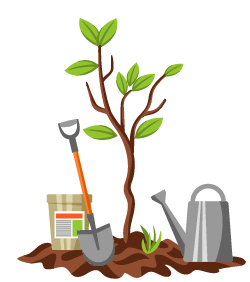 Landing
Basic conditions
- A sunny, well-ventilated location, but free from drafts, is a good choice for planting this variety. Trees grow well in drafts or shade, but they may begin bearing fruit late, produce few fruits, and sometimes even refuse to bloom at all.
- Almost any soil is suitable for the Druzhba Narodov tree, from rich, rich black soil to rocky slopes and sandy soils. Occasional fertilizing will help the tree grow strong and beautiful.
- Groundwater depth is important because the tree's roots can penetrate deep into the soil. If moisture is nearby, the apple tree will inevitably reach it and begin to rot. Therefore, it's best to avoid planting near a river, stream, lake, shallow well, in a floodplain meadow, in a swamp, or in a lowland.
- Preparing the holes in advance is possible, but not necessary. The main thing is to let them sit for at least a few weeks before planting the seedlings. To do this, dig holes 70-80 centimeters deep and up to 1 meter in diameter. Add soil mixed with various fertilizers (organic and mineral) to the bottom, add drainage, add 30-45 liters of water, and leave them outdoors.
- Leave 3-5 meters between trees, depending on the height of the trunks. A similar distance can be left between rows, making it easier to harvest fruit and tend to the orchard.
- Planks or stakes are driven directly into the holes to support the trees. They can be made of wood, plastic, or metal. If you place several of them around the trunk or simply on the north side, they will serve not only support, but also protection from the cold northern winds.
- Before planting, a day or at least 10-12 hours before, the trees are inspected, all damaged, dry, and diseased shoots are cut off, and the rhizomes are lowered into a swamp prepared from water, earth, and clay.
- Place the seedling on a drainage surface, spread the roots, cover with soil, compact with your feet, but not too hard, and water with 20-35 liters of water. If moisture retention is needed, the soil surface mulch, for example, sawdust or compost.
Landing dates
For Druzhba Narodov, spring planting is the best option, as the trees take root much better this way. In northern regions, winter can arrive quickly and unexpectedly, and a young tree won't have time to prepare for it and will die. Therefore, it's best to choose a warm day in late March or early April, when the sap hasn't yet started to flow in the trunks, but the soil has already warmed up completely.
Tree care
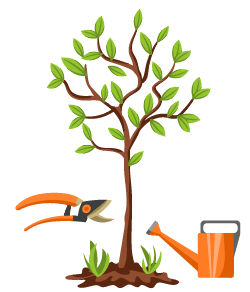 Tree care
Protection from frost and pests
Before the onset of autumn, already at the beginning August All watering and irrigation in the garden is stopped. In September and October, the area around the tree trunks is cleared of fallen leaves, rotting fruit, and other debris. The trunks are wrapped in burlap or old tights, and the shortest ones can be covered with a tent-like covering. Soil can be piled onto the roots, which will then need to be removed in the spring, and mats of hay or straw can be laid, along with spruce branches.
To prevent rodents from damaging the bark and branches, they are coated with various strong-smelling substances. Old lard, rendered lard, fuel oil, grease, or even products from a gardening store can be used. The bark is cleaned with a stiff brush to remove excess debris and clean out cracks where insects might hide, and then whitewashed to a height of at least one meter.
Loosening the soil, watering: proper agricultural technology
Apple trees are typically hoeed twice a year, but with such an easy-to-grow variety, the need for such care is eliminated by the fourth to sixth year. At that point, the root zone can be covered with sod and sown with herbs, spices, or flowers. These will provide natural aeration and eliminate the need for regular hoeing after watering.
Watering Friendship of Nations is needed only in the early years of life, and also in extremely extreme, dry, and hot conditions. If rainfall is regular or slightly delayed, there is no need to add water; the tree will find it in the soil on its own.
Pruning: simple crown shaping
This variety has a medium-density crown, so regular thinning is necessary to prevent it from becoming overgrown. This can be achieved by forming a cordon, a broom-shaped form, or, best of all, a sparsely tiered form. Then, trim off any shoots that grow vertically upward or inward, maintaining the correct natural branching pattern.
Every year in the fall, trees are inspected, removing all dead or damaged branches. Diseased branches should also be promptly removed to prevent them from spreading to the entire trunk and destroying it.
Pollinator varieties
- Melba.
- Antonovka ordinary.
- Mac.
- Welsey.
- Folder.
- Grandma's.
- Sword.
- Grandma's.
- Cinnamon striped.
- Saffron pepin.
Reproduction
- Layers.
- Grafting cuttings.
- Clones.
- Growing from seeds.
Diseases and pests
- Powdery mildew.
- Scab.
- Fruit rot.
- Pit bitterness.
- Green aphid.
- Flower beetle.
- Scale insect.
- Codling moth.
- Hawthorn.
Ripening and fruiting of the Friendship of Nations
The beginning of fruiting
 The beginning of fruiting
This is a truly early-bearing variety, which is unusual for tall northern apple trees. It can produce buds as early as the second or third year, but it's best to remove them immediately so the tree can develop roots and foliage first. By the fourth or fifth year, you can harvest several dozen fruits that fully meet all standards.
Flowering time
Apple tree buds begin to appear around late April or early May. By mid-May, they usually open and bloom for approximately 14-18 days, allowing pollinators and the wind time to do their work. In cool weather and frequent rainfall, the tree may linger until early June. The flowers are fragrant, large to medium-sized, with oval, slightly elongated, snow-white petals of a delicate texture.
Fruiting and growth
The tree grows quite quickly, increasing its productivity. Each year, the apple production increases, reaching its peak around the 10th to 12th year. However, it's important to understand that after this point, yield may gradually and slightly decline, and there's also a subtle periodicity in fruiting.
Technical (harvestable) maturity of Druzhby Narodov apples occurs in the middle or second half of the last summer month. It's important not to miss this moment, otherwise the fruit will fall to the ground and will have to be processed urgently. These summer apples don't have a long shelf life; the latest shelf life is early January in a special refrigerator, and even less in a cellar.
Top dressing
- Superphosphate.
- Ammonium nitrate.
- Manure.
- Compost.
- Humus.
- Chicken or pigeon droppings.
- Mineral complexes.
What to do if it doesn't bloom or bear fruit
- Check for the presence of pests or diseases.
- Increase watering.
- Feed.
- Transplant.
Why do apples fall?
- Natural weather conditions (wind, rain, hurricane, hail).
- Pest damage.
- Diseases.
- Overripening.
Share your own experience with the Druzhba Narodov apple variety so that any gardener can learn about it before planting and achieve maximum results.