Apple tree Era: characteristics of the variety and care
| Color | Reds |
|---|---|
| Ripening season | Autumn |
| Size of apples | Average , Large |
| Taste | Sweet and sour |
| Crown type | Dwarf |
| Shelf life | Average shelf life |
| Application | Fresh , For recycling |
| Fruiting age | Up to 5 years |
 History of origin and regions of growth
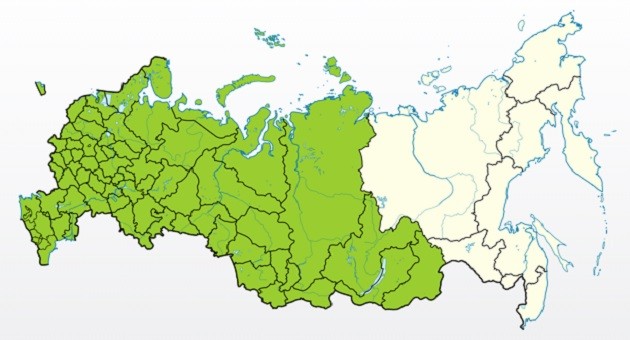
Growing regions
- Crimea.
- Samara region.
- Tatarstan.
- Volga-Vyatka region.
- Middle zone.
- Tver region.
- Leningrad region.
- Mordovia.
- North Caucasus.
- Ulyanovsk region.
- Moscow region.
Origin
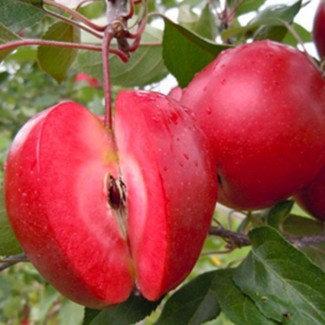
This apple tree is a Swiss selection. It was developed relatively recently, around the dawn of the new century in 2000, by pomologist Markus Kobelt. It belongs to a special line of Redlove varieties, whose fruits have red or raspberry-colored flesh.
The State Register of Breeding Achievements contains no information about the Era variety, nor is it officially zoned in our country. It can be grown in the southern regions, central Russia, and far to the north, east, and west.
Description of the Era variety
 Small trees with compact crowns that don't take up much garden space always attract the attention of gardeners. They are also frost-resistant, resistant to various fungal infections, unpretentious, require little maintenance, are environmentally friendly, tolerate a variety of soils, and can thrive without frequent watering.
The variety's fruits are unusual and attractive, with their main characteristic being their bright red flesh, which is juicy and delicious. They are juicy, intensely aromatic, suitable for fresh eating or processing, and easily transported even over long distances. They are recommended for individual cultivation in home gardens and for commercial, intensive, industrial gardens.
Apples: What do they look like?
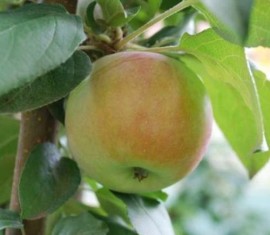
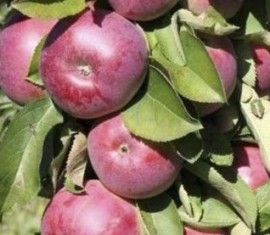
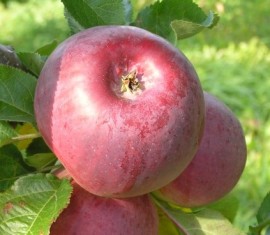
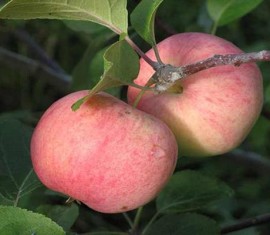
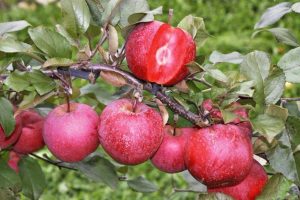 The fruits are generally round, with a regular, even shape, often spherical, but sometimes slightly elongated at the calyx and flattened at the stem. They are medium to large in size, weighing approximately 160-190 grams, but can sometimes reach 220-250 grams under very favorable conditions and with good care. The apples are uniform, symmetrical, and similar to each other, with virtually no ribbing and no visible side seam.
The skin is dense, elastic, smooth, and highly shiny. At full maturity, it becomes covered with a continuous grayish-blue or silvery waxy coating. It is not thick and is brittle, but quite durable. The underlying hue is yellow-green or yellowish-lemon, but it is difficult to notice, as it is completely hidden beneath a thick, rich blush of bright red, red-purple, or dark raspberry-red, which covers at least 90-95% of the surface. Subcutaneous punctures are numerous, small and large, light-colored, and clearly visible on the apple's surface. Experts recommend understanding the chemical composition based on the following information:
- P-active substances (catechins) – 487 milligrams.
- Ascorbic acid (vitamin C) – 14.9 milligrams.
- Total sugars (fructose) – 14.6%.
- Pectins (fiber) – 12.3%.
- Titratable acids – 1.29%.
Era's flesh is very unusual, with a rich red-raspberry, red-purple, or raspberry-pink hue. The color is thicker near the skin and becomes more bleached toward the core. Its key characteristic is that no darkening of the cut apple is observed, even after prolonged exposure to air.
The fruit's texture is dense, fine-grained, crisp, and prickly, yet tender, fresh, easy to peel, and intensely juicy. The flavor is considered harmonious and balanced, dessert-like, classically sweet and sour, leaning more toward the sweet, but with a distinct wine-like acidity in the aftertaste. According to professional tasters, it scores 4.8 points on a standard 5-point scale.
Apple tree Era: characteristics
Crown and root system
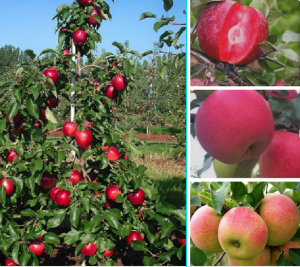 The Era variety is classified as medium-sized by all criteria, but it would be more correct to call it a natural dwarf. Trees can grow to a height of no more than 2-2.3 meters, very rarely up to 2.5-2.6 meters.The shape is rounded, broadly oval, often drooping, spreading, and weeping, with medium to low density. The branches are long, straight or slightly geniculate, drooping downwards, covered with cherry-brown or reddish-brown bark, sometimes even slightly carmine, smooth, shiny, and virtually pubescent.
The leaves are small to medium-sized, rounded, only slightly elongated, oval, and short-pointed. They are dense, leathery, glossy, and highly lustrous, and may have a light, felt-like pubescence on the underside. They are green-reddish or greenish-carmine in color, with doubly serrated, crenate, serrated, and sometimes slightly wavy margins. The root system is medium-deep, fibrous, highly branched, fairly robust, and moderately adapted to water-seeking.
Productivity and pollination
There is no point in classifying this variety as medium-yielding, because no matter how hard you try, you won’t be able to produce a lot of fruit; the “trick” of this apple tree is completely different.
With proper and timely care, one mature Era tree can yield approximately 19-25 kilograms of aromatic, unique fruit per year. Under favorable weather and climate conditions, this figure can increase by no more than 15-17%..
The variety is completely self-sterile, so if you don't have late-blooming apple trees in your garden or nearby plots, you may not get any fruit. Ideally, plant one pollinator per 50-90 square meters of area; this will be sufficient. Spraying the trunks with honey or sugar diluted in water during flowering is also recommended, which further attracts bees.
Winter hardiness and disease resistance
Era can be safely considered winter-hardy, easily surviving temperatures down to -29-34°C. The apple tree is also resistant to sudden temperature fluctuations and fluctuations, provided winter preparation is timely and proper. Therefore, precautions and adequate shelter should always be taken in the fall.
Apple trees have excellent natural resistance to various diseases, but they have no genetic immunity to either powdery mildew or scab. Parasites can also attack apple trees, but this is rare. If all preventative treatments with fungicides and insecticides are carried out promptly, the risk is virtually zero.
Rootstocks and subspecies
No subspecies of the Era variety are known in our country, nor are they found in other regions. This apple tree is so unique and unusual that it exists only in one variety. However, it can be grown on a wide variety of rootstocks, the most popular of which are dwarf and semi-dwarf varieties. These produce very compact, small, and neat trees.
Features of growing Era
 Landing
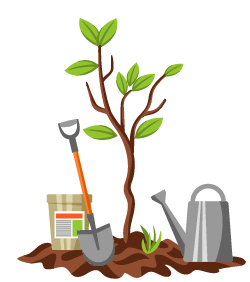 Landing
Basic conditions
- Like all fruit trees, Era thrives in sunny, open areas with good UV exposure for most of the day. It will tolerate some shade, but the quality and quantity of its fruit may be significantly reduced.
- You will have to watch out for drafts; the crown should be well ventilated, but not blown through, otherwise diseases and frost damage cannot be avoided.
- The depth of the groundwater table plays a role. If it's too close to the surface, the rootstock may begin to rot, requiring replanting, which is difficult with mature apple trees. For the same reason, it's not advisable to plant trees directly near streams and rivers, lakes and ponds, wells, or in swampy or floodplain areas.
- Digging holes the season before planting isn't necessary, but you should let them sit for at least 2-3 weeks. Therefore, dig holes up to 70 centimeters deep and up to 90 centimeters in diameter, add fertilizer to the bottom, cover with soil and rocks for drainage, and then fill with water. There's no need to cover the holes; they should be left outdoors.
- The distance between trees should be no more than 1.8-2 meters, as the crown diameter typically does not exceed this. Row spacing is typically slightly wider, up to 2.5-3 meters, to facilitate maintenance and harvesting.
- It's a good idea to immediately dig or drive trellises, stakes, or stakes into the holes for tying. These will not only provide reliable support for the young seedlings but also provide protection from cold weather if the trunks are positioned on the south side.
- The root collar is always left above the soil surface horizon, otherwise the properties of the rootstock will not be preserved.
- Raking a drainage layer down the center of the hole, place the tree on it, straighten the rhizome, and carefully cover it with soil, holding it by the trunk and gently shaking it to eliminate any air pockets. Cover with soil, compacting it in a river-like pattern, and mulch the surface, keeping the apple tree trunk away from the mulch.
Landing dates
Apple trees are best planted in the spring, when the soil has warmed up completely and the air temperature has stabilized at 9°C to 11°C. They should be protected from recurrent frosts, so it's best to choose a warm day in early or mid-April. However, autumn planting is also acceptable, around early or mid-October, after the leaves have completely fallen.
Tree care
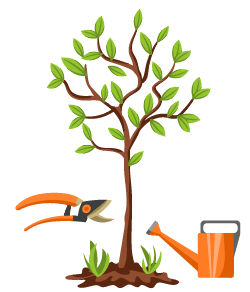 Tree care
Protection from frost and pests
Young Era saplings must be wrapped before winter, otherwise they may die. The tent method is ideal for such low-growing trees, while for taller trees, you can simply wrap the trunks with burlap. However, the small stature of apple trees allows them to be covered from top to bottom at any age. In the harshest regions, you can cover the root zone with straw, hay, or spruce branches.
To protect trees from pests, it's common to whitewash the trunks with a thick lime solution, taking every precaution to avoid damaging the bark. This will prevent insects from nesting in cracks and broken sections of the bark. Greasing the bark and branches with melted animal fat, grease, or even fuel oil will help prevent rodents from damaging the bark and branches. Commercially available products, readily available at the store, work well.
Loosening the soil, watering: proper agricultural technology
Dig around the apple tree trunks twice a year, but don't go too deep, about half a spade's depth. Hoeing can be done more frequently, about 5-8 times per season. It's also a good idea to remove any root suckers, weeds, and other plant shoots that regularly appear. Debris from the tree trunk area should also be removed immediately, as rotting leaves and fruit can promote fungal growth.
Era apple trees are watered regularly, especially young ones, as fruiting depends directly on this. Water is applied on a ten-day cycle, meaning if it doesn't rain, water once every ten days. If it does rain, count the ten days from that time until the next rainfall. glazeDuring hot and dry weather, you can increase the watering frequency, adding 15-25 liters approximately every 5-7 days. It's convenient to add fertilizer and other supplements along with the water, but not until 3-4 years after planting in open ground.
Pruning: simple crown shaping
Typically, seedlings from the nursery arrive with a pre-formed, sparse crown. In the second year, it's recommended to trim the central leader by no more than a third and ensure no more than 3-4 skeletal branches remain. These are cut in tiers, each 5-7 centimeters shorter. Era is tolerant of shaping, so it usually doesn't suffer much unless more than a third of the foliage is removed at once.
Trees require sanitary cleaning. Dry, broken, and diseased branches should be removed. Also removed are those that run parallel, protrude upward, or cross over the crown. All wounds should be sealed. garden pitch or paint over with paint (oil, water-based).
Pollinator varieties
- Kehura.
- Academician Kazakov.
- Beautiful Crowley.
- Butskoe.
- Halopen.
- Gold medal.
- Adams Apple.
- Bryansk.
- Ariva.
Diseases and pests
- Scab.
- Cytosporosis.
- Fruit rot.
- Powdery mildew.
- Scale insect.
- Leafhopper.
- Fruit hyacinth.
- Hawthorn.
- Green aphid.
- Leaf roller.
Ripening and fruiting of the Era
The beginning of fruiting
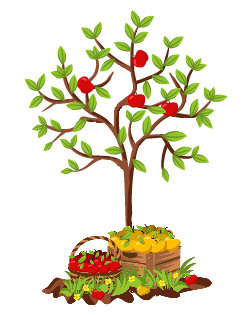 The beginning of fruiting
This variety is exceptionally early-bearing, which has earned it immediate recognition from domestic gardeners who don't want to wait too long. Already in the second year, buds open on the tree, apples begin to form, and a harvest of several dozen large, aromatic fruits can be harvested. Flowers may bloom in the first year, but it's recommended to pluck them immediately to allow the trees to develop foliage, root well, and rhizomes.
Flowering time
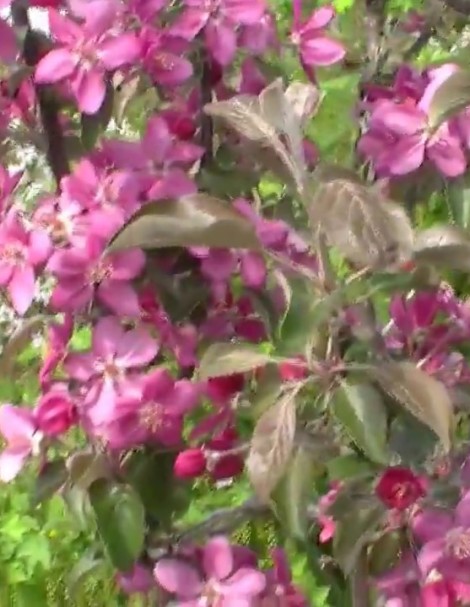
The Era blooms later than most apple trees. Around early to mid-May, large, dark red or burgundy buds begin to appear. By the end of the month or early June, these blossom into beautiful, large flowers of a bright crimson or raspberry-pink hue. They densely cover the branches, their petals are delicate and fleshy, and their fragrance can be detected from afar. The blooming period lasts for a long time, approximately two weeks, making the apple tree highly ornamental and often planted as a landscape design element.
Fruiting and growth
The tree grows slowly, reaching approximately 25-35 centimeters in the first year, but this rate slows significantly once fruiting begins. It can grow a maximum of 15-20 centimeters in a year, and even then, with good care. Fruitfulness also increases slowly, and a full harvest of 20-25 kilograms can only be achieved in the 7th to 10th year. The total lifespan of the apple trees and their fruiting is not yet known, as the variety was developed only 20 years ago.
The fruit ripens in mid-September or more often in late September; in some regions, it's common to harvest it only in early or even mid-October. Technical maturity and consumer maturity lag by at least 3-4 weeks. This means apples should be stored and eaten within two weeks to a month, when they're at their tastiest. They can be stored for a long time, right up until spring, but their flavor may have noticeably deteriorated by then. Therefore, it's best to use them as much as possible before the end of January. Apples are transported in crates, with no more than 2-3 layers, to prevent them from bruising or breaking.
Top dressing
- Superphosphate.
- Humus.
- Peat.
- Calcium.
- Manure.
- Compost.
- Nitrogen complexes (not in the first 4 years).
What to do if it doesn't bloom or bear fruit
- Strengthen watering.
- Remove insects.
- Cure diseases.
- Fertilize.
- Move to a sunny place.
Why do apples fall?
- Wind, rain, hail, snow.
- Pests or diseases.
- They are very overripe.
Leave a review of the Era apple tree variety so that even a novice gardener can receive useful information firsthand.