Gala Mast apple tree: characteristics of the variety and care
| Color | Reds |
|---|---|
| Ripening season | Autumn |
| Size of apples | Average |
| Taste | Sweet |
| Crown type | Average tree height |
| Shelf life | Average shelf life |
| Application | Fresh , For recycling |
| Winter hardiness | High winter hardiness |
| Fruiting age | From 5 years old |
 History of origin and regions of growth
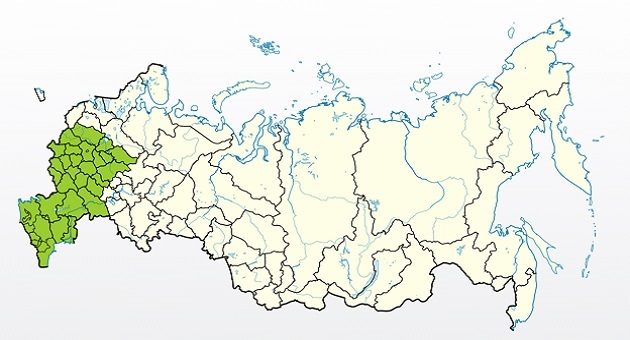
Growing regions
- Crimea.
- Middle zone.
- Leningrad region.
- North Caucasus.
- Moscow region.
Origin
This is another well-known and widely popular clone of the common New Zealand variety Gala, developed in the early 1950s, or perhaps even earlier, by the eminent pomologist and breeder J.H. Kidd. The Gala, Delicious Golden, and Kidd's Orange Red varieties were used in experiments.
The variety first arrived in the Soviet Union around the early 1970s. It was successfully grown in Belarus, Ukraine, and some regions of Russia. The clone was not included in the State Register of Breeding Achievements and has no official regionalization in our country.
Content
Description of the Gala Mast variety
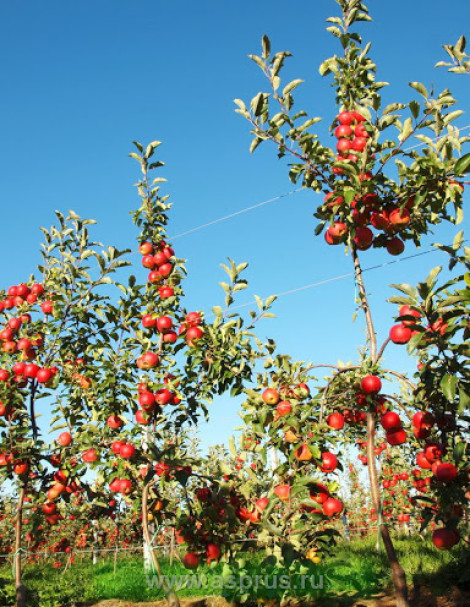
 This Gala mutant is considered the largest-fruited of all existing varieties. It's an early-winter variety, beginning to bear fruit quite early and producing regularly, without interruption for dormant periods. The trees themselves are compact, attractive, and don't take up much space in the garden. They require little care and feeding, are tolerant of virtually all soil types, and are relatively resistant to frost and disease.
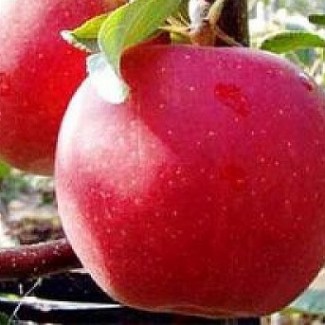
The fruits are truly visually appealing: large and beautiful, with rosy, bright red hues. They are tasty and aromatic, easily withstand even long transport, and store well in a regular cellar at average temperature and humidity. This variety is recommended not only for small private gardens but also for intensive commercial plantings.
Apples: What do they look like?
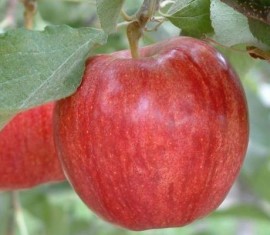
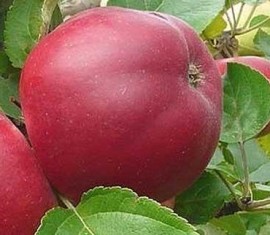
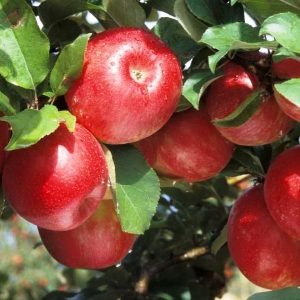 Mostly round, truncated cone-shaped, or round-conical. They are considered large-fruited, although the maximum apple weight is only 170-190 grams. With proper ovary management, fruits can be grown to 190-220 grams. They are uniform, mostly symmetrical, with ribbing only on the calyx; the rest of the surface is very smooth, and there is no lateral seam.
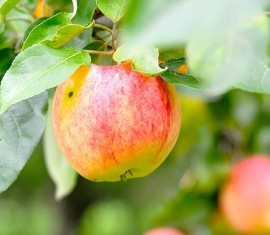
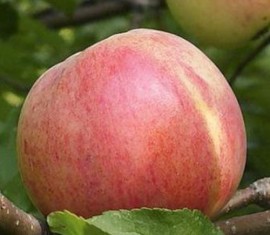
Gala Mast has a dense, smooth, strong, and elastic skin, yet it is quite thin and fragile. The fruit's surface is usually dry, glossy, and shiny, with no waxy or oily coating. Its base color is greenish-yellow, sometimes golden. As it ripens, this is hidden by a bright red, ruby-red, or blood-red blush, dense, thick, and rich, with a blurred stripe and slightly speckled texture. It covers more than 85-99% of the surface. Subcutaneous punctures are numerous, large, gray-green, and randomly distributed. The chemical composition is virtually identical to that of the parent variety:
- P-active substances (catechins) – 204 milligrams.
- Ascorbic acid (vitamin C) – 13.1 milligrams.
- Total sugars (fructose) – 11.9%.
- Pectins (fiber) – 7.8%.
- Titratable acids – 0.49%.
The flesh of Gala fruits is dense, even slightly firm, fine-grained, juicy, crisp, and easy to peel. It has a creamy yellow, light yellow, or slightly lemony hue and a slightly spicy, candy-like aroma. The flavor is considered harmonious, balanced, and dessert-like, due to its predominant sweet note and tart aftertaste. Professional tasters give these apples 4.6-4.7 points on a 5-point scale for flavor and appearance.
Apple tree Gala Mast: characteristics
Crown and root system
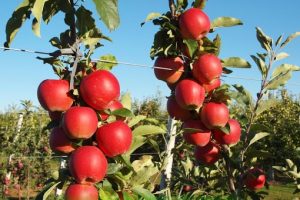 Some say the variety is tall, but that's not true. The tree is clearly medium-sized, as even with minimal crown shaping, it can grow no more than 4.5-5 meters on a tall standard rootstockIts crown shape is generally round or broadly oval with age, unevenly dense, becoming spreading and ragged in old age. The branches are strong but can split off, as they extend from the main conductor at an angle of up to 65-76°. They are generally straight, directed upward, and covered with brown or brownish-green bark. Fruiting is mixed, meaning the fruit is borne on fruiting twigs, spears, and rings.
The leaves are green or deep green, mostly dense and leathery. They have a slight matte sheen, are smooth and long-pointed, and the edges are serrated, serrated, or serrated, though they can occasionally be slightly wavy or keeled. The underside has a felt-like pubescence. The root system is highly branched, with numerous tiny offshoots, significantly complicating maintenance. It penetrates medium-deep into the soil, and its adaptability to moisture is average.
Productivity and pollination
The clone's yield figures are a source of much debate among pomologists and ordinary gardeners. Some consider it average, as it truly doesn't offer anything particularly impressive, while others point to the stunted nature of the standard, which makes the yield figures seem even more significant.
From one mature Gala Mast tree, a good owner, with regular care and favorable environmental conditions, can harvest approximately 65-85 kilograms of fragrant and very beautiful apples per year.
This variety is an excellent pollinator for a wide variety of apple trees, as its pollen is very active. However, its pollination power is average, so without other apple trees, you can expect no more than 35-50% of the potential harvest. Suitable apple trees should be planted within 90-150 meters of each other; this will ensure cross-pollination.
Winter hardiness and disease resistance
The variety can't be called low-temperature-resistant, but it can be grown in temperate climates and even in some more northern regions. Gala Mast tolerates frosts down to -28-31°C with virtually no damage, but only if the frosts are short-lived. During prolonged cold spells, not only the buds but also the wood can freeze. Therefore, trees require timely and proper preparation for winter.
The variety has average resistance to scab and other fungal infections, and the tree has no immunity to the diseases. Apple trees can be affected scab, and here powdery mildew or European cancer less often, bacterial burn is even less common. With regular antimicrobial and antiparasitic treatments, the risk of disease is reduced to a minimum.
Rootstocks and subspecies
Gala Mast is itself a subspecies, a clone of the main variety. While it doesn't yet have any varieties, it can be grown on a wide variety of rootstocks. These trees then acquire some of the original qualities and properties. For example, on dwarf rootstocks, they barely reach 2.9-3 meters, yet begin bearing fruit earlier, and their fruit is typically larger, although fewer in number. However, winter hardiness is significantly reduced with this variety, so not every gardener can choose dwarf or semi-dwarf varieties.
Features of growing Gala Mast
 Landing
 Landing
Basic conditions
- When planting this subvariety, it's essential to select a sunny, open space. In shaded areas, the trees will likely die at a young age, never reaching the fruiting stage.
- Before planting, it's important to determine the depth of the groundwater table. This determines whether the apple tree's roots will be able to reach it. This will inevitably lead to root rot, so the water should be no higher than 2-2.2 meters from the surface.
- Ventilation of the Gala mast's uneven crown is crucial. Air movement should be free, but drafts should be avoided. Stagnant air promotes fungal growth, as does high humidity, and in the latter case, trees simply die in the cold.
- Holes for planting apple trees are dug during the season, but leaving them for 3-4 weeks is also quite sufficient.
- The optimal hole size for this variety is 50-70 centimeters deep and 80-90 centimeters in diameter. Topsoil mixed with fertilizer is added to the bottom, then watered and left uncovered until planting.
- It's advisable to leave 3-5 meters between holes for tall rootstocks, or 2-3 meters for dwarf or semi-dwarf varieties. A good distance between rows is 4-5 meters to facilitate fruit harvesting and maintenance.
- Before planting, inspect the seedlings, trimming away any unnecessary, dry, or broken shoots. It's a good idea to soak them in water for 5-8 hours to allow them to absorb moisture.
- Rake the drainage material into a pile, and place the seedling on it, carefully straightening the rhizome to avoid bending it. Cover with soil, compacting it layer by layer by hand or gently with your feet. Water with 35-50 liters of water, and mulch the surface with sawdust, compost, or manure, or even chopped grass.
Landing dates
Trees can be planted not only in the spring, before the end of April, when the sap hasn't yet begun to actively flow, but also in the fall. The optimal time for fall planting is from mid-September to early October, after the leaves have finished falling. This marks the end of the sap flow. In warmer regions, the fall planting is preferable, while in colder regions, spring planting is preferable.
Tree care
Protection from frost and pests
To properly prepare Galu Mast for winter, stop watering by the end of August and do not apply any more water until spring. Wrap the trunks with burlap, tarpaulin, roofing felt, or other available materials. It's a good idea to pile spruce branches, straw or hay bales, or dry leaves or even soil on the roots during severe frosts. All of this must be carefully removed in early spring, before the sap begins to flow.
Rodents can be repelled by lubricating the lower part of the trunk with various strongly aromatic substances, such as lard, fuel oil, grease, and other industrially produced products. Bleaching the trunks with a thick solution of lime will also help repel insects that have settled in bark crevices or rhizomes. This will also significantly improve the aesthetics of your garden.
Loosening the soil, watering: proper agricultural technology
Gala mast produces numerous tiny root shoots near the surface, so digging around the trunk requires extreme caution. Twice a year, dig a third of a shovel's depth around the trunk, and during the growing season, simply hoeing the soil, loosening it slightly, for example, on the second day after watering, is sufficient. During this time, remember to remove any debris from under the trees, including dry leaves, weeds, rotting fruit, and other items.
Young apple trees should be watered once every 10-12 days, or even once a week in dry and hot weather. Approximately 25-30 liters of water should be applied to each trunk, divided into two times, morning and evening. Drip irrigation or overhead irrigation is recommended to ensure the soil never dries out completely. However, excess moisture can lead to root rot, so it's important to be mindful of the water. Mature trees should receive 5-6 waterings per season during the driest periods.
Pruning: simple crown shaping
Proper crown formation for Gala begins in the second year after planting in open ground. The best options for crown formation are:
- Tiered.
- Sparsely tiered.
- Whorled.
- Palmette.
- Cordon.
- Spindle.
- Cup-shaped.
Tree pruning is usually done in the fall, after the leaves have fallen. Broken and dry branches growing inward, parallel to other shoots, and vertically upward are then pruned. The cut areas are always sealed with paint or garden varnish.
Reproduction
- Cuttings.
- Budding.
- Cloning.
- Kidney grafting.
Pollinator varieties
- Idared.
- Wagner Prize.
- Elstar.
- Jonathan.
- Delicious golden.
- Gloucester.
- Golden Vladimir.
- Melrose.
Diseases and pests
- Bacterial burn.
- Scab.
- Cytosporosis.
- Powdery mildew.
- Rust.
- Apple moth.
- Scale insect.
- Glass-box.
- Leafhopper.
- Hawthorn.
Ripening and fruiting of Gala Mast
The beginning of fruiting
 The beginning of fruiting
Depending on the rootstock you choose, the first fruiting can occur at different times. A dwarf Gala will produce fruit as early as the third or fourth year, while a vegetative standard tree might not produce a harvest until the fifth or sixth or even sixth or seventh year. The first fruits will be few in number, sometimes up to several dozen.
Flowering time
Like all mid-autumn apple trees, Gala Mast blooms in mid-May. If the weather is cold and the winter has been prolonged, flowering may be delayed slightly until the end of the month or even until early June, but this rarely happens. The tree blooms profusely, with large, snow-white flowers with fleshy petals densely covering the branches. These flowers can be solitary or gathered in small clusters. Staggering the blooms is recommended to produce larger apples.
Fruiting and growth
This variety grows quite quickly, gaining 45-60 centimeters per year before the fruit begins to ripen. Once Mast begins bearing fruit, the rate slows, but not too much, so the trees quickly reach their full potential. Fruiting increases gradually, but quite significantly; by the 7th to 9th year, a full crop of fruit can be expected.
The fruit reaches technical maturity around late September or early October. Don't wait until it's ready for consumption, otherwise the apples may fall from the branches. They are picked unripe and stored. After 1-1.5 months in a regular cellar, they are perfectly ready for consumption, becoming juicier, crispier, and more pleasant to the taste, with their full aroma and sweetness revealed by the caramelization of the sugars in the fruit. They are easily transported over long distances and can be stored until mid-winter or even spring.
Top dressing
- Eggshell.
- Humus.
- Bor.
- Manure.
- Compost.
- Superphosphate.
- Copper.
- Mineral and nitrogenous complexes.
- Ammonium nitrate.
What to do if it doesn't bloom or bear fruit
- Wrap up for the winter.
- Limit or activate watering.
- Eliminate insect infestation.
- Cure diseases.
Why do apples fall?
- Strong wind, hail, rain.
- Pests or diseases.
- Frosts.
- Overripe.
Share your own experience with the Gala Mast apple tree variety so that even novice gardeners have no questions about cultivating these trees.