Conference apple tree: characteristics of the variety and care
| Color | Reds |
|---|---|
| Ripening season | Summer |
| Size of apples | Large |
| Taste | Sweet and sour |
| Crown type | Columnar tree |
| Shelf life | Low shelf life |
| Application | For recycling , Fresh |
| Winter hardiness | High winter hardiness |
| Fruiting age | Up to 5 years |
 History of origin and regions of growth
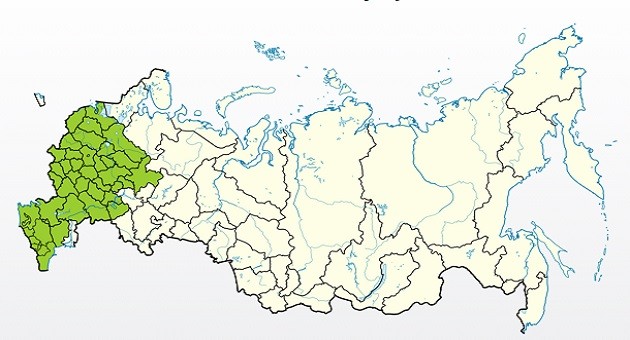
Growing regions
- North Caucasus.
- Crimea.
- Northern regions (partially).
- Moscow region.
- Middle zone.
- Leningrad region.
Origin
This variety was recently developed at the All-Russian Institute of Selection and Technology of Horticulture and Nursery (VSTiSP), where renowned biologist Viktor Valeryanovich Kichina worked. It was obtained through cross-pollination and hybridization at the Sverdlovsk Breeding Station around 2009-2010. The variety's author is A.N. Malkov, a renowned Russian breeder and biologist.
The tree was immediately sent for variety testing, but there is no mention of it in the State Register yet. The zoning conference was not held, but it is successfully grown in many parts of our country.
Content
Description of the Conference apple variety
 A classic columnar apple tree that can withstand harsh Russian winters, the Conference fits the description perfectly: a compact, medium-sized tree that takes up little space and resists freezing even at fairly low temperatures. It grows quickly and begins bearing fruit quickly, producing quite tasty, albeit slightly aromatic, fruits. Despite the short shelf life of its fruit and the need for frequent fertilizing and watering, it is recommended for cultivation in private gardens. The variety's yield is considered insufficient for intensive commercial orchards.
Apples: What do they look like?
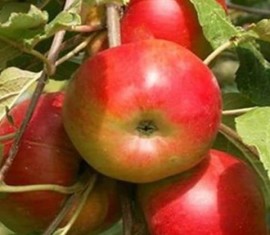
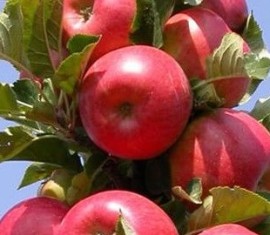
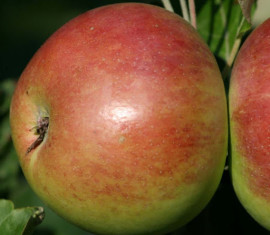
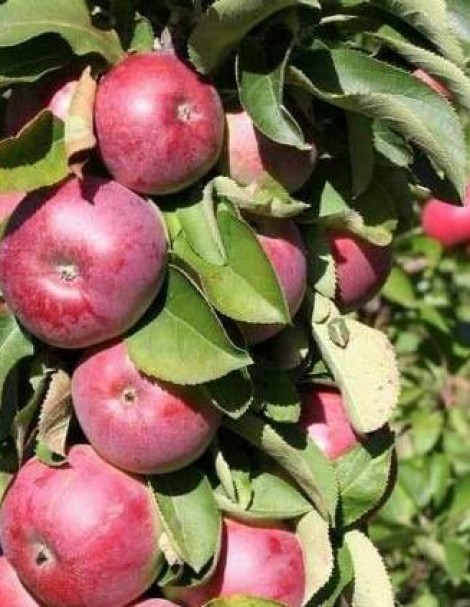
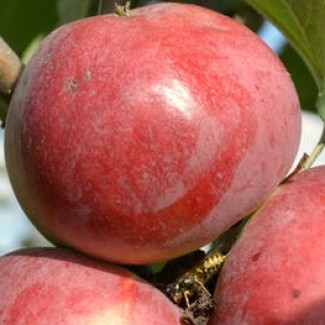
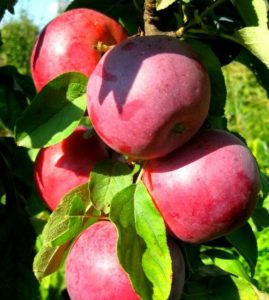 The fruits are round, sometimes slightly conical, asymmetrical, slanted on one side and flattened on the petiole side, and turnip-shaped. They are medium to slightly larger in size. On average, they reach 140-190 grams, but in very good years and with proper and timely care, they can reach as much as 190-220 grams. The ribbing is slightly noticeable near the calyx and smoothed out.
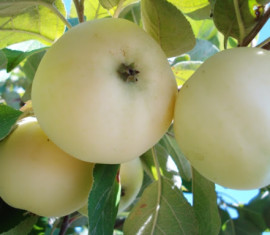
The skin is smooth, glossy, very shiny, dense, and elastic, but thin and brittle, cracking easily from excess moisture or mechanical damage. It is green or greenish-yellow in color, and may turn lemon or golden as it ripens. The blush is dense, diffusely mottled, and typically covers more than 80-95% of the skin, with a beetroot or cherry red color. A fairly dense waxy-oily coating may appear on the surface. Subcutaneous dots are small, evenly distributed, grayish-green, and of medium density. The chemical composition of apples is most easily assessed by the following indicators:
- P-active substances – 189 milligrams.
- Ascorbic acid (vitamin C) – 11.7 grams.
- Sugar (fructose) – 16.4%.
- Titratable acids – 0.46%.
- Pectins (fiber) – 8.5%.
The flesh is dense, pleasantly crisp, slightly prickly, and finely grained. It's juicy and refreshing. The flavor is considered dessert-like, balanced, and sweet and sour, with a hint of sweetness. The aroma is distinctive, recognizable, and unusual, but moderately pronounced. Professional tasters give the apples 4.5 points for appearance and 4.2 for flavor.
Conference apple tree: characteristics
Crown and root system
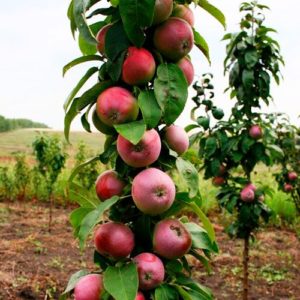 The trees are classified as medium-sized columns, because usually their height without formative pruning is no more than 2.2-2.5 metersIn some cases, however, they can stretch up to three meters, but this is rare, and then only on vegetative seed rootstock. The trees grow as a single trunk, rarely producing lateral skeletal branches, and the crown barely reaches 0.25-0.4 meters in diameter. The bark is brownish-green or greenish-brown, glossy, and shiny.
Conference leaves are large, dark green or rich green, and densely leathery. They are short-pointed, elongated, and coarsely ribbed. The tips can be twisted, and the edges are serrate-crenate, wavy, or serrated, but lacking pubescence. The root system is superficial but highly branched, fibrous, and poorly adapted to the search for water and nutrients.
Productivity and pollination
The fertility rate of this variety is considered average, although many look at it skeptically.
Under the most favorable weather conditions and with high-quality care, regular fertilizing, watering, and pruning, one Konferentsiya variety can yield no more than 4-8 kilograms of tasty, juicy fruit per year..
Conference apples are self-sterile, so you won't get any apples unless there are other varieties growing nearby that bloom at the right time. Ideally, the trees should be planted interspersed, no more than 50-100 meters apart. It's a good idea to have an apiary nearby, and spray the trees with sugar or honey syrup to attract bees.
Winter hardiness and disease resistance
This is a very frost-hardy variety, able to withstand temperatures down to -39-42°C without significant damage. However, it's important to note that if periods of extreme cold last longer than 2-3 weeks, the trees will inevitably suffer damage and may even die. Therefore, it's essential to prepare them for winter and properly cover them.
Conference apple trees lack genetic immunity to scab or other fungal infections. However, they are rarely affected by any apple diseases, only during the most severe epidemics. Typically, the leaves are affected, but the fruit remains perfectly edible. However, it's still worth regularly treating the trees with fungicides to minimize any risks, and also spraying them with insecticides to control insect pests.
Rootstocks and subspecies
There is currently no reliable information regarding the presence or absence of subvarieties of this variety. Conference can be grown on a wide variety of rootstocks, with fruit characteristics remaining virtually unchanged. However, the tree's qualities can change significantly.
Dwarf and semi-dwarf rootstocks will make the tree very small, only 1.6-2.2 meters tall. This significantly reduces winter hardiness, which is not good. Vegetative trees tolerate frost very well and are not affected by sudden temperature fluctuations, but they can grow up to three meters tall, which makes harvesting and maintenance somewhat difficult.
Features of growing Conferences
 Landing
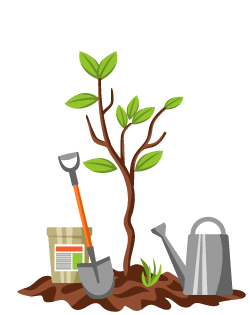 Landing
Basic conditions
- The planting site should be protected from drafts on all sides, but ventilation should not be compromised. While strong winds will damage the trees, good ventilation is beneficial.
- A sunny, open space is the best place to plant Conference lilies. It prefers its crown to be exposed to sunlight for most of the day during the growing season. In the shade, the trunks grow thin and weak, fruiting is delayed, and the fruit produced is small and sour.
- Apple trees prefer loamy and sandy loam soils. They grow well in black soil, but it's advisable to dilute it with imported river sand, otherwise over-fertilization can lead to root rot. Apple trees don't thrive in acidic soils and die almost immediately.
- Groundwater generally doesn't harm apple trees, which have very shallow root systems. It simply won't reach the groundwater level, so you can even plant the tree directly next to a river or pond. However, you should ensure that the water level is no higher than 1.2-1.5 meters.
- Leave approximately 1-1.3 meters between trees, and the same amount will be enough between rows.
- Holes for this tree are not dug in advance, although if you have some from last season, you can replant the Conference tree in them. To do this, dig holes 60 centimeters deep and 80 centimeters in diameter, create a small mound in the center, place the seedling on it, carefully spreading out the roots, cover with soil, and water with 25-35 liters of water.
- Stakes or planks are immediately placed in the holes to tie up the trees. This will not only provide them with additional support, but also protect them from frost, and will also make it easier to cover the trunks from frost.
- The soil around the trunk will settle slightly after a while; you need to add some fresh soil and mulch the surface with sawdust or compost.
When planting, it is very important to pay attention to the depth root collar, as this factor affects the tree's future development. If you want to preserve the rootstock's properties, you need to leave it 7-9 centimeters above the surface; otherwise, the tree may root higher, which will result in the loss of all its qualities..
Landing dates
This variety is versatile in terms of planting, as it thrives in both spring and fall plantings. Choose a sunny, dry day in April or October to transplant the trees to the open ground, preferably in the evening. It's best to leave the young seedling untouched by frost or the first frost for at least 21 days. With their root system closed, apple trees can be transplanted at any time; they have a nearly 100% survival rate, with very few exceptions.
Tree care
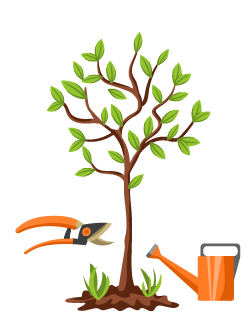 Tree care
Protection from frost and pests
Conference trees should be prepared for winter as early as August, gradually reducing watering to zero by early September. It's common to pile spruce branches, bales of straw or hay, and piles of dry leaves on the root zone. The trunks are wrapped in burlap or any other available materials, and in harsh conditions, it's best to completely enclose the trees using a tent-like covering.
Tree trunks are whitewashed with lime in early spring and late fall. This helps repel pesky and annoying insects that can damage not only foliage and fruit, but even wood. To repel rodents that come to gardens in winter to feast on tender young bark and shoots, the trunks are coated with fuel oil, grease, or lard.
Loosening the soil, watering: proper agricultural technology
Aeration of the soil around the trunk is crucial, as the roots require oxygen. However, it's important to remember that they are quite thin and run shallow near the surface. Therefore, digging and hoeing the soil must be done very carefully to avoid damaging them. You'll also need to regularly remove root suckers, shoots from various plants, and weeds from the area around the trunk.
Watering is very important for this variety, as it cannot find enough moisture in the soil on its own. Therefore, the trees will need to be watered once or twice a week. Regular watering is especially important during hot and dry weather.
To prevent the root ball from collapsing, the next day after watering, you need to loosen the soil around the apple tree trunk..
Pruning: simple crown shaping
Most often, standard trees are formed in nurseries, growing as a single trunk, which is then very easy to maintain. This type of tree requires no shaping at all. However, there are also options with double or even triple trunks, in which case one shoot will need to be pruned annually, allowing the next to develop. If the top freezes, it is cut off and a new shoot is allowed to grow.
Pollinator varieties
- Vazhak.
- Cheburashka.
- Currency.
- Nectar.
- Barguzin.
- Chervonets.
- Ostankino.
- Dialogue.
Reproduction
- Rooting.
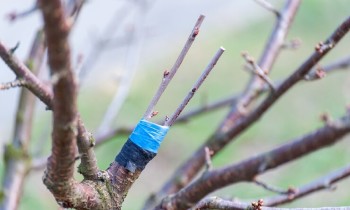
- Kidney grafting.
- Growing from seeds.
- Cuttings.
Diseases and pests
- Bacterial burn.
- Powdery mildew.
- Scab.
- Black crayfish.
- Pit bitterness.
- Green aphid.
- Codling moth.
- Leaf roller.
- Hawthorn.
Ripening and fruiting of the Conference
The beginning of fruiting
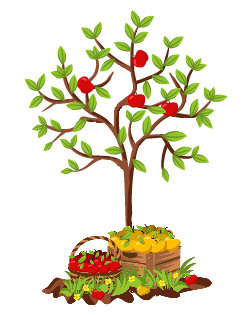 The beginning of fruiting
The variety is extremely early-bearing. Apple trees with flowers arrive from the nursery in their very first year. However, allowing them to develop is unwise, as this will slow down the tree's fruiting in the future. Therefore, it's customary to harvest the first fruit only in the second or third year, when the tree has already yielded at least 3-4 kilograms of delicious, sweet apples.
Flowering time
Conference buds emerge quite early. As early as early May in warmer climates, beautiful, large, moderately fragrant flowers with fleshy pinkish-white petals may bloom. In more northern regions, the process may begin later, only in the middle or even at the end of the month. It lasts approximately 12-14 days, depending on weather conditions. If it's sunny and warm, the process progresses more quickly, while cloudy and damp weather slows it down. It's advisable to control flowering (pinch off up to 50% of the flowers) to promote larger fruit.
Fruiting and growth
Conference very quickly reaches its maximum height, growing by about 35-50 centimeters per season. This is very good, as the yield increases along with the green mass. By about the sixth to eighth year, you can harvest a full six to eight kilograms of juicy fruit.
Growing these columns in pots is acceptable. They produce approximately the same results as growing them in open ground..
Apples begin to ripen as early as the second half of July, and by early August they are fully ready for processing or fresh consumption. They ripen in a spurt, all at once, and if overripe, they can fall to the ground. These apples cannot be stored for more than a week, so they are not even placed in a cellar; they are eaten immediately or processed into juices, compotes, and jams.
Top dressing
- Compost.
- Ammonium nitrate.
- Humus.
- Superphosphate.
- Manure.
- Mineral complexes.
What to do if it doesn't bloom or bear fruit
- Check for pests or diseases.
- Transplant into the sun.
- Water.
- Fertilize.
Why do apples fall?
- Wind, hail, hurricane, rain.
- Overripe.
- Pest damage.
- Diseases.
Please leave your feedback on the Conference variety, as many gardeners would like to grow similar ones in their gardens.