Apple tree Strela: characteristics of the variety and care
| Color | Reds |
|---|---|
| Ripening season | Autumn |
| Size of apples | Large |
| Taste | Sweet and sour |
| Crown type | Columnar tree |
| Shelf life | Low shelf life |
| Application | Fresh , For recycling |
| Winter hardiness | High winter hardiness |
| Fruiting age | Up to 5 years |
 History of origin and regions of growth
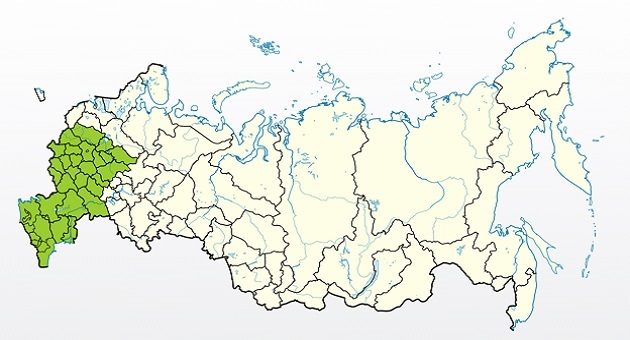
Growing regions
- North Caucasus.
- Crimea.
- Northern regions (partially).
- Moscow region.
- Middle zone.
- Leningrad region.
Origin
Many domestic fruit crop varieties, and others, were developed by Ivan Vladimirovich Michurin's followers. The columnar apple tree Strela was also developed at the Russian Academy of Agricultural Sciences, specifically at its branch, the All-Russian Research Institute of Genetics and Breeding of Fruit Plants. The variety was developed by renowned Russian breeder Nikolai Ivanovich Saveliev, co-authored by his daughters, Natalia and Irina. It was obtained by open pollination of the complex hybrid KV103 (the donor of the columnar shape) and the frost-resistant Brusnichnoe variety, which has served as the basis for the development of several new varieties.
At the beginning of the twenty-first century, the first seedlings were obtained and immediately sent for field trials to farms near the town of Michurin in the Tambov region. The first harvest was reaped in 2006-2007, and in 2011, the variety was classified as elite. Strela was officially added to the state register of breeding achievements in 2013. The variety is zoned for the Central and Central Black Earth regions, but in reality, it can be grown in much larger areas.
Content
Description of the Strela apple variety
 This medium-sized columnar variety has already earned a huge following in its short existence. This early winter variety has a very compact size, allowing for a good harvest even in a truly limited space. It tolerates even severe frosts, producing a large number of tasty and aromatic fruits with high marketability.
It is undemanding of soil and growing conditions, requires little care, and is resistant to infectious diseases. It is recommended for growing in small plots near the home and in intensive commercial gardens.
Apples: What do they look like?
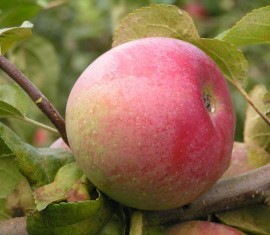
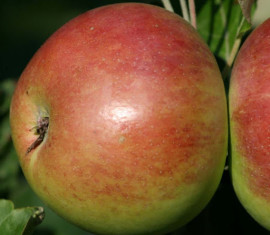
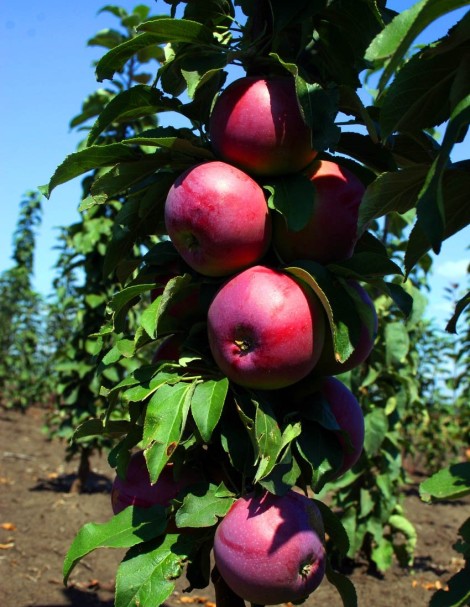
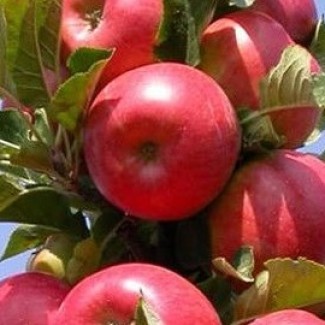
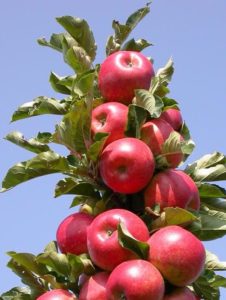 The fruits are usually medium, larger than average, or large, and may be irregular in size. They are smooth, round, and often symmetrical and spherical, but can be slightly slanted or flattened on the stem side. The ribbing is barely noticeable and smoothed, visible only from the calyx side.
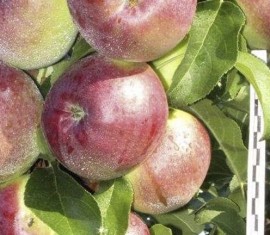
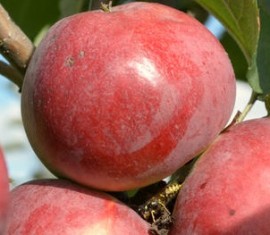
The skin is firm, very elastic, but not overly thick, smooth, glossy, and highly shiny. It is light green or greenish-green in color, but as it ripens, it becomes green-yellow or even golden. The blush is vaguely mottled, can be slightly speckled, dark red, burgundy, beetroot-colored, or with a slight violet tint, and covers at least 80-95% of the surface. Subcutaneous dots are light, numerous, small, but clearly visible. The chemical composition is usually assessed according to the following parameters:
- P-active substances – 167 milligrams.
- Ascorbic acid (vitamin C) – 11.2 grams.
- Sugar (fructose) – 12.3%.
- Titratable acids – 0.86%.
- Pectins (fiber) – 15.3%.
The flesh is medium-dense, pleasantly textured, slightly prickly yet tender and very juicy. It is fine-grained, crisp, and has a slight greenish or yellowish tint, sometimes slightly creamy or lemony, depending on growing conditions, rootstock, and other factors. Experts rate the flavor as dessert-like, sweet and sour, balanced, and harmonious. These apples score 4.3-4.5 out of 5 for appearance and taste.
Apple tree Strela: characteristics
 Crown and root system
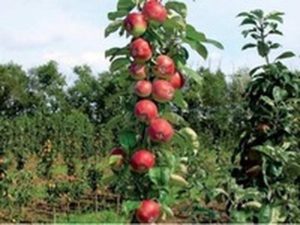 Crown and root system
The variety is a classic medium-sized columnar variety, it can easily reach 2.7-3 meters, If it's not pruned in time, it will grow as a single stem, without producing side shoots, which is where it got its name. The trunk is thick, covered with grayish-brown or greenish-brown, smooth, and glossy bark without pubescence. Fruiting occurs on spurs, rings, and fruiting twigs growing from the central stem.
The leaves are medium-sized, rich green or bright green, glossy and shiny, smooth, and leathery, with coarse ribbing. They are elongated-oval, with a serrated, slightly serrated, and crenate margin, long-pointed, and the tip may be twisted. The blade is often folded into a boat shape and may be slightly wavy. The root system is extensive, shallow, and poorly adapted to the search for moisture and nutrients. It is superficial and fibrous. It usually lacks a central rachis.
Productivity and pollination
The variety is considered medium-growing and medium-yielding, so don't expect any record-breaking results from it. However, Strela does boast exceptional consistency year after year.
A standard hectare of mature plantings (up to 20,000 trees) can yield 180-190 tons of apples per season. This equates to approximately 6-8 kilograms per tree. In isolated cases, growers have achieved yields of up to 9-15 kilograms, but only in favorable weather and climate conditions and not on a consistent basis..
The Strelka apple is considered conditionally self-sterile. This means it's likely to produce some fruit even if there are no other apple trees nearby that bloom at the same time. However, the number of fruits will be minimal, so it's best to take care of pollinators in advance. Experienced growers bring mobile apiaries to the planting sites, and spray the trees with syrup made from diluted honey or sugar during flowering.
Winter hardiness and disease resistance
The arrow apple tree is considered low-temperature resistant, easily surviving temperatures down to -27-32°C. However, the tree will only survive damage if the frosts are short-lived. If winters in the region are harsh, with severe frosts lasting at least 2-3 weeks in a row, it's important to properly prepare and cover the apple trees for the winter. Fortunately, the tree's low height and particularly compact crown make this effortless.
Strela has a high resistance to scab, powdery mildew, cytosporosis, pitted buckwheat, fire blight, and other apple tree diseases. It is rarely affected, and the diseases primarily affect the leaves, leaving the fruit undamaged. However, prevention should not be overlooked; during years of severe epiphytotics, it is essential to take precautions and protect the trees.
Rootstocks and subspecies
This relatively new variety doesn't yet have any subspecies, and columnar varieties rarely have any. However, Strela can be grown on a wide variety of rootstocks, slightly altering the tree's characteristics, with the fruit only slightly varying in size. For example, on dwarf and semi-dwarf varieties, trunks barely reach 2-2.4 meters in height, producing large fruits but unable to withstand even moderate frosts of -20-22°C. Trees grown on seed rootstocks grow more vigorously, taller, and tolerate winters better, but produce slightly smaller apples, weighing only 160-170 grams.
Features of growing Arrow
Landing
 Landing
Basic conditions
- This variety requires very high-quality lighting throughout the growing season. Therefore, it should be sited appropriately. In the shade, trees grow slowly and poorly, and develop poorly. As a result, they may not bear fruit at all or even bloom in the spring.
- It's best to choose fertile, loose soil for planting trees. They thrive in loam or sandy loam, but only if they receive regular fertilization, watering, and fertilizer. The best choice is slightly acidic black soil, slightly diluted with river sand.
- Groundwater levels should be no higher than 2.2-2.5 meters. Although the Strela's root system isn't very deep, it can reach the water and cause rot. For this reason, it's not common to plant apple trees directly next to ponds, rivers, streams, or even shallow wells.
- Fruit trees don't thrive in drafts, but their roots need good ventilation. Therefore, sufficient space must be left between tree trunks to prevent air stagnation between the branches. To achieve this, leave up to 0.8-1 meter between apple trees within a row, and up to 1.4-1.5 meters between rows.
- Experienced gardeners usually dig holes in advance, the previous season, but this isn't necessary for the Strela. It's enough to dig 80x90 cm holes two to three weeks in advance, fill the bottom with soil and fertilizer, add drainage if needed, and leave them outdoors.
- Special supports—stakes or planks—are driven directly into the holes to support the apple trees during their first few years. Ideally, they should be positioned on the north side to provide additional frost protection.
- If you need to preserve the qualities and properties of the rootstock, then root collar It is necessary to leave 6-8 centimeters above the soil surface.
- Place the seedling on a mound of drainage material, spread the roots out so they lie freely, and cover with soil, being careful not to leave air pockets. Create an earthen bank around the trunk circle, add 20-25 liters of water, and mulch the surface.
Landing dates
You can plant Strela in either spring or fall; there's little difference. However, in northern regions, where frosts arrive early and can damage young, immature trees, it's best to plant early in the spring. Ideally, choose a warm day in late March or early April, when frost is already certain and the soil has warmed.
Tree care
 Tree care
Protection from frost and pests
In areas where frosts don't persist for long, standard wrapping of the trunks with burlap is sufficient, but in colder areas, more effort will be required. The root zone is lined with bundles of grass, hay, or dried leaves, spruce branches, and even foam. This prevents the roots located close to the surface from freezing. In the coldest regions, it's best to cover apple trees with a tent-like structure, as their low height allows for this.
Tree trunks are whitewashed with lime to get rid of insects. This should be done twice a year, in spring and fall. Greasing the trees with lard, fuel oil, or grease will help repel hungry rodents in winter. There are also commercially available products available at gardening stores.
Loosening the soil, watering: proper agricultural technology
You should dig around the trunk at least twice a year, but do so with extreme caution. Otherwise, you can damage the rhizome, which will lead to disease and even death. It's best to hoe the soil 6-9 times per season, for example, on the second day after watering, to prevent the soil from compacting into a solid, rock-hard lump.
Water as needed, but be careful not to overdo it. If there has been no rain for more than a week, apply approximately 15-20 liters of water per mature tree. Drip irrigation is recommended if possible. Fertilizers and fertilizers should be applied with the water, as this ensures better absorption.
Pruning: simple crown shaping
Strela doesn't require any special pruning. Trees arrive from nurseries already formed, with no lateral shoots. If a terminal bud freezes, it will need to be removed and a new top will need to be grown. If fruiting canes dry out, they should also be pruned.
Pollinator varieties
- Vazhak.
- Currency.
- Gin.
- Geyser.
- Cheburashka.
- Malyukha.
- Chervonets.
- Ostankino.
Reproduction
- Rooting.
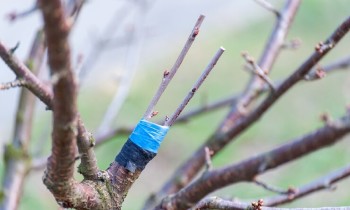
- Kidney grafting.
- Growing from seeds.
- Cuttings.
Diseases and pests
- Black crayfish.
- Bacterial burn.
- Powdery mildew.
- Green aphid.
- Codling moth.
- Leaf roller.
- Hawthorn.
Ripening and fruiting of Arrow
The beginning of fruiting
 The beginning of fruiting
Trees of this variety begin bearing fruit very quickly, making it especially prized by those who can't wait years for their first harvest. The apple tree produces buds in the first year, but it's best to pluck them immediately. By the second or third year, you can harvest 3-5 kilograms of aromatic fruit.
Flowering time
The average flowering period makes it easy to select suitable pollinators for the trees. Buds appear on the branches as early as early May, and soon bloom. In cold years, flowering may be delayed until mid- or even late May, but will typically last 12-15 days. The tree's flowers are large, cup-shaped, and intensely fragrant. Their fleshy petals can be slightly wavy, almost corrugated.
Fruiting and growth
The tree grows at a moderate rate, without impressing. It can grow approximately 25-30 centimeters per year, so it reaches its full size quite quickly. By the age of 6-8, it begins to bear a full harvest, and then continues to do so with particular consistency, meaning the amount of fruit it produces remains constant.
Apples begin to ripen in mid- to late September, but may be delayed until early October. They hold tightly to the branches for a while, then suddenly fall off. This is an unavoidable moment, otherwise they will have to be processed immediately. Ripeness can be determined by the thick waxy coating on the surface. Harvested fruits can be stored for only a month in the cellar or for about 45-60 days in the refrigerator.
Top dressing
- Peat.
- Compost.
- Ammonium nitrate.
- Humus.
- Chicken manure.
- Superphosphate.
- Manure.
- Mineral complexes.
What to do if it doesn't bloom or bear fruit
- Check for pests or diseases.
- Transplant into the sun.
- Water.
- Fertilize.
Why do apples fall?
- Wind, hail, hurricane, rain.
- Pest damage.
- Diseases.
Please leave your feedback on the Strela variety, as many gardeners would like to grow similar ones in their gardens.