Champagne apple tree: characteristics of the variety and care
| Color | Greens |
|---|---|
| Ripening season | Summer |
| Size of apples | Average |
| Taste | Sweet and sour |
| Crown type | Average tree height |
| Shelf life | Low shelf life |
| Application | Fresh |
| Winter hardiness | High winter hardiness |
| Fruiting age | Up to 5 years |
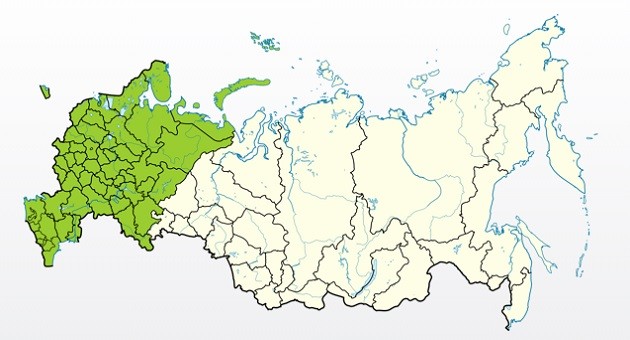 History of origin and regions of growth
Growing regions
- Middle zone.
- Some northern regions.
- Southern and southwestern regions.
- North Caucasus.
- Transcaucasia.
- Central Asia.
Origin
The origins of the Champagne apple variety are unknown. Saplings were presumably brought to the North Caucasus and southern regions of Russia as early as the early nineteenth century. The variety is considered a natural selection and is directly related to the Ranet subgroup. Moreover, Champagne is one of the largest-fruited apples in this family.
This variety has several names, all of which are correct. Therefore, it can be called Champagne Ranet, Paper Ranet, Champagne, or Sparkling Ranet.
Content
Description of the Champagne apple variety
 When searching for suitable apple trees for their gardens, people often overlook older varieties. However, Champagne possesses a number of positive qualities that have attracted experienced gardeners for over a century. Its enviable winter hardiness and resistance to various fungal apple infections make Champagne particularly appealing. Add in the pleasant flavor of its fruit, its large size compared to other Reinettes, its good yield, and its low maintenance, and the apple tree seems almost ideal. The only drawback is the short shelf life of these early apples, but they can always be processed into compotes, jams, and preserves.
Apples: What they look like
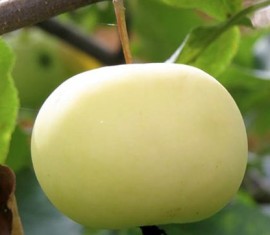
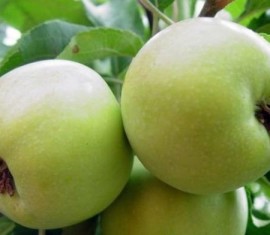
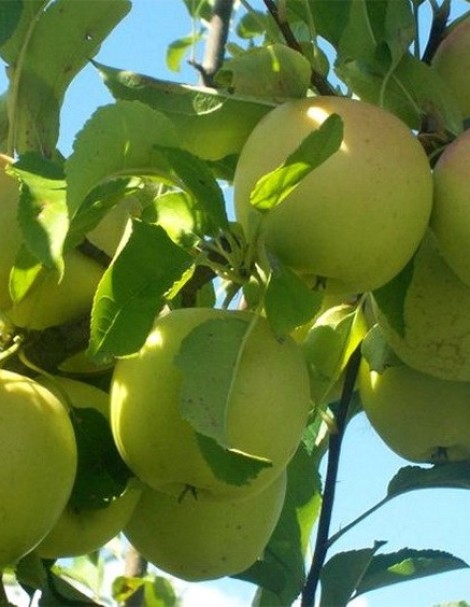
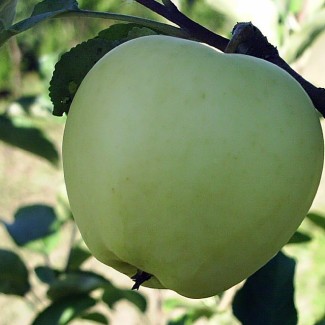
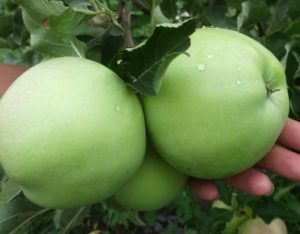 This variety is one of the largest-fruited of the Ranets, with apples easily reaching 110-140 grams in weight. They are round, sometimes slightly flattened or conical, and rarely have a regular shape, often lopsided.
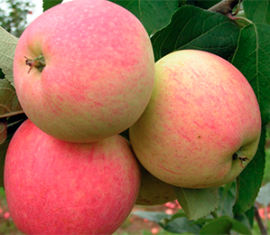
The fruit skin is dense, thick, and green, turning yellowish as it ripens, acquiring a light, diffuse, pinkish or orange, translucent, and fuzzy blush. It is smooth and glossy, and may have some rusting around the stem. The chemical composition can be characterized by the following indicators per 100 grams of product:
- P-active substances – 181 milligrams.
- Ascorbic acid (vitamin C) – 10.1 milligrams.
- Total sugars (fructose) – 11%.
- Titratable acids – 0.58%.
The apple flesh is white or slightly yellowish-cream. It is quite dense, fine-grained, and crisp. Its flavor is rated as harmonious, balanced, and sweet and sour with a bright, tart aftertaste. The tasting score is only 4.2 out of 5.
Apple tree Champagne: characteristics
Crown and root system
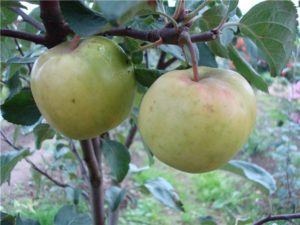 The tree of this variety is considered to be of medium height, however, for this subspecies it is quite tall, and can easily reach 4.5-5 meters if not limited by pruning.
Crown At an early age, the tree is broom-shaped, but with time it can become spreading, but can be shaped into almost any desired form. The branches are medium-length, some thin and long, while others are short and angular. They extend from the trunk at almost a right angle, preventing them from splitting off even with fairly large harvests. The bark is gray-brown; with age, it can turn brown, crack, and begin to crumble.
The leaves are usually sparse, medium-sized, and oval-shaped. They can be light or dark green, leathery, dense but not glossy, and covered with numerous veins and wrinkles. The leaf edges are slightly serrated, the tip is not sharp, slightly curled inward, and the back is pubescent. The root system is highly branched, often deep rather than shallow, but this depends on the rootstock.
Productivity and pollination
Among the varieties in its subgroup, Bumazhnoe can be called a true leader, as it can produce up to 40-50 kilograms of fruit in one season.
However, compared to other apple trees, especially elite selected varieties, the tree's yield can be considered average or even slightly below average. The good news is that the tree bears fruit every year without a rest period.
Champagne is considered a conditionally self-fertile variety with an average level of self-pollination. This means that even if there are no other varieties nearby (150-200 meters), a harvest will still occur. Approximately 25-40% of the ovaries develop into apples. Moreover, sunny and calm weather will certainly enhance the process; strong winds, rain, and especially hail will reduce pollination. The yield can be significantly increased through cross-pollination or artificial pollination, as well as by locating an apiary nearby.
Winter hardiness and disease resistance
The apple tree has an exceptional level of resistance to low temperatures. Therefore, it is recommended for cultivation in virtually all regions of our country. It tolerates frosts below -32-35°C, even in strong winds, which most varieties cannot withstand. At lower temperatures, it may suffer slight frost damage, but quickly recovers during the summer. Moreover, this has only a minimal impact on the fruit yield that year.
Unfortunately, there is no special immunity to fungal infections, such as scabies The tree is not susceptible to powdery mildew or powdery mildew. However, it is quite resistant to such threats if preventative measures are taken promptly. Fallen leaves, especially rotting fruit, should be regularly removed from under the trunk, moisture should be prevented, the tree should be sprayed and treated with fungicides and insecticides, and fertilized (but in moderation).
Subspecies and rootstocks
| Subspecies | Description |
| Crimean | This variety was bred in Crimea on a dwarf rootstock, which prevents it from growing more than 2.5-3 meters tall. Otherwise, the subspecies retains all the qualities of the parent tree, except for its winter hardiness. It produces impressive yields, but is unable to withstand temperatures of -20-22°C. |
| Spray | This subspecies is common in the temperate zone and is a tall tree with long, slender shoots. Considered an early-season variety, it produces large fruits, weighing up to 200 grams, which store well for 30-40 days. |
| Livonian | This subvariety inherited all the best qualities of the parent tree. The apple tree is tall and produces high yields, but the fruit is usually medium-sized. When ripe, the apples develop a rather bright and noticeable blush of a coral or orange hue. They are very rich in vitamins and are recommended for fresh consumption. |
Features of growing Champagne
 Landing
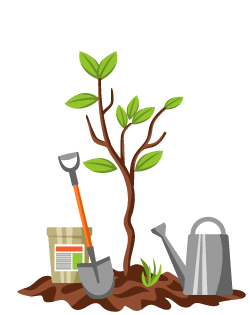 Landing
Basic conditions
- This variety doesn't care much for soil type; it thrives in black soil, loam, sandy loam, or any other soil. The key is that it's not overly acidic and that it's well-drained and dense.
- For all apple trees, it's best to choose sunny, well-ventilated sites. However, avoid drafts in the planting area, as this can cause the trees to become diseased.
- The holes are dug small, only about 60 centimeters deep and 70-80 in diameter, which is quite enough for a small Champagne root system.
- The distance between trees should be 3-3.5 meters, and between rows up to 4-4.5.
- You can prepare the holes in advance by mixing soil with fertilizer and leaving them for at least a few weeks, or you can skip this step entirely. Humus, compost, and mineral fertilizers can be added immediately to the bottom before planting, but they should not come into direct contact with the roots. Therefore, the soil and additives are covered with a layer of soil, a drainage mound is formed, and only then the seedling is placed on top.
- Stakes are immediately inserted into the hole for tying up, but it is not recommended to remove them for the first 3-4 years.
- The seedlings are carefully covered with soil, compacting it lightly. Then, they are watered (30-50 liters) and the surface is mulched with chopped grass, humus, or compost.
Make sure the root collar of the seedling is at least 5-7 centimeters above the soil surface. Rooting it can significantly slow the apple tree's growth and delay the onset of fruiting.
Landing dates
Champagne can be planted in either spring or fall; the trees tolerate the adaptation period well and adapt easily to new conditions. In the former case, it's best to plant around mid- to late April, before the buds begin to open and the risk of frost has passed.
In the fall, it's best to wait until the leaves have fallen and the sap has stopped flowing in the trunks. If the tree was purchased with closed root system (in a special pot), then there is absolutely no difference when to plant it in its permanent growing location.
Protection from frost and rodents
In warm or temperate climates, trees don't need any special protection from freezing temperatures. While it won't hurt to scatter some straw bales or spruce branches around the roots, it won't provide much benefit.
If winters in your region are quite severe, it's better to be on the safe side. Trunks are wrapped in special covering materials, such as roofing felt, tar paper, and even nylon tights. Covering trees 5 meters tall with a tent-like structure is hardly possible, and it's not necessary. Keeping the rhizomes intact is sufficient, and the apple tree will recover very quickly even from severe frost damage.
Tree trunks are regularly whitewashed with lime in the fall to prevent insects from settling in the bark and root zone. To repel rodents hungry for tender bark, it's best to coat the trunks with lard, grease, or commercial products from a gardening store.
Tree care
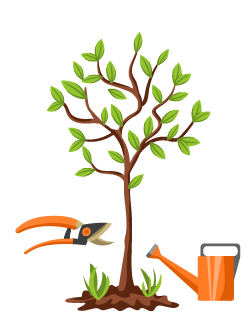 Tree care
Loosening the soil, watering: proper agricultural technology
Many inexperienced gardeners think that natural or so-called folk-bred apple trees require no care, but this is a misconception. While they are often much less demanding, proper care is essential if you want to reliably produce good harvests. Therefore, it's a good idea to dig around the root zone at least once a year, remove weeds, and remove root suckers, shoots, and other tree shoots.
It's best to water infrequently; 3-4 times during the growing season is sufficient. Plan your waterings to coincide with ovary setting, flowering, and fruit ripening. Fertilizers can be added at this time. Be careful not to overwater, as this can lead to fungal infections.
Pruning: simple crown shaping
Crown shaping can begin as early as the first year after planting. The tree is quite flexible, so it can be given virtually any shape desired. Most often, gardeners create a tiered or sparsely tiered crown, which significantly thins out the branches and simplifies maintenance and harvesting.
In spring or fall, it's also a good idea to perform sanitary pruning. This involves removing all diseased, damaged, or dead branches. Rejuvenation pruning should be done no earlier than 15-20 years. Then, remove 2-3 mature branches, allowing new ones to develop.
Pollinator varieties
- Reinette Simirenko.
- White rosemary.
- Sarah's signal.
- Boyken.
- Parmen gold (winter).
- Reinette of Landsberg.
- Chinese golden.
Reproduction
- Clones (layering).
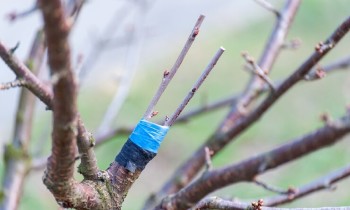
- Grafting by cuttings or buds.
- Growing from seeds (rarely).
Diseases and pests
- Scab.
- Powdery mildew.
- Cytosporosis.
- Moniliosis.
- Green aphid.
- Leaf roller.
- Flower beetle.
Ripening and fruiting of the Champagne apple tree
The beginning of fruiting
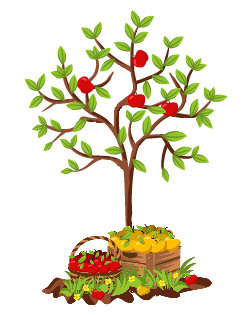 The beginning of fruiting
Champagne can bloom as early as the first or second year after planting outdoors. However, experienced gardeners advise removing all buds immediately, preventing them from developing into apples. This will allow the tree to develop roots and branches rather than waste energy on fruit formation. The first harvests can be reaped in the fourth to sixth year. They won't be record-breaking, but you'll definitely get your fair share of 10-15 kilograms of fragrant apples.
Flowering time
Despite the early ripening of the fruit, the tree doesn't begin flowering until mid-May, not earlier. However, much depends on the regional climate and weather conditions. The process is usually short, lasting only 5-10 days. The flowers are quite large, gathered in small inflorescences, white, and fragrant.
Fruiting and growth
A full harvest won't be difficult. By the 8th to 10th year, trees can produce at least 50-60 kilograms of apples. Moreover, apple trees produce fruit every year without interruption, which is a distinct advantage. A tree's growth rate is normally about 10-15 centimeters per season. If it exceeds half a meter, you're overfeeding the tree, which is not good. It may grow foliage and branches, but fruit production will be limited.
You can begin harvesting Champagne apples in August, but they can easily hang on the branches until early September. In any case, they won't be stored for long, as the variety has a poor shelf life. They should be processed immediately into compotes, sauces, jams, or pastilles. Under the best conditions (a humid and well-ventilated cellar), the fruit can be stored for about 20-30 days.
Top dressing
- Manure.
- Humus.
- Urea.
- Compost.
- Bird droppings.
- Ammonium nitrate.
- Ammonium sulfate.
- Mineral complexes.
- Superphosphate.
What to do if it doesn't bloom or bear fruit
- Check for diseases and pests.
- Feed.
- Perform pruning.
- Transplant.
Why do apples fall?
- Pests.
- Diseases.
- Lack or excess of moisture.
- Natural phenomena.
Please share your feedback on Champagne in the comments below. This way, any gardener can learn from your experience and avoid making mistakes.