
Malinovka apple tree: characteristics of the variety and care
| Color | Reds |
|---|---|
| Ripening season | Autumn |
| Size of apples | Average |
| Taste | Sweet and sour |
| Crown type | Average tree height |
| Shelf life | Low shelf life |
| Application | For recycling |
| Winter hardiness | Average winter hardiness |
| Fruiting age | Up to 5 years |
 History of origin and regions of growth
Growing regions
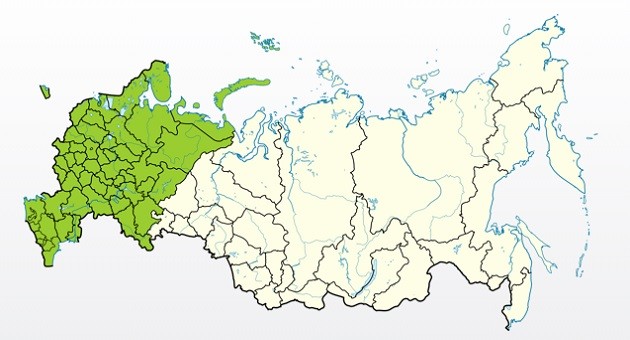
Apples are zoned for cultivation in many regions of our country, primarily within the central zone. This applies in particular to the following areas:
- Moscow.
- Orlovskaya.
- Bryansk.
- Tverskaya.
- Tula.
- Ryazan.
- Tambov.
The southern part of the Black Earth Region, the Eastern Volga region and Bashkortostan can also be included here.
Origin
According to the generally accepted version of its origin, the Malinovka apple tree originated somewhere on the shores of the Baltic, hence its enviable winter hardiness. The variety was first described in detail by the French pomologist André Leroy back in 1843-1845, leading many scientists to believe it originated in France. However, there is no evidence to support this.
This tree has many different names, one of which refers to a large estate in Estonia called Suislepa, where specimens of the variety were discovered as early as the mid-eighteenth century. Therefore, the apple tree's primary name is considered to be Suslepskoye or simply Suslep. Several other variations exist: Suislep, Suislepskoye, and Susleper.
According to many Russian pomologists, apple trees could have even been brought to the territory of modern-day Estonia from Persia. Some theorize that seeds and seedlings were distributed by the Ottomans in the 17th and 18th centuries, as similar qualities of apple trees were described by Turkish scholars of the time.
Content
Description of the Malinovka apple tree variety
 Many people prefer new-fangled apple varieties bred recently, as they produce reliable harvests every year. However, judging by their ease of cultivation and mid-summer fruiting period, it's worth choosing old Russian varieties bred naturally, those that have been around for a long time. One such example is the Malinovka apple tree, whose bright lilac flowers, with their powerful fragrance, are instantly memorable to anyone who has seen them even once.
These trees are easy to care for and produce fruit well for a long time, but are not suitable for intensive orchards. They are recommended for small garden plots where the apples are immediately eaten or processed.
Apples: color, size and weight
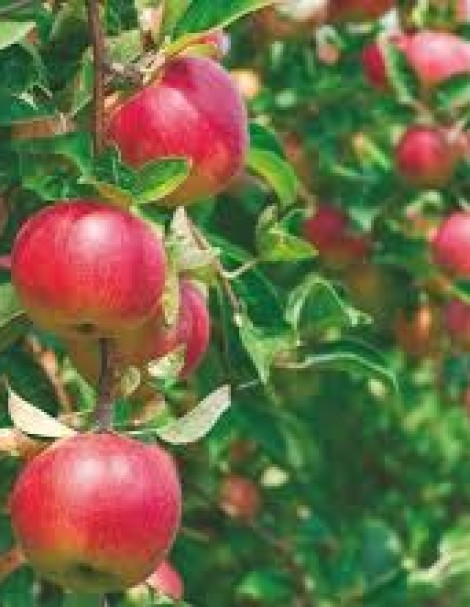
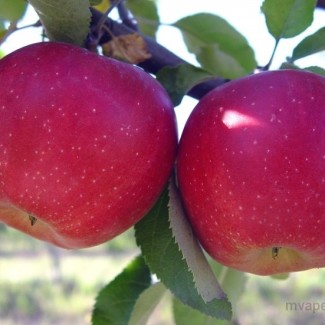
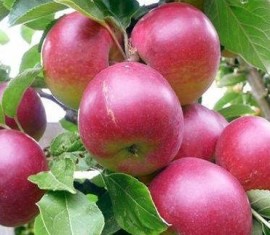
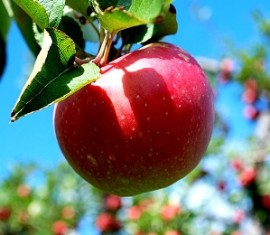
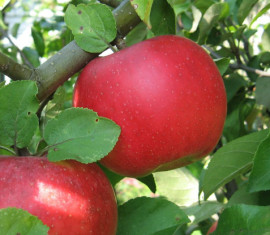
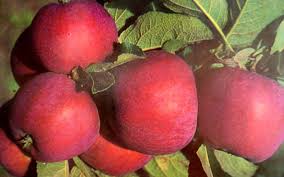 Malinovka fruits are typically medium to slightly larger than average. They vary considerably in weight: a single tree can produce apples weighing 70 grams and 150 grams. Their shape is rarely symmetrical or uniform; most often, the fruits are conical, slightly flattened, round, or lopsided. The skin is dense, smooth, even glossy, and has a green or greenish-yellow base color. The blush occupies approximately 75-90% of the surface area; it is pink with streaked bright red stripes. The chemical composition is characterized by the following indicators per 100 grams of product:
- P-active substances (catechins) – 117 milligrams.
- Vitamin C (ascorbic acid) – 9.2 milligrams.
- Pectins (fiber) – 12.1-12.3%.
- Total sugars (fructose) – 9.8%.
- Titratable acids – 0.7%.
Malinovka apples have predominantly greenish flesh, but can have pink or even red veins, giving them a marbled appearance. The apples have a balanced, sweet-and-tart flavor, reminiscent of a dessert. They received a 4.6 out of 5 points for their appearance and a 4.4 out of 5 points for their taste.
Malinovka apple tree: characteristics
Crown and root system
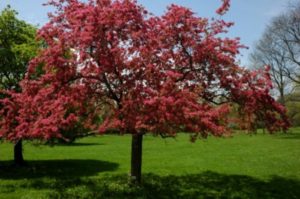 Trees of this variety are considered medium-sized, as they can grow from 3 to 5 meters in height, depending on growing conditions, choice of location, and climate. Crown Typically rounded, it becomes spherical over the years and tends to become overly dense, requiring regular pruning. The tree's branches are thick, with smooth, glossy, reddish-brown bark. They may be slightly pubescent, are upturned, and extend from the trunk, typically at an acute angle.
Malinovka's leaves are nearly round, slightly elongated, and firmly attached to the branches, with short, thick petioles. They are dark green, glossy and leathery above, and may be lightly fuzzed beneath, with slightly serrated edges. The crown grows to 3-4 meters in diameter. The root system is highly branched, and depending on the rootstock, may be shallow or deeper, with or without a central taproot.
Productivity and pollination
Experts call the Malinovka a medium-yielding variety. The average yield per tree reaches 45-60 kilograms in a good year under favorable weather conditions.
However, it's important to understand that after 25-30 years of active growth and fruiting, the tree begins to bear fruit irregularly. Years of high yield alternate with periods of dormancy at random, regardless of external circumstances.
The Suslepskoye apple is completely self-sterile, so it's essential to plant apple trees of other varieties nearby; otherwise, you'll have to wait a long time for apples to bloom, never to see them. Within the cross-pollination zone (150-200 meters), crops with suitable flowering times are usually planted.
Winter hardiness and disease resistance
The tree exhibits moderate tolerance to low temperatures, so it will require careful cultivation. If winters in your area are severe, with temperatures even occasionally dropping below 22-25°C, then serious measures to protect the apple trees will be necessary, otherwise they will die.
The variety isn't immune to any apple diseases, so a fair amount of preventative care will be necessary. Regularly clear the root zone of fallen leaves, especially rotting fruit, and spray with suitable chemicals. In damp, rainy years, there's a risk that the tree will become ill, not only with scab or powdery mildew, but also fruit rot.
Rootstocks and subspecies: features
There are several main subvarieties of Malinovka, which have been well studied by gardeners over a long period of cultivation. Depending on the rootstock, they can have completely different properties and qualities.
| Subspecies | Description |
| Riga | This is the only disease-resistant subspecies grown on a dwarf rootstock. It is fairly tolerant of low temperatures and does not grow excessively tall (no more than 3 meters). The variety produces medium-to-small, bright-red apples, with the flesh similarly veined beneath the skin, giving it a pinkish appearance. The fruits are quite sweet, keep well, and are suitable for making compotes, jams, preserves, and even apple wine (cider). They usually ripen in mid-September, after which they remain on the branches even when overripe. After the first frost, they become even juicier and sweeter, but they can only be stored for 3-5 days at this point. |
| Red-leaved | The main characteristic of this subvariety is its leaves, which have a distinctive carmine hue. The tree is undemanding, disease-resistant, and virtually immune to insect pests. It is most often planted for ornamental purposes, as it produces small fruits. These fruits have a slightly tart, slightly astringent taste and are not particularly appealing when fresh. |
| Decorative | This species is considered a tall tree, easily reaching 7-8 meters in height. It has an oval, spherical, or pyramidal crown, but can be shaped into a "palmette" with proper pruning. It has large (up to 10 centimeters), dark green leaves with a leathery, glossy finish. The ornamental raspberry blooms with bright pink, multi-layered flowers that densely cover the shoots. They are large, up to 3-5 centimeters in diameter, with numerous beautiful long stamens and a powerful aroma. The fruits are small, oblong-oval, purple-red in color, with a tart, slightly sour taste, but are ideal for processing. |
| Columnar | This apple tree can be grown on a columnar rootstock, producing a single central trunk without lateral scaffold branches, which offers particular advantages in care and harvesting. It retains all the qualities and properties of the parent variety, and its height does not exceed 2-3 meters. |
Features of growing Robins
Apple trees don't have any special soil or climate requirements, nor do they require any special care. Generally accepted conditions for all fruit crops are sufficient.
 Landing
 Landing
Basic conditions
- Robins prefer sunny, open spaces, but avoid drafts. Shady areas will cause the fruit to become smaller and may even disappear altogether.
- Fertile soil – the main requirement for planting such a tree. If you have any doubts about the parameters, it's best to fertilize the soil in advance, ensuring the apple tree receives sufficient nutrients.
- Suslepskoe does not tolerate close groundwater or open water, so planting it near a pond is not the best solution. If the area is damp, dig a deeper hole and lay a protective layer of roofing felt, tar paper, or slate to prevent the roots from reaching the water and subsequently rotting.
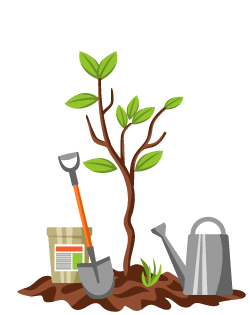
- The holes are dug in advance; they should be 70 centimeters deep and up to 1 meter in diameter. A mixture of soil and fertilizer is placed at the bottom, filled with water, and left for at least 2-3 weeks.
- If necessary, add drainage material to the bottom of the hole. This can be vermiculite, gravel, broken brick, or even nutshells.
- Stakes are immediately dug in to support the seedlings, and it is recommended to remove them no earlier than the third year after planting.
- The root collar is left at least 5-7 centimeters above the surface, and the roots are covered with soil and compacted. The first watering is carried out immediately, with 30-40 liters of water per apple tree.
Landing dates
There are two options for planting Malinovka apple trees: spring and fall. The latter is considered more favorable, as it allows the apple trees to adapt more easily to environmental conditions after being raised in the nursery. However, if you have a choice of root system type, the following guidelines can be followed.
- Bare-root seedlings are best planted before bud break in early spring, in late March or early April.
- If the rhizome is closed (in a special pot), then it is better to plant the trees in the autumn, approximately from the end of September to the second half of October, but only after the leaves have completely fallen.
Protection from frost and rodents
If temperatures drop below -20°C, it's best to cover the root zone and trunk of mature trees, not just first-year trees. You can pile spruce branches, surround them with straw bales, grass, wrap them with roofing felt or tar paper, or even just regular nylon tights. If the climate is warmer and severe frosts don't occur, no special measures are necessary.
Building "houses" for apple trees inevitably attracts hungry rodents, who seek to move closer to human dwellings during the winter. To repel them, the trunks, with their young, tasty bark, are coated with grease, lard, or special chemicals. To protect against insects, the trees are whitewashed with lime in the fall.
Tree care
 Tree care
Loosening the soil, watering: proper agricultural technology
Weeding and loosening the soil around the tree's roots is a common practice among all gardeners, and Malinovka usually appreciates such efforts. Weeds, root suckers, and shoots from shrubs and other trees should be removed, otherwise they will hinder the growth of the young sapling. Mulching the area around the tree's trunk with humus, chopped grass, peat, and compost is also a good idea.
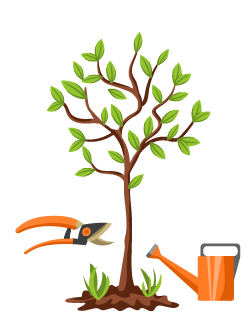
It's not customary to water apple trees of this variety; they're perfectly capable of taking care of themselves. However, in particularly dry years, the trees should be watered at a rate of 20-40 liters per plant. It's best to do this no more than twice a month, otherwise the root system may begin to rot. It's best to water in two stages—morning and evening.
Pruning: simple crown shaping
Malinovka requires special pruning to shape it, as it tends to become very dense, which leads to smaller fruits. Therefore, the skeletal branches should be spaced far apart. The central stem should always remain 5-7 centimeters above the other branches arranged in tiers. Of the three branches, one, the strongest and thickest, is usually left.
No more than a third, or even better, a quarter, of the branches should be removed at one time. Otherwise, the tree will become severely stressed and may even die.
Sanitary pruning is best done in the spring to remove all dried and diseased shoots, but it's also a good idea to remove damaged ones after harvest. This allows young, strong branches to develop better and yield a higher yield next year.
Reproduction
- Clones (layering).
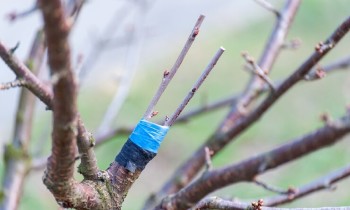
- Grafting by cuttings or buds.
- Growing from seeds.
Diseases and pests
- Powdery mildew.
- Fruit rot.
- Scab.
- Cytosporosis.
- Leaf roller.
- Flower beetle.
- Green aphid.
Ripening and fruiting of the Malinovka apple tree
The beginning of fruiting
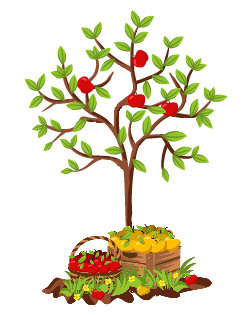 The beginning of fruiting
The time it takes for an apple tree to begin bearing fruit can vary significantly depending on the rootstock used. For example, on a dwarf rootstock, the first harvests can be reaped as early as the third or fourth year, while on semi-dwarf or vigorous varieties, it may not be until the fifth or seventh year.
Flowering time
Like most apple trees, Susleypskoe begins blooming around the second half of May or even towards the end of the month. The main variety produces large, snow-white flowers with a pleasant, powerful scent that attracts numerous pollinating insects to the garden. However, in subspecies, the flowers can have a slight or strong pink tint, or even be completely red.
Fruiting and growth
The first apples can be tasted in the second or third year after planting, but apple trees don't begin to bear fruit fully until the 8th to 10th year. Although several kilograms of aromatic fruit can be harvested in the 5th or 6th year, this still isn't a full harvest. The tree's growth is relatively small, but it's not exactly vigorous either.
Some Malinovka varieties ripen as early as early July in certain regions, but most often fruiting occurs in August-September. Once fully ripe, the apples begin to literally fall from the branches, and it's crucial not to miss the moment. The main drawback of the apple tree is its shelf life of 2-3 weeks, during which time they must either be eaten fresh or processed into jams, compotes, or preserves. The fruit's transportability is below average, so thrifty homeowners avoid transporting them long distances.
Top dressing
- Manure.
- Bird droppings.
- Wood ash solution with microelements.
- Superphosphate.
What to do if it doesn't bloom or bear fruit
- Apply fertilizer.
- Check for pests or diseases.
- Perform pruning.
Why do apples fall?
- Overripe.
- Insufficient watering or excessive moisture.
- Natural phenomena (wind, rain, hail).
- Pests or diseases.
Please leave your feedback on the Malinovka apple tree in the comments below. This way, everyone can learn from your experience and draw their own conclusions.


Comments
The apple tree is three years old. We pruned the branches in the fall (we were shaping the tree, I think... Under the guidance of an experienced neighbor, of course...). In the spring, a few leaves appeared, and there was even an attempt to bloom. And without any obvious signs of infection, the leaves suddenly curled up, dropped them, and dried up. The branch is breaking off. It's dead. What can I do with the apple tree? Or should I just dig it up?