Malt Bagaevsky apple tree: characteristics of the variety and care
| Color | Reds |
|---|---|
| Ripening season | Summer |
| Size of apples | Average |
| Taste | Sweet and sour |
| Crown type | Tall tree |
| Shelf life | Low shelf life |
| Application | Fresh , For recycling |
| Winter hardiness | Average winter hardiness |
| Fruiting age | From 5 years old |
 History of origin and regions of growth
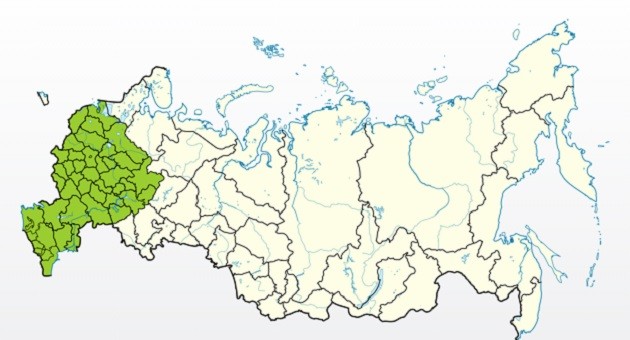
Growing regions
- Middle zone.
- Central Black Earth Region.
- Moscow region.
- Leningrad region.
- Crimea.
- North Caucasus.
Origin
This variety is considered a folk selection. The apple tree was first discovered by pomologist Mikhail Vasilyevich Rytov in 1908. It grew in the village of Bagayevka in the Saratov region, in the Potemina Valley. The orchards belonged to brothers Semyon and Stepan Kuznetsov.
After the 1917 revolution, Soviet fruit biologist, plant breeder, and Doctor of Biological Sciences Vasily Vasilyevich Pashkevich provided the first official description of the apple tree in his book, "Fruit Variety Science, or Pomology on New Principles." This work describes nine different forms.
The variety was included in the State Register and was zoned for the Central Black Earth and Volga regions. Currently, the Malt Bagaevsky apple has been supplanted by newer and more promising varieties, but it is successfully grown throughout virtually the entire European part of Russia, both north and south.
Content
Description of the Malt Bagaevsky variety
 Compared to other summer varieties, even newer ones, the apple tree has many advantages. It is highly productive and requires little care, fertilizing, or watering. It is long-lived, resistant to harsh winter frosts and dry summer heat, tolerant of soil conditions, and resistant to pests and diseases. Its main drawbacks include the short shelf life of its fruit and its low resistance to fungal infections.
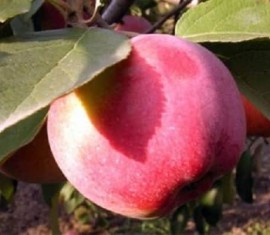
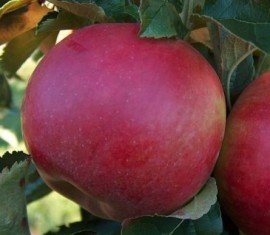
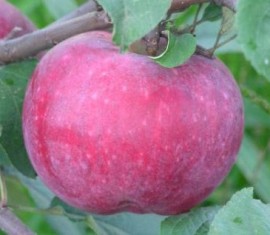
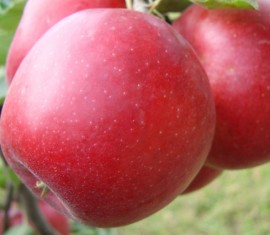
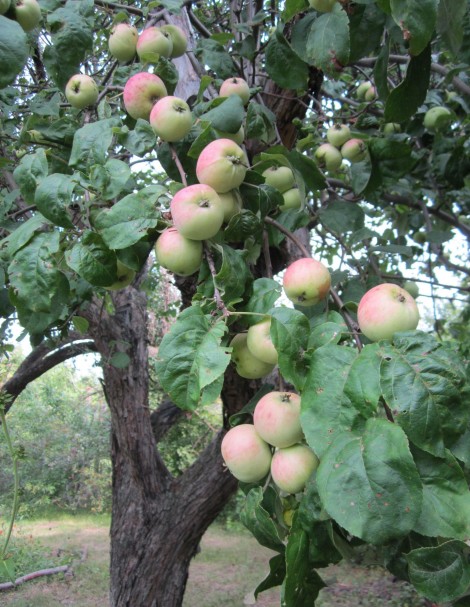
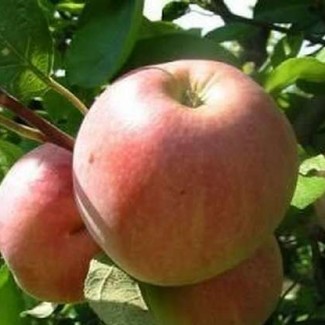
The fruits are very attractive, round, red-sided, variegated, striped, and vibrant. They are juicy and delicious, and ripen quite early. The trees bear fruit regularly, have a long, active life, and are recommended for individual cultivation due to their poor transportability and short shelf life.
Apples: What do they look like?
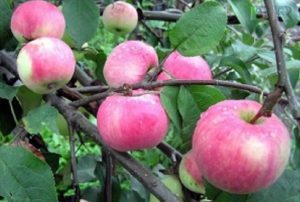 The fruits are usually medium-sized or slightly smaller. Their maximum weight is approximately 75-130 grams; they typically do not grow larger than this. They are round, sometimes spherical, or slightly flattened, like a turnip. They are smooth, with slightly visible ribbing near the calyx and completely invisible elsewhere on the surface, and have no lateral seam.
The skin is dense, elastic, smooth, and somewhat thick. It is glossy and shiny, becoming covered with a silvery-gray, dense, waxy coating during ripening. The apple's base color is green or greenish-yellow, and can be whitish or even slightly golden. The blush occupies at least 60-85% of the surface; it is bright red or blood-red, spotted and striped, and can be blurred, speckled, or have multiple undertones. Subcutaneous punctures are numerous on the apples; they are large, grayish-green, and clearly visible. To assess the chemical composition, some simple data is needed:
- P-active substances (catechins) – 302 milligrams.
- Ascorbic acid (vitamin C) – 10.8 milligrams.
- Fructose (total sugars) – 11.2%.
- Pectins – 11.6%.
- Titratable acids – 0.47%.
The flesh is dense, extremely juicy, fine-grained, crisp, and easy to peel. It's typically snow-white, with a slight lemon tint, or slightly creamy. The flavor is predominantly sweet with a distinct apple tartness. It's considered a harmonious, dessert-like, and balanced fruit, scoring 4.4 out of a possible 5 points among professional tasters.
Malt Bagaevsky apple tree: characteristics
Crown and root system
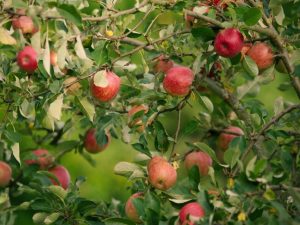 The variety is considered tall or just slightly larger than medium-sized. In favorable conditions, Malt can easily stretch up to 6-8 meters., but with proper pruning, it can be kept within 4-5 meters without any problems. The crown is rounded or broadly rounded, becoming drooping and spreading with age. The shoots extend at a wide angle and are covered with rough, gray or gray-brown bark prone to cracking. It bears fruit on both complex and simple ringlets, with fruiting growth occurring every 1-2 years.
The leaves are small, rather medium-sized, green or dark green, long-pointed, elongated, oval, leathery, and glossy. The nerves are coarse, wrinkled, and dense, the margins are finely serrated, jagged, and serrated, and the blades usually curl downwards. The root system is deeply rooted, fibrous, branched, and well adapted to seeking water in the soil.
Productivity and pollination
The Malt variety, and specifically the Bagaevsky variety, has a fairly high yield, especially compared to other summer apple trees.
In favorable weather, with proper and timely care, a single mature tree of this variety can yield at least 150-220 kilograms of beautiful fruit. But that's far from the limit. In some cases, gardeners have harvested up to 280-300 kilograms of apples from a single trunk, but this is rare.
Like many other fruit crops, Malt is completely self-sterile and cannot bear fruit unless there are suitable trees nearby for cross-pollination. To ensure regular harvests, it's advisable to interplant Malt with apple trees that bloom at the same time. The most advanced growers bring apiaries to their orchards in the spring and spray the trees with honey or sugar syrup.
Winter hardiness and disease resistance
This variety has a unique characteristic: it recovers from damage very quickly, within just one season. Therefore, the trees tolerate frost damage with virtually no consequences. Temperatures down to -25-27°C aren't particularly harmful, but if they persist for more than a couple of days, the apple tree may suffer. It's advisable to carry out all preparatory and covering work promptly.
Fungal infections, especially dangerous in years of high humidity, can seriously threaten Malta. It is heavily and rapidly attacked by scab, fruit rot, and other unpleasant surprises. However, insect pests rarely damage the trees, so they pose little threat, as do bacterial threats.
Rootstocks and subspecies
According to Pashkevich's records, in the Saratov province alone there are exactly eight forms of Malt apple trees, in addition to the Bagaevsky variety:
- Yellow.
- Mal.
- Maltese anise.
- Onion.
- Grey.
- Pink or pink striped.
- Black.
- Red.
There are no significant differences between them; they may differ slightly in the size or color of the fruit, but they retain the characteristics of the main variety.
Growing Malta Bagaevskyi
 Landing
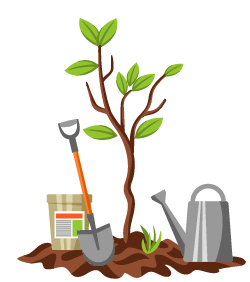 Landing
Basic conditions
- A sunny, open location is ideal for planting this variety. It prefers good daylight, but in the shade it may refuse to flower or bear fruit, and sometimes even die in its first few years.
- Ventilation is also important. The crown, although not prone to excessive thickening, still needs good air flow. Drafts should be monitored; trees don't like them.
- Malt generally has no soil requirements, but airy and nutritious soil is preferable. Black soil, sandy loam, clay, and rocky slopes are all suitable, as long as timely fertilization and watering are provided. High salinity soil is not a problem for it, and is even desirable, as long as it is not excessively acidic.
- Holes for the variety are prepared in advance, but they can also be dug 2-4 weeks before planting. They are 60-75 centimeters deep and approximately the same in diameter. The bottom is lined with soil mixed with top dressing (fertilizer), then drainage, and fill everything with water. Leave it to stand without covering it.
- Leave at least 3-4 meters between apple trees, sometimes even a little more, and up to 5-6 meters between rows. This will prevent them from clashing with each other in the future, either through their roots or crowns.
- Special planks or stakes are dug or driven into the holes to tie the delicate and fragile sapling to them. When such supports are placed on the north side, they also serve as additional protection from frost and cold.
- The root collar should protrude 5-9 centimeters above the soil surface, otherwise the tree may root higher. In this case, all the qualities of the rootstock will be completely negated.
- Place the tree on a drainage platform, spreading out the root system so it can lie freely and the shoots don't bend. Cover with soil, being careful not to leave air pockets. Water with 20-35 liters of water, if necessary to retain moisture. mulch.
Landing dates
In temperate climates, trees can be planted in both spring and fall. Early planting requires waiting until the soil has warmed completely and the threat of frost has passed. In fall, planting should begin after the last leaf has fallen. With its closed root system, Malt can be planted in the ground even in midsummer; it thrives in its own root ball.
Tree care
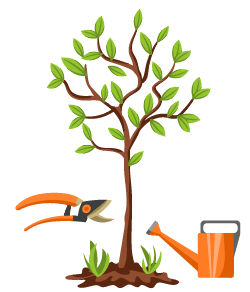 Tree care
Protection from frost and pests
Before the onset of autumn, around the beginning August, all watering should be reduced, even in very dry and hot weather. By the end of the month, watering should be stopped completely, allowing the tree to prepare for winter in time. Trunks are wrapped in burlap, spunbond, tarpaulin, and even old women's tights. Young seedlings can be protected from frost by using a tent-like method, but this is no longer possible with mature trees due to their height.
To prevent insects from remaining in rough, cracked bark over the winter, trees are whitewashed with lime to a depth of 1-1.4 meters. It's a good idea to brush the trunk with a stiff brush beforehand. Industrial rodent repellents are also effective, as is simply lubricating the trunks with pungent substances, such as grease, lard, or fuel oil.
Loosening the soil, watering: proper agricultural technology
Dig around the trunk twice a year, in spring and late fall, removing any unnecessary debris from under the tree. Weeds should be removed, along with root suckers and shoots from various plants. It's a good idea to hoe the soil between each hoeing to ensure it's always loose and airy. Ideally, this should be done the day after each watering.
During drought, Malt can be watered even once or twice every 10-14 days, but under normal conditions, it doesn't need such frequent watering, as it can find water in the soil on its own. If it rains, wait at least 10-12 days before watering again. Fertilizers, topdressings, and other supplements are added according to the crown's contour.
Pruning: simple crown shaping
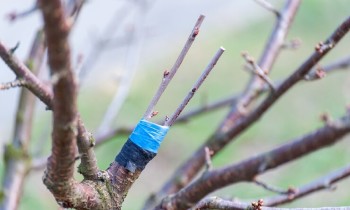
Starting in the first year, pruning the crown is necessary to ensure the tree develops a proper shape, which will significantly facilitate harvesting and maintenance later. The optimal form for Malta is a sparse, tiered form. Branches are spaced at different heights. However, this variety can be grown in many other shapes, from cordons to broom-shaped, so experimentation is encouraged.
In spring and fall, you can perform sanitary pruning. To do this, prune away all damaged, broken, diseased, or dried branches. Remove shoots protruding inward and upward to prevent excessive crowding.
Pollinator varieties
Reproduction
- Layers.
- Grafting cuttings.
- Clones.
Diseases and pests
- Rust.
- Powdery mildew.
- Spider mite.
- Green aphid.
- Weevil.
- Flower beetle.
- Fleas.
- Codling moth.
Ripening and fruiting of Malta bagaevsky
The beginning of fruiting
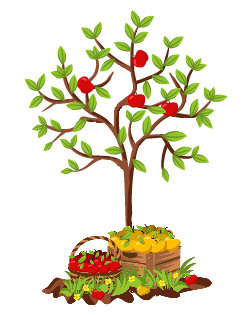 The first buds on the tree aren't seen for a long time, only around the fifth or sixth year. However, these are usually barren flowers, so it's best to pluck them during this period. The first harvest isn't until the sixth or seventh year after planting in open ground. It's a stretch to call it abundant, but it's certainly enough for a sample.
Flowering time
Like all early apple trees, the Malt apple tree blooms as early as late April or early May. It needs to open its buds quickly to produce a harvest before the cold season sets in. The tree's flowers are large, clustered 5-7 per inflorescence. They are fragrant, numerous, and snow-white, with smooth, flat petals. The process lasts only 1-2 weeks, giving bees and wind time to do their work.
Fruiting and growth
Apple trees grow at a moderate rate. They can grow 25, and sometimes even 45 centimeters per year, depending on climate, conditions, weather, fertilizing, and other external factors. After fruiting begins, the rate slows slightly. The apple tree gradually increases its yield, beginning to produce a full crop of fruit by the age of 12-13. Fruiting is intermittent, which is considered its main drawback, but its active lifespan is at least 75-90 years.
You can begin harvesting the fruit from early August. They hold onto the vines quite firmly, giving you time to take care of the harvest. Keep in mind that apples reach consumer ripeness approximately 5-7 days after picking, which is when they are at their most delicious. The shelf life of the fruit is no more than 30-45 days, after which they become deformed, wither, and lose their sweetness and aroma.
Top dressing
- Chicken manure.
- Manure.
- Humus.
- Compost.
- Wood ash.
- Peat.
- Ammonium nitrate.
- Superphosphate.
What to do if it doesn't bloom or bear fruit
- Inspect for diseases or pests.
- Limit or increase watering.
- Feed or apply fertilizer.
- Transplant to a sunny place.
Why do apples fall?
- Natural weather conditions (wind, rain, hurricane, hail).
- Pest damage.
- Diseases.
Share your own experience with the Malt Bagaevsky apple variety so that any gardener can learn about it before planting and achieve maximum results.