Apple tree Martovskoye: characteristics of the variety and care
| Color | Greens |
|---|---|
| Ripening season | Autumn |
| Size of apples | Large |
| Taste | Sweet and sour |
| Crown type | Tall tree |
| Shelf life | High shelf life |
| Application | Universal variety |
| Winter hardiness | High winter hardiness |
| Fruiting age | From 5 years old |


 History of origin and regions of growth
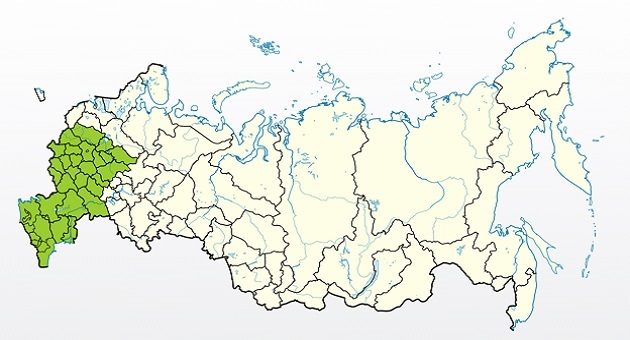
Growing regions
- Crimea.
- Lipetsk region.
- Volga-Vyatka region.
- Middle zone.
- Tver region.
- Leningrad region.
- North Caucasus.
- Bryansk region.
- Moscow region.
Origin
The new variety was developed in the 1960s at the I.V. Michurin All-Russian Research Institute of Horticulture by hybridizing the domestic Antonovka genus and the American McIntosh genus. Zoya Ivanovna Ivanova and Gavriil Alekseevich Lobanov are considered the cultivars.
The name of the new apple variety, Martovskoye, was chosen for a reason. It's all about the shelf life of the fruit, which can be stored in a regular cellar until spring..
In 1969, the first application was submitted to admit the variety to field trials and classify it as an elite variety. The testing process lasted quite a long time. The Martovskoye apple tree was only added to the State Register of Breeding Achievements in 1993. The variety's official distribution zone is the Middle Volga and Central regions, but it can be grown in much larger areas.
Description of the March variety
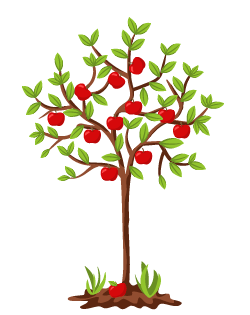 New winter varieties are always welcomed by gardeners because they offer longer shelf life. Martovskoe is no exception. The trees are hardy and environmentally friendly, withstanding winter cold well and requiring little care, frequent watering, or fertilizing. These apple trees regularly produce fairly high yields and have an easy-to-maintain crown. The tree's height and susceptibility to fungal infections are considered a drawback.
The variety's fruits are evenly distributed throughout the crown; they are quite large, attractive, tasty, juicy, and aromatic. They are easy to transport over long distances and can be stored until spring in a regular cellar. Recommended for intensive commercial plantings, as well as for individual cultivation in home gardens.
Apples: What do they look like?
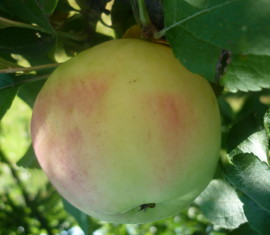
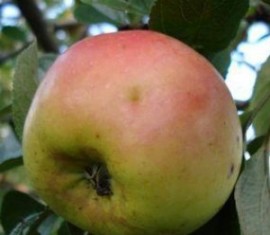
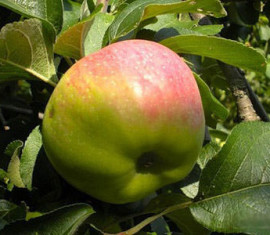
 The fruits are usually medium or larger in size. They typically weigh 140-170 grams, but with proper care they can reach 200-230 grams. The shape is flattened-round, flattened, smooth, and even, with very smooth, almost invisible ribbing and no side seam.
The Martovsky variety has a dense, smooth, and highly shiny skin. It's glossy, medium-thick, and not particularly brittle, effectively protecting the apples from mechanical damage. The base color is green or yellowish-green, while the skin is a blotchy, reddish-brown or dark burgundy color, visible on the sunny side. It covers no more than 45-50% of the fruit and may expand during storage. When ripe, a dense, waxy, gray-silver coating is visible. A distinctive feature of the fruit is its large, gray-greenish subcutaneous spots; they are few in number, but clearly visible. The chemical composition can be assessed using the following selective indicators:
- P-active substances (catechins) – 223 milligrams.
- Ascorbic acid (vitamin C) – 17.5 milligrams.
- Total sugars (fructose) – 11.8%.
- Pectins (fiber) – 12.1%.
- Titratable acids – 0.41%.
The Martovsky variety has firm to medium-firm flesh, fine-grained, not prickly, yet fresh, tender, with a pleasant texture and slightly oily. It is a beautiful, slightly greenish or snow-white color, and can have a slightly lemony flavor. The flavor is sweet and sour, dessert-like, harmonious, balanced, and slightly spicy, with a powerful aroma. Professional ratings for taste and appearance are 4.2-4.3 points on a 5-point scale.
Apple tree Martovskoye: characteristics
Crown and root system
 The tree is vigorous and can easily reach 8-10 meters in height. If it's not pruned in a timely manner, most owners prefer to limit the tree to 6-7 meters to make it easier to care for and harvest. The crown is tall, oval, or broadly pyramidal, with medium or low density. The shoots are divided into two types.
- The first order branches (skeletal) are located at a right angle to the conductor.
- Second-order shoots can grow at an acute angle to the trunk.
They are medium-length, thick, geniculate, covered with cherry-brown or greenish-brown bark, smooth, and pubescent. Fruiting is partial-mixed (rings and fruiting shoots).
The leaf blade is flattened, oval-elongated, or even lanceolate, medium to large in size. The leaves are wrinkled, with doubly serrated, serrated, or crenate margins, and may be slightly wavy or raised relative to the midrib, with a long-pointed tip. They are dark green or rich green, matte, and may have a slight tomentose pubescence on the back. The root system is very robust, highly branched, fibrous on most rootstocks, and well-developed, with a diameter commensurate with the crown diameter.
Productivity and pollination
The variety is considered medium-yielding due to the large height of the tree.
A single mature Martovsky tree, up to 8-9 meters tall, can produce 110-120 kilograms of apples per year. On average, the yield per hectare at standard planting density reaches 170-220 centners. Proper care and regular fertilizing help increase productivity.
The March variety is conditionally self-fertile. This means that some apples can be produced without the need for pollinators, but maximum yields are impossible to achieve. Therefore, it is planted interspersed with suitable varieties, no more than 45-80 meters apart. Spraying flowering trees with sugar or honey syrup in the spring is beneficial.
Winter hardiness and disease resistance
Apple trees have good resistance to low temperatures and sudden temperature fluctuations. They can withstand temperatures as low as -27-30°C with virtually no frost damage, as long as they last no more than a few weeks at a time. Damaged trees should be treated in a timely manner. cropped In the spring, they recover very quickly. They require moderate winter preparation and winter shelter.
Trees are quite susceptible to fungal infections in general, and scab in particular, which is considered their main drawback. Therefore, excessive moisture around the trunk and leaf and fruit rot in the trunk circle should be avoided. Timely treatment with fungicides and insecticides is essential.
Rootstocks and subspecies
The Martovskoye apple tree doesn't yet have its own subspecies, and there's no columnar variety. However, it can be grown on a dwarf rootstock, which will create more compact stems. These trees begin bearing fruit much earlier, producing larger fruits. However, it should be noted that winter hardiness drops sharply, and the active fruiting period is shortened to 25-30 years.
Features of growing March
 Landing
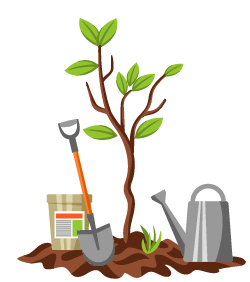 Landing
Basic conditions
- Loamy or sandy loam soils are considered optimal for this variety. Apple trees grow poorly on pure black soil; it's best to dilute it with clay and sand in standard proportions.
- A sunny location is the key to good growth and fruiting for March lilies. In the shade, they grow weak and spindly, and the first bloom may never appear.
- Close proximity to groundwater can kill the tree; it should not be closer than 2-2.2 meters from the surface. Moisture not only promotes root rot but also the regular development of various infections. Therefore, apple trees should not be planted near streams and rivers, lakes and ponds, in areas flooded by spring runoff, or in swamps.
- Ventilation should be good, but without drafts, which also provoke diseases.
- Dig the holes for the planting season. They should be large enough – 90-100 centimeters deep and the same in diameter. Add soil mixed with minerals and organic matter to the bottom. Add drainage material (nut shells, stones, broken brick, vermiculite) and water (45-70 liters). Leave the holes outdoors until planting time.
- Between trees on tall rootstocks, 6-7 meters should be left and the same between rows; on dwarf rootstocks, this distance can be reduced to 3-4 and 4-5 meters.
- The root collar should be left 10-13 centimeters above the surface to prevent rooting higher up, otherwise the properties of the rootstock will be leveled out.
- As soon as the holes are dug, stakes or planks are driven into them for support. They should be at least 1 meter above the ground and positioned on the north side of the tree.
- The drainage is raked into the center of the hole, the apple tree is placed on it, carefully straightening the rhizome, sprinkled with soil and tamped with feet, but without fanaticism, watered with 35-45 liters of water, and the surface is mulched.
Landing dates
The best time to plant Martovsky is in the spring, approximately from late March to early April. It's important to ensure that the sap in the trunks hasn't yet begun to flow by then. For autumn planting (from late September to mid-October), it's important that the leaves have already fallen and the trees have time to establish roots before the first sustained frost.
Tree care
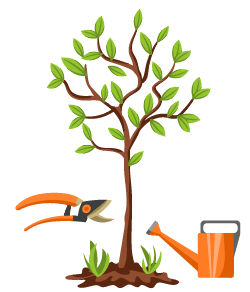 Tree care
Protection from frost and pests
First of all, remember to completely stop watering as autumn approaches. Otherwise, the apple trees won't have time to prepare for winter and may die. After the leaves have fallen, young seedlings are covered with tents, while older, taller ones are wrapped with roofing felt, tar paper, or other suitable materials. In the harshest regions, the root area is covered with straw, hay, or spruce branches, and 10-15 centimeters of soil can be raked up if needed. All this should be removed in early spring, before the buds open.
Whitewash the trunks up to a height of 1.1-1.3 meters with a thick lime solution to prevent insects from settling in the bark crevices; about twice a year is sufficient. A thick layer of lard, grease, or fuel oil will protect against rodents, discouraging them from feasting on the tender bark and shoots.
Loosening the soil, watering: proper agricultural technology
Young Martovsky seedlings are dug around at least twice a year, in spring and fall. As the years go by, you can switch to digging only once a year or even sow the root zone with herbs or lawn grass. You can hoe the soil several times throughout the season, especially the day after watering, to prevent the soil from compacting into a tight ball around the rhizome.
Water one-, two-, or three-year-old trees once every ten days. This regimen should be maintained until the tree is fully established and growing. Subsequently, watering can be significantly reduced to four or five times per season. It's convenient to mix fertilizer with water and pour it around the perimeter of the crown; this will ensure better and faster absorption.
Pruning: simple crown shaping
Gardeners usually don't have problems with pruning, due to the low density of the crown. They usually arrive from the nursery already planted, either tiered or sparsely tiered. All that remains is to maintain the natural branching. Only inward-growing, vertically jutting, parallel, or intersecting branches will need to be pruned.
Sanitary pruning is carried out after the leaves have fallen, so that diseases and damage to the bark and shoots are clearly visible. All these are removed, and the cuts are sealed. garden pitchto reduce tree stress.
Pollinator varieties
- Mac
- Antonovka.
- Sinap northern.
- Gloucester.
- Connell ed.
- Bogatyr.
- Ligol.
- Champion.
- Renet Chernenko.
- Korobovka.
Diseases and pests
- Cytosporosis.
- Scab.
- Fruit rot.
- Powdery mildew.
- Scale insect.
- Leafhopper.
- Fruit hyacinth.
- Hawthorn.
- Green aphid.
- Leaf roller.
Ripening and fruiting of March
The beginning of fruiting
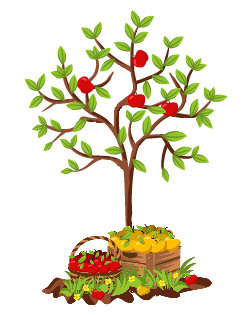 The beginning of fruiting
The apple tree is considered early-bearing, although the first harvests can only be reaped in the fifth or sixth year after planting. With a dwarf rootstock, this period is reduced to two or three years, but this reduces the tree's lifespan. Flowers on the Martovsky apple tree begin to bloom as early as the third or fourth year, but these will likely be barren blossoms, so it's best to pluck them completely. The first harvests won't be abundant, yielding only a few dozen apples, but that's certainly enough for a sample.
Flowering time
This figure largely depends on the growing region and the chosen rootstock. Some varieties in warmer regions bloom in mid-May, while others linger until the end of the month. Many apple tree varieties bloom during this time, so finding pollinators is easy. The tree's flowers are small but beautiful, snow-white with a slight greenish tint, fragrant, and have oval petals.
Fruiting and growth
Martovskoye trees grow very quickly, especially before they begin bearing fruit, growing at least 45-60 centimeters per year, sometimes even more. Once the fruit begins to ripen, the growth rate slows slightly, but not significantly. Fruit production also increases rapidly. By the 9th to 11th year, a tree can produce at least a hundred kilograms of aromatic fruit.
The fruit ripens around the second half of September. They don't ripen all at once, but in stages, so it's best to pick them in 2-3 batches, as they ripen. Ripeness is determined by the waxy coating. If picked too early, the apples' shelf life is reduced, and they become tanned. They don't tend to shatter, and they transport well and can be stored in a regular cellar until mid-March without losing their nutritional value. They are suitable for fresh consumption and for use in processing.
Top dressing
- Superphosphate.
- Humus.
- Peat.
- Calcium.
- Manure.
- Compost.
- Nitrogen complexes (not in the first year).
What to do if it doesn't bloom or bear fruit
- Limit watering.
- Eliminate insects.
- Cure diseases.
- Fertilize.
- Move to a sunny place.
Why do apples fall?
- Wind, rain, hail, snow.
- Pests or diseases.
Leave a review of the Martovskoye apple tree variety so that even a novice gardener can receive useful information firsthand.