Apple tree "Gift for gardeners": characteristics of the variety and care
| Color | Reds |
|---|---|
| Ripening season | Autumn |
| Size of apples | Average |
| Taste | Sweet and sour |
| Crown type | Average tree height |
| Shelf life | Average shelf life |
| Application | For recycling , Fresh , Storage |
| Winter hardiness | Average winter hardiness , High winter hardiness |
| Fruiting age | Up to 5 years |
 History of origin and regions of growth
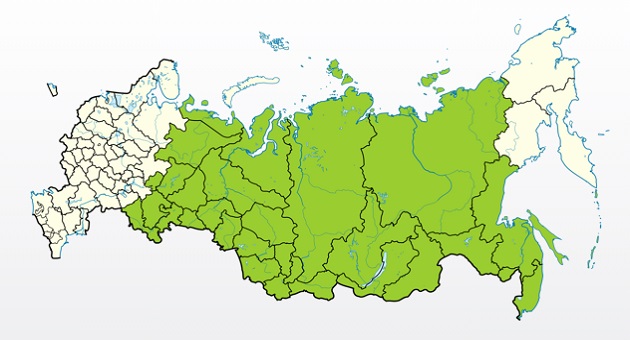
Growing regions
- Siberia.
- Ural.
- Far East (partially).
- Altai.
Origin
Mikhail Afanasyevich Lisavenko, a renowned Russian biologist and plant breeder, began developing fruit crops capable of withstanding the harsh conditions of the northern, northeastern, and northwestern regions of our country back in the mid-1930s. He established the Altai Zonal Fruit and Berry Experimental Station in Gorno-Altaisk, based at the Siberian Horticulture Research Institute. In 1959, the first apple tree was grown there, which was later named "Gift to Gardeners." The authorship of this new apple tree is officially registered, and the following individuals are considered the creators:
- Dorokhina Nina Ivanovna.
- Kalinina Ida Pavlovna.
- Kornienko Tamara Fedorovna.
- Chupina Galina Vasilievna.
- Zhebrovskaya Liliya Yuryevna.
The Melba and Laletino varieties were used to create the hybrid. Variety testing was lengthy, and an application for inclusion in the list of fruit crops was only received in December 1991. The applicant was the Federal Altai Scientific Center of Agrobiotechnology. The Podarok sardorazam variety was only included in the State Register in 1998, at which time it was officially zoned for the East Siberian and West Siberian regions. In practice, it is successfully grown throughout Siberia, in the Urals, and even in some areas of the Far East.
Content
Description of the Gift to Gardeners variety
 Gardeners in northern regions immediately appreciated the benefits of growing these undemanding, hardy apple trees. This gift to gardeners is characterized by high yields, a particularly compact crown, requires minimal attention, is resistant even to severe frosts, and is highly resistant to various fungal apple infections.
The variety's fruits possess the highest commercial and consumer qualities; they are very aromatic and tasty, store well in suitable conditions, and can be used for both processing and fresh harvesting. Recommended for cultivation in private gardens and large, intensive commercial plantings.
Apples: What do they look like?
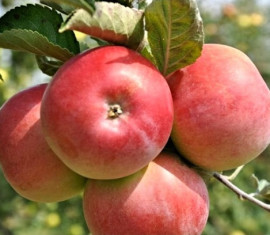
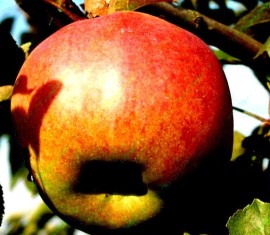
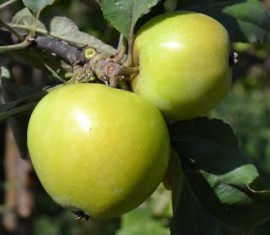
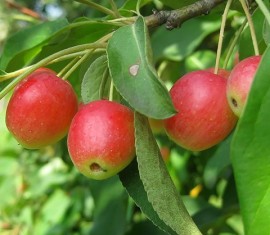
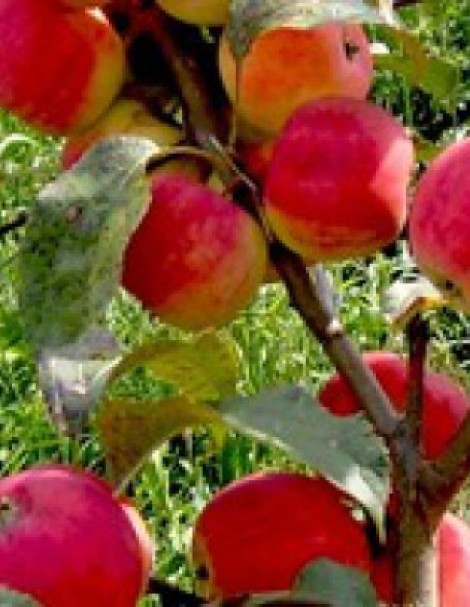
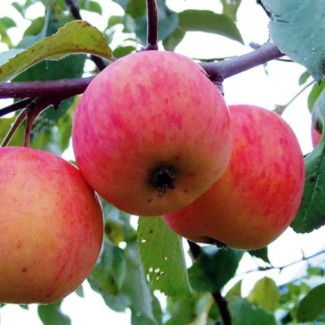
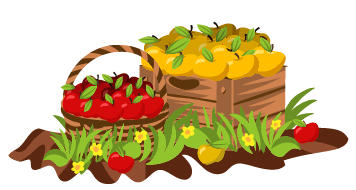
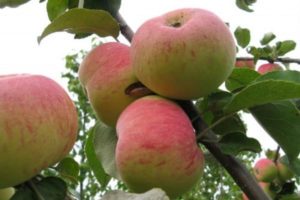 The fruits are typically medium to below average in size, and can be small. They grow to a maximum weight of 50-95 grams, but can occasionally reach 90-110 grams under favorable conditions. The fruits are round or flattened-round, smooth, and generally uniform in size, but may be slightly slanted to one side. Ribbing is very subtle, almost imperceptible.
The skin is smooth, glossy, and shiny, beautiful, dense, elastic, and quite thick, although fragile. It is greenish-yellow or lemon-yellow. The blush is red, red-orange, or carmine, vaguely mottled, and translucent, occupying no more than 45-60% of the surface. Subcutaneous spots are light and numerous, but not very visible. Experts recommend assessing the chemical composition based on the following factors:
- P-active substances – 312 milligrams.
- Ascorbic acid (vitamin C) – 24.9 grams.
- Sugar (fructose) – 13.7%.
- Titratable acids – 1.24%.
- Pectins (fiber) – 6.9%.
The apple flesh is dense, crisp, and very juicy, yet fragile and prone to chipping. It is tender, light green or slightly creamy lemon in color, intensely aromatic, and has a distinctive, easily recognizable scent. The flavor is considered dessert-like, tartly sweet with a hint of sweetness, and balanced. Professional tasting scores range from 4.8-4.9 points for appearance and flavor.
Apple tree Gift to gardeners: characteristics
Crown and root system
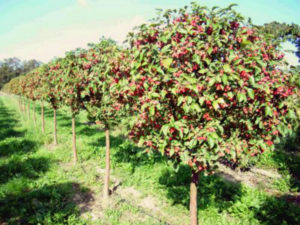 It is common to classify Podarok as a medium-sized apple tree, although in fact they are more suited to the description of natural semi-dwarfs. Mature trees can reach a maximum height of 2.5-3 meters., even without formative pruning, and no longer grow. The crown is round or oval, with moderately dense branches. They are straight, medium-thick, covered with brownish or reddish-brown, sometimes cherry-colored bark, mostly without pubescence. Fruiting occurs on fruiting twigs, spears, and rings.
The leaves are fairly large, dense, elongated, short-toothed, and serrate-dentate. They are green, deep green, or even emerald in color, but can be slightly grayish. The backs are usually moderately pubescent. The root system is robust, moderately to deeply rooted, and extensively branched, holding the tree firmly in the soil.
Productivity and pollination
Compared to European apple trees, Podarok's yield leaves much to be desired. However, compared to other Siberian and Far Eastern apple trees, it performs quite well.
One mature tree can yield up to 30-45 kilograms of aromatic and delicious apples annually per season. However, this is practically the absolute limit for the tree; it is not capable of more..
Apple trees of this variety don't require planting close to others, as they don't require outside pollinators. Even if there aren't any apple trees nearby, you'll still get a harvest, provided you have the wind and bees. This is considered the variety's main advantage. However, experienced gardeners still recommend interplanting the trees to maximize yields, especially since Podarok itself can be a good pollinator.
Winter hardiness and disease resistance
This variety tolerates almost any cold very well. It can easily withstand temperatures down to -32-35°C, sustaining minimal damage without special protection. Even if it does sustain some damage, it recovers very quickly. The apple tree is resistant to sudden temperature fluctuations and thaws alternating with severe frosts, but it does not respond well to drought, so growing it in the south is not recommended.
Podarok is disease-resistant, rarely affected by scab, cytosporosis, or powdery mildew, and insects are also reluctant to damage the trees. Only during years of severe epiphytotics should there be any cause for serious concern. Those who regularly and promptly carry out preventative measures usually have nothing to fear.
Rootstocks and subspecies
No subspecies of the Gift to Gardeners have been invented, and no work is being done in this direction. However, it can be grown on a wide variety of rootstocks, imparting slightly different characteristics to the trees. For example, on dwarf rootstocks, they will grow quite small, up to 1.5-2 meters, while on vegetative rootstocks, they will achieve the greatest frost resistance.
Features of growing Gift to gardeners
 Landing
 Landing
Basic conditions
- A sunny spot where the tree will receive most of the daylight is the best choice for apple trees. In the shade, they tend to grow weak, their branches become very thin, and they may not bloom or bear fruit.
- Before planting, it's important to understand that an apple tree's root system is twice the size of its crown. Therefore, the planting site should be spacious. Leave about 3.5-4.5 meters between trees, and a little more between rows is fine.
- The groundwater table below the surface must be medium or deep, otherwise the tree will reach it with its roots and begin to rot, and eventually die.
- Holes are prepared in advance, approximately 5-8 months before planting. It's best to do this in the fall if you plan to plant in the spring.
- It's best to dig holes 60-80 centimeters deep and up to 1 meter in diameter, with steep sides. Add fertilizer mixed with the topsoil to the bottom, then cover with a layer of drainage material, such as broken or crushed brick, store-bought vermiculite, gravel, or granite chips. Fill the holes with water (50-60 liters) and leave them to sit outdoors.
- It's a good idea to dig or drive in stakes right away, which will later provide additional support for the apple trees. Orienting them north of the future trunks will help protect the trees from frost.
- The root collar of apple trees is left above the surface by at least 6-9 centimeters if the properties of the rootstock need to be preserved.
- The tree is placed vertically, the roots are spread out so they lie freely, and covered with soil, compacting it layer by layer with your hands. Don't pack the root ball too tightly, otherwise oxygen access to the shoots will be reduced. Trees are watered from above (25-40 liters), while spruce trees require moisture retention. mulch surface with sawdust or chopped grass.
Landing dates
All northern apple trees should be planted in the spring to give them time to adapt to the new conditions before the onset of severe cold. Over the summer, the trees will have time to establish themselves well, growing roots and foliage. In more moderate climates, fall planting is also an option, but you'll need to ensure that there are at least 21-35 days before frost and that the tree hasn't begun to bud.
Tree care
 Tree care
Protection from frost and pests
For the winter, seedlings, especially young ones, need to be covered in the standard manner. The harsher the climate in the growing region, the more substantial the protection. Trunks are wrapped in burlap, roofing felt, or old tights; first- and second-year trees can be covered using the tent method. If winters are cold, pile a layer of soil onto the root area and add spruce branches, straw bales, or hay mats.
To prevent insects hiding in bark chips and cracks, whitewash the trunks in spring and fall with regular lime diluted with water. To prevent hares, mice, and hamsters from gnawing the bark in winter, coat the trees with melted animal fat, fuel oil, or grease. Regular spraying with insecticides and fungicides will prevent disease and pest damage.
Loosening the soil, watering: proper agricultural technology
Dig around apple trees once or twice a year, which is usually sufficient. Hoeing the soil several times throughout the growing season ensures good aeration. Regularly clearing fallen leaves from under the tree, weeding, and knocking down shoots from other plants and root suckers is also a good idea.
The Gift tree doesn't tolerate dry and hot weather well, so watering requires careful attention and time. For young trees, watering is recommended once every 10-12 days in the absence of natural precipitation, and for mature trees, watering is recommended every 6-9 days per season. It's a good idea to add fertilizer along with the water, as this will help it be absorbed more effectively.
Pruning: simple crown shaping
Pruning is usually done at a nursery during the first year of a seedling's life. Professionals most often create a sparse, tiered form, with shoots spaced far apart and at different heights. As the tree grows, only branches protruding inward or vertically upward need to be removed. These don't produce fruit, but they do drain the tree's vital energy.
In the fall, inspect the tree and remove all dead, broken, or diseased branches. These serve no function, but they spoil the tree's appearance and negatively impact future harvests.
Pollinator varieties
- Juicy greenery.
- Welsey.
- Antonovka.
- Korobovka.
- Glory of Primorye.
- Pink filling.
- Aborigine.
- Reliable.
- Gorno-Altai.
Reproduction
- Rooting.
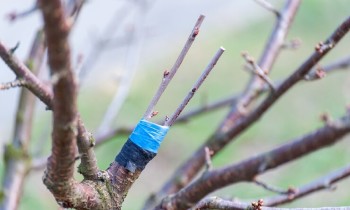
- Kidney grafting.
- Cuttings.
- Growing from seeds.
Diseases and pests
- Scab.
- Bacterial burn.
- Powdery mildew.
- Cytosporosis.
- Green aphid.
- Codling moth.
- Leaf roller.
- Hawthorn.
Ripening and fruiting A gift to gardeners
The beginning of fruiting
 The beginning of fruiting
This variety is very early-bearing, capable of producing a decent harvest of 3-5 kilograms of fragrant and delicious fruit in just 3-4 years. However, flowers may appear earlier, and it's best to pluck them immediately. These will likely be barren flowers, but if not, it's best to allow the tree to develop foliage and rhizomes before fruiting.
Flowering time
This autumn apple tree blooms in mid-May, delighting the eye with branches laden with large, beautiful flowers. These large blossoms, gathered in clusters of 5-6, exude an incredibly powerful, pleasant, and slightly spicy aroma. The process lasts approximately 10-14 days, during which time bees and wind have time to pollinate the apples.
Fruiting and growth
The tree is considered fast-growing, as it can grow 45-60 centimeters per season before fruiting begins and 25-35 centimeters afterward. Therefore, it easily reaches its maximum size, and yield increases with height. By the sixth to eighth year, fruiting reaches 15-20 kilograms, and by the ninth to tenth year, it reaches its maximum. The Podarok tree has no periodicity in fruiting; it produces good crops throughout its life, without resting.
Apples ripen by mid-September. The easiest way to tell when they're ripe is by taste, and their appearance also changes as they plump up, turning a bluish, reddish, and beautiful. They hold onto the branches quite well, so harvesting can extend until early October. The fruit's shelf life is average to slightly above average, reaching 100-120 days, after which it's best to process them immediately.
Top dressing
- Peat.
- Compost.
- Ammonium nitrate.
- Humus.
- Chicken manure.
- Superphosphate.
- Manure.
- Mineral complexes.
What to do if it doesn't bloom or bear fruit
- Check for pests or diseases.
- Transplant into the sun.
- Water.
- Fertilize.
Why do apples fall?
- Wind, hail, hurricane, rain.
- Pest damage.
- Diseases.
Please leave your feedback on the Gift to Gardeners variety so that other gardeners can learn from your experience and draw conclusions from it.