
Chudnoe apple tree: characteristics of the variety and care
| Color | Greens |
|---|---|
| Ripening season | Summer |
| Size of apples | Average |
| Taste | Sweet and sour |
| Crown type | Average tree height , Dwarf |
| Shelf life | Average shelf life |
| Application | Universal variety |
| Winter hardiness | High winter hardiness |
| Fruiting age | Up to 5 years |
 History of origin and regions of growth
Growing regions
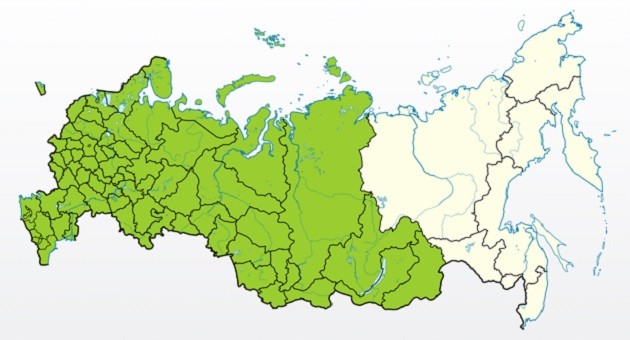
This variety can easily adapt to almost any conditions, so it can be grown in all regions of Russia, with the exception of the most severe ones.
History of origin
Work on creating a dwarf or naturally creeping apple tree capable of growing freely in the Ural and even further northern regions has been actively underway since the 1950s. The renowned pomologist, breeder, and researcher Mikhail Aleksandrovich Mazunin made a significant contribution to this endeavor. In the late 1970s, he crossed the complex hybrid Uralskoye Zimneye x 11-20-12 with an old West German variety called Eliza Ratke (Vydubetskaya Weeping).
As a result of research, a variety called Chudnoe was developed, which is a natural dwarf. However, the material can be easily grafted onto vigorous rootstocks without losing its original winter hardiness. In 1984, the apple tree was classified as an elite variety and recommended for cultivation throughout our country. Chudnoe was finally regionalized only in 2001, so it has not yet achieved widespread popularity.
Content
Description of the Chudnoe apple tree variety
 Natural dwarf apple trees are rare in the world of similar fruit crops. Moreover, most gardeners are so accustomed to old varieties, with all their advantages and disadvantages, that they embrace new ones with great caution. The Chudnoye variety can satisfy even the most discerning apple tree lovers.
The tree is undemanding regarding climate, soil, and groundwater levels. It doesn't require excessively meticulous care or careful frost protection. It easily tolerates prolonged, severe frosts and short, hot, dry periods. Moreover, the tree bears fruit early, producing delicious fruit that can be easily preserved for extended periods.
Apples: What they look like
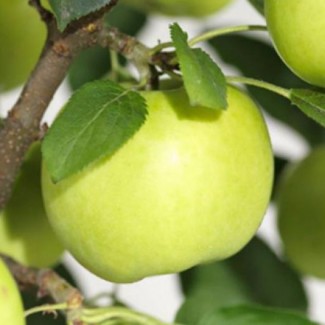
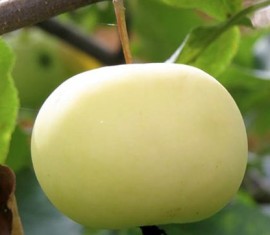
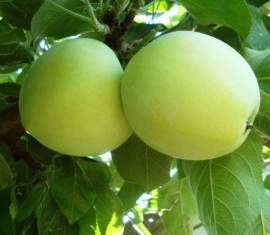
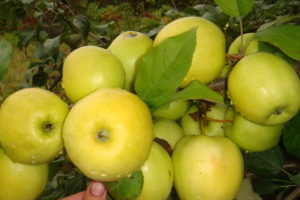 The fruits of this variety often grow large to very large. On average, an apple weighs 110-160 grams, but under favorable conditions, apples weighing 200-250 grams can be harvested. They are round, slightly flattened, and can be slightly elongated with subtle ribbing.
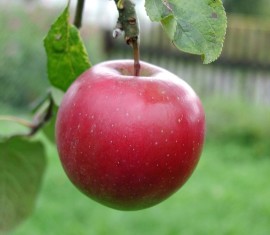
Apple skin is dense, glossy, smooth, and bright green when young, but may yellow slightly as it ripens. Most apples lack a blush, but in some cases, a clear, washed-out pink or slightly orange tint can be seen on the sunny side. The chemical composition is characterized by the following indicators per 100 grams of product:
- Catechins (P-active substances 0 – 184 milligrams.
- Vitamin C (ascorbic acid) – 19 milligrams.
- Total sugars (fructose) – 10.7%.
- Pectins (fiber) – 12%.
- Dry matter – 13.8%.
The flesh is quite dense, fine-grained, crisp, white or with a slight creamy-greenish tint. It is juicy, has a very pleasant sweet-and-sour flavor, and a lingering, characteristic aftertaste. These apples are especially healthy when eaten fresh; they require no added sugar for many dishes, and are often used in baby food. They receive a tasting score of 4.6 out of 5.
Chudnoe apple tree: characteristics
Crown and root system
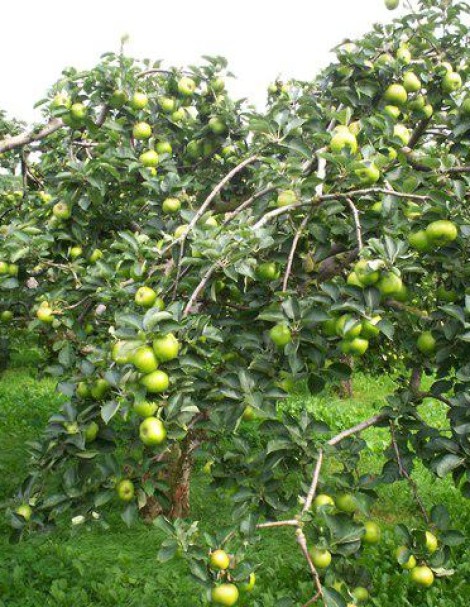
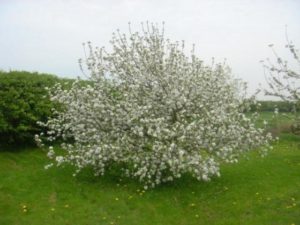 The tree is naturally low-growing; even on a vigorous rootstock it barely reaches 2.5 meters. However, such standard trees rarely grow so tall. The average tree height is 1.5-2 meters maximum. Creeping varieties may barely rise half a meter above the ground. crown The tree's growth is quite impressive for such a small stature. It is spreading, often weeping, and can grow laterally to a diameter of 3 meters or more. Because of its branches' tendency to spread across the ground, the tree is often called a self-decaying tree.
The leaves are small, rounded, only slightly elongated, and have lightly serrated edges. They are dark green or just green, leathery, and smooth, but not glossy, rather slightly matte. They may be slightly pubescent on the underside. The shoots are most often gray or gray-brown in color and may crack slightly and fall off over the years. The root system is deep and branched, adapted to growing in harsh weather and climate conditions.
Productivity and pollination
Despite the tree's extreme stature, it can produce a truly impressive harvest. While it can't be compared to the Antonovka, which yields up to 250 kilograms of apples, you can still get 70-110 kilograms of aromatic fruit with high consumer and commercial qualities. The Chudnoye bears fruit annually, without a break, for virtually its entire active life, which is at least 50-60 years.
Chudnoe is conditionally self-fertile. This means that if there are no other varieties within 200 meters, a harvest will still occur. However, maximum yields can only be achieved with artificial pollination, as self-pollination typically produces around 50-60% of the ovaries. However, if other varieties are available, and an apiary is within reach, a high yield can be expected.
Winter hardiness and disease resistance
The variety is very resistant to low temperatures. The tree can easily withstand cold Siberian winters, even without special shelter, without losing fruit. Moreover, the structure of the apple tree, which is dwarf even on a vegetative rootstock, allows it to be completely covered with snow for the winter, helping it cope with the cold. Therefore, these trees are recommended for cultivation in virtually any region of Russia.
Among the main advantages of the variety is its outstanding resistance to various fungal infections. Scab, cytosporosis, powdery mildewFruit rot—all of these are practically harmless to Chudny. Insect pests and rodents pose some threat to apple trees only in more southern regions, while northern regions are typically free of them, so there's nothing to worry about.
Rootstocks and subspecies: features
Chudnoe is grown on vigorous vegetative rootstocks, dwarfs, and semi-dwarfs, which retain all the qualities of the parent variety. However, differences in tree height can also be minor (from approximately 1.5 to 2.5 meters). The commercial characteristics of the fruit, their flavor, and the overall yield of the trees remain unchanged and meet the above-mentioned standards.
Features of growing Chudny
Apple trees of this variety do not have any special requirements for cultivation; they are hardy and unpretentious, so following the general rules will be enough for their cultivation.
 Landing
 Landing
Basic conditions
- The trees don't have any special requirements for planting. However, a fairly sunny spot is preferable, even if it's in a drafty area—apple trees don't mind it at all.
- The height of the groundwater table does not affect the rhizome, so you don't need to worry about this factor and can even plant Chudnoe near open water.
- The root system is small, so it is enough to dig holes for planting 50 centimeters deep and the same in diameter.
- It's advisable to prepare the holes in advance (2-4 weeks or in the fall) by filling them with soil mixed with humus, river sand, and other substances. Fill them with 20-40 liters of water and leave them outdoors.
- The root collar should be approximately 2-3 centimeters above the soil surface. Deepening it won't affect the apples' quality or future yield, but it may significantly slow down their growth and development.
- Just before planting, pour a bucket of water into the bottom of the hole. Place the seedling in the hole, spreading its roots out. Cover with soil, gently shaking to remove air pockets, and compact it. Water the soil with another 10-20 liters of water, and mulch the surface with compost, manure, or chopped grass.
When purchasing Chudnoye seedlings, don't be surprised if they are very small, appear fragile, or flimsy. High-quality planting material barely reaches 15 centimeters in height and can have a root system 10-15 centimeters in diameter. It's important to purchase from reputable sellers, preferably nurseries that provide comprehensive, documented information about their products.
Landing dates
The variety is planted at the same time as most other apple trees. In spring, this is usually April, when soil It's already completely thawed and there's no risk of frost. In the fall, this can be done in late September or early October after the leaves have fallen, but leave another 2-4 weeks of storage before the frost.
The second option is considered preferable by experienced gardeners. It gives the apple tree more time to adapt to the environment, especially when it comes to exposed rootstocks.
Protection from frost and rodents
Even young trees require protection from low temperatures only in exceptional cases, for example, in the Far East or in Siberia, where winter temperatures can drop below an abnormal -47°C. But even here, there's little work involved—just pile some snow on the tree, and it won't be affected by any cold. Many prefer to cover young saplings with spruce branches or straw; it won't hurt, of course, but it's also not particularly useful.
Coating tree trunks with grease or lard helps repel rodents. Regular whitewashing of trees with lime is also recommended to repel insects. Various commercially available products are also available, and they are affordable and sold in gardening stores.
Tree care
 Tree care
Loosening the soil, watering: proper agricultural technology
Weeding, removing root suckers, shrub and tree shoots, and regularly loosening the soil are standard procedures for all gardeners. It wouldn't hurt to do all of this for the Chudnoye variety; it will reward you with a good harvest. However, even without all this, you can regularly get quite a lot of apples simply by letting the tree live its natural life.
Apple trees should be watered only during dry periods, when there's been no natural precipitation for an extended period. A good rule to follow is the 10-day rule, which dictates that trees should be watered only when no precipitation has occurred during that period. Fertilizers can be added along with water, which is helpful, especially during flowering and fruit ripening.
Pruning: simple crown shaping
The first formative pruning should be done in the first year after planting. For example, if you planted Chudnoe in the spring, you'll need to trim the main trunk back to 50 centimeters in the fall to allow for the formation of creeping lateral branches. If planting in the fall, pruning should be done in the spring, before the sap begins to flow.
Next, you'll need to regularly remove small, excess shoots that thicken the crown, as well as old, diseased, or damaged branches. This can be done in both spring and fall. As the tree ages, you can rejuvenate it by removing 2-3 mature branches at a time, allowing younger, stronger ones to develop.
Pollinator varieties
Reproduction
- Clones (layering).
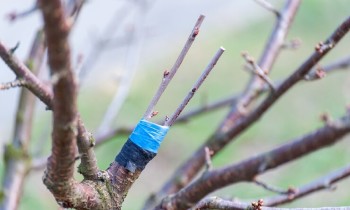
- Grafting by cuttings or buds.
- Growing from seeds.
Diseases and pests
- Cytosporosis.
- Leaf roller.
- Flower beetle.
- Scale insect.
Ripening and fruiting of the Chudnoe apple tree
The beginning of fruiting
 The beginning of fruiting
Blooming of the Chudny is possible in the first year, but unlikely. If the tree produces a few buds, it's best to carefully remove them, allowing it to develop foliage and new branches. In the second year, the bloom will be more abundant, and several apples will ripen. By the third or fourth year, the first harvests will be possible, but don't expect more than 3-5 kilograms.
Flowering time
This figure directly depends on the weather and climate conditions of the region where the tree is grown. However, in most cases, flowers bloom as early as late April or early May. This variety blooms profusely, with branches literally covered in white, fragrant blossoms. Flowering typically begins on the lower branches, gradually moving upward over the course of 7-12 days.
Fruiting and growth
The wonderful apple tree increases its yield very quickly. By the seventh or eighth year, a tree can yield the coveted 100 kilograms of apples. Moreover, the tree grows quite rapidly, at least 12-15 centimeters per year. However, the apple tree grows wider, not taller.
The fruits ripen in mid-August, making them considered summer apple trees. However, the ripening period can shift to early or even mid-September, depending on the weather. It's unusual for early autumn and summer apples to be able to be stored for 30 to 45 days under suitable conditions. This is why gardeners value these apple trees so highly. During this period, neither the commercial nor consumer qualities of the apples change, but eventually, at the end of their optimal storage period, they may first become wilted and then rot.
Top dressing
- Compost.
- Peat.
- Manure.
- Mineral complexes.
What to do if it doesn't bloom or bear fruit
- Provide watering.
- Thin out the crown.
- Transplant.
- Check for diseases and pests.
- Fertilize.
- “Threaten” with an axe (make several light cuts on the trunk).
Why do apples fall?
- Overripe.
- Damaged by pests.
- Diseases.
- Natural phenomena.
Leave your feedback about Chudny in the comments below so everyone can learn from your experience and gain some useful insights.


Comments
The Chudny apple variety has a very unique flavor. It makes excellent jam and cider. It's been growing in my garden for over 17 years. It produces a high yield. I didn't require any special care. Incidentally, it's rarely found for sale, mostly at the market. I think it's ranked lower than the Grushevka (White filling). It's worth planting in your own garden.