Pink Pearl Apple Tree: Variety and Care Features
| Color | Greens |
|---|---|
| Ripening season | Summer |
| Size of apples | Average |
| Taste | Sweet and sour |
| Crown type | Average tree height |
| Shelf life | Low shelf life |
| Application | For recycling , Fresh |
| Winter hardiness | Average winter hardiness |
| Fruiting age | Up to 5 years |
 History of origin and regions of growth
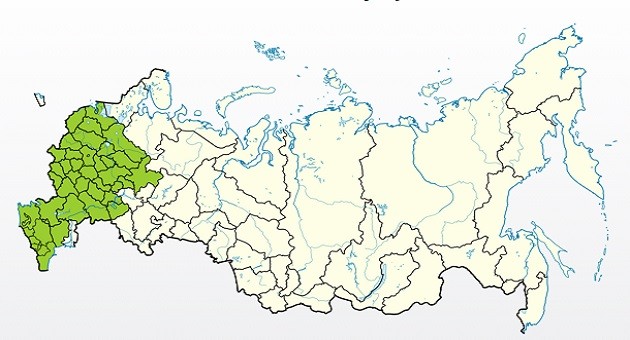
Growing regions
- North Caucasus.
- Middle zone.
- Some northern regions.
Origin
It is believed that work on this variety began in the early twentieth century by an American pomologist named Albert Etter. It was developed at a breeding station in Northern California. The Surprise variety served as the basis, as did the Nadzvetsky apple tree, which produces fruit with a delicate reddish flesh.
In 1944, the variety was sent for experimental testing, after which it became clear that, in addition to all its other virtues, it also possessed remarkable winter hardiness. Thanks to this, Pink Pearl became widespread in the northern states and Canada. In Russia, the apple tree is not listed in the State Register or zoned, and is not grown commercially. However, seedlings can be purchased from nurseries owned by connoisseurs and collectors.
Content
Description of the Pink Pearl apple variety
 This natural semi-dwarf is quite early-bearing, so you won't have to wait long for a harvest. Its unusual taste and, most importantly, color, fruits will surprise even the most seasoned gardener. They contain high levels of anthocyanins, carotene, and vitamin C, making them very beneficial for health. Add to this the ease of care, low maintenance, compact size, and substantial yield, and everyone will want to plant this unusual tree in their garden.
Apples: What they look like
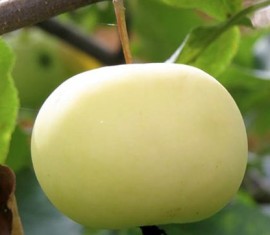
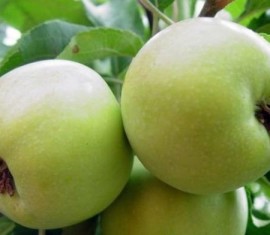
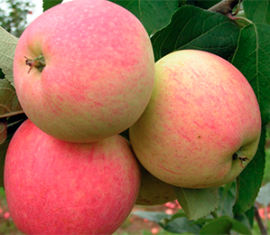
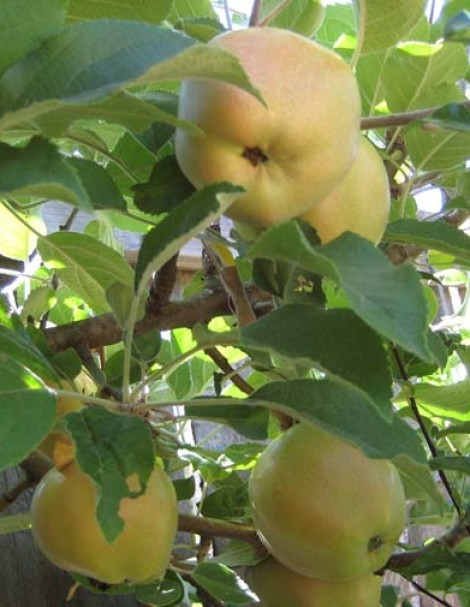
 The fruits are usually medium to large in size, but can also be small, depending on growing conditions, soil nutrient levels, light, and other external factors. On average, a single fruit weighs 110-180 grams. However, some specimens weigh as much as 300-350 grams. They are round or round-conical, and may be slightly flattened, ribbed or not. The stem funnel often has a rusty appearance.
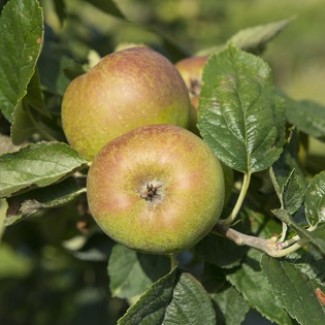
The skin is thin but dense, glossy, and free of wax or oil. When young, it is green or light green, turning yellow as it ripens. Many people perceive it as transparent, but this is an optical illusion due to the slight, washed-out blush of raspberry or soft pink. The chemical composition is characterized by the following indicators per 100 grams:
- P-active substances (catechins) – 268 milligrams.
- Vitamin C (ascorbic acid) – 19 milligrams.
- Total sugars (fructose) – 15%.
- Pectins – 11%.
- Titratable acids – 0.8%.
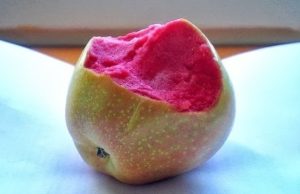
The fruit's flesh is crisp, fine-grained, very juicy, prone to cracking, and prickly, likely surprising if you're trying it for the first time. This is all due to its incredibly beautiful hue—it can be light or dark pink, reddish, or even tinged with purple, depending on growing conditions. Its flavor is primarily sweet, but with a distinctive tartness in the aftertaste, quite unique. Many note hints of citrus, raspberry, and even strawberry. There's no official tasting rating for the fruit, but its taste is generally considered harmonious and balanced, reminiscent of a dessert.
Apple tree Pink Pearl: characteristics
Crown and root system
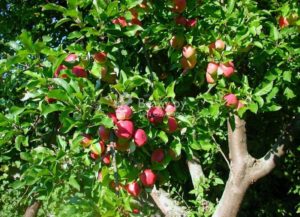 The apple tree is considered a semi-dwarf, so even without formative pruning it can grow no more than 4 meters. However, gardeners prefer to leave trees no taller than 3.5 meters to make harvesting and caring for them easier. Crown The tree's bark is not very dense, and the shoots can be straight or geniculate. The bark is brown or brownish-green, but over the years it can turn brown, crack, and peel. Subcutaneous punctures are much lighter than the skin, making them easily visible. They are numerous and quite large.
The leaves are medium or even small, oval, elongated, and pointed. They are green or dark green, leathery, and dense, with poorly visible veins. They are often glossy on top and slightly pubescent on the underside. The root system usually lacks a central taproot; it is well-branched but superficial.
Productivity and pollination
There are no official yield data for this variety in our country, but there are reports from amateur gardeners. They say that a mature tree, around 10-12 years old, yields at least 70-90 kilograms of apples, which can be considered a significant result, especially for summer-ripening apple trees.
Pink Pearl is completely self-sterile, and if there are no other suitable apple trees within 50-100 meters, no harvest will be possible. Gardeners recommend planting it alternately with other summer varieties for cross-pollination, as well as providing easy access for insects to the trees (mobile or permanent apiaries).
Winter hardiness and disease resistance
The variety's tolerance to low temperatures is considered average. With proper care and protection, it can easily withstand temperatures down to -22-25°C. However, it's worth noting that sudden temperature fluctuations can cause significant damage to apple trees, and even the wood can freeze. Therefore, it's crucial to pay sufficient attention to winter protection and ensure that the trees aren't exposed to drafts, which can easily kill them.
Experts consider the variety's main drawback to be its susceptibility to various fungal infections common to apple trees. They are easily infected. scab Powdery mildew, cytosporosis, and fruit rot are common, as are insect pests that damage and consume them. Therefore, it's essential to implement all preventative measures promptly, including spraying apple trees with fungicides and insecticides, removing fallen leaves and fruit from the trunk area, weeding, and preventing waterlogging.
Rootstocks and subspecies
There are currently no subspecies of this variety, but there are several different rootstocks on which it grows very well. The most popular is MM-111 (vigorous), which produces the tree with the highest frost resistance. If this quality is not crucial, it's better to choose a sapling on a dwarf or semi-dwarf rootstock; this will reduce its height and allow it to bear fruit earlier.
Growing Features of Pink Pearl
 Landing
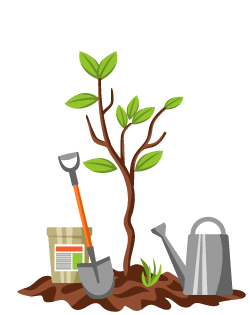 Landing
Basic conditions
- This variety requires very sunny and wind-free sites. The apple tree will not bear fruit in the shade, and will simply die in windy winter conditions. Therefore, it should be planted under the protection of taller trees, hedges, or building walls.
- The quality of the soil does not play a big role; it can be sandy loam, loam, or black soil, the main thing is that it is not overly acidic.
- Pay attention to the groundwater depth; it should be at least 2-2.5 meters, otherwise the tree may begin to rot. Open water is also not the best choice for Zhemchug.
- Planting holes must be prepared in advance, and their size will depend directly on the root ball of the apple tree. On average, when preparing the holes in the fall, you can dig holes 80 centimeters deep and 1 meter in diameter; this will definitely be enough. The topsoil is mixed with fertilizer, then returned to the soil, and filled with plenty of water (2-3 buckets).
- The optimal distance between holes should be 3.5-4 meters, and between rows no less than 3 meters.
- Immediately before planting, add 10-15 centimeters of drainage to the bottom of the holes and dig in stakes for support. These can be made from vermiculite, gravel, or broken brick.
- Apple trees are positioned so that the root collar (the grafting point) is approximately 8-10 centimeters above the soil surface. Otherwise, there is a risk of rooting higher, which will result in the loss of all the rootstock's properties and slower growth and development.
- Apple trees are sprinkled in layers, watered with a small amount of water, the soil is lightly compacted, watered from above with 10-20 liters of liquid, the trunk circle is mulched with humus, compost or chopped grass.
Landing dates
Seedlings with closed root system Can be planted at any time during the growing season. For these trees, it doesn't matter whether they have leaves or not. Otherwise, it's best to plant in the fall or spring, after the leaves have fallen or before the buds have opened.
Protection from frost and rodents
Young trees must be protected from frost, even if it's light and short-lived, as they are vulnerable and tender. To do this, it's recommended to cover the area around the trunk with spruce branches, straw, or hay mats. Wrap the trunks with agrofibre, burlap, or nylon tights. If necessary, you can cover the Pink Pearl tree with a tent.
To prevent insects from settling near the trunk over the winter and then damaging leaves, fruit, and wood, whitewash the trunks with lime in the fall. Coating the trunk for approximately 0.5-1 meter with lard, grease, or commercially available products, readily available at gardening stores, effectively repel rodents. Regularly treating the trees with fungicides and insecticides is also a good idea.
Tree care
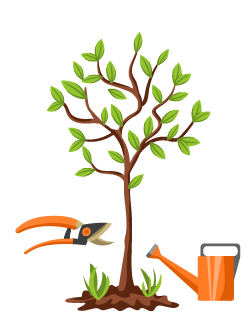 Tree care
Loosening the soil, watering: proper agricultural technology
All plants love airy, oxygen-rich soil, and this variety is no exception. Therefore, it's important to periodically dig around the trunk, removing any unwanted debris (fallen leaves, weeds, grass, and shrub and tree shoots). However, this must be done carefully to avoid damaging the roots located close to the surface.
Young trees require regular watering, approximately once a week. Apply water in small amounts (10-20 liters) in two doses. If it rains, stop watering. The 10-day rule can be used as a guide, meaning watering only when there has been no rain for ten days. Mature trees should be watered sparingly, avoiding stagnant water.
Pruning: simple crown shaping
The tree isn't prone to a dense crown, so pruning will be standard. The central trunk should be shortened by about one-third, and all the skeletal branches should be placed lower and lower in tiers. Initially, they should be spaced widely apart.
Sanitary pruning is also necessary to ensure the apple tree's normal development. All dead, diseased, or damaged branches are removed. The cut areas must be sealed with garden varnish or water-based paint. After 10-15 years, rejuvenation can be performed by cutting off 2-3 older branches per year to allow room for new growth.
Pollinator varieties
- Melba.
- Mantet.
- White filling.
- Grushovka Moscow.
- Candy.
- Celeste.
Reproduction
- Clones (offshoots).
- Grafting by cuttings or buds.
- Growing from seeds.
Diseases and pests
- Scab.
- Powdery mildew.
- Fruit rot.
- Black crayfish.
- Cytosporosis.
- Leaf roller.
- Scale insect.
- Green aphid.
- Hawthorn.
- Codling moth.
- Flower beetle.
Ripening and fruiting of the Pink Pearl apple tree
The beginning of fruiting
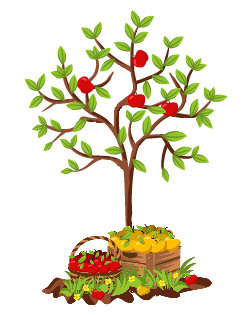 The beginning of fruiting
Pink Pearl is considered an early-bearing variety, as the first flowers appear as early as 2-3 years after planting in open ground. However, it's best to pick them off immediately. The first harvest of 5-15 kilograms can be reaped in the 4-5 year.
Flowering time
This variety blooms quite early, around the beginning of May, but much will depend on the climate and weather. The apple tree looks stunning during bloom, with large pink blossoms densely covering the branches. The aroma during bloom is moderate, but very unique, with spicy and even slightly citrusy notes.
Fruiting and growth
Pink Pearl doesn't begin to bear fruit normally until the 8th or 10th year. Then, you can harvest 70-80 kilograms or more of juicy, rosy-brown fruit. They ripen in late August or early September. Care must be taken not to miss the moment, otherwise they may fall to the ground and need to be processed immediately, within a few days.
These apples don't store well at all, although they can be transported. After about 3-5 weeks, they completely lose their original flavor and juiciness, becoming soft. Therefore, by this time, they are best eaten or processed into juice, jams, and preserves.
Top dressing
- Bird droppings.
- Manure.
- Compost.
- Humus.
- Ammonium nitrate.
- Urea.
- Superphosphate.
- Mineral complexes.
What to do if it doesn't bloom or bear fruit
- Water or stop watering.
- Apply fertilizer.
- Transplant to a sunnier location.
- Check for pests or diseases.
- Provide watering.
Why do apples fall?
- Overripe.
- Lack or excess of water.
- Natural phenomena (wind, rain, hail).
- Diseases.
- Pests.
Leave your feedback on the Pink Pearl apple tree in the comments and share your experiences with other gardeners.