Saffron apple tree: characteristics of the variety and care
| Color | Reds |
|---|---|
| Ripening season | Autumn |
| Size of apples | Average |
| Taste | Sweet and sour |
| Crown type | Average tree height |
| Shelf life | High shelf life |
| Application | Universal variety |
| Winter hardiness | High winter hardiness |
| Fruiting age | Up to 5 years |
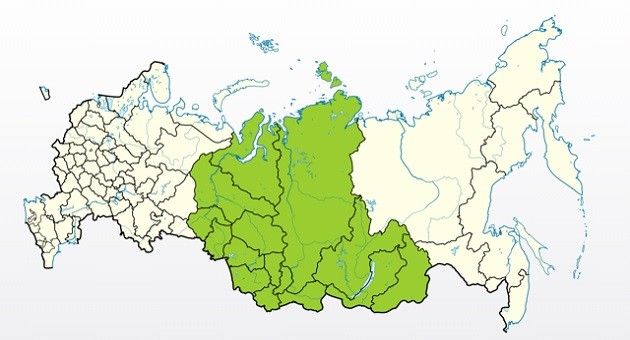 History of origin and regions of growth
Growing regions
- Novosibirsk region.
- Omsk region.
- Tomsk region.
- Kemerovo region.
- Tyumen Oblast.
- Khanty-Mansi Autonomous Okrug.
- Yamalo-Nenets Autonomous Okrug.
- Altai Republic.
- Altai Krai.
- Tuva.
- Khakassia.
- Krasnoyarsk Krai.
- Irkutsk region.
- Transbaikal Territory.
- Buryatia.
History of origin
In the early 1950s, the M.A. Lisavenko Siberian Research Institute of Horticulture began cultivating apple trees that were particularly resistant to temperature fluctuations and would bear fruit well in the harsh conditions of Siberia and the Altai region. By mixing pollen from the Siberian Beauty and Siberian Nugget varieties and crossing them with the Gorno-Altai apple tree, a group of Russian pomologists (I.P. Kalinina, T.F. Kornienko, Z.A. Grankina, and E.S. Orekhova) in 1954 obtained a variety called Shafran.
In 1959, the variety was sent to various farms for observation and testing of its behavior, and in the early 1960s, it was classified as an elite variety. However, it wasn't until 1994, nearly forty years after its creation, that the decision was made to regionalize Saffron.
Content
Description of the Saffron apple variety
 This late-ripening, fairly prolific variety is more popular in small private farms than in commercial intensive gardens. However, it is also recommended for commercial cultivation.
Its frost tolerance isn't always suitable for harsh Siberian winters. After all, it's much easier to protect a few trees from frost than several hectares. Nevertheless, saffron has excellent flavor, is resistant to fungal infections, and stores well, making it a popular choice among home gardeners.
Apples: color, size and weight
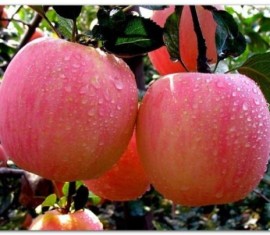
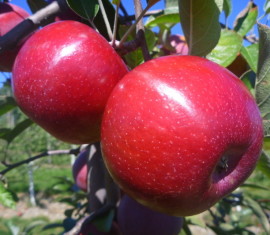
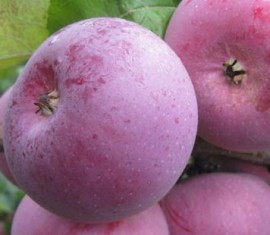
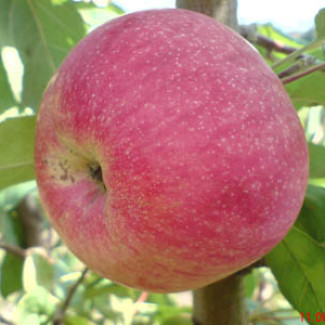
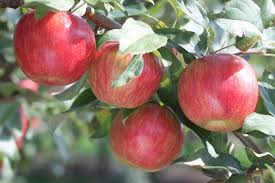 Apples on this tree typically grow to be medium to below average in size, weighing only 70-130 grams. They are round, often slightly flattened, with noticeable ribbing. The skin is firm, fairly thick, but not hard, and yellow or yellow-green in color. The apples are completely covered with a red, striped, diffuse blush. Numerous, light-colored subcutaneous spots are clearly visible on the surface. The chemical composition can be characterized by the following indicators per 100 grams of product:
- P-active substances (catechins) 182 milligrams.
- Ascorbic acid (vitamin C) – 24.2 milligrams.
- Total sugars (fructose) – 12.3%.
- Titratable acids – 1.16%.
- Pectins (fiber) – 5.46%.
The flesh has a harmonious, balanced sweet and sour taste reminiscent of a dessert apple, with a distinctive aroma. It is creamy and fine-grained in texture, very juicy, crisp, and dense.
Saffron apple tree: characteristics
Crown and root system
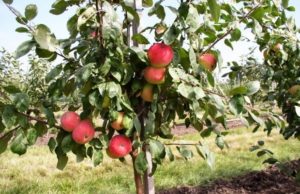 It is a medium-sized tree, barely reaching 3-4 meters in normal growing conditions. Crown It has a rounded shape and moderate density. Most branches extend from the main trunk at almost a right angle, growing predominantly upward. Most fruits ripen on the rings. The bark has a characteristic steel-gray hue, turning brownish-brown with age and may crack and crumble.
The leaves are small, rounded, tapering at the tips, and their edges are slightly, but not excessively, serrated. They are glossy, dark green, wrinkled, and leathery. The tree's extensive root system allows it to easily find moisture even at great depths.
Productivity and pollination
The yield of this variety is considered average: approximately 50-90 kilograms of fruit can be harvested from one tree.
With proper care, you can achieve much higher yields, almost equaling the figures of such leaders as Antonovka If the tree is protected from frost, pruned properly, and protected from pests, it can yield up to 250-260 kilograms per year.
Winter hardiness and disease resistance
Saffron has very good adaptability, adapting easily to virtually any climate and weather conditions. However, it cannot be called particularly frost-resistant. It can tolerate temperatures down to -35°C for a short time, but if the cold period is prolonged, temperatures as low as 25-27°C can easily kill the tree, especially if it is not protected for the winter.
Resistance to fungal infections isn't genetically predetermined, but trees rarely suffer from them. However, this only applies if pruning is done promptly and fallen leaves, especially rotting fruit, are regularly removed from under the tree. Pests also pose a significant threat to the tree, so it's important to constantly monitor for signs of damage.
Rootstocks and subspecies: features
| Rootstocks | Peculiarities |
| Dwarf (Winter) | This crop was bred on a dwarf rootstock and is zoned in Moscow region, the Volga region, and the entire central part of the country. Its only drawback is its demanding soil quality—it must be slightly acidic. If the tree is planted in soil with a high pH, it will die. |
| Creeping | Growing this variety of Saffron requires not only a special rootstock but also a great deal of attention to care. The crown of these creeping trees is formed in a special way, without a central trunk, but this allows for adequate shelter during the winter cold. |
| Saratov | This subvariety, grown on vegetative rootstock, is highly productive, but the tree itself is tall. Its apples have bright yellow skin with an orange blush. It is frost- and drought-resistant. This subvariety was bred by Olga Berkut and is zoned for the Saratov region. |
Features of Saffron cultivation
 Landing
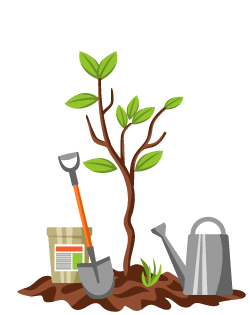 Landing
Key Features
- Saffron should be planted in sunny, well-ventilated areas. However, careful attention must be paid to avoid drafts, otherwise the tree may become diseased.
- It's best to plant the variety immediately in a location where it will grow for a long time, until old age. It doesn't respond well to transplanting, so it's best to avoid any unnecessary manipulations in this regard.
- Before planting, place the seedlings in a container with warm water for 6-8 hours to allow the roots to become saturated with moisture.
- It's not necessary to prepare tree holes in advance, unless you've already dug them. They should be 60-70 centimeters deep and up to 90 centimeters in diameter; this will be sufficient for a small seedling's root system.
- A drainage layer is poured onto the bottom; this can be broken brick, vermiculite or gravel; nut shells are also often used.
- It's a good idea to dig in stakes to support the seedlings right away. You won't be able to remove them until the third year after planting.
- Root collar should always be 5-7 centimeters above ground level.
- After sprinkling the roots with soil, lightly compact it, make a border around the circumference and pour 20-30 liters of water.
Landing dates
The main condition for planting a variety is allowing it time to take root before frost. In the fall, this can be done in late September or even October. The key is to allow at least 3-4 weeks before the first frost.
If spring planting is chosen, it's best to do so in March or April. However, you'll need to wait until frost has been completely eliminated, as young seedlings will inevitably suffer from shock and may become infected even if they survive. This will slow their growth, and subsequent yields will decline.
Protection from frost and rodents
To protect the root system from low temperatures, they are lined with spruce branches, hay, or straw. The trunks are wrapped with special covering materials, such as roofing felt or tar paper. High-quality insulation will help ensure regular, good harvests, even in truly harsh conditions.
To protect the delicate bark of apple trees from rodents, the trunks are coated with lard, grease, or special solutions. Insects can be repelled by regularly coating the lower part of the trunk and skeletal branches with lime in the fall.
Tree care
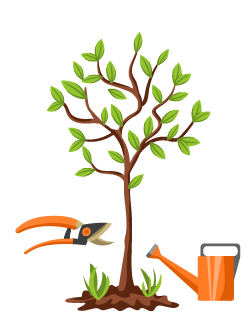 Tree care
Loosening the soil, watering: proper agricultural technology
Don't underestimate the importance of regular loosening of the soil around the trunk and weeding. At the same time, be sure to remove root suckers, as well as shoots from other trees or bushes. Digging once or twice a year is sufficient, but you can loosen the surface of the soil every day after watering.
It's best to water saffron according to weather conditions, using the 10-day rule as a guide. This means that if there's been no rain for a period of time, it's time to water the apple trees. If rain falls, wait exactly ten days, and then water again. Watering shouldn't be heavy; just 10-15 liters morning and evening is sufficient to prevent root rot.
Pruning: simple crown shaping
For the first 3-4 years after planting in open ground, it's best to leave the seedlings alone and not prune them. Trees are very delicate and don't easily handle stress, so it's best to let them establish roots. Prune excess branches in spring and fall.
- Spring pruning involves formative pruning. This involves removing branches growing inward from the crown, leaving only a few skeletal branches spaced widely apart.
- In the fall, old, diseased, or damaged branches are pruned. Rejuvenation is also done in the spring, starting when the tree is 15-17 years old. Then, 2-4 mature branches are pruned, allowing space for the young ones to develop.
It's important to remember that removing more than 25% of the tree's crown at one time is strictly prohibited. This can lead not only to the tree's death, reduced fruiting and growth, but also to its death.
Pollinator varieties
- Welsey.
- Antonovka.
- Snowy Calville.
- Slav.
- Beni Shogun.
- Delicious golden.
Reproduction
- Rooting cuttings.
- Layers (clones).
- Growing from seeds.
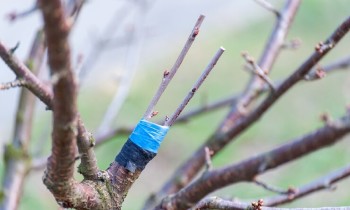
- Grafting by cuttings or buds.
Diseases and pests
- Cytosporosis.
- Scab.
- Powdery mildew.
- Fruit rot.
- Scale insect.
- Green aphid.
- Codling moth.
Ripening and fruiting of the Saffron apple tree
The beginning of fruiting
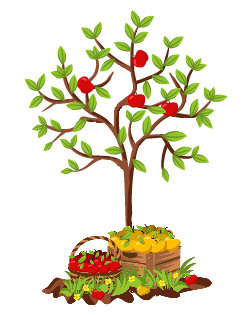 The beginning of fruiting
The first few apples may appear on the branches as early as 2-3 years, but the apple tree only begins to bear fruit fully in 3-4 years.
Flowering time
The flowering period is influenced by the characteristics of the rootstock, climate, and weather conditions. However, flowering generally coincides with that of most winter apple trees. It begins around mid-May and lasts no more than 10-12 days.
Fruiting and growth
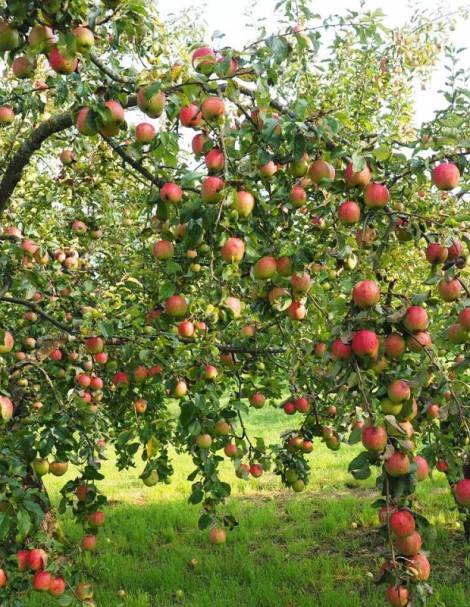
Full fruiting will take at least eight years. Only then will the harvest reach its peak, with over 130 kilograms of fruit densely packed on the branches. Because of this, they require support until the apples are fully ripe. Annual growth is quite high, reaching 15-25 centimeters, but only in the first few years.
The fruits ripen in mid- to late September, but are only ready for consumption after 50-60 days. The fruits can be left on the branches; by mid-October, the berries will acquire the desired flavor and aroma, but their shelf life will decrease from 200 days to 1.5-2 months.
Top dressing
- Manure.
- Bird droppings.
- Mineral complexes.
- Superphosphate.
- Compost.
What to do if it doesn't bloom or bear fruit
- Apply fertilizer.
- Water on time.
- Check for pests or diseases.
- Trim correctly.
Why do apples fall?
- Not enough moisture.
- Natural phenomena (wind, rain, hail).
- Overripe.
- Pests or diseases.
Please leave your feedback on the Saffron apple tree in the comments below this article so you can share your experience with other gardeners.