Apple tree Ekrannoe: characteristics of the variety and care
| Color | Reds |
|---|---|
| Ripening season | Autumn |
| Size of apples | Large , Average |
| Taste | Sweet and sour |
| Crown type | Average tree height |
| Shelf life | High shelf life |
| Application | Universal variety |
 History of origin and regions of growth
Growing regions
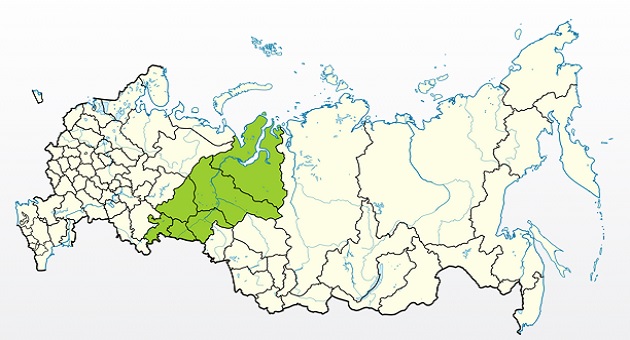
- Ural.
Origin
This is a very recent apple variety, developed only in 2002 by breeder Leonid Andrianovich Kotov at the Sverdlovsk Experimental Horticultural Station. It was created by hybridizing and crossing the Yantar, Samotsvet, Zvezdochka, and Oranzhevoye varieties. The variety is considered highly promising, but it has not yet been included in the state register or fully zoned. It is most widespread in the Urals and the Volga-Vyatka region.
Content
Description of the Ekrannoe apple tree variety
 Climate UralsThe climate where this variety is primarily recommended for cultivation can hardly be called moderate or mild. Mountains create a barrier to air movement, making the western side warmer and more humid, while the eastern side is drier and harsher. Therefore, apples that thrive in these challenging conditions are also suitable for many other climates. The Ekrannoe variety boasts a pleasant fruit flavor, high yields without a resting period, high winter hardiness, and reasonable immunity to scab and other fungal infections.
Apples: the appearance of the fruit
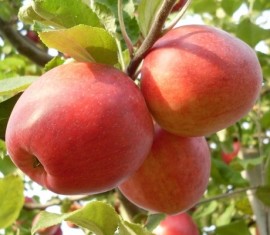
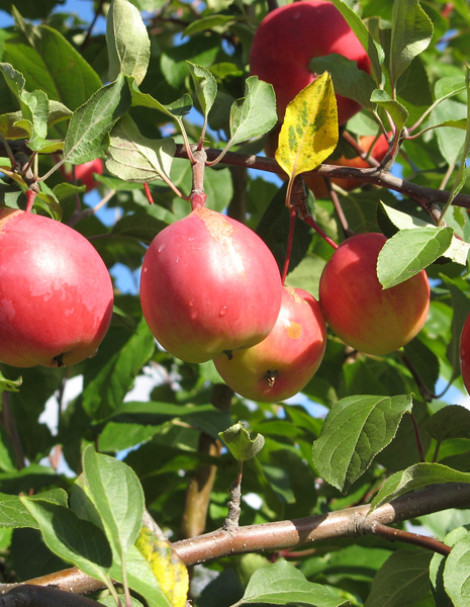
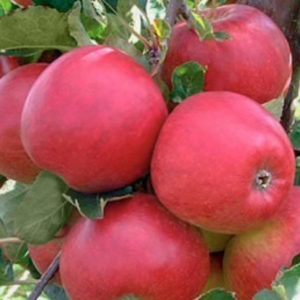 The fruits are predominantly medium to smaller in size, weighing 70-95 grams. They are round, sometimes slightly flattened, with a smooth surface and subtle ribbing. Most of the fruits are uniform in size, with slight variations in size. The funnel is often closed, concealing the tip of the stalk; sometimes the apple even has a protrusion in this area, a smooth bump.
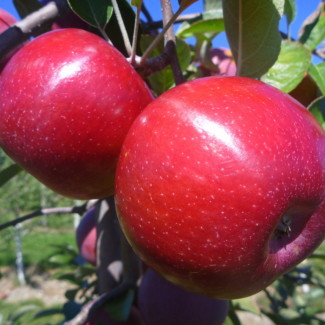
The apple skin is smooth, glossy, dry, and covered with a light waxy coating. When young, it is green, becoming yellow-green and then light yellow as it ripens. At technical and consumer ripeness, it develops a bright red or slightly reddish-pink blush covering 80-95% of the fruit's surface. The chemical composition is characterized by the following indicators per 100 grams of fresh fruit:
- P-active substances (catechins) – 167.8 milligrams.
- Vitamin C (ascorbic acid) – 6.16 milligrams.
- Total sugars (fructose) – 12.5%.
- Titratable acids – 0.66%.
- Pectins (fiber) – 15.6%.
The flesh of the Ekrannoy apple is very tender, fine-grained, crisp, and prickly, yet extremely juicy. Many believe that the content of ascorbic acid and other nutrients in these apples is very low, and that they don't provide the health benefits they should. However, they do contain sufficient titratable acids, iron, fiber, and other nutrients. The fruit has a pleasant dessert-like sweet-and-sour flavor, and a tasting score of 4.6 out of 5.
Apple tree Ekrannoe: characteristics
Crown and root system
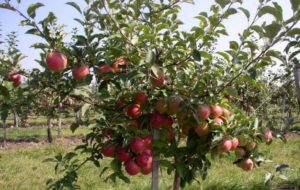 The tree is considered medium-sized or semi-dwarf. Its maximum height is only 3-3.5 meters without pruning, and even that is a stretch. The crown is usually sparsely dense and self-forming, pyramidal or oval when young, becoming more rounded, spherical, or broadly pyramidal and spreading with age. Branches are mostly straight and smooth, with greenish or greenish-brown bark that may turn brown, crack, and crumble over time. Shoots grow at an angle close to right angles, directed upward. Fruiting occurs on spurs, as well as simple and compound rings.
The leaves are medium-sized, oval-rounded, slightly elongated, bright green or just green, matte, wrinkled, and leathery, covered with a network of veins. They have a pointed tip and a serrated edge, and may curl slightly underneath. The root system is predominantly branched; depending on the rootstock, it may have a central taproot, but is usually absent.
Productivity and pollination
The variety is considered high-yielding, compared to other autumn varieties, although it is far from the absolute leaders, such as Antonovka ordinary.
The average yield of one adult tree is 110-130 kilograms of beautiful, unusual fruits per season.
By nature, the cultivated apple tree is self-sterile. This means that if there are no other varieties nearby that bloom at the appropriate time, a harvest cannot be expected. Therefore, it is recommended to plant Ekrannoe in rotation with other apple trees, and also to establish an orchard near the apiary, or to use mobile apiary options during flowering.
Winter hardiness and disease resistance
Bred for the fickle Ural weather, apple trees demonstrate excellent resistance to low temperatures and sudden temperature fluctuations. Without special cover, they can withstand temperatures as low as -28-30°C. However, experienced gardeners still prefer to be on the safe side and cover the root zone with spruce branches, especially on young trees. Some say it's possible to grow Ekrannoe even in Siberia, if you properly prepare it for winter and protect it from the cold.
Apple trees of this variety are quite resistant to scab, as well as other fungal infections, as we've already mentioned. However, preventative measures should still be taken, as infestations are particularly likely in certain cases, for example, if fallen leaves or rotting fruit are not promptly removed from under the trees, if the trees are regularly overwatered, or if the weather is particularly humid.
Rootstocks and subspecies
| Rootstocks | Peculiarities |
| Semi-cultured | Wanting to grow Ekrannoe in harsher conditions than the Ural climate, gardeners learned to grow it by grafting it onto Raneta. These varieties are less susceptible to frost and begin bearing fruit as early as the third or fourth year. |
| Columnar (standard) | The variety can be grown on a columnar rootstock, which is especially welcomed by gardeners seeking maximum fruiting in a limited space. The tree then grows to a height of no more than 2 meters and develops ring-shaped growth, which is where the fruiting occurs. These apple trees begin bearing fruit in the first year after planting, but it is recommended to remove the buds. |
Features of growing Screen
 Landing
 Landing
Basic conditions
- The apple tree prefers sunny areas with good ventilation, but without drafts.
- Monitor the groundwater level; if it's too high, the tree may begin to rot from the roots down. Ekranoye dislikes proximity to open water, marshy areas, and areas with stagnant moisture.
- There are no special requirements for the soil, but it is desirable that it be slightly acidic.
- The holes can be dug in advance in the fall, or just 2-3 weeks before planting. The optimal dimensions are 80 centimeters deep and the same in diameter. The topsoil is mixed with fertilizer, then filled back in, covered with 2-3 buckets of water, and left uncovered.
- A 15-20 centimeter drainage layer is laid on the bottom beforehand. Vermiculite, gravel, broken brick, and even nut shells can be used for this layer.
- If necessary, if the apple tree roots have dried out during transportation and storage, they can be placed in warm water for 5-8 hours.
- The seedling is placed vertically so that the grafting site (root collar) protrudes above the ground by about 6-8 centimeters. This will prevent the tree from taking root higher and neutralizing all the properties of the rootstock.
- The rhizome is covered with soil, lightly compacted, watered with 30-40 liters of water, and the surface is mulched with humus, compost or chopped grass.
Landing dates
This tree is so easy to grow that it can be planted either in the spring, around April, or in the fall, after the leaves have fallen, around September or October. In either case, its survival rate is very high. Experienced gardeners say that even if you plant this sapling in midsummer, it will bloom the following year and even produce a few apples.
Protection from frost and rodents
In the variety's typical climate, only young seedlings and trees will require winter shelter, approximately 3-5 years after planting. The root zone is covered with straw bales or hay, and the trunks are wrapped in burlap, roofing felt, or roofing felt. This is sufficient to prevent the tree from experiencing significant stress.
To prevent the development of insect pests, which often settle in tree roots over the winter, tree trunks are whitewashed with lime in the fall. Hungry rodents can be repelled by coating the trunks with a thick layer of lard or grease, approximately one meter high.
Tree care
 Tree care
Loosening the soil, watering: proper agricultural technology
The area around the tree trunk should be dug twice a year to oxygenate the soil. It's a good idea to keep it aerated throughout the growing season, regularly hoeing and loosening the soil, and removing weeds and other plants from under the tree.
It wouldn't hurt to water the Ekranoye plant frequently during its first year, at least once every ten days, and in particularly dry or hot weather, a weekly dose is ideal. For a young tree, 20-30 liters of water, applied in two doses (morning and evening), is sufficient. Fertilizers are usually added along with the water.
Pruning: simple crown shaping
The apple tree itself is low-growing and not prone to becoming dense, making it much easier to shape its crown. Ideally, the trunk should be cut back by a third in the first year, and the skeletal branches should be shortened in tiers. It's best to space them far apart, which will significantly simplify future pruning.
Don't forget about sanitary pruning, which involves removing all dry, damaged, or diseased shoots. Failure to do this promptly can significantly reduce the tree's productivity. Such pruning is usually performed in the fall, after fruiting and leaf fall. Starting around the 15th year, the tree can be rejuvenated by removing one or two older branches, allowing room for new growth.
Pollinator varieties
- Lobo.
- Glory to the victors.
- Uralsk resident.
- Zhigulevskoye.
- Teremok.
- Spartan.
- Mac.
- Welsey.
Reproduction
- Clones (layering).
- Grafting by cuttings or buds.
- Rooting cuttings.
- Growing from seeds.
Diseases and pests
- Moniliosis.
- Fruit rot.
- Scab.
- Powdery mildew.
- Scale insect.
- Green aphid.
- Codling moth.
Ripening and fruiting of the Ekrannoe apple tree
The beginning of fruiting
 The beginning of fruiting
The tree doesn't begin bearing its first fruit very early if grown on a standard vegetative rootstock. It blooms for the first time in the third or fourth year, but the buds don't necessarily develop into ovaries or apples, and it's best to pluck them immediately, allowing the tree to develop roots and branches. Fruiting begins in the fifth year, when the tree has produced approximately 5-20 delicious, aromatic fruits.
Flowering time
Like all early autumn apple trees, the Ekrannoe apple tree typically begins blooming around mid-May. If the spring is cold, with late frosts and prolonged rains, the blooming period may shift to the second half of the month, or even to the very end. The variety's flowers are large, sometimes slightly cream-colored, and have a strong, pleasant fragrance, attracting numerous pollinating insects.
Fruiting and growth
Apple trees grow quite quickly, gaining at least 20-35 centimeters per year, which is far from the limit for semi-dwarf trees. Therefore, their fruit production also increases gradually. Each year, you can harvest more and more fruit from the tree. The full harvest you were initially hoping for can be reaped around the 10th to 12th year.
Apples begin to ripen in early September. However, due to weather conditions, there may be a slight delay, so you'll need to monitor this. You can determine the degree of ripeness by the ripening of the apples' color and their flavor. Don't delay harvesting too long, as the fruit may fall to the ground, although it may take a while to ripen. In this case, they'll be used exclusively for processing. Under the right conditions (a damp, well-ventilated cellar), the fruit can be stored for 4-5 months without losing its commercial and consumer qualities.
Top dressing
- Peat.
- Compost.
- Mineral complexes.
- Bird droppings.
- Ammonium sulfate.
- Urea.
- Humus.
- Manure
- Superphosphate.
What to do if it doesn't bloom or bear fruit
- Check for pests and diseases.
- Feed.
- Transplant to a sunny area.
- Provide watering.
Why do apples fall?
- Natural factors.
- Overripe.
- Pests.
- Diseases.
Leave your own reviews of the Ekrannoe variety to share your experience with other gardeners.