Simirenko apple tree: characteristics of the variety and care
| Color | Greens |
|---|---|
| Ripening season | Autumn |
| Size of apples | Large |
| Taste | Sweet and sour |
| Crown type | Tall tree |
| Shelf life | High shelf life |
| Application | Universal variety |
| Winter hardiness | Average winter hardiness |
| Fruiting age | From 5 years old |
 History of origin and regions of growth
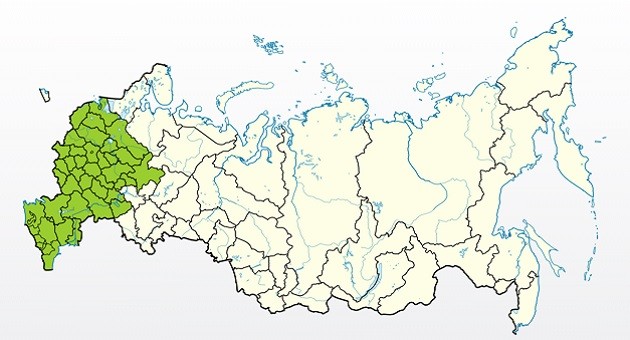
Growing regions
- Middle zone.
- Krasnodar Krai.
- Adygea.
- Dagestan.
- Kabardino-Balkaria.
- Rostov region.
- North Ossetia.
- Stavropol Krai.
- Karachay-Cherkessia.
- Chechen Republic.
- Ingushetia.
- Astrakhan region.
- Kalmykia.
Origin
The origin of this variety is unknown, but it was first discovered and described by the renowned pomologist Lev Platonovich Simirenko, a pioneer in many fields of varietal science. He found the apple tree in the orchards of his estate, Platonov Khutor, which is now located in the Cherkasy Oblast (Ukraine).
The variety was discovered around 1880, after which research began on its properties and qualities. It was named in honor of the breeder's father and simultaneously classified as a member of the Renet family. Simirenko believed it to be an ancient variety that had undeservedly lost its popularity over time and been forgotten in the West. Its appearance resembles the old Wood's Greening variety, but its taste and aroma are significantly superior.
Content
Description of the Simirenko apple variety
 Any gardener, even the most inexperienced, has surely heard the name of this variety and even tasted its fruit. This ancient cultivar is distinguished by its early maturity, high yields, excellent and even exceptional shelf life, unique flavor, and resistance to dry and hot weather. Every self-respecting gardener wants to have such a tree in their garden, especially since its lifespan can easily exceed a hundred years.
Apples: What the Fruit Looks Like
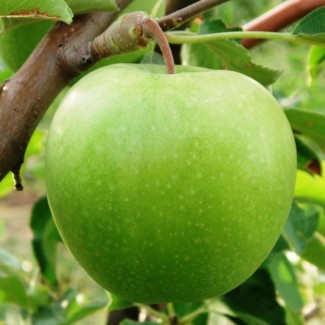
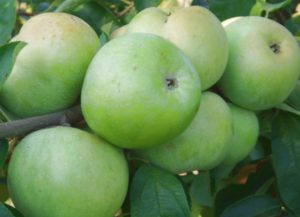 With proper care, apple trees produce large, sometimes even very large, fruits. They are round, with a characteristic protrusion-like growth near the stalk. This is what distinguishes this variety from similar ones. Apples can be round or slightly elongated, or sometimes flattened, with a smooth, even surface, or lopsided.
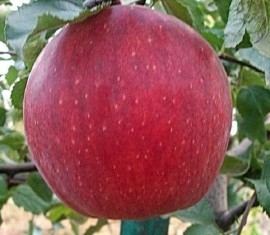
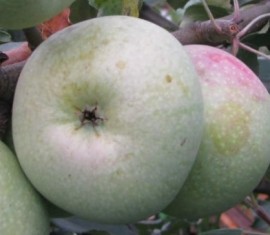
The fruit skin is very dense, bright green or just green, covered with numerous lighter-colored subcutaneous spots that are clearly visible. When grown in southern regions, a light, transparent blush of pink and slightly orange may appear on the surface. The chemical composition is as follows per 100 grams of product:
- P-active substances – 110 milligrams.
- Ascorbic acid (vitamin C) – 9 milligrams.
- Total sugars (fructose) – 12-13%.
- Titratable acids – 0.4-0.7%.
The white flesh is very tender, crisp, and fine-grained. It remains firm even after storage until the following spring. It has a distinctive wine-spicy flavor, sweeter but with a distinctive apple-like tartness. The taste is rated as balanced and harmonious, with a tasting score of 4.7-4.9 out of 5. A distinctive feature of this variety is that it reaches consumer maturity only after 30-60 days of storage, not immediately after harvest.
Apple tree Simirenko: characteristics
Crown and root system
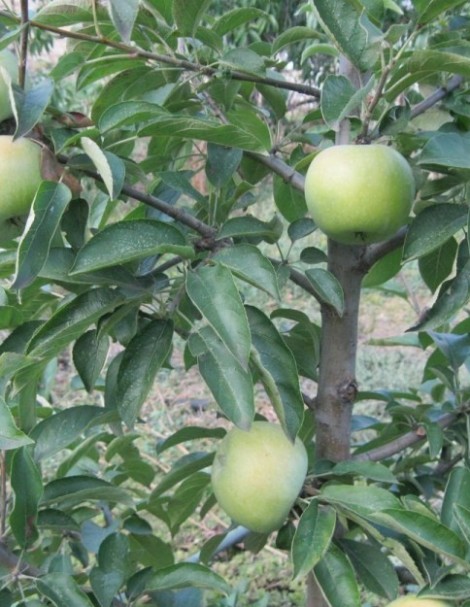
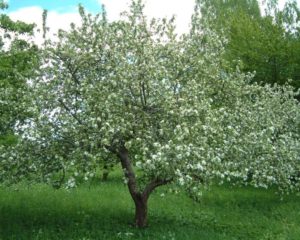 The tree is considered tall and can easily reach 7-8 meters if its growth is not limited. Old apple trees grow so large in their trunks that even an adult cannot hug them. Crown When young, the tree is round, spherical, or oval, but with age it becomes spreading, sometimes even cauldron-shaped, with a distinct central gap at the trunk. The bark on young shoots and mature branches is predominantly steel-gray, but may acquire a slightly reddish-brown tint on the sunny side. The shoots are usually straight and long, directed upward.
The leaves are slightly elongated, distinctly ovate, and may taper toward the edges, serrated. The tip is elongated, sometimes twisted into a helix, or simply curled downward. They are light green, lightly pubescent on the underside, and slightly glossy, leathery, and fairly dense on top. The root system of this variety is highly branched and deep, but most of the roots are located just below the surface.
Productivity and pollination
Simirenko is especially prized by gardeners for its high yield. It's important to note that annual, consistent harvests can only be obtained from a young tree. Once the tree reaches 25-30 years of age, it will begin producing apples intermittently, alternating periods of active fruiting with periods of rest. This means the harvest can only be harvested every other year.
In good years, you can easily harvest 200 or even more kilograms of delicious, aromatic apples from a mature tree, which have a truly unique shelf life.
The apples hold tightly to the branches and don't fall off once ripe. Therefore, there's no risk of delaying harvest, which is another advantage of this variety. The variety is completely self-sterile, so if there are no other apple trees within direct reach (50-100 meters), you won't get any harvest. It's a good idea to have an apiary near the trees, as this will make pollinating insects much easier to manage.
Winter hardiness and disease resistance
One of the drawbacks of this apple tree is its low frost tolerance. It is best planted in southern regions. It cannot withstand prolonged frosts of -20-22°C without additional insulation. This damage affects not only the roots located close to the soil surface, which could easily be resolved with covering, but also the bark and wood. It has a high capacity for recovery (2-3 years), but a young tree may simply not survive.
Very often Simirenko suffers from powdery mildew and scabies, which are severely and severely affected. Therefore, it's necessary to regularly carry out preventative measures, treat with fungicides, and remove fallen leaves from the trunk area, especially rotting fruit. Apple trees don't like excessive moisture. Pests also readily eat the wood, damaging the bark and fruit.
Rootstocks
| Rootstocks | Peculiarities |
| Dwarf | These are the shortest of all the varieties, barely reaching 3 meters. They begin to produce 10-15 kilograms of delicious fruit as early as 2-3 years after planting in open ground. However, their lifespan is even shorter than that of semi-dwarf varieties, only 25-30 years. |
| Semi-dwarf | With this type of rootstock, the tree typically grows no more than 4-5 meters, simplifying various maintenance procedures. However, its lifespan is reduced to 40-50 years, after which it will need to be replaced in the garden with a young tree. However, fruiting begins as early as the fourth year after planting. |
| Vigorous | This is the most common variety and the least demanding in terms of care. The trees grow very tall and produce abundant crops, but not until they are 7-8 years old. This tree should not be planted in a small plot, close to a house, or in an area with high groundwater levels. An open body of water is also not the best neighbor for a large Simirenka. |
If you're offered a Simirenko columnar seedling at the market, refuse to buy it immediately. Such subspecies don't exist, so it's most likely a scam. At best, you'll end up with a different variety, and at worst, you won't know what it is.
Features of Simirenko cultivation
 Landing
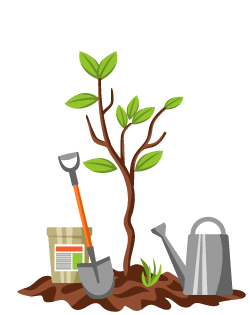 Landing
Basic conditions
- For planting, choose a large enough area where the tree will be unobstructed within a 6-7 meter radius. It needs ample space so that neither its roots nor branches interfere with other plants.
- The variety prefers airy, but fairly fertile soils; therefore, if the soil is sandy or loamy, regular fertilization will be necessary to ensure the tree bears fruit abundantly and grows well.
- Simirenko's resistance to drought and heat is very high, so it can be planted on hills, away from groundwater – the apple tree will "get to the moisture" on its own.
- In light soils, a hole 50 centimeters deep and in diameter is sufficient, but in heavier soils, you will have to dig up to 60-70 centimeters to leave space for laying river sand and drainage.
- It's best to dig the holes in advance, at least 3-4 weeks before planting. Add fertilizer mixed with soil, fill with water, and leave the mixture in the open air.
- Stakes for tying are immediately driven into the hole, preferably on the north side.
- Soaking seedlings of this variety before planting is not necessary; however, it is advisable to shorten all roots by 3-4 centimeters. It's also a good idea to trim off any dried or damaged roots with pruning shears.
- The root collar should protrude above the soil surface by at least 5-7 centimeters for dwarf or semi-dwarf rootstocks. Otherwise, the tree may root above the root collar, completely negating any additional properties.
- The trees are covered with soil and simply pressed down with your hands, without trampling. Water should be added with 30-40 liters of water.
Landing dates
For this tree, it doesn't really matter whether you plant it in spring or fall. The main thing is that it has time to take root before the frost sets in or isn't caught by spring frosts, as a weak seedling can die from such stress. In spring, it's best to plant it around mid- to late April, and in fall, around late September or early October.
Protection from frost and rodents
To ensure a good harvest, and even to avoid losing a tree altogether, you'll need to protect it well from frost. The tree's trunk, surrounding area, and even skeletal branches are best wrapped in special materials, such as spruce branches, roofing felt, roofing felt, hay, or straw bales. Even wrapping the tree in nylon tights can be effective. However, if temperatures are extremely low and continue for a long time, no amount of protection will help, and the trees will likely freeze.
To prevent insects from settling in the trunk area in the fall, the trunk should be whitewashed with lime, to a height of approximately 1-1.5 meters. Hungry rodents also pose a danger to the tree. To repel them, the trunk is coated with grease, lard, or special industrial products.
Tree care
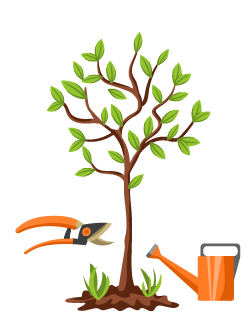 Tree care
Loosening the soil, watering: proper agricultural technology
Loosening the soil around apple trees isn't necessary; it won't affect their growth or fruiting, and Simirenko can handle other plants within their "growth zone" on its own. The tree provides dense shade, so weeds and grasses don't thrive under it, let alone shrubs or other tree varieties. However, it's a good idea to dig around the tree's trunk once a year to ensure the roots receive more oxygen. Be careful, however, not to disturb the shallow root system.
This variety also generally doesn't require watering. It finds water in the soil very well with its extensive root system. However, in very dry years, you can still water the apple trees with 10-15 liters morning and evening, no more than every 10-14 days. Excessive moisture will lead to root rot and death of the plant, so caution is required.
Pruning: simple crown shaping
This variety is very prone to developing a dense crown, so pruning will be necessary frequently—twice a year. Otherwise, the risk of fungal infections and smaller fruit increases significantly. Any diseased, dry, or damaged branches should be removed, but that's not all. Prune off any branches touching the ground or growing vertically (suckers), those growing inward, and any simply unnecessary ones.
Pollinator varieties
- Kuban spur.
- Delicious golden.
- Idared.
- Korea.
- In memory of Sergeev.
Reproduction
- Clones (layering).
- Grafting by cuttings or buds.
- Growing from seeds.
Diseases and pests
- Scab.
- Powdery mildew.
- Cytosporosis.
- Leaf roller.
- Flower beetle.
- Green aphid.
- Hawthorn.
- Codling moth.
Ripening and fruiting of the Simirenko apple tree
The beginning of fruiting
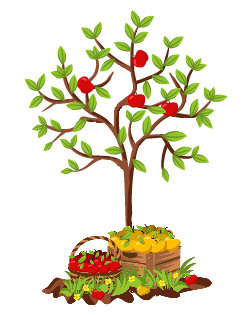 The beginning of fruiting
On vegetative rootstocks, an apple tree will only begin bearing fruit in its sixth to eighth year, so you'll have to wait. However, you'll be able to sample a few apples as early as the fourth or fifth year. On dwarf and semi-dwarf rootstocks, the fruiting period is significantly shorter, and you'll be able to enjoy apples as early as the second or third year.
Flowering time
Simirenko usually begins blooming in mid- to late May, so it's best to choose pollinators that are suitable for this time. Its flowers are large, beautiful, and snow-white, sometimes taking on a light green tint. The bloom period lasts no more than 10 days, accompanied by a strong fragrance that can be detected from afar.
Fruiting and growth
An apple tree only begins to gain momentum, meaning it begins to bear more fruit, around the 10th to 12th year. A full harvest is unlikely before the 15th year, but by the 8th to 9th year, the tree can produce up to 45-50 kilograms of beautiful, aromatic apples. The tree's growth is very rapid, reaching 30-50 centimeters during the growing season, which is quite significant.
Apples reach harvest maturity around late September or early October. However, you can easily harvest blocks even as early as early November, provided there's no frost. They don't fall off the branches, so the harvest is undamaged. At harvest, they're usually extremely hard and tart, but after a month of storage, they acquire the flavor for which they're so prized. They can be stored in a cellar until the next harvest; they keep very well and are easy to transport, even withstanding significant temperature fluctuations.
Top dressing
- Ammonium nitrate.
- Urea.
- Humus.
- Manure.
- Ammonium sulfate.
- Bird droppings.
What to do if it doesn't bloom or bear fruit
- Apply fertilizer.
- Check for pests or diseases.
- Perform pruning.
Why do apples fall?
- Flower beetle.
- Excessive humidity.
- Natural phenomena (wind, rain, hail).
- Diseases.
Please leave your feedback on the Simirenko apple tree in the comments so that any gardener can learn from your experience.