
Apple tree "Slast Scarlet": characteristics of the variety and care
| Color | Reds |
|---|---|
| Ripening season | Autumn |
| Size of apples | Small ones |
| Taste | Sweet |
| Crown type | Average tree height |
| Shelf life | Low shelf life |
| Application | Fresh , For recycling |
| Winter hardiness | High winter hardiness |
| Fruiting age | Up to 5 years |
 History of origin and regions of growth
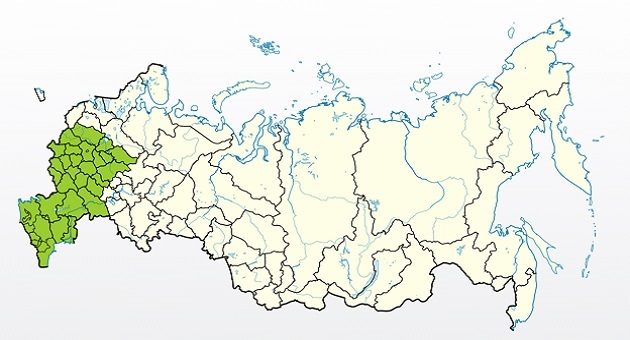
Growing regions
- Crimea.
- Yaroslavl region.
- Ural.
- Volga-Vyatka region.
- Middle zone.
- Siberia.
- Tver region.
- Leningrad region.
- North Caucasus.
- Pskov region.
- Moscow region.
Origin
The new apple variety was developed at the Sverdlovsk Horticultural Breeding Station. The author is Leonid Andrianovich Kotov, a renowned Russian pomologist and inventor of over two dozen popular and widespread apple trees. Testing began in the summer of 2000, when cuttings were grafted onto the crowns of the Aromat Uktusa and Progress varieties, as well as onto a young wild apple tree.
The variety demonstrated excellent compatibility, although growth was somewhat slower and weaker in the first case. During the trials, which are still ongoing, the variety was presented several times at the Rossiya Cultivation and Seed Breeding Center. The apple tree has not yet been officially included in the State Register of Breeding Achievements and has not been regionalized. The variety is not widely distributed, although it can be easily grown throughout virtually the entire country, with the exception of the Far North and the Far East.
Content
Description of the Scarlet Sweetness variety
 The trees are resistant to low temperatures, are not affected by sudden temperature fluctuations and fluctuations, and are undemanding of soil and growing conditions. They do not require frequent watering or fertilizing, but are quite susceptible to scab in wet years. They bear fruit regularly, without resting, and quite abundantly.
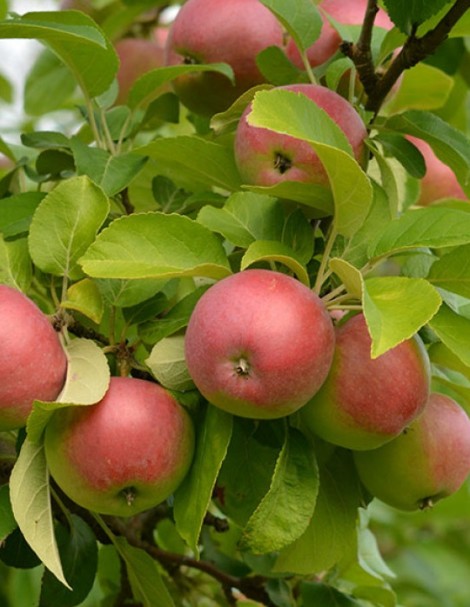
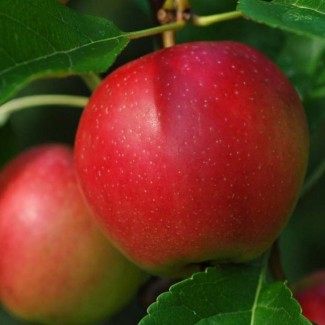
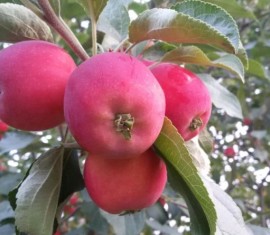
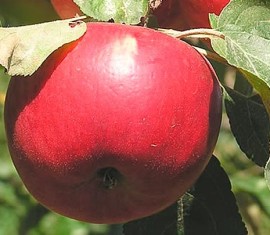
The apples themselves, though small, are very attractive. They are a uniform scarlet color, round, and have a pleasant aroma. The fruit's flavor is sweet, without the characteristic sourness, making it ideal for baby food. This variety is recommended for private gardens; it is not yet grown commercially.
Apples: What do they look like?
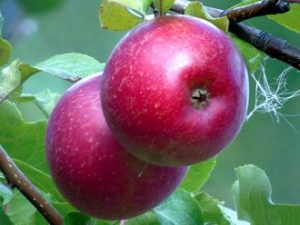 The scarlet sweet fruit is small or slightly larger than small, weighing up to 65-80 grams. They are round-elongated, somewhat cup-shaped, sometimes turnip-shaped, equal-sided, usually symmetrical but can be slightly slanted, and are generally uniform in size. Ribbing is virtually invisible, and there is no lateral seam.
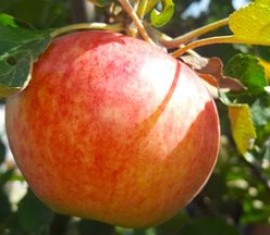
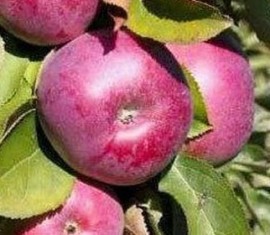
The apple skin is thin, yet strong and elastic enough to protect the flesh from mechanical damage. It is smooth, shiny, and glossy, and when fully ripe, it becomes covered with a dense, dry, waxy coating. The base color is greenish-green, sometimes with a slight yellow tint. However, this is almost completely hidden by a bright scarlet or crimson blush. Subcutaneous punctures are moderate in number; they are very small, gray-green, and can be rusty. The chemical composition is most easily assessed by the following data:
- P-active substances (catechins) – 342 milligrams.
- Ascorbic acid (vitamin C) – 7.8 milligrams.
- Total sugars (fructose) – 15.6%.
- Pectins (fiber) – 8.2%.
- Titratable acids – 0.37%.
The flesh is medium-dense, fine-grained, and very juicy. It's aromatic and sweet, a favorite among children, with virtually no tartness. They're often used in baby food, both fresh and as preserves, jams, and juice. While there's no professional tasting score, experts unofficially rate these apples around 4.4-4.5 points for taste and appearance.
Apple tree Scarlet Sweetness: characteristics
Crown and root system
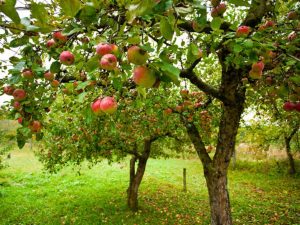 The sweetness is a medium-sized, fast-growing standard tree that can reach a height of no more than 3-4.5 meters without pruning. Most owners keep their trees at a lower height for convenience. The crown shape is oval or rounded-spherical, the shoots are medium thick, straight, and directed upward, extending from the trunk at an acute angle, and covered with reddish-brown or reddish-green bark. Over the years, the trees can become spreading, appearing disheveled, and bear mixed fruit.
The leaves are medium-sized or small, the blade is flattened, short-pointed, and the margins are serrated, doubly serrated, crenate, and may be slightly wavy. They are dense, leathery, and glossy, and can be bright or dark green. The backsides are pubescent or sparsely furred, with a felty texture. The root system is well-branched, fibrous, and well-adapted to water-seeking.
Productivity and pollination
The variety cannot be called high-yielding, but it is early-bearing, and the trees bear fruit regularly.
From one fully formed tree of the Scarlet Sweetness, you can get 35-50 kilograms of apples annually under favorable weather conditions..
The variety is self-pollinating, but only to a limited extent. Therefore, for greater yields, it's best to interplant it with other varieties. Ideally, suitable pollinators should be available within 50-80 meters, and flowering trees should be sprayed with sugar or honey syrup.
Winter hardiness and disease resistance
Scarlet Sweet is considered very tolerant of low temperatures, including sudden changes from bitter frost to thawed drops, and back again. It easily tolerates temperatures as low as -27-32°C, even without any shelter. However, if the climate is harsher or severe cold lasts for more than 2-4 weeks at a time, it's worth considering insulation.
The variety has absolutely no immunity to diseases. Scab It is frequently and heavily affected, especially in years with severe epiphytosis. Other diseases also readily attach to it. Therefore, it is crucial to regularly spray apple trees for prevention, treat them with insecticides and fungicides, clear the area around the trunks of debris, rotting fruit, and leaves, and plant trees in drier areas.
Rootstocks and subspecies
The variety is fairly new and is still undergoing testing, so there are no subspecies or subcultivars. The most popular rootstock for growing Slast is a highly winter-hardy Siberian apple seedling.
Features of growing Scarlet Sweets
 Landing
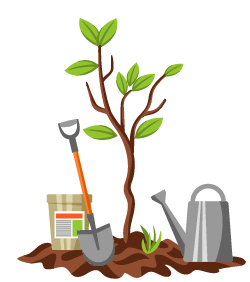 Landing
Basic conditions
- The main criterion when choosing a planting site for this variety is the correct groundwater depth. It should be at least 2 meters below the surface. Avoid planting Slast' in swampy areas or floodplain meadows, or directly near wells, streams, rivers, or lakes. If the apple tree gains access to water, it will inevitably immerse its roots in it and rot. Furthermore, high humidity can lead to regular scab infestations.
- A sunny, open location is a good choice. The crowns should be well-lit by UV rays and well-ventilated, but not drafty.
- The soils best for this variety are airy, permeable to oxygen and moisture, and, if possible, fertile. Apple trees grow well in sandy loam or clay loam, but black soil is also ideal if diluted with river sand and clay in the right proportions.
- Planting holes are dug in advance, but not necessarily as early as 3-4 weeks beforehand. They should be 60-70 centimeters deep and the same in diameter. Fertilizer mixed with soil is placed at the bottom, followed by stones or broken brick as a drainage layer, and the entire thing is filled with water. There's no need to cover the holes; they should be left to soak in the open air.
- Leave at least 2.5-3 meters between trees, and up to 3-4 meters between rows. This will prevent them from getting in each other's way as they mature, and harvesting will be easier.
- Stakes or trellises are driven directly into the holes to support the young seedlings. This is crucial to ensure they take root well and don't fall over in strong winds. Placing the supports on the north side will provide additional protection from frost in the winter.
- The standard procedure involves placing the tree on a drainage platform, spreading out the rhizome, covering it with soil, compacting it, and watering it. It's advisable to mulch the top with chopped grass or sawdust.
Disembarkation time
Slast' can be planted in any form, meaning it has the same survival rate whether planted in spring or fall. In spring, it's best to wait until the soil has warmed up completely, around April or May, and in fall, planting should be done in September or October, after the leaves have fallen.
Tree care
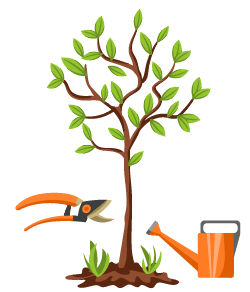 Tree care
Protection from frost and pests
Despite their enviable frost resistance, apple trees need to be prepared for winter. Watering should be stopped completely at the end of AugustNo further artificial moisture is introduced. Tree trunks are wrapped in roofing felt, old tights, burlap, or roofing felt, and spruce branches or straw are spread over the root zone. During severe frosts, soil can be raked up, but it must be removed before the sap begins to flow in the trunks in the spring. Young trees benefit from being covered with tents.
Regular spraying with fungicides will help protect trees from fungal infections, and with insecticides against parasites. Additionally, to repel insects, the trunks are whitewashed with a thick lime solution. To prevent rodents from eating the bark and branches, you can coat the trunks with lard, fuel oil, or grease. Commercially available products, readily available at any gardening store, are also a good option.
Loosening the soil, watering: proper agricultural technology
Dig the semi-cultivated plant once or twice a year, but be very careful, as some roots don't go deep. As the plant grows, you can loosen the soil further, for example, the day after glazeFrom 10-12 years, you can sow the area around the trunk with grass or herbs; they will provide natural aeration of the soil and prevent weed growth.
Slaste doesn't require frequent watering, but if the weather is very hot and dry, you'll need to add water. It's a good idea to dilute fertilizers and ground food with water, then water (preferably drip) around the perimeter of the crown.
Pruning: simple crown shaping
Slaste is not prone to excessive overgrowth; its natural density is average. If the tree was trained in a nursery, simply follow the natural branching pattern, regularly pruning suckers (those that stick up), parallel shoots, and crossing shoots. If you have to shape the crown yourself, it's best to create a sparse or tiered crown, starting in the first year after planting.
Every year in the fall, a sanitary pruning is performed. All broken or diseased branches are then pruned, and any dead ones should also be discarded. Wounds (cut sites) must be treated. garden pitch or water-based paint. If you don't have anything handy, you can simply cover the cuts with soil.
Pollinator varieties
- Borovinka.
- Ranetki.
- Sverdlovsk beauty.
- Bugler.
- Carpet.
- Silver hoof.
- Solntsedar.
- The aroma of Uktus.
- Progress.
- On-screen.
Diseases and pests
- Scab.
- Cytosporosis.
- Fruit rot.
- Cancer.
- Powdery mildew.
- Scale insect.
- Fruit hyacinth.
- Green aphid.
- Leaf roller.
Ripening and fruiting of the Scarlet Sweet
The beginning of fruiting
 The beginning of fruiting
Slast is considered an early-bearing variety, as the first fruits can be produced as early as 3-5 years after planting. The onset of fruiting depends largely on climate and growing conditions. In warmer regions, several dozen fruits can be produced as early as 2-3 years, while in harsher climates, only 4-5 years may be needed.
Flowering time
Mid-season blooming is typical for most autumn apple varieties, and the Scarlet Sweetness is no exception. In late April, it produces dense, bright pink or even crimson buds, which by mid-May blossom into beautiful, large, pale pink flowers. These bloom densely along the branches, with delicate, light, oval petals and a distinctive, vibrant, powerful aroma.
Fruiting and growth
The tree grows quite rapidly, adding at least 45-60 centimeters per year, especially before fruiting begins. Subsequently, the growth rate slows slightly, but not significantly. Fruiting also increases rapidly, with full harvests occurring by the 7th to 9th year.
The fruit ripens in mid- to late September. They aren't particularly prone to shedding, but strong winds or early frosts can contribute. Therefore, it's best to harvest them promptly, as soon as they acquire a rich color, sweet flavor, and a waxy, dry coating. Transporting the fruit is easy in crates, using just 2-3 layers, but they will only last 45-60 days. After that, they lose their juiciness, become slightly sour, and become crumbly.
Top dressing
- Superphosphate.
- Humus.
- Peat.
- Calcium.
- Manure.
- Compost.
What to do if it doesn't bloom or bear fruit
- Limit or activate watering.
- Eliminate insects.
- Cure diseases.
- Fertilize.
- Move to a sunnier and more ventilated place.
Why do apples fall?
- They are very overripe.
- Wind, rain, hail, snow.
- Pests or diseases.
Leave a review of the Scarlet Sweetness apple tree variety so that even a novice gardener can receive useful information firsthand.




Comments
The Scarlet Sweet has been standing for three years, and everything is fine. It's grown to two meters, with a smooth, rounded crown, very neat, but it hasn't bloomed. I was advised to water it with "Bud" in the spring. I'll try it. But considering we live in Tyumen, a northern region, maybe it will bloom. A Rodnikovoye apple tree grows nearby; this year, it was planted the same year and has produced 13 tasty, sweet, fairly large apples.