Apple tree Delight: characteristics of the variety and care
| Color | Greens |
|---|---|
| Ripening season | Autumn |
| Size of apples | Average |
| Taste | Sweet and sour |
| Crown type | Columnar tree |
| Shelf life | Average shelf life |
| Application | Fresh , For recycling |
| Winter hardiness | High winter hardiness |
| Fruiting age | Up to 5 years |
 History of origin and regions of growth
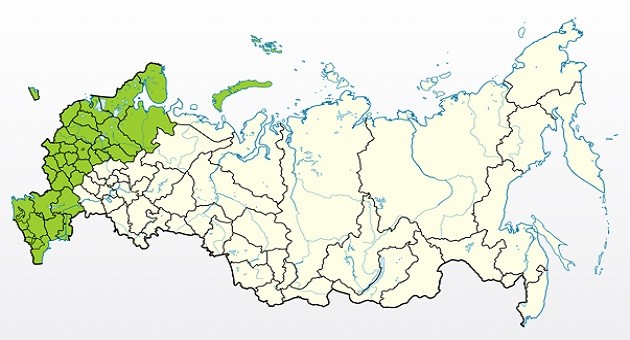
Growing regions
- North Caucasus.
- Crimea.
- Northern regions (partially).
- Moscow region.
- Middle zone.
- Leningrad region.
Origin
Many columnar apple trees were developed in the Oryol region, specifically in the village of Zhilina, home to an experimental station of the All-Russian Research Institute for Fruit Crop Breeding. One of these developments was a variety poetically named "Vostorg." The following outstanding Russian breeders are officially credited as the variety's creators:
- Serova Zoya Mikhailovna.
- Sedov Evgeniy Nikolaevich.
- Korneeva Svetlana Aleksandrovna.
In 2013, an application was submitted to include the new columna in the State Register of Breeding Achievements. That same year, Vostorg was classified as an elite variety and sent for field trials. Only six years later was the variety entered into the register and zoned for the Central and Central Black Earth regions.
Content
Description of the apple tree variety Delight
 Early winter or late autumn varieties, such as this one, are prized for their long shelf life, making them versatile. While Vostorg has only average shelf life, it offers many other advantages. The tree is very compact, takes up little space, is low-growing, and is undemanding, requiring no special care. It is tolerant of moisture and soil, tolerates frosts well, produces abundant fruit, and has a genetic resistance to scab.
The fruits are quite large, have high marketable qualities, and are attractive in appearance. They are tasty and suitable for long-distance transport or for making juices, compotes, and jams. This variety is recommended for growing in small home gardens, as well as in commercial intensive orchards.
Apples: What they look like
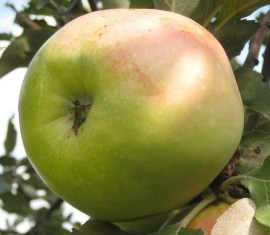
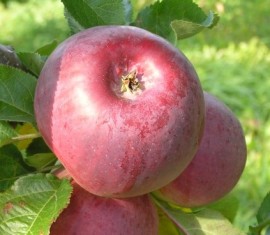
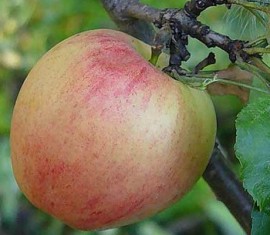
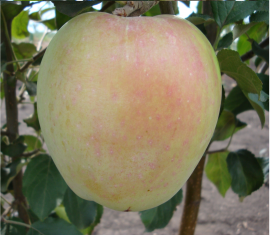
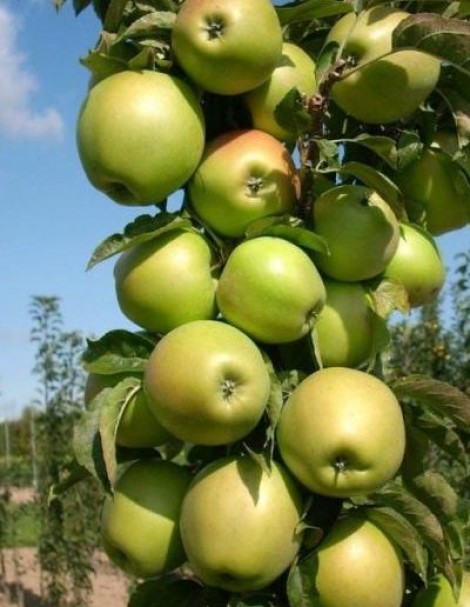
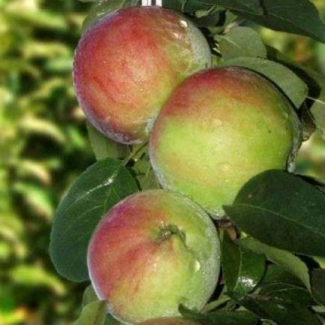
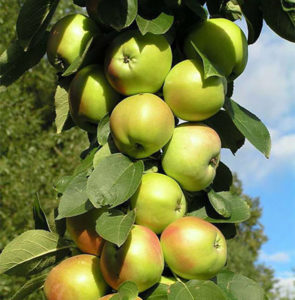 The fruits are generally medium-sized, sometimes slightly larger than average. With proper care, they can grow to approximately 150-190 grams. The shape is round, flattened-conical, somewhat turnip-shaped, elongated toward the calyx. The ribbing is slightly visible at the tip, but completely smoothes out near the petiole.
The skin is smooth, glossy, and very shiny. A dense oily or oily-waxy coating covers the surface when ripe. Its base color is green or light green, but may become slightly yellowish or golden as it ripens. The blush is translucent, diffuse, striped, sometimes speckled, and reddish, crimson, or reddish-orange in hue, occupying 55-80% of the surface. Subcutaneous punctures are large, evenly spaced, light in color, and easily visible even to the naked eye. The chemical composition is typically assessed based on the following parameters:
- P-active substances – 167 milligrams.
- Ascorbic acid (vitamin C) – 3.9 grams.
- Sugar (fructose) – 11.4%.
- Titratable acids – 1.1%.
- Pectins (fiber) – 8.4%.
The fruit's flesh is firm, not overly aromatic, fine-grained, juicy, crisp, and prickly, yet quite tender. It has a distinct greenish hue and a distinctive "green" flavor. It's considered balanced, palatable, harmonious, and refreshing. Experts rate it 4.3 out of 5.
Apple tree Delight: characteristics
Crown and root system
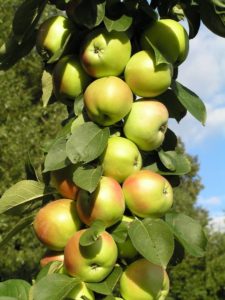 The tree is rightfully considered a natural semi-dwarf, although it is officially listed in the register as medium-sized. Its maximum height reaches 2.8-3.1 meters. Without additional pruning. This is a classic columnar apple tree, grown as a single trunk without lateral scaffold shoots. It bears fruit on one- and two-year-old fruiting canes, which are densely distributed along the entire trunk from bottom to top. The bark is brown, greenish-brown, or brown, and is usually completely pubescent.
The leaves are dense, green or dark green, large, serrate-crenate, and long-pointed. The leaf blade can be wavy, delicately ribbed, glossy, shiny, and folded into a boat-shaped form. The root system is fibrous, highly branched, and medium-deep. It is well adapted to the search for moisture and nutrients, but lacks a central taproot, making it poorly anchored in the soil.
Productivity and pollination
The variety is considered high-yielding, as its performance in this regard can easily surpass most other varieties.
The standard planting density of Vostorg is 18,000-20,000 trees per hectare, which can yield over 120-150 tons of high-quality fruit. A single tree typically yields 14-17 kilograms per season, depending on weather, regional climate, maintenance, and other external factors..
The variety is called conditionally or partially self-fertile. This means that a small amount of fruit, approximately 35% of the maximum, can be produced even without any other apple trees nearby. Experienced gardeners interplant varieties, choosing ones that bloom at appropriate times no more than 45-60 meters apart. During flowering, they recommend spraying the trees with honey or sugar syrup to attract more bees to the garden.
Winter hardiness and disease resistance
Apple trees are frost-tolerant, and with proper winter protection, they can easily withstand temperatures as low as -40-42°C. However, prolonged exposure to low temperatures, sudden fluctuations and drops, and strong and piercing winds can destroy trees if winterization and protection measures are not timely or performed incorrectly.
Rapture has immune protection against five races built into its genetic code. scabies (Vf gene). It is resistant to powdery mildew and cytosporosis, but can still be infected in epiphytic years. Therefore, preventative measures should be taken, including regularly spraying the trees with insecticides against pests.
Rootstocks and subspecies
In fact, this variety was only recently developed, so it's too early to talk about subspecies. However, Vostorg can be grown on a wide variety of rootstocks, imparting specific traits. Seedlings produce more winter-hardy apple trees, while dwarf or semi-dwarf varieties produce more compact ones. In the latter case, frost resistance is significantly reduced, but the fruit size is larger. More precise information can be obtained from a nursery or a replacement farm when purchasing seedlings. Needless to say, planting material should only be purchased from reputable sellers with the appropriate documentation.
Features of growing Delight
 Landing
 Landing
Basic conditions
- It's important to devote sufficient time and attention to selecting a site for this variety. It should be protected from strong winds but still receive ample sunlight. Trees can grow in the shade, but they tend to be weak, spindly, and bear little fruit, if at all.
- Any soil will do, as long as it's slightly acidic. If the soil is too acidic, it can be significantly reduced by adding lime. This should be done at least one season before planting the apple trees.
- Groundwater, as long as it doesn't reach the surface closer than 2-2.5 meters, doesn't pose any threat to Vostorg. If it rises higher, bury a sheet of slate at a depth of 2 meters to encourage the rhizome to grow sideways. It's not recommended to plant apple trees in swamps, near rivers, ponds, streams, springs, lakes, or in lowlands—all of these will lead to root rot.
- It's best to prepare the holes the previous season, but 3-5 weeks before planting will also be sufficient time for them to mature. The holes are 70-80 centimeters in diameter and the same depth, with fertilizer added to the bottom, followed by drainage or a little soil, and plenty of water.
- Planks or stakes are driven in immediately to support the apple trees. Their rootstocks are shallow, so strong gusts of wind can uproot them.
- A 0.5-meter distance can be left between trees, and approximately 1.5-2 meters between rows. This will save space and maximize tree density without sacrificing yield.
- Place the tree on a pile of soil or drainage, spread out the roots, and cover with soil. Care must be taken to ensure that root collar The soil remains 5-8 centimeters above the surface. Water the soil with 35-45 liters of water and mulch with sawdust, manure, compost, chopped grass, or any other available material.
Landing dates
Trees can be planted outdoors in spring and fall. The most favorable periods are approximately from late March to early April and from late September to early October. Care must be taken to prevent the apple trees from freezing during spring frosts, and in the fall, to avoid frosts lasting 21 days. Rooted trees (in containers, bags, or pots) can be planted at any point during the growing season.
Tree care
 Tree care
Protection from frost and pests
In winter, Vostorg must be wrapped against frost, and in harsh northern regions, covered with a tent. Soil is raked onto the root zone and covered with spruce branches, straw, hay, and dry leaves. The trunks are usually wrapped with roofing felt, agrofibre, roofing felt, old tights, or any other fabric.
Whitewashing tree trunks with lime twice a year is effective against insects: in early spring and late fall, after all the leaves have fallen to the ground. To repel mice and hamsters, as well as hares, which readily feed on young shoots and tender bark, you can coat the trunks with strong-smelling substances such as grease, fuel oil, or lard.
Loosening the soil, watering: proper agricultural technology
Soil aeration is crucial for trees, so the area around the tree trunk is dug up twice a year. However, it's best to also hoe the soil during the growing season, allowing even more oxygen to reach the roots. This is usually done the day after watering. Weeds, shoots from other plants, and root suckers are also removed.
Watering is not necessary when rainfall is more or less regular. If dry and hot weather persists for more than two weeks, apply 20-35 liters of water per tree in two doses (morning and evening). Fertilizers and supplements are also applied at this time (minerals in spring, organic matter in fall).
Pruning: simple crown shaping
Columns aren't prone to overgrowth, especially those growing as a single trunk, like Vostorg. Therefore, no special pruning is required. If the tree begins to produce side shoots, they should be trimmed off, and any dead fruiting shoots should be removed. That's all that needs to be done. The tree also doesn't require any rejuvenation, as its lifespan is very short, no more than 15-19 years.
Pollinator varieties
- Gin.
- Vazhak.
- Senator.
- Chinese red and gold.
- Currency.
- Ostankino.
- Barguzin.
- Chervonets.
Reproduction
- Rooting.
- Kidney grafting.
- Growing from seeds.
- Cuttings.
Diseases and pests
- Black crayfish.
- Bacterial burn.
- Powdery mildew.
- Green aphid.
- Codling moth.
- Leaf roller.
- Hawthorn.
The Ripening and Fruiting of Delight
The beginning of fruiting
 The beginning of fruiting
The first flowers on the column, like on many other trees, bloom in the nursery. However, they need to be plucked so the tree has time to adapt to the new conditions, strengthen, and develop foliage, fruiting twigs, and rhizomes. The first harvests of 4-6 kilograms can be harvested in the third or fourth year. Then, you'll have plenty of time to sample the apples and decide whether this variety is right for you.
Flowering time
The trees bloom in May, like most other apple trees of various varieties, so pollinators are usually uncomplicated. The blooming period may vary depending on the weather or the general climate of the region. The flowers are large, beautiful, saucer-shaped, with delicate, ruffled petals, gathered in clusters of 5-9. They densely cover the trunk, making the plant very decorative. It is sure to be a beautiful addition to any garden during this period and during the ripening period.
Fruiting and growth
Apple trees can easily grow about 25-30 centimeters in a year, making them considered fairly fast-growing. However, they are incomparable to some other trees. They reach their maximum height fairly quickly and begin producing fruit to its full potential by the 8th to 10th year. By then, they can harvest at least 15 kilograms, and some even report double that.
The fruit ripens in mid-September, but it's best to pick it in the second half of the month. It doesn't fall to the ground, but clings tightly to the branches. However, the picking time coincides only with technical ripeness; for consumption, you'll have to wait another 2-4 weeks for the sugars in the fruit to caramelize. Initially, the apples are tart, dense, and grassy, but later they become juicy, sweet-tart, and aromatic. They can be stored for no more than 4-6 months at most; after that, the fruit begins to wilt, taste bitter, and become soft and crumbly.
Top dressing
- Peat.
- Compost.
- Ammonium nitrate.
- Humus.
- Superphosphate.
- Manure.
- Mineral complexes.
What to do if it doesn't bloom or bear fruit
- Check for pests or diseases.
- Transplant into the sun.
- Water.
- Fertilize.
Why do apples fall?
- Wind, hail, hurricane, rain.
- Pest damage.
- Diseases.
Please leave your feedback on the Delight variety, as many gardeners would like to grow similar ones in their gardens.