
Imrus apple tree: characteristics of the variety and care
| Color | Reds , Greens |
|---|---|
| Ripening season | Winter |
| Size of apples | Average |
| Taste | Sweet and sour |
| Crown type | Average tree height |
| Shelf life | High shelf life |
| Application | Universal variety |
| Winter hardiness | High winter hardiness |
| Fruiting age | Up to 5 years |
 History of origin and regions of growth
Growing regions
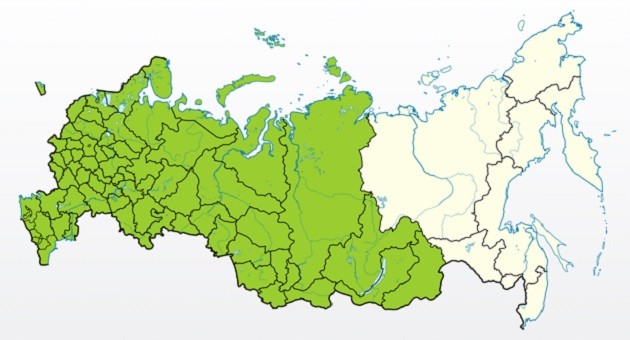
Imrus is zoned in six regions of Belarus, as well as in many regions of Russia:
- Central.
- Central Black Earth.
- Volga region.
- Far East.
- Siberia.
Origin
Research into creating a mildew- and scab-resistant apple hybrid began at the All-Russian Research Institute of Fruit Crop Breeding in the second half of the 1960s. It wasn't until 1977 that Imrus was developed, a cross between the frost-resistant OR18T13 and the Antonovka variety. The variety's creators included Yu. I. Khabarov, E. N. Sedov, Z. M. Serova, and V. V. Zhdanov.
The Imrus variety is recommended for planting in high-productivity commercial gardens, i.e. intensive gardens.
Almost immediately, seedlings were sent to farms in various regions for testing. Eleven years later, the variety was recognized as an elite variety due to its outstanding performance, and in 1996, it was included in the state register and zoned (recommended for cultivation in certain regions).
Content
Description of the Imrus apple variety
 The 1970s saw the development of numerous new apple varieties, and Imrus is one of them. It's always a welcome addition to both large commercial orchards and small home gardens. It boasts exceptional frost resistance, good yields, excellent flavor, and shelf-life, but most importantly, genetic resistance to scab and powdery mildew.
Apples: color, size, weight
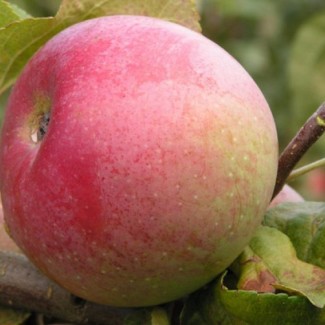
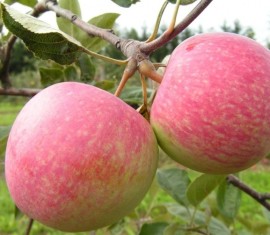
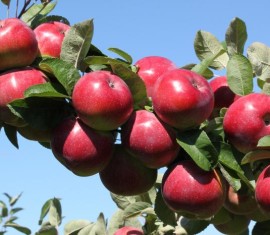
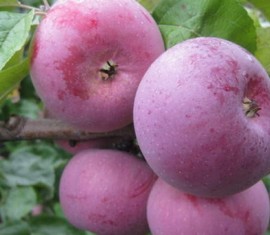
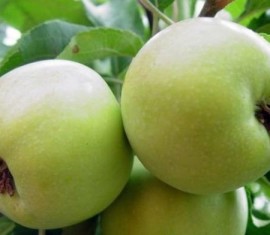
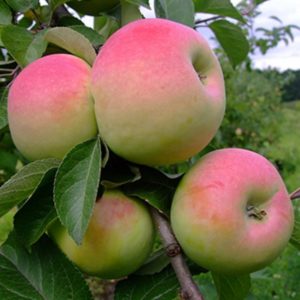 Imrus fruits are typically medium-sized (140-180 grams) with subtle ribbing and a flattened appearance. The skin is dense, smooth, and shiny, with no bluish or oily bloom. The apples' base color is green or yellowish-green when ripe, with a red, crimson, or brown blush, which can be streaked or spotted and cover up to 50-60% of the apple's surface. Light subcutaneous spots are clearly visible and numerous. The chemical composition is characterized by the following indicators per 100 grams:
- P-active substances – 460 grams.
- Ascorbic acid (vitamin C) – 10.1 milligrams.
- Total sugars (fructose) – 10.2%.
- Titratable acids – 0.65%.
- Pectins (fiber) – 15.2%
The apples' flesh is quite dense, very juicy, and slightly creamy. It has a harmonious flavor, balancing sweetness and tartness, and a pleasant, distinctive aroma. While the apples' appearance scores only reach 4.3, Imrus's taste score is 4.5 out of 5.
Imrus apple tree: characteristics
Crown and root system
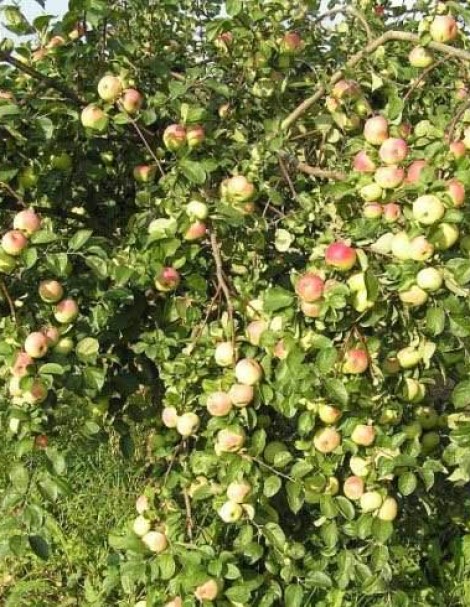
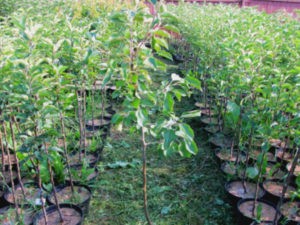 Trees of this variety are considered to be of medium height. If left unpruned, they can reach 4 or 5 meters, but through proper crown formation, experienced gardeners limit the tree to 3 meters. After all, it is much more convenient to care for the plant and harvest.
Usually crown From a pyramidal shape at a young age, it gradually becomes spherical, and sometimes even spreading. Branches are moderately dense, and they extend from the trunk primarily at an acute angle.
The bark on young shoots is greenish, becoming flaky with age and acquiring a darker, greenish-brown hue. The leaves on the branches are fairly dense, medium-sized, rounded, and light in color. They are smooth and leathery, with a wavy edge and slightly curled downwards. The tree's root system is highly branched, and the presence of a central root depends on the rootstock used.
Productivity and pollination
The fruiting of this apple tree directly depends on the region where it is grown, the correct care, and suitable weather conditions.
On average, one tree can easily produce 80-120 kilograms of fruit, even in the most unfavorable years.
No cyclic fruiting has been observed, but in dry or excessively rainy years, yields can drop by about a third. The variety is considered conditionally self-sterile. This means that without pollination from other apple trees, no more than 12-15% of the potential fruit set is formed. Therefore, trees should be planted in close proximity to varieties with similar flowering periods.
Winter hardiness and disease resistance
If you're looking for a truly low-maintenance variety, Imrus is definitely worth it. You'd be hard-pressed to find a more frost-resistant and low-maintenance variety. Winter frosts down to -38-40°C will have virtually no effect on the apple tree. It easily tolerates early frosts, as well as prolonged or snowless winters. However, to achieve this, remember to properly prepare the trees.
The variety was specially bred to protect the crop from powdery mildew and scabiesImrus' genes contain a special code (Vf), which makes it virtually immune to fungal infections. However, there are several diseases that threaten the variety, mostly caused by careless gardeners. For example, with excessively high humidity (incorrect watering frequency), bacterial infections can occur. burn, and in the absence of timely sanitary pruning – black crayfish.
Subspecies and rootstocks
The apple tree's unpretentiousness and resistance to various types of stress made it possible to grow subspecies by grafting them onto different types of rootstocks.
| Rootstocks | Peculiarities |
| Semi-dwarf | This rootstock produces apple trees that don't grow taller than 2-2.5 meters. This is a very productive option, capable of yielding up to 150 kilograms of aromatic fruit, but it has a number of drawbacks. Firstly, the average lifespan of the trees is only 10-12 years; secondly, it requires special care, protecting them from drafts and excessive or insufficient humidity; and thirdly, the root area will need to be hilled 3-4 times, dug, and maintained, along with numerous other maintenance procedures. |
| Dwarf | This rootstock option produces Imrus with an early fruiting period. It requires virtually no fertilizer, is drought- and frost-resistant, and is very compact—no more than 1.5 meters in height. |
| Columnar | This is the most common variety and has a number of unique advantages. Its columnar crown allows for easy harvesting of the fruit, which literally hangs along the entire trunk, reaching up to 2.5-3 meters in height. This apple tree is easy to care for, and any side shoots that appear can be simply pruned with pruning shears in April, before the sap begins to flow. |
Features of growing Imrus
 Landing
 Landing
Key Features
- Choose sandy loam or loamy soil; it should be well-ventilated, loose, and breathable. Trees can also be planted in black soil, but the soil will need to be mixed with river sand and a small amount of clay.
- Imrus prefers sunny, wind-blown locations, but not drafty ones. If possible, the north side of the plant should be occupied by a larger tree, hedge, or wall, especially in northern regions.
- This variety doesn't like stagnant water, so it's not a good idea to plant it near open water, in marshy areas, or where groundwater is too close to the surface. If options are limited, ensure good drainage under the rhizome using gravel, broken brick, or even walnut shells.
- It's not advisable to plant imrus near other fruit crops. This is the apple tree that stands alone, 5-6 meters away from other plants.
- The holes should be dug in advance, preferably in the fall, filled with a mixture of soil and fertilizer and watered. For fall planting, this can be done 2-4 weeks before planting. The optimal size is 60-80 centimeters deep and about 1 meter in diameter.
- Root collar The seedling must protrude above the soil level by at least 5-6 centimeters.
- After planting, the soil is not compacted too much, only lightly tamped down, since Imrus loves airiness and a lot of air.
- After planting, the apple tree is watered with 20 liters of water, and the trunk area is mulched with humus and chopped grass.
To consistently get good yields from the Imrus variety, you need to choose the right planting location. This is the only way to avoid unnecessary work and easily harvest plenty of aromatic, long-lasting fruit every year.
Landing dates
Ideally, plant this variety in the fall, after the leaves have fallen in October or early November. However, make sure there are at least 2-3 weeks before the first frost. The seedlings will likely be fine, but their growth may be significantly slowed over the next few years.
Protection from frost and rodents
After planting, you'll need to spend the first and second years caring for the trees to ensure they take root well. By taking care of them from the start, you'll ensure peace and consistently good harvests for the next several decades. It's not necessary to wrap the rhizomes and trunks for the winter, but why not surround them with spruce branches, especially in northern regions?
The best way to protect yourself from insects and rodents is to provide timely whitewash Tree trunks can be treated with lime or special compounds. Solid oil or rendered lard are effective repellents.
Tree care
 Tree care
Loosening the soil, watering: proper agricultural technology
First-year seedlings require close monitoring, especially the condition of the soil around them. It should never dry out, much less compact into a hard lump. Therefore, it's important to loosen the soil and water the apple trees regularly, approximately once every 4-6 days, unless there's been rainfall. The tree doesn't require much water; dividing one bucket of water between morning and evening is sufficient. Watering the apple trees isn't necessary in the future, but can be done during particularly dry periods.
To ensure the apple tree takes root better and thrives, remove all blossoms during the first year, if any have appeared. After one or two years, a procedure called thinning should be performed. This involves removing 50% of the apples when they reach a diameter of 1-2 centimeters. This will ensure much larger fruits.
Pruning: simple crown shaping
You can shape the crown as you see fit; the tree responds well to pruning and quickly recovers from stress. Ideally, immediately shorten the central trunk by one-third, and make the remaining branches 5-7 centimeters shorter.
Don't forget about regular sanitary pruning; it's very important for this tree. Damaged, diseased, or dead branches should be removed promptly. To rejuvenate the tree, starting at 20-22 years of age, you can begin removing 2-3 old shoots to allow new branches to develop.
Pollinators
Pomologists have determined that pollinators are essential for this variety, but there is no information yet on which varieties are best suited for this purpose. Nevertheless, Imrus produces fruit well next to Antonovka, Pepinka, Orlovim And Orlinka, Grushovka, Melba.
Reproduction
- Growing from seeds.
- Layers (clones).
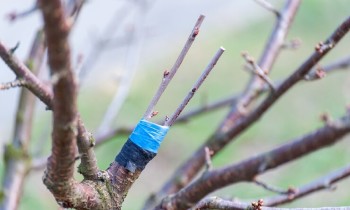
- Grafting by cuttings or buds.
Diseases and pests
- Bacterial burn.
- Black crayfish.
- Flower beetle.
- Green aphid.
- Sawfly.
- Leaf roller.
Ripening and fruiting of Imrus apple trees
The beginning of fruiting
 The beginning of fruiting
Already in the first year, the Imrus apple tree produces large, beautiful flowers. It's best to pluck these before they develop into apples. Failure to do so may result in smaller harvests and smaller fruits. Normal fruiting (10-15 kilograms) begins in the third or fourth year.
Flowering time
This variety is considered a mid-early bloomer. This means the trees bloom in early to mid-May. This can be influenced by the regional climate, as well as the prevailing weather conditions in a given year. The apple tree's flowers are large, white with pink accents, and fragrant. Their petals are quite fleshy, and their stamens are long.
Fruiting and growth
By the second or third year, you can harvest around 10-20 fruits, but the trees don't begin bearing fruit normally until the eighth or tenth year. Then, yields begin to increase significantly, reaching 50-100 kilograms per tree. Apple trees grow only slightly, about 2-5 centimeters per year, but this isn't surprising, as they don't grow very tall.
The fruits ripen from approximately mid-September to early October, and don't fall off the branches without cause. Imrus apples are easy to transport and store. They will delight you with their pleasant sweet-and-tart flavor until spring if stored properly (in a well-ventilated cellar).
Top dressing
- Humus.
- Sypets.
- Manure.
- Peat.
- Wood ash.
- Compost.
What to do if it doesn't bloom or bear fruit
- Check for pests or diseases.
- Provide watering or stop it.
- Carry out pruning and thinning of the crown.
- Transplant the tree to a sunnier area.
Why do apples fall?
- Pest activity.
- Diseases.
- Natural weather phenomena.
- Overwatering or over-humidity.
Share your feedback on Imrus in the comments below. This will allow other gardeners to learn from your experience and gain some useful insights.

Comments
Imrus has become our favorite apple tree. It produces a good yield, and the apples last until February without any special storage conditions. Antonovka apples rot, but Imrus apples are as good as fresh.