Pinova apple tree: characteristics of the variety and care
| Color | Reds |
|---|---|
| Ripening season | Winter |
| Size of apples | Large |
| Taste | Sweet |
| Crown type | Average tree height |
| Shelf life | High shelf life |
| Application | Fresh |
| Winter hardiness | Low winter hardiness |
| Fruiting age | Up to 5 years |
 History of origin and regions of growth
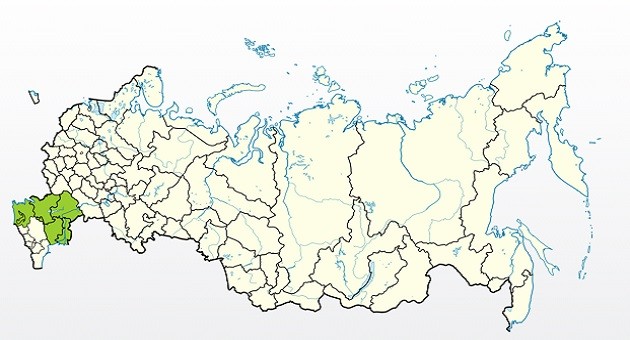
Growing regions
- Republic of Adygea.
- Astrakhan region.
- Volgograd region.
- Republic of Kalmykia.
- Krasnodar Krai.
- Republic of Crimea.
- Rostov region.
Origin
German apple breeders of the 1960s gave the world many high-quality apple varieties, producing high yields of tasty and healthy apples. In 1964, work was conducted in Saxony to cross-breed the complex hybrid Clivia (Geheimrat Dr. Oldenburq x Cox'c Orange Pippin) with the older variety Delicious Golden. The result was a variety named Pinova, which was sent for experimental testing to farms in Germany.
The Pinova variety has several other names by which it's known internationally. These apples, with their beautiful, unusual blush, are called Coral, Sonata, and Pinata. These are all names for the same apple, and this information should make your purchasing decision easier..
The variety didn't gain recognition immediately, but only after more than twenty years. Only in 1986 were trials officially completed, and the apples were added to the list of elite varieties. They attracted interest in Europe and the United States, where they quickly spread. They were also introduced to the southern regions of the Soviet Union. Pinova was added to the State Register of Selected Crops only in 2016, although it had already been actively cultivated by our gardeners before that.
Content
Description of the Pinova apple variety
 Many gardeners call this apple tree the 21st century variety. It's early-bearing, produces fruit abundantly every year without resting, is disease-resistant, and is almost pest-free. Most importantly, it's easy to grow and maintain. Moreover, the taste of its fruit is almost universally appreciated. True, it's best suited for temperate or warm climates. However, experienced gardeners say they can grow Pinova even in the harsh conditions of the temperate zone. Moscow region.
Apples: What they look like
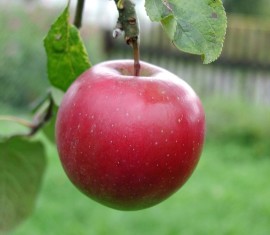
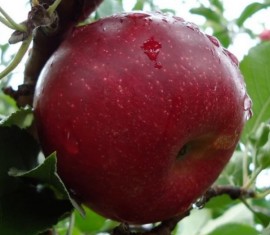
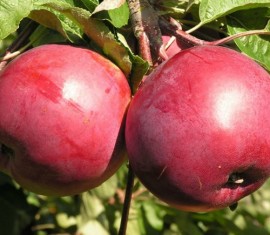
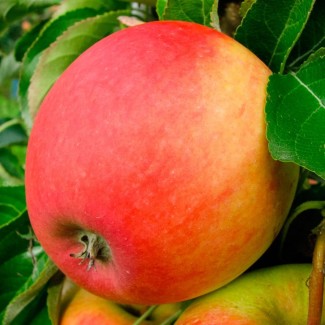
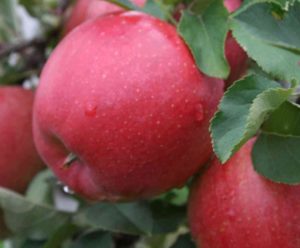 The fruits are generally large or even larger than large, easily reaching 170-200 grams on average. The largest fruits can reach 250-300 grams, but only with proper care and in favorable years. They are round, usually symmetrical, slightly conical, tapering toward the bottom with slight ribbing.
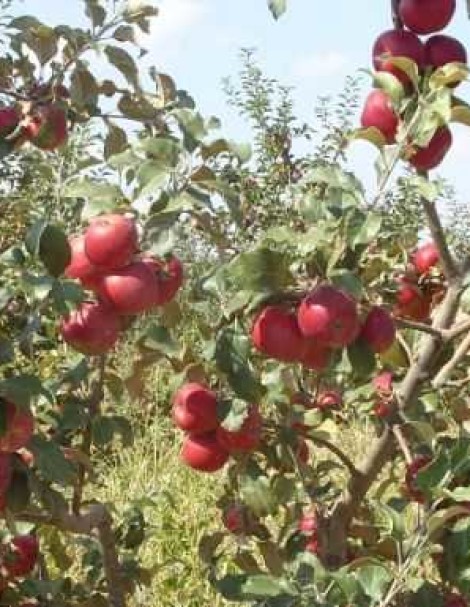
Apple skin is dense, light green or simply green, often matte rather than glossy. As it ripens, it becomes covered with a beautiful coral or carmine-red blush, which has a blurred, streaky texture and typically covers more than 75-90% of the fruit. There are small, barely visible, subcutaneous dots of a lighter shade. The chemical composition can be characterized by the following components per 100 grams:
- P-active substances (catechins) – 289 milligrams.
- Vitamin C (ascorbic acid) – 20.5 milligrams.
- Total sugars (fructose) – 13.9%.
- Titratable acids – 0.37%.
- Pectins (soluble fiber) – 15.3%.
The apple's flesh is fine-grained, very juicy, medium-firm but not crumbly, and crisp. It has a beautiful creamy hue or can be completely white. The flavor is noted as harmonious and balanced, sweet with a characteristic apple tartness in the aftertaste, and dessert-like. Pinova receives 5 out of 5 possible points based on tasting assessments for both taste and appearance.
Pinova apple tree: characteristics
Crown and root system
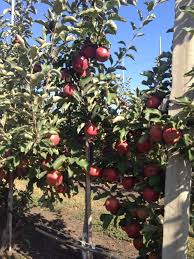 The tree is considered medium-sized and easily reaches 4 meters without formative pruning. However, to make things easier, gardeners limit its height to 3-3.5 meters. When young, it grows very quickly, with a reverse, broadly pyramidal or broom-shaped crown.
It's not very dense, with thin, long shoots. Over the years, the apple trees become spreading and even weeping. The branches typically extend from the trunk at right angles, and their bark is greenish-brown. With age, the bark may turn brown, crack, and crumble.
The leaves are oval, elongated, short-pointed, medium-sized, and green. They are matte, leathery, and dense, covered with numerous veins. The leaf margins are slightly serrated, crenate, and sometimes curved downwards, and may have a light pubescence on the back. The root system is superficial and highly branched; a central taproot may or may not be present, depending on the rootstock.
Productivity and pollination
This apple tree begins bearing fruit very quickly, producing quite a large harvest in its second year. It gradually gains momentum, each year increasing not only its growth but also its yield.
On average, an adult Pinova tree can produce at least 90-150 kilograms of aromatic and delicious apples per year.
The variety is considered conditionally self-sterile. This means you'll get a tiny amount of fruit each year, even if there's no other apple tree within 150-200 meters of a suitable flowering time for cross-pollination. However, with this setup, no more than 5-15% of the fruit will be fruitful, which is very low. To achieve maximum results, trees should be planted in succession, and it's a good idea to locate the plantings near an apiary. Experienced gardeners practice artificial pollination, which also produces enviable results.
Winter hardiness and disease resistance
The tree's frost resistance is considered low to moderate, meaning it can only be grown in the southern regions of the country with warm or temperate climates. However, the most daring gardeners report growing Pinova even in the Moscow and Leningrad regions. However, to protect it for the winter, it must be covered with a tent, and the root system is covered with spruce branches, hay, or straw. According to official data, the tree cannot withstand temperatures below -15-17°C for two weeks straight; it becomes severely stressed and may even die.
Sonata is moderately resistant to various fungal infections of apple trees. Therefore scab Trees are rarely infected with powdery mildew or powdery mildew, but fire blight can occur. In the latter case, all affected branches must be removed immediately; they cannot be cured. Pests feed on the tender wood, foliage, and bark of the cultivar, so it's best to carry out all preventative measures promptly.
Rootstocks and subspecies: features
| Subspecies | Description |
| Dwarf | In our country, the dwarf rootstock M9 is most often used for grafting Pinova apple trees. It imparts special properties to the trees while fully preserving all the qualities of the parent variety. To ensure high-quality cross-pollination, it is traditionally alternated with Santana and Ariva. It is characterized by earlier fruiting, but even less frost resistance. |
| Evelyn | This subvariety is grown on a clonal rootstock, which allows it to replicate many of the qualities of the original material. However, significant improvements in winter hardiness, early fruiting, yield, and shelf life are noted, without compromising consumer appeal. |
Peculiarities of growing Pinova
 Landing
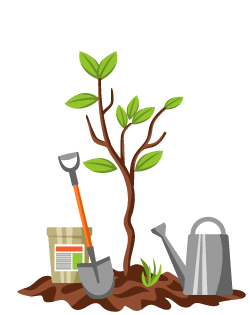 Landing
Basic conditions
- The planting site should be dry, light, and well-ventilated, but avoid drafts, which can cause apple trees to become ill.
- The proximity of groundwater will damage the root system of the variety, so it is better to choose a place where it is located at least 3 meters from the surface.
- Pinova apple trees prefer airy, oxygen-rich soil, so planting them in clay or black soil isn't the best solution. However, you can create a suitable soil mixture yourself by adding river sand, peat, compost, loam, and other necessary ingredients.
- The root system needs to be prepared and hydrated before planting, which is done by placing it in a bucket of warm water. Damaged or dry shoots are best removed immediately with pruning shears.
- Holes are dug in advance, 80 centimeters deep and 1 meter in diameter. Topsoil mixed with fertilizer is poured into the bottom, filled with water, and left for at least 2-4 weeks.
- Stakes are driven into the holes to support the seedlings, but they can be removed no earlier than the fourth year. It's best to place them on the north side.
- The root collar of a seedling should always be 6-8 centimeters above the soil surface. If it's allowed to root, the tree will develop much more slowly, and the rootstock's properties will be completely negated.
- Place a drainage layer on the bottom, such as vermiculite, gravel, broken brick, or even nut shells. A layer of 10-15 centimeters will be sufficient.
- Place the tree on top, spreading its roots out first. Cover with soil, shaking it gently to remove air bubbles. Create a raised border around the trunk and water it with 20-40 liters of water. Mulch the surface with chopped grass, humus, or compost.
To ensure better rooting and minimal problems, choose sturdy two- or three-year-old seedlings. The Pinova Eveline subvariety is ideal, especially if winters in your region are quite harsh.
Landing dates
Spring and fall planting times are equally suitable for Pinova trees, whether they're grown in warm or moderate climates. April or early May, before the sap begins to flow, and late September or early October are ideal. The key is to allow at least 20-30 days before frost, allowing the seedling time to adapt to the environment.
If your winters are quite harsh, it's better to choose the fall option. This way, the tree won't have to immediately grow new green mass, but will have time to adapt. closed root system (in pots that do not require disposal) are planted throughout the growing season, regardless of the time of year.
Protection from frost and rodents
Coral is considered a delicate variety that tolerates frost, so it absolutely needs to be covered for the winter. In mild climates, simply throwing straw or hay over the root zone of spruce branches is sufficient, but in harsh and changeable weather, such as that found in the Moscow region, this won't be enough. The trunks are wrapped in roofing felt, tar paper, nylon tights, or burlap. They can also be used to create a kind of shelter tent out of burlap or agrofibre while the apple trees are still young. If there are any cuts or damage on the tree, it's best to seal them with pitch beforehand and then cover them with some kind of covering material for the winter.
Insects can be easily repelled by whitewashing the trunks and lower skeletal branches with lime. Rodents are a more complex problem, but there are methods for controlling these pests as well. For protection, trunks can be coated with lard, grease, or commercially available products available at any gardening store.
Tree care
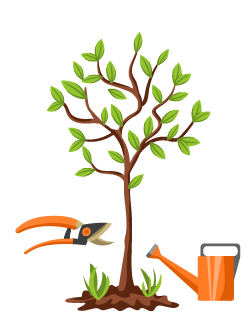 Tree care
Loosening the soil, watering: proper agricultural technology
Sonata requires favorable conditions to produce substantial harvests of delicious, aromatic, and beautiful apples. Careful loosening of the soil around the tree trunks is essential, as the roots are close to the surface. Regular weeding, removal of shoots from other trees and shrubs, and clearing of grass will be necessary. All of this depletes the apple trees of nutrients.
Trees must be watered three times during the growing season. The first time is before flowering, the second time is when fruit set, and the third time is when the fruit is ripening. Otherwise, water only in the absence of natural precipitation, no more than 3-5 times per season. It's advisable to add fertilizer and supplemental fertilizer along with the water. However, this should not be done until three years after planting; before then, the fertilizers added to the planting hole will be effective.
Pruning: simple crown shaping
The Pinova is a rather sensitive tree, easily shaped into a crown, so it can, as they say, be "braided into ropes." The tree is given a rest period during the first year, and all pruning is carried out starting in the second year. It can be shaped into virtually any desired form:
- Cup-shaped (broom-like).
- Spindle-shaped.
- Palmetto.
- Cordon.
- Tiered or sparsely tiered.
Don't forget about sanitary pruning, which involves removing all old, dried, diseased, or damaged branches. Starting in the 15th year, rejuvenation pruning is also performed, when two or three older, mature branches are cut off to allow new growth to develop.
Pollinator varieties
- Delicious golden.
- Gala.
- Elstar.
- Idared.
- Gloucester.
- Champion.
- Jonathan.
Reproduction
- Growing from seeds.
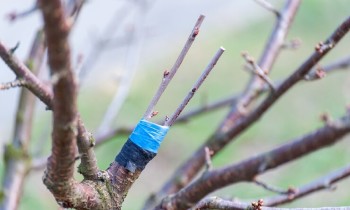
- Grafting by buds or cuttings.
- Rooting cuttings.
- Layers (clones).
Diseases and pests
- Fruit rot.
- Moniliosis.
- Cytosporosis.
- Scab.
- Powdery mildew.
- Scale insect.
- Leaf roller.
- Flower beetle.
- Green aphid.
Ripening and fruiting of the Pinova apple tree
The beginning of fruiting
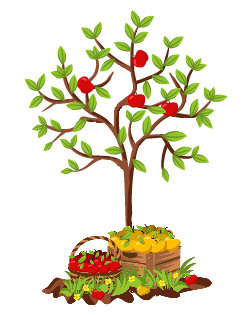 The beginning of fruiting
Trees of this variety bloom for the first time in the first year after planting. However, it's important to allow them to develop a root system and scaffold branches, so it's best to remove all buds. Don't worry, the following year the seedling will produce even more flowers. Fruiting begins in the third year, when they harvest 5 to 15 kilograms of fragrant apples.
Flowering time
Like most apple varieties, the Winter Pinova blooms in May. The exact timing is directly influenced by weather and climate, rainfall, and other factors. This can occur in the middle or end of the month, and in rare cases, flowers can bloom as late as early June. The variety's medium-sized, saucer-shaped flowers are fleshy, with numerous stamens, and are very fragrant.
Fruiting and growth
The tree grows very quickly, so it's important to prune it promptly. Annual growth is at least 15 centimeters, which is very good. However, a full harvest can be obtained no earlier than 6-8 years, when the tree has already reached a sufficiently large size. The fruits ripen by the end of September or the beginning of October. It is recommended to harvest them at this time, although they do not fall to the ground even when overripe; they cling very tightly to the branches.
Under proper storage conditions (a damp, well-ventilated cellar), apples of this variety exhibit truly remarkable shelf life. This is what attracts most people who maintain commercial intensive orchards. They retain all their qualities perfectly until May and even June, and often can easily last until the next harvest. Therefore, they are preferred for fresh consumption, although compotes, jams, and preserves made from them are also delicious.
Top dressing
- Compost.
- Manure.
- Bird droppings.
- Superphosphate.
- Potash fertilizers.
- Nitrogen fertilizers.
- Mineral complexes.
- Humus.
What to do if it doesn't bloom or bear fruit
- Trim.
- Transplant.
- Apply fertilizer.
- Provide or stop watering.
- Check for diseases or pests.
Why do apples fall?
- Natural phenomena.
- Pests.
- Diseases.
- Excessive or insufficient humidity.
- Poor soil (lack of nutrition).
Please share your thoughts on the Pinova variety in the comments below this article to share your experiences with other gardeners.