Belarusian Sweet Apple Tree: Variety and Care Features
| Color | Reds |
|---|---|
| Ripening season | Winter |
| Size of apples | Large |
| Taste | Sweet |
| Crown type | Average tree height |
| Shelf life | Average shelf life |
| Application | Fresh |
| Winter hardiness | High winter hardiness |
| Fruiting age | Up to 5 years |
 History of origin and regions of growth
Growing regions
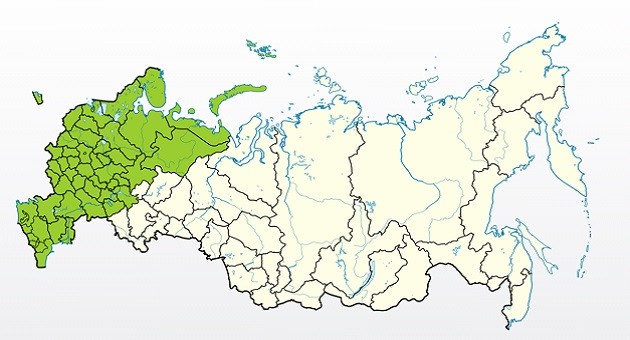
The variety is officially zoned only for the Northwestern Federal District, but it can be successfully grown throughout the country, right up to the Urals.
- Vologda Oblast.
- Arkhangelsk region.
- Nenets Autonomous Okrug.
- Pskov region.
- Leningrad region.
- Karelia.
- Kaliningrad region.
- Komi.
- Novgorod region.
This variety is still very rare, and finding seedlings can be difficult. It's recommended to purchase them only from nurseries, where you can receive complete information about the tree, its variety, and its biological health.
Origin
Work on developing this variety began in the nurseries of the Belarusian Research Institute of Fruit Growing in 1977. Its primary creators are considered to be V. M. Evdokimenko and G. K. Kovalenko, who introduced it for field trials just two years later. In 1999, the variety was classified as elite, but it was not until 2005 that it was added to the State Register and zoned.
The basis for this variety was the Lithuanian Pepinka and the Antonovka apple. Despite its youth and unusual flavor characteristics (the apple is actually sweet, with only a slight tartness in the aftertaste), it is becoming increasingly popular with each passing year.
Content
Description of the Belarusian Sweet apple variety
 Many inexperienced gardeners believe that a sweet taste is a sign of a summer apple tree, whose fruit won't store for long. This is partly true, but there are some exceptions that are important to know. The Belorusskoye Sladkoye variety literally breaks all stereotypes, as it is a winter apple with a pleasant sweet taste, good winter hardiness, and high productivity.
Apples: color, size, weight
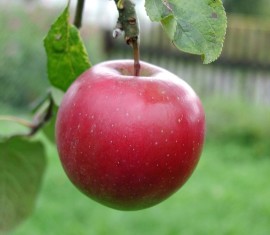
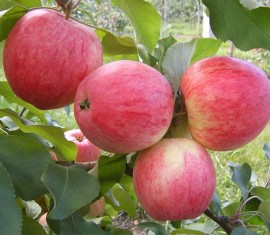
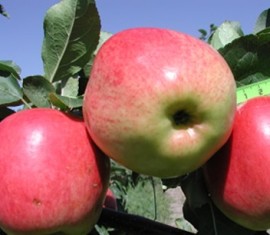
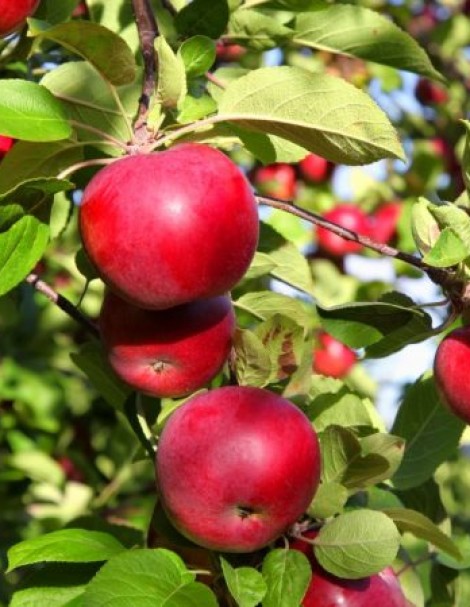
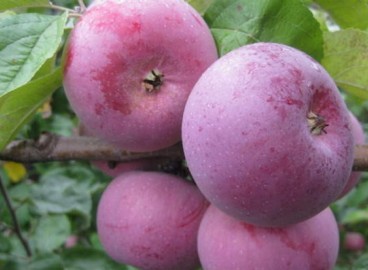
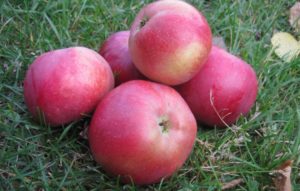 The fruits of this variety are large or medium-large, easily reaching 160-180 grams in weight. They are round in shape and can be slightly lopsided or asymmetrical.
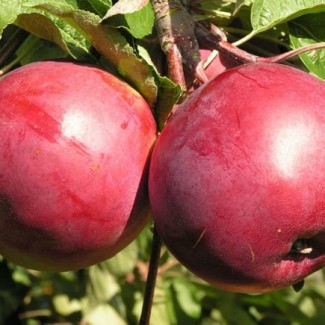
Their skin is thick, elastic, green or greenish-yellow, turning yellow as they ripen and becoming covered with a beautiful red or crimson blush. This blush can cover a significant area of the fruit, or it can be very small. The surface has a waxy coating, giving the apples a bluish tint.
The chemical composition can be characterized by the following indicators per 100 grams of product:
- P-active substances (catechins) – 110 milligrams.
- Ascorbic acid (vitamin C) – 10.5 milligrams.
- Total sugars (fructose) – 10-15%.
- Titratable acids – 0.6%.
The flesh of this variety is typically dense, with barely noticeable graininess, very juicy, crisp, and with a pleasant sweet-sour flavor. Experts' opinions on the taste vary widely. Some give Belorussky Sladky only 4.1 out of 5 possible points, while others award it the maximum.
Belarusian Sweet Apple Tree: Characteristics
Crown and root system
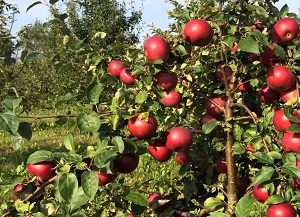 The tree is of medium height, since without pruning it can reach a height of 3-3.5, and sometimes 4 meters. It has a conical crown when young. Over the years, it can become very spreading, reaching at least 5 meters in diameter. The branches are arranged at an acute angle, but not densely, making it much easier to shape and harvest later.
The shoots are most often green or greenish-brown, but over the years they can turn brown, become rough, and crack. The foliage is predominantly light green, smooth, and leathery. The leaves are oval, round, or elongated, without a sharp, elongated tip. The variety has a ringed fruiting pattern, meaning the apples ripen only on the rings that form on branches that are at least three years old. These rings age very quickly, but are replaced by new young shoots. The root system is extensive and superficial. The presence of a central taproot depends on the rootstock.
Productivity and pollination
The variety has a stable yield without dividing it into years, for which it is highly valued by many gardeners.
The yield is considered high, although typically only 35-50 kilograms of fruit can be harvested from a single tree. Therefore, Belorusskoe Sladkoe is rarely used for commercial intensive orchards.
The variety is completely self-fertile, so no other varieties are needed to produce fruit. However, experienced gardeners say that with other varieties, yields increase to 65-70 kilograms. It's best to plant the apple trees close to the apiary, as this will give insects direct access to them.
Winter hardiness and disease resistance
The variety wasn't specifically bred for harsh conditions, but it exhibits remarkable cold tolerance. During testing, the apple trees easily withstood frosts down to -30-36°C. Experiments at lower temperatures have not yet been conducted.
Among the apple tree's main advantages is its immunity to scab and other wood and bark diseases. However, it offers no protection against pests. Therefore, regular treatment with suitable pesticides is recommended.
Subspecies and rootstocks
The variety is new, so its development on different rootstocks hasn't been fully studied. However, some information is already available. For example, it's clear that apple trees on dwarf rootstocks begin bearing fruit in the first year after being planted outdoors. Moreover, by the fifth year, they can yield twice as much as those on regular seedlings, even after seven to eight years.
Peculiarities of growing Belarusian sweet
 Landing
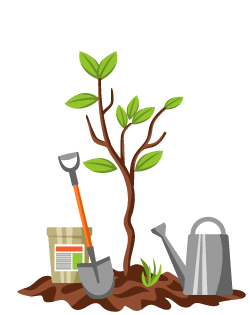 Landing
Key Features
- This apple tree requires a well-lit, sunny site with adequate ventilation. However, special care must be taken to avoid drafts. This can kill the tree in its first year, even before it has time to establish roots.
- Belarusian sweet loves moisture, but is not resistant to dry periods, so it is best planted where groundwater is not very deep or even near open bodies of water.
- Black soil, sandy loam, or loamy clay soil are suitable. It should be well-ventilated and airy. If the black soil is too heavy and "rich," it can be thinned with river sand.
- The holes are prepared in advance, at least 1-2 weeks before planting. To do this, dig holes up to 80 centimeters deep and 1 meter in diameter. Mix some soil with fertilizer and fill it back in, then add 20-30 liters of water. The holes are left outdoors. It's acceptable to prepare them in the fall if spring is the planned planting date.
- A distance of at least 2-4 meters must be left between the apple tree and other plants so that their crowns and roots do not conflict with each other later.
- Stake trees are immediately driven into the holes on the north side to support the sapling. These supports should not be removed until the apple trees' third year of growth.
- Immediately before planting, add drainage material to the bottom. This can be vermiculite, broken brick, gravel, or even nutshells. Place the seedling on top, spreading out the roots and removing any damaged ones with pruning shears. Cover with soil, compacting it lightly so that the root collar protrudes at least 10-15 centimeters. If the grafted scion is allowed to root, all the properties of the rootstock, which is the reason for the grafting, will be completely lost.
- The young tree should be watered immediately with 30-40 liters of water, and the area around the trunk should be mulched with chopped grass or humus.
To ensure the tree takes root quickly and begins producing good harvests quickly, it should be planted correctly, choosing optimal conditions. For the Belorusskoe Sladkoe variety, the best option is to grow it from two- or three-year-old seedlings.
Landing dates
This variety can be planted in the spring, before bud break, in early or mid-April, or in the fall after the leaves have fallen in October. However, experienced gardeners prefer the latter option, as it gives the apple tree more time to adapt to environmental conditions during the winter and with the onset of spring sap flow. The main thing is to ensure there are at least 4-5 weeks before frost, otherwise the tree may freeze.
Protection from frost and rodents
During the first and second years of growth, it's best to provide reliable frost protection for seedlings, especially if your climate is harsh. To do this, line the area around the tree trunk, including the lower part of the trunk, with spruce branches, straw bales, hay, or even wrap it in foam rubber or nylon tights.
Such piles and the tender bark of young shoots are sure to attract the attention of hungry small rodents, who readily feast on such delicacies in winter. To repel them, the trunks are coated with special chemicals, such as lard or grease. This works well against insects. whitewash trunk and skeletal branches with lime.
Similar varieties
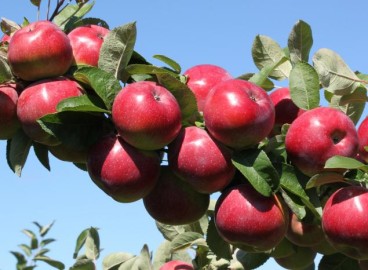
2
| Color | Reds |
|---|---|
| Ripening season | Autumn |
| Size of apples | Average |
| Taste | Sweet and sour |
Read more
Tree care
 Tree care
Loosening the soil, watering: proper agricultural technology
All plants love airy soil, so it needs to be loosened regularly, and each tree should be well-dug around twice a year. At the same time, remove root suckers, shoots from shrubs and other trees, and various weeds.
Belorusskoe Sladkoe apple trees need to be watered regularly, at least once a month. If the weather is very dry, you can double the watering frequency. For a mature apple tree, use at least 50-60 liters of water at a time, then immediately mulch the soil with humus, chopped grass, or straw.
Pruning: simple crown shaping
The tree tends to develop a dense crown, so pruning (formative, sanitary, supportive, and rejuvenating) will need to be done regularly. This is best done in early spring, in April or October, when the sap has stopped flowing in the trunk.
When purchasing seedlings from a nursery, pay attention to their crown. They typically have a central stem and several tiered scaffold branches. If this is the case, you won't need to prune them yourself the following year.
In the first year, it's best not to damage the tree, but in the second year, you can shorten the main stem by a third and trim the skeletal branches by 5-7 centimeters. You should also regularly remove damaged, dry, diseased shoots, and those growing inward, causing the crown to become denser.
The variety is self-fertile, but additional pollinators for the cross-pollination process will only increase the yield.
Pollinators
- Antonovka.
- Pepinka.
- Cinnamon Striped.
- Belarusian synapse.
Reproduction
- Grafting by cuttings or buds.
- Layers (clones).
- Growing from seeds.
- Rooting by cuttings.
Diseases and pests
- Cytosporosis.
- Green aphid.
- Leaf roller.
- Scale insect.
Ripening and fruiting of the Belarusian Sweet apple tree
The beginning of fruiting
 The beginning of fruiting
This variety is considered very early-bearing, so you can try your first apples as early as the year of planting. However, a full harvest of 3-4 fruits is hardly a good idea. Therefore, you'll have to wait 2-3 years for normal fruiting. With a dwarf rootstock, the process will be faster, and you can get a good harvest of apples much earlier.
Flowering time
Like most other apple trees, this variety blooms in May. However, the exact timing will depend directly on the growing region, climate, and weather conditions. In most cases, blooming will occur at the end of the month and last no more than a week.
Fruiting and growth
By the fifth to eighth year, a full harvest of 35-60 kilograms of delicious and sweet fruit can be achieved. Although the tree's growth is small, it can fully reach its maximum height during this time, and then expand in width.
The typical ripening period for apples is September or early October. They cling tightly to the branches and only begin to shed their leaves after the first frost. However, to ensure the fruit lasts longer, experienced gardeners recommend picking them no later than late August. While they are generally considered edible immediately, it's best to keep them until February, when they'll be particularly juicy and sweet.
Top dressing
- Compost.
- Manure.
- Peat.
- Mineral complexes.
What to do if it doesn't bloom or bear fruit
- Provide watering.
- Check for diseases or pests.
- Transplant to a site without drafts and shade.
Why do apples fall?
- Diseases.
- Insufficient watering.
- Natural phenomena.
- Frosts.
- Pests.
Share your thoughts on Belarusian Sweet in the comments so that other gardeners can learn from your experience.