Columnar apple tree: planting tips
These apple trees are characterized by a compact crown, a virtually complete absence of lateral branches, a wide variety of cultivars, and high fruit yields. The popularity of these fruit trees is growing daily. In this article, you'll learn how to properly plant and care for them. columnar apple trees.
Content
- When is the best time to plant columnar apple trees?
- Planting plan
- It will be useful to know:
- Determining a favorable location
- Preparing the pit
- Root treatment
- Description of the planting process
- Features of planting columnar apple tree seedlings
- Differences by season
- Caring for a columnar apple tree after planting
- Prevention of diseases and pests of young seedlings
When is the best time to plant columnar apple trees?
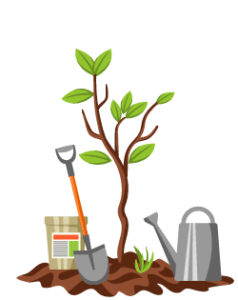 The main factor influencing the planting of this variety of fruit trees is optimal weather conditions. Experienced gardeners say this can be done in both spring and fall.
In spring, you should plant seedlings of columnar apple trees after soil will receive a sufficient amount of sunlight, and buds will begin to appear on the branches. Don't forget about the period of returning night frosts, which can negatively impact young plants. The site where the fruit tree will grow begins to be prepared in the fall. For this purpose, a hole is dug and the soil is fertilized.
Necessarily it is necessary to take into account the air temperature, which should be no lower than +15 degrees. The climatic characteristics of each region of the country should also be taken into account. If in the Moscow region and the Leningrad region, planting can begin in mid-to-late April, then in the Urals And in Siberia Doing this before the second ten days of May is simply pointless.
It is also possible to transplant young trees in autumn. Moscow region This process occurs at the end of September – beginning of October, and on Urals – in the first month of autumn. The seedling needs time to take root in the open ground. Delay in planting can lead to the tree's growth being stunted and even to its death.Be sure to find out. What apple tree varieties are suitable for the Moscow region?.
If you purchased planting material in a container with closed root system, then you can plant it even in summer.
Planting plan
When distributing young seedlings around your garden plot, it's essential to consider the tree varieties you purchased and the specific grafting techniques. You should also consider your own ideas and preferences regarding apple tree planting. Place them where they'll be most appropriate. Don't forget the recommendations of experts and the advice of experienced gardeners.
It will be useful to know:
3
There are times when the planned autumn planting of seedlings is impossible due to some...
Read more
The apple tree is an unpretentious fruit tree that does not require special...
Read more
To get a healthy plant and a good harvest, you need to...
Read more
Determining a favorable location
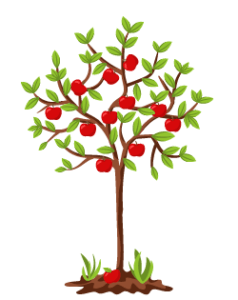 When choosing the most favorable place for the location of a columnar apple tree seedling, remember that this the area should be as protected as possible from strong winds and draftsAt the same time, it must receive a sufficient amount of sunlight.
The best option is to plant them along a fence or near summer cottages. An apple orchard of dwarf varieties can easily be established in a greenhouse.
Is it possible to plant columnar apple trees of different varieties next to each other?
When planting large numbers of seedlings, maturity timing plays a key role. This is a key criterion to consider if you plan to plant different columnar apple tree varieties nearby.
The planting pattern should be as follows:
- summer group;
- autumn group;
- late group.
What to plant next to a columnar apple tree
The columnar apple tree is a very friendly neighbor. Its compact crown Allows for planting other fruit trees nearby. Just be careful not to over-crowd the trees. The minimum distance between trees should be 40 cm. This is necessary to ensure equal access to sunlight for all the trees in the garden.
Should I plant just one apple tree?
It's not recommended to plant this type of apple tree singly, at least for aesthetic reasons. A solitary tree with its very distinctive crown will look extremely odd on your property.
The exception is the variety Moscow Necklace.
Preparing the pit
Depending on the number of seedlings selected, it is necessary to clearly orientate yourself, How to prepare holes for plantingThis happens as follows:
- For an entire orchard, holes should be dug using the trench method. The dimensions will be up to 45 cm wide and up to 50 cm deep;
- for a small number of young trees, separate planting holes are better suited;
- The size must correspond to the root system of the planting material - diameter not less than 1 m, depth up to 90 cm.
It is not recommended to add complete mineral fertilizer to the planting holes, as the weak root system is unable to absorb large amounts of nutrients, which will negatively affect the tree's development.
Root treatment
Before planting in open ground, the root system of columnar apple trees must undergo special treatment. The day before transplanting, soak the roots in water containing a growth stimulant. Immediately before planting, treat them with a protective clay-based slurry.
Description of the planting process
To successfully transplant a seedling, it is recommended to follow clear step-by-step instructions:
- A fertile layer of soil is poured into the hole.
- The planting material is lowered into the hole in such a way that the upper line of root growth rises slightly above the surface of the ground.
- The roots are straightened out and covered with infertile soil left over from preparing the hole.
- The soil is pressed down and filled with 2 buckets of water.
- As soon as the moisture has completely disappeared into the ground, the area around the trunk is covered with peat, shavings or grass.
- For greater stability, the young plant is tied to a stake.
Features of planting columnar apple tree seedlings
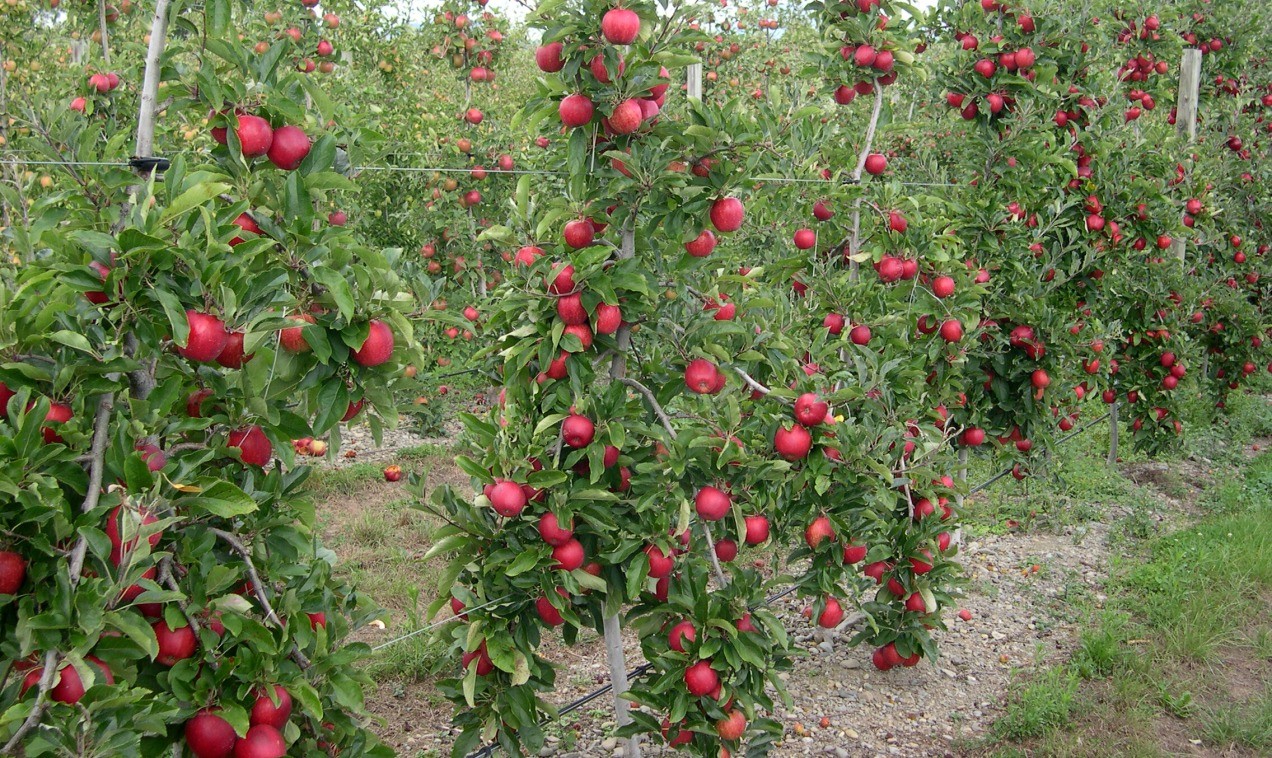
Depending on the type of soil in your garden, you will need to adjust the planting process itself.
In clay soil
 If you have a garden with clay soil, you'll need to dig a deeper hole for the seedling—perhaps even up to five feet deep. Next, create a drainage layer of sand, crushed stone, or broken brick. You can also use tin cans or plastic bottles. This is all to prevent damaging waterlogging around the root system.
Into sandy soil
Sandy soils are highly permeable. The loss of vital moisture is also dangerous for young trees. When preparing the planting hole, it's important to add silt or clay. This will provide additional waterproofing.
When the groundwater level is high
When planting columnar apple trees, avoid planting them in soil with a high water table. The minimum depth should be at least 2 meters. If this is a problem on your property, plant the trees on raised mounds or earthen embankments, and ensure proper drainage is installed.
By vaccination site
Be sure to pay attention to the location of the graft. When transplanting the seedling into the soil, ensure the scion is 4–6 cm above the root hole, even after the soil has settled.
Differences by season
 To achieve better results when planting columnar apple trees, it is necessary to follow the rules associated with the planting season.
Planting in spring
Considering the low frost resistance of these trees, it is recommended to transplant young trees into open ground in the spring.
Planting diagram
Recommended scheme for planting young columnar apple trees in spring:
- Prepare the holes in the fall; this will help the soil settle and the fertilizers dissolve.
- When planting several trees, place them at a distance of 50 cm from each other, and leave a gap of 1 m between rows.
- Make a hole of standard size (45 by 50 cm), taking into account the size of the root system.
- Make sure there is organic fertilizer in the hole, which will become a source of nutrients for the young plant.
Fertilization
Fill the planting hole with:
- up to 500 g of ash;
- 80 g potassium;
- 100 g superphosphate;
- 5 kg of organic fertilizers.
Planting an apple tree in autumn
When planting, choose the appropriate time based on your region's conditions. If you're unable to complete the planting on time, it's best to postpone the process and bury the seedling in a suitable location until spring, then insulate it for the winter.
Scheme
The recommended planting scheme in autumn is no different from the spring one, except for the timing.
Fertilization
It is not recommended to apply any fertilizer when planting young plants outdoors. It's best to wait until spring before doing so. Watering should also be reduced by at least half.
Caring for a columnar apple tree after planting
 Post-planting care for columnar apple tree seedlings consists of:
- irrigation;
- top dressing;
- trimmings;
- regulation of the load on a young plant during the flowering period;
- timely harvesting;
- protection during the winter period.
Regulating the number of ovaries on trees helps control the quality of the harvest. Overcrowding the tree contributes to the degeneration of the variety and the smaller size of the fruit.
Don't forget about mulching and grassing. Mulching is done by laying hay or sawdust around the trunk of a young tree. This method helps protect the planting from frost. It's recommended to use coniferous branches as a surface "covering." Grassing involves seeding the open space around the tree with herbs or cereals.
If the winter forecast is extremely bleak with regard to catastrophically low temperatures, then hilling is recommended, which will help protect the trees from freezing and rodent attacks.
To water columnar apple trees, you need to set up a drip irrigation system. If you don't have this capability, you can manually water them every 3-5 days.
One of the most important processes in caring for seedlings is pruning, which is performed in the spring of the first year after planting. Young lateral shoots are removed, leaving only two buds. In the fall, these will develop into two strong branches, which should be removed the following spring. In the third year, the formed fruiting branch will reward you with a full harvest, after which it is pruned.
Proper care allows trees to produce a high-quality harvest even before they reach 5–6 years of age. After this age, fruiting rates begin to decline, requiring rejuvenation measures.
Systematic soil fertilization plays an important role in the growth of young apple trees.
Urea can be used as a fertilizer. Supplemental feeding is best done from March to June. In addition to urea, slurry or processed chicken manure are often used. It is recommended to fertilize young trees at least three times per season. Frequency:
- in spring, add organic matter under the roots;
- in mid-June, complex additives containing nitrogen, potassium and phosphorus are required;
- In August, potassium-containing fertilizers are necessary, but nitrogen and phosphorus should be excluded.
Prevention of diseases and pests of young seedlings
 If you've acquired columnar apple tree seedlings, be aware of the insidious pests and serious diseases that can attack your trees. The most dangerous pests for seedlings are:
- aphid;
- codling moth;
- Schlechtendahl's tick.
To prevent these tree pests, it's important to regularly inspect the leaves of your trees. A tree is considered healthy only if it shows no signs of damage.
At the first sign of infestation, emergency measures should be taken. To control insects, use insecticides designed for regular apple trees. To prevent and combat fungal diseases, young plants should be sprayed with Fitosporin or Trichodermin. Fitoverm is effective against aphids, caterpillars, and mites. Most importantly, all of the above-mentioned products are completely harmless to humans, bees, and animals.
Timely spraying is the key to a good harvest.
In winter, columnar apple trees need to be protected from small pests such as hares and mice. For this purpose, tree trunks are wrapped in plastic film and tied to prevent pests from reaching the bark.
These apple trees offer numerous advantages that any gardener will appreciate. The most important ones, of course, include: a compact crown shape, low maintenance requirements, delicious fruit, and significant yields.