Why do apples on an apple tree become smaller?
Sooner or later, a seemingly healthy apple tree yields a crop of small, unattractive apples. This suggests something is wrong, or the conditions, which were previously more favorable, have changed. By analyzing the tree's entire annual care cycle, you can determine the cause of the problem and answer the question of why apples become smaller over time.
Content
Reasons for small fruits on an apple tree
If your apple tree hasn't produced large fruits before, it's possible you're growing a wild apple tree, not a cultivated variety. Even with the most careful care, don't expect large fruits from such a tree; their size will remain constant.
But if a good apple tree variety initially yielded large, juicy fruits, but over the years they began to become smaller, then the cause may be various agricultural errors made by the gardener.
Irregular pruning of apple trees
 The main cause of small fruit on an apple tree is irregular and improper pruning. For effective fruiting, this procedure should be performed annually. It is especially important for a young tree, when its skeleton is developing.
Pruning regulates both the height and width of an apple tree. Furthermore, this procedure:
- the quality of the harvest is improved;
- the number of small apples is reduced;
- the tree is rejuvenated;
- his immunity is strengthened.
Some novice gardeners believe that pruning slows a tree's growth and development. This is a misconception, as timely and proper pruning will improve crown ventilation, effectively preventing many plant diseases. A well-maintained tree is less susceptible to infection and more frost-resistant.
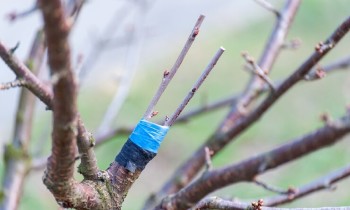
Pruning is carried out in the fall when temperatures are no lower than -5°C (33°F) or in the spring before bud swell. If the apple tree has old or diseased branches, a combination of formative and sanitary pruning can be performed. Damaged, dead, and unwanted branches growing inward are removed to allow more light to reach the center of the tree.
To disinfect the wound, treat it with a 1% Bordeaux mixture or Savoy DS for garden trees. Afterwards, apply a special paste to the cut areas, such as RanNet, BlagoSad, Zhivitsa, etc.
Untimely or incorrect fertilizing
Apple trees require additional nutrition, especially in the spring after winter dormancy. If fertilizing is done late, incorrectly, or not at all, the apple trees' fruit will not only become smaller each year but also lose flavor. Timely application of nutrient mixtures stimulates the growth and development of shoots and fruits and prevents disease.
Fertilize the apple tree soil from April to September. In spring, plants require more nitrogen, and during flowering and after fruiting, they need potassium and phosphorus.
The apple tree itself signals the lack of certain elements with specific signs: the fruits ripen, but are very small, the leaves lose their natural color, turn yellow, curl and fall off, and young shoots dry out.
When fertilizing trees, it's best to choose complex fertilizers with a seasonally appropriate ratio of nitrogen, phosphorus, and potassium. Complex fertilizers not only replenish micronutrient deficiencies but also increase the frost resistance of fruit crops.
It is important to remember that nitrogen cannot be applied in the second half of summer.
Lack of moisture
 Some gardeners make the mistake of believing that fruit trees receive enough moisture from precipitation, melting snow, and groundwater. But properly organized watering will enhance the growth and development of the apple tree and help to obtain a rich and high-quality harvest.
The tree doesn't require frequent watering. Four deep waterings per season are sufficient to soak the soil to a depth of 60–80 cm and thoroughly nourish the roots. Approximate schedule glaze mature trees:
- before the buds open (April-May, if there was no snow and soil dry);
- after flowering (after 2-3 weeks);
- during the period of fruit filling (2–3 weeks before ripening);
- moisture-recharging watering after leaf fall (before the onset of cold weather).
Water consumption depends on the age of the tree. Mature trees 6–10 years old require 12–15 buckets of water. Apple trees over 10 years old require up to 20 buckets.
If the summer is dry, apple trees require additional watering during the fruit ripening period. A lack of moisture during this period results in the fruit becoming smaller and falling off.
The apple tree's suction roots are located closer to the edge of the crown. Therefore, it is recommended to position the hose at least 1.5 m from the trunk.
Crowded plantings or excess fruit
Small apples can grow even in densely planted trees. Each fruit tree requires sufficient soil and air throughout its life to grow and bear fruit well. Therefore, even when planting seedlings, it's important to space the crops according to the space they will occupy when mature.
If tall apple trees are planted, the recommended distance between them should be at least 6 m, for medium-sized ones – 4 m, for dwarf ones – 2 m.
An excess of fruit on a tree can also lead to small and tasteless apples. Therefore, a profusely blooming orchard is no cause for celebration. The tree simply won't have the energy to provide the necessary nutrition for all the berries, and the tired plant will refuse to bear fruit at all next season.
Furthermore, the tree will enter winter dormancy weakened and unprepared, which will negatively impact its subsequent growth. The number of fruit buds can be artificially controlled using one of the following methods:
- Remove excess ovaries manually, meaning pick off any small, flawed, or irregularly shaped ones. You can simply shake the branch first, and the weak ovaries will fall off.
- If the trees are tall, approximately four days after flowering, treat the plants with a 0.7% solution of soda ash (70 g of solution per 10 liters of water). After this treatment, the number of ovaries will decrease by almost half, but the apples will still be large, beautiful, and delicious.
Pests on a tree
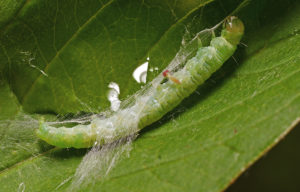 Apple tree pests damage much of the future harvest during flowering and budding. As a result, the fruit may be small, damaged, and deformed.
Pests love dense shoots and the presence of old branches. Therefore, to limit their free reign, timely pruning is necessary. The most common apple tree pests include:
- AphidMany species feed on apple tree juice. aphids: green, gray, striped, red-gall, peach, etc. These are small sucking insects that attack young leaves and buds. The leaves dry up and fall off. If there are large numbers aphid It can also damage the fruit: red spots appear and the apples do not ripen properly.
- Apple blossom weevilA small, brownish-brown beetle with an elongated, proboscis-like head, reddish-brown legs, and antennae. If not detected promptly, the damage can be significant, as it feeds on various parts of the apple tree at all stages of its development. It chews small holes in leaves and developing fruits.
- Scale insectThe pest's body shape resembles a tiny, flat turtle, which attaches itself to the surface of a plant and sucks out all its juices.
Trees affected by pests are sprayed with broad-spectrum insecticides: Karbofos, Iskra Zolotaya, Aktara, 30 Plus, Actellic, Inta-Vir, etc.
Apple tree diseases
Apple tree diseases can also cause fruit to become smaller. Fungal or viral infections can leave a gardener without a harvest. If symptoms of the disease are not identified and treated promptly, the fruit tree may die. The most common diseases that cause fruit to become smaller include:
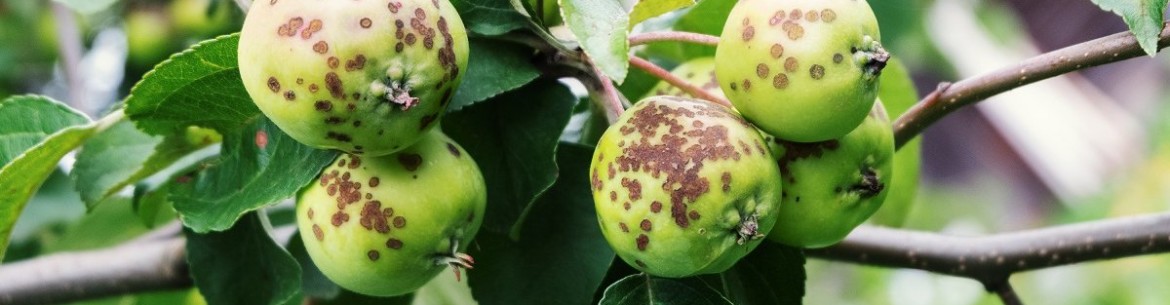
- ScabA fungal infection that causes crusts and ulcers to form on leaves and fruit. Fruit growth is stunted and flavor is lost. In this case, healthy fruit should be removed and the apple tree treated with a 3% Bordeaux mixture solution or with products such as Alirin-B, Maxim Dachnik, or Skor.
- Black crayfishBrown spots appear on leaves and fruit, the bark dies, and wounds appear on the trunk and branches. Damaged areas are carefully cleaned down to healthy tissue, treated with a 5% ferrous sulfate solution for disinfection, and then coated with a protective compound. If the damage is severe, the tree is completely removed.
- Milky shineThe leaves take on a silvery tint, and over time, necrotic areas develop. Fruit on affected branches grow poorly, do not ripen, and fall prematurely. If the infection has only affected individual branches, they will need to be removed. If the entire tree is severely affected, it must be uprooted and burned. Affected areas of the bark are cleaned and treated with a 4% solution. copper sulfate, and then with a protective composition: "Zhivitsa", "RanNet", "BlagoSad".
Caution: Regularly inspect your apple tree for signs of disease or pests, and take immediate action if any are detected.
Apple trees require proper care, preventative measures, and timely inspections for diseases and pests. Only then will a caring owner reap an excellent harvest of large, delicious apples.