Arkadik apple tree: characteristics of the variety and care
| Color | Striped |
|---|---|
| Ripening season | Summer |
| Size of apples | Large |
| Taste | Sour |
| Crown type | Tall tree |
| Shelf life | Low shelf life |
| Application | For recycling , Fresh |
| Winter hardiness | High winter hardiness |
| Fruiting age | Up to 5 years |
 History of origin and regions of growth
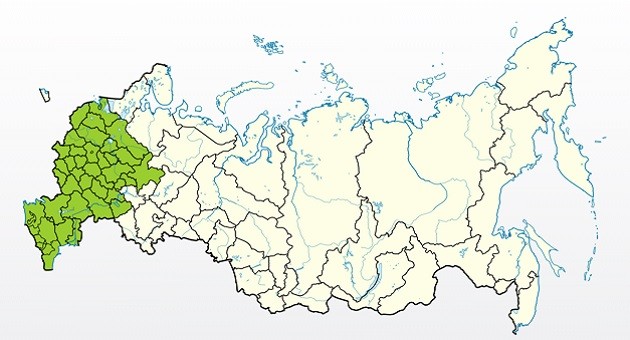
Growing regions
- Middle zone.
- North Caucasus.
- Crimea.
- Some northern regions.
Origin
This variety is one of many developments by renowned Soviet scientist and breeder Viktor Valerianovich Kichina. In the mid-1970s, he attempted to improve the qualities of the ancient Arkada zheltogo variety by crossing it with the American SR0523. By the early 1990s, a seedling later named Arkadik was obtained at the experimental station of the All-Russian Selection and Technological Institute of Horticulture and Nursery in Moscow.
The variety was sent to various farms in the Moscow region for field trials and passed them with flying colors. However, it was only added to the State Register of Breeding Achievements in 2008. These apple trees are zoned for the Central Region, although in reality they grow well throughout the central part of the country, and thrive in the Leningrad Region and even in regions much further north and northwest.
Content
Description of the Arkadik apple tree variety
 In the harsh conditions of our country, with its cold winters, frequent thaws, and prolonged periods of rain alternating with summer heat, it is crucial that fruit trees withstand such periodic challenges with honor. Arkadik is one of those apple trees that survives even where the hardier AntonovkaThe trees grow and begin to bear fruit quickly, producing good harvests without resting.
The fruits are large, beautiful, aromatic, and juicy. Even though harvesting requires some haste, as the apples can fall to the ground and their shelf life leaves much to be desired, they are recommended for planting in large, intensive commercial orchards and for growing in small plots near a garden shed.
Apples: What they look like
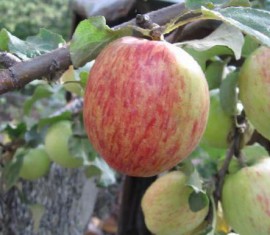
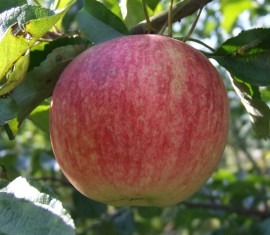
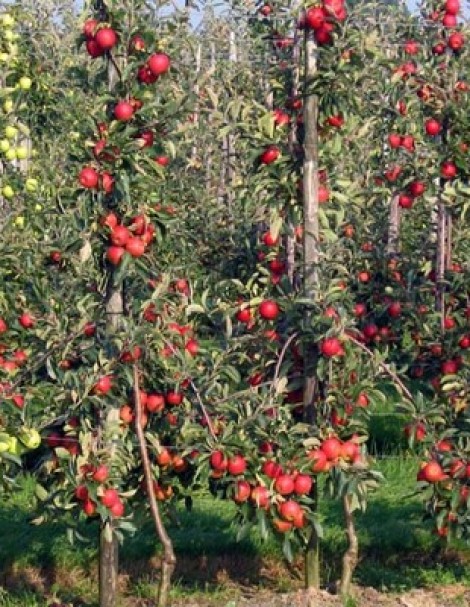
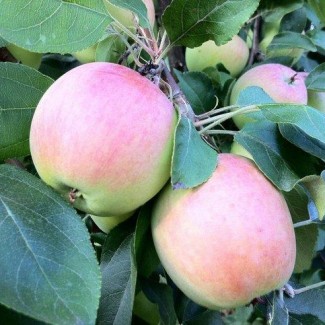
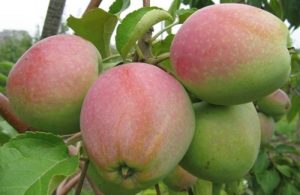 Arkadik typically produces medium to large fruits, but with proper care, the tree can grow very large. Average weight ranges from 120-160 to 250-330 grams. They are generally irregular, symmetrical, and elongated to oblong in shape, sometimes slightly ovoid. The ribbing can be clearly visible from the outside, and the apples may even appear slightly faceted.
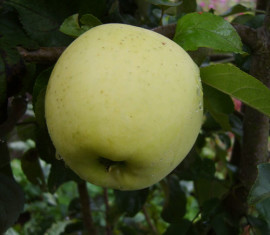
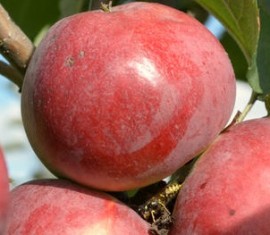
The skin is dense but thin, easily damaged, smooth, glossy, and free of any oily or waxy coating. The base color is green, becoming more creamy, lemon-yellow, as it ripens. The blush is diffusely streaked and mottled, occupying approximately 55-75% of the surface, and is bright red, crimson-red, or carmine-red in color. Subcutaneous spots are light, numerous, and not very visible on the apple's variegated surface. The chemical composition is best characterized by the following chemical indicators per 100 grams:
- P-active substances (catechins) – 235 milligrams.
- Ascorbic acid (vitamin C) – 11.4 milligrams.
- Total sugars (fructose) – 14.6%.
- Pectins (fiber) – 8.2%.
- Titratable acids – 0.67%.
The fruit's flesh is not very dense, pleasant, fine-grained, crisp, oily, slightly prickly, and very juicy, white or creamy white in color, sometimes with a hint of lemon. It has a harmonious, balanced dessert flavor, sweet and sour, but leaning heavily toward sweetness with a tart finish, as is typical of classic varieties. The professional tasting score is 4.3 out of 5.
Arkadik apple tree: characteristics
Crown and root system
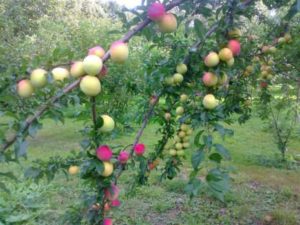 It is not without reason that these unusual apple trees are considered tall, They can easily reach a height of 9-10 meters if no formative pruning is carried out.Most owners do not allow such overgrowth and limit trees to a maximum height of 5-6 meters.
The crown is usually conical or pyramidal, fairly compact, and does not take up much space. It is quite sparse and not prone to dense growth. The shoots extend from the main stem at an angle close to ninety degrees. They are straight, thick, long, round in cross-section, and covered with brown or reddish-brown bark. Fruiting is concentrated on the ring shoots.
The leaves are medium-sized, numerous, elongated, long-pointed, flat, leathery, glossy, dense, and shiny. They are dark green or rich green in color, with rough ribbing and slight pubescence on the underside. The root system is very robust, deeply buried, and well adapted to seeking water; most often, there is a central taproot that penetrates very deeply.
Productivity and pollination
The apple tree is considered an early-fruiting and high-yielding variety, as it can easily outperform most similar crops.
In a single season, thrifty growers harvest at least 200, and more often 220-250 kilograms, of very juicy and delicious apples from a mature Arkadik tree. Commercial orchards typically yield 300-310 quintals of fruit per hectare.
Arkadik is considered conditionally self-fertile; even in the complete absence of other apple trees within 150-200 meters, ovaries will form from the inflorescences and ripen into apples in 50-55% of cases. However, to maximize yield, it's still a good idea to have other varieties nearby, bring mobile apiaries into the garden, and spray the trees with honey or sugar diluted with water.
Winter hardiness and disease resistance
This variety is considered highly resistant to low temperatures, as well as sudden fluctuations and changes. Even frosts down to -32-35°C (-22-35°F) cannot harm the trees if they last no more than 2-3 weeks. If Arkadik does sustain damage, it is minor and recovers within a year, continuing to produce good harvests.
The apple variety's resistance to fungal infections is high, but it's not programmed into the gene pool. This means that during years of severe epiphytotics, trees can be affected by diseases, especially if the area around the trunk isn't kept clean. Rotting fruit and leaves there can become a breeding ground for fungi. Removing the disease is more difficult than preventing it, so it's best to treat the trees with fungicides and insecticides in a timely manner to protect them from insect attacks.
Rootstocks and subspecies
There are several subspecies of the variety, which are worth examining in more detail, as their characteristics may differ from the parent variety.
| Subspecies | Description |
| Sugar | This subspecies produces fruit that is significantly sweeter, with sugar content reaching over 15.9% per 100 grams. The trees themselves grow up to 5-6 meters tall, are easily trained, winter-hardy, low-maintenance, and drought-resistant. |
| Columnar | Grown on a special rootstock, it lacks lateral scaffold branches. The rings are located directly on the central conductor, where the apples ripen. All the characteristics of the main Arkadik variety's fruit are preserved, but the yield per tree barely reaches 70-80 kilograms, although it only increases per hectare (330-340 kilograms). |
| Pink | This subspecies is grown on a dwarf rootstock, resulting in compact, small-sized trees. The fruits are small, barely reaching 70-80 grams in weight, with a light green skin and a pale pink, translucent blush. |
| Summer yellow | This variety is also grown on dwarf rootstocks, resulting in a much smaller tree than the main cultivar. Its fruit is also somewhat smaller, but retains all its flavor. The skin has a bright, beautiful yellow or lemon-yellow hue; the blush is absent or may appear on the sunny side as translucent, faded, and barely visible stripes, spots, or specks. Its main drawback is considered to be its high susceptibility to pests. scabies and powdery mildew. |
Features of growing Arkadik
 Landing
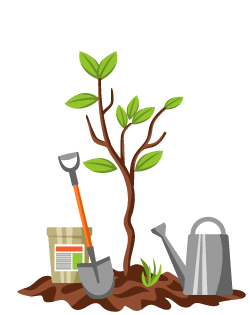 Landing
Basic conditions
- Always choose a sunny location for planting apple trees; they prefer well-lit and ventilated areas. In such locations, they are less susceptible to diseases and produce higher yields.
- Proximity to groundwater can be fatal for Arkadik, as its roots penetrate very deeply. Therefore, it's best to choose a high elevation or a site where the roots are at least 3-3.5 meters below the surface. Avoid planting this variety near ponds, lakes, springs and rivers, shallow wells, in lowlands, or in floodplain meadows.
- You can prepare the holes for apple trees in advance, ideally the previous season, but if you haven't had time, you can do so within 2-3 weeks. To do this, dig holes 70-80 centimeters deep and approximately 1 meter in diameter. Add fertilizer to the bottom, then add drainage material made of stones or bricks, then add 45-55 liters of water and leave uncovered until planting time.
- The root collar of the seedlings should be left at least 7-9 centimeters above the horizon, otherwise the tree may root higher. This will likely result in the loss of the rootstock's properties.
- Place the seedling upright, holding it by hand and gently shaking it. Cover with soil, compacting it gently to eliminate air pockets. Water the tree with 45-60 liters of water, and mulch the surface with grass, sawdust, or compost.
Landing dates
Arkadik responds well to planting in both spring and fall. You can choose a warm day in late March or early April, or late September or October—it doesn't matter much. The key is to give the tree 2-4 weeks to adapt to the new conditions. It's best to avoid any sap movement in the trunks during planting.
Protection from frost and rodents
This variety is generally not particularly susceptible to frost, but in harsh conditions or when young, it still requires proper winter protection. In particularly cold climates, it's best to cover the root zone with straw or grass mats and cover it with soil. The trunks can be wrapped with agrofibre, burlap, old women's tights, roofing felt, or roofing felt. Small dwarf and semi-dwarf varieties, as well as young seedlings, can be covered with a tent-like covering.
Hungry rodents can chew the tender bark and shoots of young trees in winter, so it's best to repel them by smearing the trunks with melted animal fat or grease. Whitewashing with lime in spring and fall will prevent insects from settling in chipped and cracked bark.
Tree care
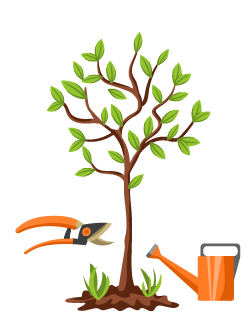 Tree care
Loosening the soil, watering: proper agricultural technology
Ensuring soil aeration and drainage is the primary task of any gardener or cultivar owner. Therefore, the soil around the trunk should be dug at least twice a year. Don't worry about damaging the roots, which are usually located deep beneath the surface. The rest of the year, you need to hoe the surface, remove weeds and other plant shoots, and remove root suckers. All of this can negatively impact yields, so it's important to remember to maintain the soil.
The tree doesn't really need watering, as it's very good at finding water in the soil. However, if the summer is particularly hot and dry, you can apply water 4-5 times per season. 20-35 liters per mature tree is sufficient. It's best to apply it via drip irrigation, but two applications (morning and evening) are also acceptable.
Pruning: simple crown shaping
If the seedling is healthy and strong, the first formative pruning should be done in the year of planting. However, if there is any damage, it's best to postpone it for 2-3 years. Prune the central basal part by 25-30%, and leave 2-3 lateral scaffold branches spaced well apart at different heights. They should be 5-7 centimeters shorter than the trunk. In the future, simply maintain the desired shape; this won't be difficult.
Sanitary pruning is usually done every fall and spring. All shoots that are damaged, diseased, or dried out are removed. Cut areas must be sealed with drying oil, garden varnish, or water-based paint.
Reproduction
- Rooting cuttings.
- Grafting by buds or cuttings.
- Growing from seeds.
- Clones (layering).
Diseases and pests
- Powdery mildew.
- Scab.
- Cytosporosis.
- Green aphid.
- Hawthorn.
- Codling moth.
Ripening and fruiting of Arkadik
The beginning of fruiting
 The beginning of fruiting
The first flowers on this variety's trees may appear even in the first year after planting, but it's not advisable to allow them to develop into apples. It's best to pluck the blossoms immediately so the Arkadik has time to develop foliage, rhizomes, and root well. The first harvest can be collected around the third or fourth year, yielding approximately 4-8 kilograms of fragrant fruit, or even up to 10-15.
Flowering time
The variety begins to bloom in early to mid-May, ensuring it produces fruit before the cold weather sets in. By around the 15th or 20th, flowering is complete, lasting no more than 10-14 days. During this period, the tree becomes covered with a dense carpet of inflorescences, becoming beautiful and elegant. The flowers are large, fragrant, with fleshy yet delicate petals, in shades of pink or snow-white.
Fruiting and growth
Experts call the tree fast-growing because it can grow at least 45-70 centimeters in height per year. Therefore, it reaches its maximum height quite quickly. Arkadik's yield also skyrockets. By the seventh to ninth year, you can harvest up to 50-70 kilograms of sweet fruit, and by the twelfth to fifteenth year, you'll have a full harvest.
You can begin picking apples from the branches as early as the second half of August. It's crucial not to miss this moment, otherwise they could all fall to the ground and then have to be processed immediately. The fruit has a short shelf life, only 30-45 days, after which they become soft, wilted, and sour. Therefore, it's best to eat them completely by then or grind them into juice, jam, or preserves.
Top dressing
- Mineral complexes.
- Chicken manure.
- Wood ash.
- Ammonium nitrate.
- Manure.
- Compost.
- Humus.
What to do if it doesn't bloom or bear fruit
- Provide watering.
- Check for pests and diseases.
- Transplant to a sunnier location.
- Fertilize.
Why do apples fall?
- Natural factors.
- Overripe.
- Pests.
- Diseases.
Please leave your feedback on the Arkadik variety so that other gardeners can learn about your experiences growing these trees.