Berkutovskoye apple tree: characteristics of the variety and care
| Color | Reds |
|---|---|
| Ripening season | Winter |
| Size of apples | Average |
| Taste | Sweet and sour |
| Crown type | Average tree height |
| Shelf life | High shelf life |
| Application | Storage , Fresh , For recycling |
| Winter hardiness | Average winter hardiness |
| Fruiting age | Up to 5 years |
 History of origin and regions of growth
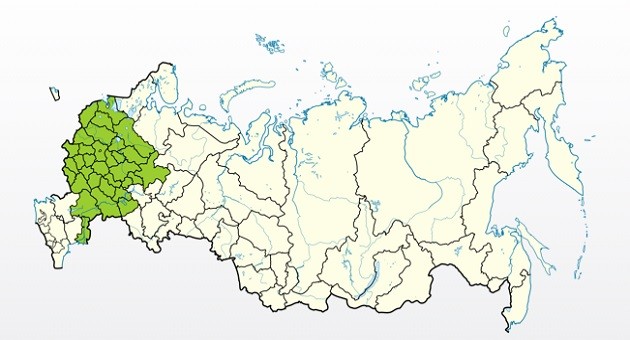
Growing regions
- Central Russia.
- Volgograd region.
- Saratov region.
- Astrakhan region.
- Some northern regions.
History of origin
Olga Dmitrievna Berkut and Galina Viktorovna Kondratieva, specialists at the Saratov Horticultural Experimental Station, had been working on developing a new apple variety since the early 1980s. They crossed the Cortland apple variety with two other varieties—the Antonovka ordinary and the Anis rosy-striped. The result exceeded all their expectations; the variety turned out to be unusual, and its fruits were delicious.
In 1981, the Berkutovskoye variety was sent to various farms across the country for experimental testing. In 1986, it was classified as an elite variety, and two years later, it was zoned for use in the Saratov and Volgograd regions. In 1991, the apple tree was awarded a gold medal by the All-Russian Exhibition Center, and its popularity has steadily grown since then.
Description of the Berkutovskoye apple variety
Every farmer wants this early-fruiting winter apple variety in their orchard. Combined with its regular, abundant fruit production, excellent transportability, and long shelf life, it's also suitable for intensive commercial orchards. Berkutovskoye meets all these requirements, plus it boasts quite good winter hardiness, another important factor. Therefore, this new variety already has quite a following, and its following continues to grow over the years.
Content
Description of the Berkutovskoye apple variety
 Every farmer wants this early-fruiting winter apple variety in their orchard. Combined with its regular, abundant fruit production, excellent transportability, and long shelf life, it's also suitable for intensive commercial orchards. Berkutovskoye meets all these requirements, plus it boasts quite good winter hardiness, another important factor. Therefore, this new variety already has quite a following, and its following continues to grow over the years.
Apples: color, size and weight
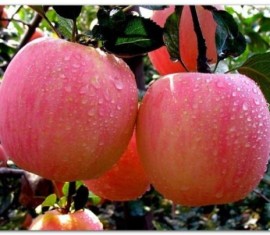
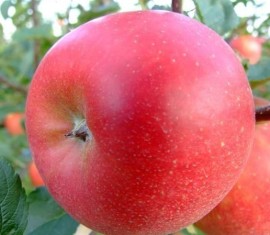
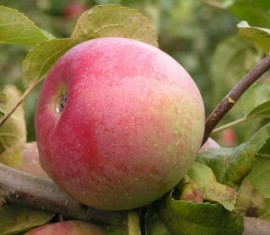
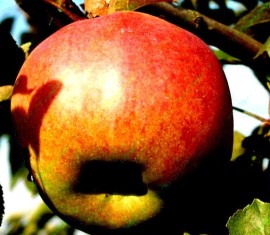
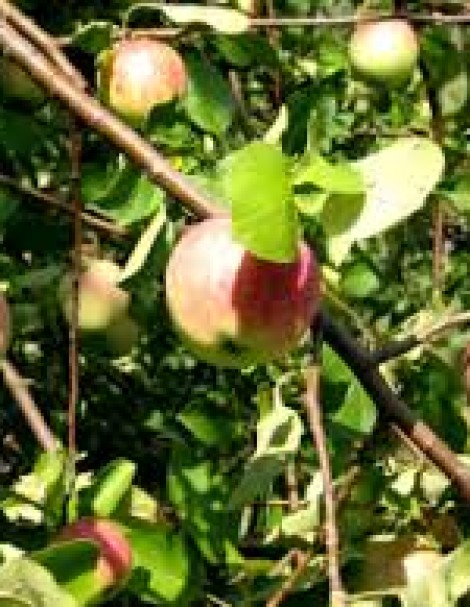
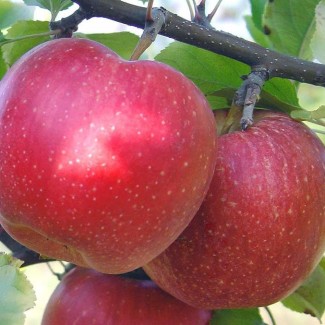
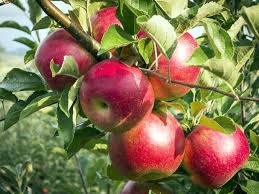 The fruits of this variety are typically medium-sized or even large. They weigh between 120-150 grams, and the largest can reach 250 grams. They are uniform, fairly symmetrical, reminiscent of their ancestor, the Antonovka. The skin is glossy, shiny, without a visible waxy or oily coating, greenish-yellow in color, and 95% or more is covered with a streaky dark red or pink blush. The subcutaneous dots are medium-sized, but whitish, making them easily visible from a distance. The chemical composition is characterized by the following indicators:
- P-active substances (catechins) – 229.5 milligrams.
- Ascorbic acid (vitamin C) – 21.1 milligrams.
- Total sugars (fructose) – 10.8%.
- Titratable acids – 0.64%.
- Pectins (fiber) – 13.4-14.2%.
The fruit's white flesh is very fine-grained, dense, crisp, and very juicy. The apples have a sweet and sour flavor, balanced, and are considered a dessert-like, harmonious fruit. The aroma is pleasant, slightly candy-like, but not overpowering. The tasting score for the fruit's appearance matches its taste, scoring 4.7 out of 5.
Berkutovskoye apple tree: characteristics
Crown and root system
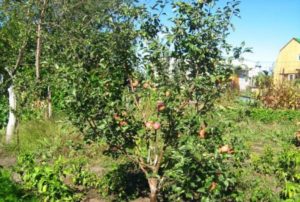 The tree is of medium height and generally does not grow taller than 5 meters even without formative pruning. In most cases, gardeners limit it to 3-4 meters. Crown It has a pyramidal shape, widening downwards, with sparsely branched branches. The bark on the main trunk is steel-gray, but over time it can become brownish, crack, and begin to crumble. Young shoots have a reddish-brown tint.
The leaves are large, elongated, oval, and pointed at the tips. They have a vibrant green hue and a slightly matte texture, covered with wrinkles. The leaf edges are slightly serrated, though not very pronounced. The root system is usually highly branched and deep, reaching several tens of meters. The main stem is covered with fine "hairs" for seeking out and absorbing moisture.
Productivity and pollination
There's a lot of controversy about how much fruit can be harvested from the Berkutovsky arborvitae. Some say they can pick 50-60 at best, while others boast about 90-120.
The official yield figure for this variety is 70-80 kilograms per year from one tree with amazing stability, without cyclical declines and rises.
The variety is considered conditionally self-sterile. This means you'll still get some apples even if there's no other apple tree in the area. However, to ensure a good harvest, Berkutovskie apples should be rotated with other varieties in the garden to ensure cross-pollination. It's also a good idea to keep these plants close to an apiary, as their blooms don't produce a strong aroma, making them difficult for pollinating insects to find.
Winter hardiness and disease resistance
The apple tree is considered to have average frost resistance. This means it can easily withstand the relatively harsh winters of the central and lower Volga regions, but is not suitable for growing in more northern regions. Where the variety is zoned, it easily recovers even from severe frost damage.
Experts say the plants' resistance to scab and powdery mildew is average. However, the risk of infection increases in wet weather, so you'll need to put in a lot of effort to protect your trees. Insect pests also readily damage trees, so regular insecticide treatments are essential.
Rootstocks and subspecies: features
| Rootstocks | Peculiarities |
| Dwarf | This option will allow Berkutovskoye to be planted further north than on vegetative or vigorous rootstocks. The trees are particularly resistant to low temperatures and can easily tolerate temperatures down to 25-27°C, even for extended periods. |
| Semi-dwarf | Apple trees grown in this way have a compact crown, which will save space in the garden, bear fruit well, and possess all the qualities of the mother plant. |
Features of growing Berkutovsky
 Landing
 Landing
Key Features
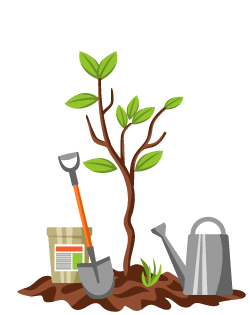
- For planting, it's best to choose strong, two-year-old seedlings; they take root best. It's best to buy them from nurseries, not from unknown sources, as unscrupulous sellers often prey on the feelings of gullible novice gardeners.
- The location for Berkutovskoe should be bright and well-ventilated, but it does not like drafts, so this must be taken into account.
- Soil The variety thrives in loamy or sandy loam soil, but if only black soil is available, it can be slightly "thinned" with river sand. It dislikes marshy areas, open water bodies, close groundwater, and excessively saline soil.
- The holes need to be prepared in advance. For spring planting, it's best to do this in the fall, and for fall planting, at least 2-3 weeks beforehand. To do this, dig holes 70-80 centimeters deep and up to a meter in diameter. Mix some of the soil with superphosphate and organic fertilizer, then return the mixture to the hole, cover with 30 liters of water, and leave it outdoors, uncovered.
- On a regular rootstock, at least 4-5 meters should be left between trees or other plants and Berkutovsky, but on a dwarf rootstock, 3 is enough.
- Before planting, soak all seedlings in a bucket of warm water for 5-7 hours to absorb moisture. Damaged or dry shoots can be removed with pruning shears.
- The root collar is left 4-8 centimeters above the soil surface. If the tree roots above the graft, all the properties of the rootstock will be completely lost.
- It is a good idea to first lay drainage at the bottom of the hole, made of broken brick, gravel, nut shells or vermiculite.
- The tree is covered tightly with soil, compacting it lightly but not turning it into a tightly packed ball. All seedlings are immediately watered with 20-30 liters of water per tree.
Landing dates
There are two main options for planting the variety: spring and fall. You can choose either. In spring, planting should be done in late March or April, after the last frost but before the buds begin to open. In autumn, it's best to wait until the leaves have fallen and the sap flow in the trunk has stopped, around mid- to late October. Make sure there are at least 3-4 weeks before the first frost.
Protection from frost and rodents
To ensure a good fruiting tree, it needs adequate frost protection in winter, especially during the first few years. This can be achieved by covering it with straw bales, hay, spruce branches, or wrapping it in nylon tights or foam rubber.
To repel insects, whitewash the trunks and lower skeletal branches with lime in the fall. Lubricating with grease or lard will help repel rodents, but commercial insecticides can also be used.
Tree care
 Tree care
Loosening the soil, watering: proper agricultural technology
To get the most out of your plant, you'll need to put in a little extra effort, ensuring quality and timely care. This requires regularly loosening and turning the soil, sowing green manure, and mulching the area around the trunk.
Despite the variety's exceptional drought tolerance, several heavy waterings per season will be necessary, especially for young trees. It's a good idea to consider weather conditions and, during dry periods, apply 40-60 liters of water per tree in two doses—morning and evening. After watering, mulch the soil with chopped grass, humus, or compost.
Pruning: simple crown shaping
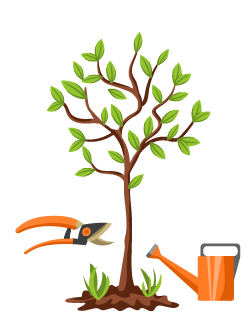
This apple tree constantly strives to "overgrow," meaning it sends out various shoots, including those deep into the crown. However, this can't be left to chance, otherwise the fruit will become smaller year after year. Therefore, regular pruning and thinning are essential. If desired, the tree can be shaped as desired:
- Tiered.
- Sparsely tiered.
- Bushy.
- Palmette.
- Spindle-shaped.
- Cup-shaped.
It's also a good idea to regularly remove diseased, damaged, or dead branches from the tree. Rejuvenation pruning should begin no earlier than the tree's 20th year. At that point, two to three mature shoots are removed, allowing the new shoots to develop.
Reproduction
- Growing from seeds (rarely).
- Layers (clones).
- Grafting by buds or cuttings.
- Rooting cuttings.
Pests and diseases
- Leaf roller.
- Green aphid.
- Scale insect.
- Powdery mildew.
- Scab.
- Fruit rot.
- Cytosporosis.
Ripening and fruiting of the Berkutovskoye apple tree
The beginning of fruiting
 The beginning of fruiting
By the second or third year, you can harvest several beautiful and delicious apples from this tree. However, it only begins to bear fruit in earnest three to six years after planting. In fact, you're unlikely to get more than 10-15 kilograms of fruit during this period.
Flowering time
Like all apple trees, the Berkutovskoye apple tree blooms in May. Depending on the region, this can be early, mid, or late in the month, so it's difficult to predict; you can only observe. The flowers are usually white, large, and beautiful, but their scent doesn't last very long. Blooming lasts approximately 10-12 days.
Fruiting and growth
A good harvest will take approximately 8-10 years, when a full 60-70 kilograms can be obtained. Some gardeners have even achieved 150 kilograms from a single tree with proper, careful care and constant attention. The tree's growth is not very large, only 5-10 centimeters per year, but it can't be called tall either.
This winter apple is harvested around the second half of October, although in some cases, ripeness occurs in late September or early October. This stage cannot be missed, otherwise the fruits will simply fall from the branches to the ground, and it will be impossible to keep them for more than a few days. Consumer maturity, that is, the time when they acquire their most pleasant flavor, occurs after 2-3 weeks of storage in the cellar. The official shelf life is 106 days, but in reality, the apples keep well until May of the following year, or even until autumn.
Top dressing
- Manure.
- Bird droppings.
- Wood ash solution with microelements.
- Superphosphate.
What to do if it doesn't bloom or bear fruit
- Apply fertilizer.
- Check for pests or diseases.
- Perform pruning.
Why do apples fall?
- Overripe.
- Insufficient watering or excessive moisture.
- Natural phenomena (wind, rain, hail).
- Pests or diseases.
Please leave your feedback about Berkutovsky in the comments so everyone can learn from your experience and gain something useful.