Cortland apple tree: characteristics of the variety and care
| Color | Reds |
|---|---|
| Ripening season | Autumn |
| Size of apples | Average |
| Taste | Sweet and sour |
| Crown type | Tall tree |
| Shelf life | High shelf life |
| Application | Universal variety |
| Winter hardiness | Low winter hardiness |
| Fruiting age | From 5 years old |
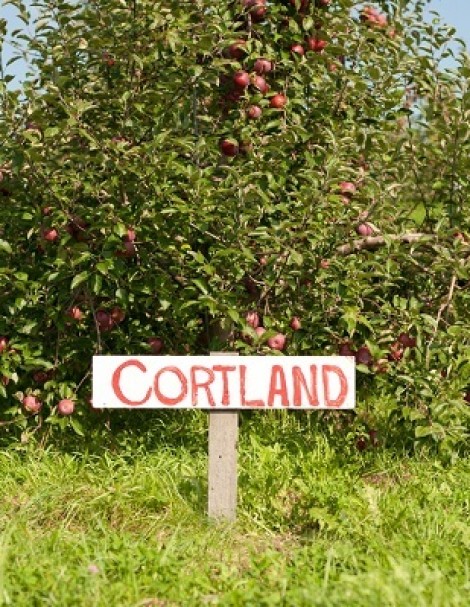
 History of origin and regions of growth
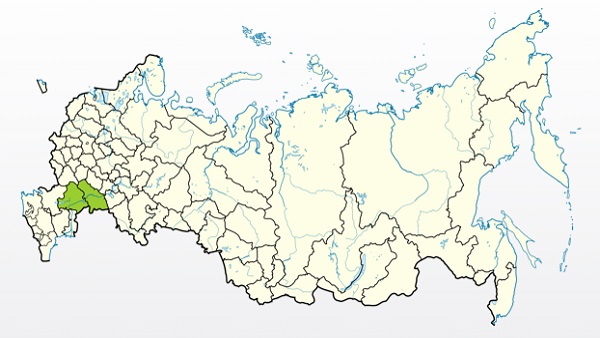
Growing regions
- Volgograd region.
- Saratov region.
Origin
This apple tree was developed at a New York breeding station in the United States in the late nineteenth century. It has been known since approximately 1898-1899, when it began to be actively promoted in nearby fruit farms. Its parent varieties were the well-known McIntosh and Ben Bevis. Around the first half of 1915, Cortland was brought to Europe, where it delighted many professional gardeners. Eventually, a few years later, the variety arrived in Russia.
Due to its insufficient winter hardiness, this variety was unable to spread widely across our country. However, it was included in the State Register and zoned for the above-mentioned regions. These apple trees grow well in Crimea, some southern regions of our country, and the North Caucasus.
Content
Description of the Cortland apple variety
 Winter apple trees, whose fruit typically has a long shelf life, attract gardeners from all over the country and around the world. This variety produces fruit that ripens closer to the cold weather and can be stored until the next harvest. Cortland bears fruit regularly, without a break, and its apples are delicious and beautiful.
The trees are undemanding, requiring no special growing conditions other than a mild climate, and are rarely affected by common apple fungal infections. Today, this variety is being actively supplanted by more promising new varieties, so it is rarely grown commercially. However, for a small garden plot, it is just the thing.
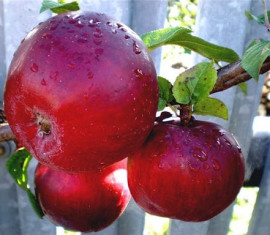
Apples: What they look like
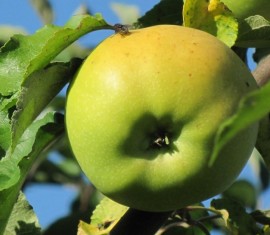
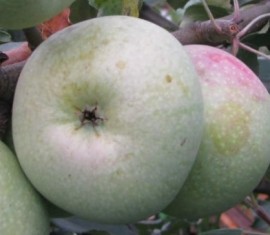
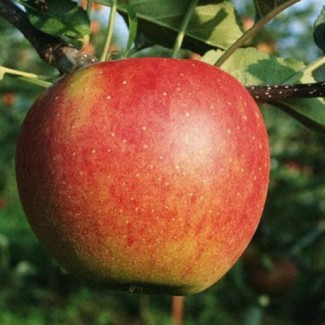
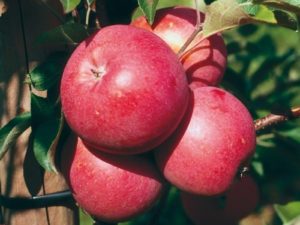 The fruits are medium-sized, typically weighing no more than 100-130 grams. They are round, often flattened, and generally uniform in size and symmetrical. Size usually depends on weather conditions, moisture levels, and fertilization. The fruits are sometimes slightly conical, with subtle ribbing.
The skin is dense, glossy, and smooth. As it ripens, it becomes covered with a bluish-white waxy coating, which disappears when the apples are fully ripe. When unripe, it is green or grayish-green, but with age it becomes bright yellow or lemon-colored. The blush is red, crimson, or bright red, blurred and spotted, speckled, and sometimes striped. Numerous, pale subcutaneous dots are barely visible on the blushed surface. The chemical composition is best characterized by the following parameters:
- P-active substances (catechins) – 187 milligrams.
- Ascorbic acid (vitamin C) – 9 milligrams.
- Total sugars (fructose) – 10.6%.
- Pectins (fiber) – 6.9%.
- Titratable acids – 0.43%.
The flesh is dense, fine-grained, and crisp, yet tender and not prickly. It has a snow-white hue, and just below the skin, it can be covered with a network of tiny reddish-purple veins, giving it a slightly pink tint. It is very juicy and aromatic, with a pleasant sweet and sour dessert flavor considered balanced and harmonious. A professional taster gives it a 4.7 out of 5 for both flavor and appearance.
Cortland apple tree: characteristics
Crown and root system
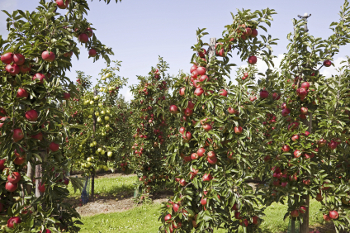 The variety is considered vigorous because, without proper formative pruning, it can easily exceed 6-7 meters in height.However, most gardeners adjust the size to create trees that are easy to care for and much easier to harvest. The crown of the Cortland is rounded, spherical when young, becoming spreading and wide-spreading with age, and sometimes weeping. The shoots are long, medium-thick, covered with dark, almost black, brownish-brown bark, smooth, and shiny. Fruiting is concentrated on the rings, spears, and fruiting twigs (mixed).
The leaves are green or dark green, emerald, leathery, dense and smooth, glossy. The back is matte and slightly pubescent. They are elongated, oval, flat, with a rounded edge, coarsely serrated, and mostly flat. The tree's root system is deeply rooted, branched, and vigorous. Depending on the rootstock used, it may or may not have a central taproot.
Productivity and pollination
Experts note the average yield of the Cortland variety, as well as its regular fruiting. The trees never take rest breaks throughout their active life, which can last more than 65-80 years.
A fully mature tree produces approximately 70-90 kilograms of juicy and delicious apples per season. In exceptional cases, some gardeners have achieved 100 kilograms or more, given favorable climate and weather conditions and proper care..
Cortland can be considered conditionally self-fertile. This means that some fruit can be expected even if there are no other apple trees nearby. However, this method won't achieve maximum fruit production, so it's best to interplant this variety with others that bloom at similar times. The most advanced gardeners bring a mobile apiary to the orchard during this period, and spray the trees with a sugar syrup diluted with water.
Winter hardiness and disease resistance
The cultivar's creators claim good resistance to low temperatures, but it's not particularly suited to the harsh conditions of our country. Only in certain regions can apple trees grow and bear fruit well without freezing in winter. However, even in relatively mild conditions, the tree requires proper shelter throughout the cold season. Frosts below -18-22°C will not be tolerated by the trees, especially if they last more than 2-3 weeks.
The variety has remarkable resistance to scab, powdery mildew, and other fungal diseases. However, if it does become infected, it's often severe and widespread. If your plantings are infected, restoring them will be difficult. Therefore, it's best to spray with fungicides and insecticides in advance to prevent diseases and insect infestations.
Rootstocks and subspecies
Korland is typically grafted onto seedling rootstock, which provides the trees with greater frost resistance. Wild rootstocks are particularly suitable for this purpose. However, the variety also thrives on dwarf and semi-dwarf trees. Moreover, the trees become much more compact, making winter protection from frost much easier. The fruits of these trees are typically larger, juicier, and have a more intense aroma and flavor.
Features of growing Cortland
 Landing
 Landing
Basic conditions
- For planting, choose a well-ventilated, sunny location. Ideally, there should be little or no shade. Avoid drafty locations, as this can cause the seedlings to become diseased and grow weak.
- Planting Cortland trees near any body of water, be it a lake, river, pond, or shallow well, is not a good idea. Groundwater levels should be at least 2.5-3 meters deep. Otherwise, the trees' roots will reach for the water, which will then rot and potentially kill the entire tree.
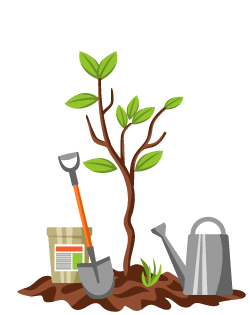
- Planting holes for the variety are prepared in advance, preferably in the fall or spring, but can also be done 3-4 weeks in advance. To do this, dig a hole 75-85 centimeters deep and one meter in diameter. Fill the bottom with soil mixed with any available fertilizer, add a drainage layer of gravel or broken brick, and then fill with 35-55 liters of water. Leave the entire thing outdoors, uncovered.
- It's best to leave at least 4.5-5 meters between rows and the same amount between plants within rows. However, remember to prune regularly. If the trees grow excessively, they will interfere with each other, which will negatively impact the harvest.
- It is advisable to immediately drive support stakes into the holes, which can be made not only from metal or wood, but also from plastic.
- The root system of the seedling is inspected a day before planting, any dry, broken or diseased shoots are cut off using garden pruning shears, and soaked in warm water.
- When planting, the root collar of the tree must be at least 6-11 centimeters above the ground. Otherwise, it will root higher, and all the properties and qualities of the rootstock will be lost.
- The seedling is placed directly on the drainage mound, the roots are spread out by hand, covered with soil, lightly compacting it in layers to ensure it stays firmly in place and does not fall over, and tied to the support. A small earthen mound is built around the perimeter of the tree trunk, and 20-45 liters of water are poured into the mound. The surface is mulched with any suitable material.
Landing dates
In a suitable climate, trees can be planted not only in the spring, when frosts are past (late March or early April). They also thrive when planted in the fall, in late September or early October. The key is to allow at least 4-6 weeks before the first frost, otherwise the trees may be seriously damaged and may not recover.
Protection from frost and rodents
The cooler the climate and weather in a given year, the more thoroughly trees need to be protected from frost. You can pile soil (20-25 centimeters) onto the roots near the trunk, or lay special mats of dry grass or straw bales to prevent the rhizomes from freezing. Dwarf trees can be easily covered with burlap using the tent-like method, but this won't work with taller trees. Therefore, wrapping the trunks with roofing felt, agrofibre, or roofing felt will suffice.
To prevent rodents from eating young branches and bark, the trunks are coated with a thick layer of lard or any other rendered animal fat. However, specialized commercial products are also available, which are even more effective. They are effective against insects. whitewash in spring and autumn.
Tree care
 Tree care
Loosening the soil, watering: proper agricultural technology
The area around the Cortlandt tree's trunk should be dug up twice a year, in spring and fall. This will also remove weeds, shoots from other plants, and root suckers. In between, you can hoe the soil to increase oxygen supply to the roots. This isn't necessary, but it's recommended.
Trees will need to be watered regularly during warm weather; without adequate moisture, the trees will not be able to handle the ripening of the fruit, and it may fall to the ground. It's best to water approximately 6-10 times during the growing season, applying 15-25 liters of water per mature tree twice (morning and evening).
Pruning: simple crown shaping
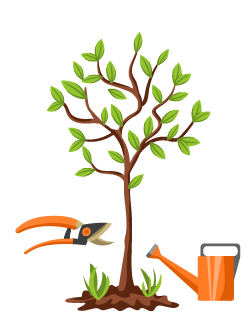
In the first few years, you can prune the central conductor by one-third and leave two or three skeletal branches spaced widely apart. However, full pruning should only be done around the fifth year to avoid excessive trauma to the young sapling. You can shape the crown to your liking. The tree isn't prone to becoming overly dense, so further shaping shouldn't pose any problems.
Sanitary pruning, which involves removing dead shoots and diseased or damaged branches, is done in late fall or early spring. All cut areas should be sealed with garden pitch. If you don't have any on hand, you can paint the wound with water-based paint or even a simple mixture of water and soil (marsh pitch).
Reproduction
- Rooting cuttings.
- Grafting by buds and cuttings.
- Growing from seeds.
- Clones (layering).
Diseases and pests
- Powdery mildew.
- Cytosporosis.
- Fruit rot.
- Scab.
- Cytosporosis.
- Tinder fungus.
- Green aphid.
- Codling moth.
Ripening and fruiting of Cortland
The beginning of fruiting
 The beginning of fruiting
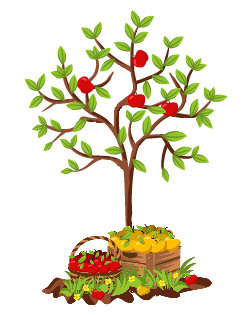
Although the tree is not technically considered early-bearing, it begins to produce its first fruits as early as 5-6 years after planting in open ground. The first flowers may appear as early as 2-3 years, but they will be solitary and sparse, so it's best to pluck them immediately. The first harvests are not particularly abundant, with a yield of barely 5-7 kilograms of fragrant fruit.
Flowering time
Winter apple trees typically bloom later than earlier varieties, and Cortland is no exception. It opens its small clusters of 6-10 snow-white or white-pink flowers around mid- to late May. Blooming lasts 10-16 days, depending on the weather. The cooler and rainier the weather, the longer this period lasts. The flowers themselves are medium-sized, saucer-shaped, and fragrant.
Fruiting and growth
Trees grow quite quickly, approximately 25-40 centimeters per year. They reach their peak quite quickly. Similarly, the variety gradually increases its yield, from small to large. By the 10th to 15th year, you can harvest around 50 kilograms of apples, and by the 20th year, you've reached your full potential. This yield largely depends on growing conditions, fertilization and supplementation, as well as climate and weather.
The fruits are harvested around the end of September, but ripening can sometimes take until mid-October or even the end of the month. They usually don't fall to the ground quickly, so there's no need to worry. However, if they don't receive enough moisture during ripening, they may fall off. The fruits store quite well until spring and even until the next harvest, making this variety considered versatile.
Top dressing
- Superphosphate.
- Compost.
- Nitrogen fertilizers.
- Humus.
- Potassium complexes.
- Ammonium nitrate.
- Manure.
What to do if it doesn't bloom or bear fruit
- Check for pests and diseases.
- Transplant to a sunnier location.
- Limit or increase watering.
Why do apples fall?
- They are very overripe.
- Natural factors.
- Pests.
- Diseases.
Leave your feedback on the winter-hardy Cortland variety to share your experience with other gardeners.