Golden Delicious apple tree: characteristics of the variety and care
| Color | Yellow |
|---|---|
| Ripening season | Autumn |
| Size of apples | Average , Large |
| Taste | Sweet and sour |
| Crown type | Average tree height |
| Shelf life | Average shelf life |
| Application | Fresh , For recycling |
| Winter hardiness | Average winter hardiness |
| Fruiting age | Up to 5 years |
 History of origin and regions of growth
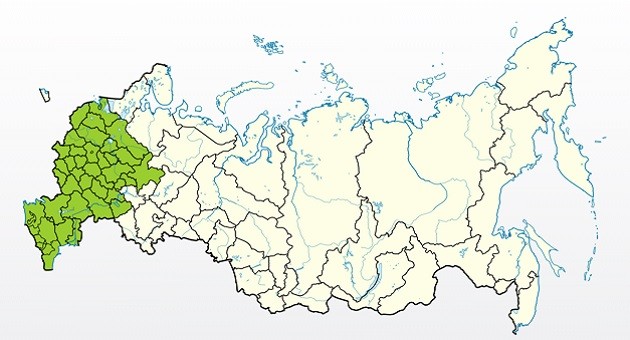
Growing regions
- Crimea.
- Pskov region.
- Middle zone.
- Astrakhan region.
- North Caucasus.
- Moscow region.
- Tver region.
- Leningrad region.
Origin
The first seedling of a new apple variety was discovered at the very end of the nineteenth century in the orchards of A.H. Mullins, located in the picturesque plains of eastern Virginia, in the United States. Its origins were uncertain, but the qualities of the apple trees and fruit surprised and delighted American gardeners. It was decided to cultivate the new variety, which they decided to call Golden Delicious, which literally means "Golden Excellent."
Since the early twentieth century, the variety has been making a triumphant journey around the world. It first reached Western Europe, then, in the early 1950s, the Soviet Union. In 1965, Golden Delicious was added to the State Register and officially zoned for the Central, North Caucasus, Northwestern, Lower Volga, Central, and Central Black Earth regions.
Content
Description of the Golden Delicious variety
 Medium-sized winter-ripening apple trees attract attention with their extraordinary qualities. They are hardy, undemanding in terms of care, soil, fertilizer, and growing conditions, and are environmentally sustainable. Golden Delicious produces abundant fruit regularly, without any rest periods. However, they are somewhat susceptible to powdery mildew and other fungi, and have limited resistance to winter cold.
With proper and timely care, the tree produces large, attractive fruits. They are aromatic, juicy, and sweet, possess high marketability, are easily transported over long distances, and keep well without losing their flavor or appearance. This variety is recommended for individual cultivation and for growing in intensive commercial and industrial gardens.
Apples: What do they look like?
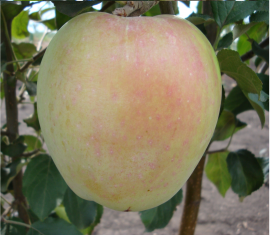
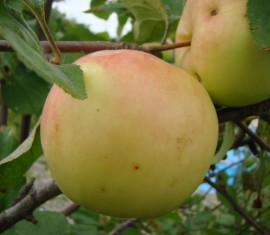
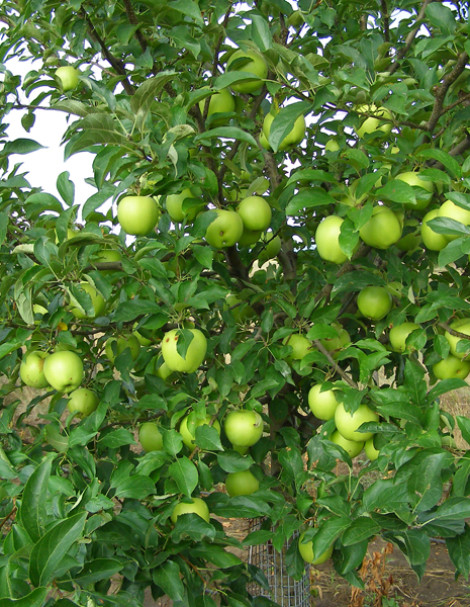
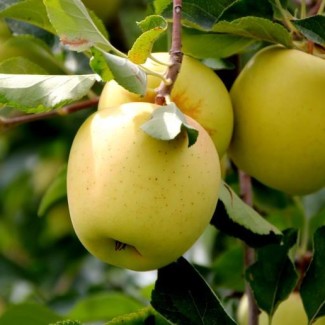
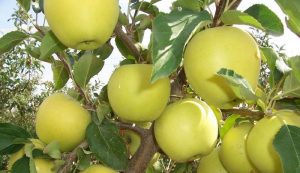 The fruits are typically medium to larger in size, but in some cases, with good care in favorable years, they can be large. The average weight of one apple is 160-180 grams, but sometimes the fruits grow to 100-220 grams. The shape is round, somewhat flattened at the top, and can be elongated along the central axis. The ribbing is noticeable, and the side seam is usually not visible.
The fruit skin is dense, even somewhat hard, thick, elastic, and durable, providing excellent protection from damage. It is dry and compacted, often rough to the touch, matte, slightly shiny, and may have a slight waxy coating. The base color is greenish-yellow, becoming rich yellow or golden when fully ripe. The blush is completely absent or may appear as faint, reddish-pink, blurred spots on the sunny side. Subcutaneous spots are dark, numerous, and small. The chemical composition is most easily determined by the following information:
- P-active substances (catechins) – 110 milligrams.
- Ascorbic acid (vitamin C) – 8.9 milligrams.
- Total sugars (fructose) – 12.1%.
- Pectins (fiber) – 17.6%.
- Titratable acids – 0.67%.
At technical maturity and harvest time, the flesh is typically firm, greenish or lemon-colored, becoming creamier as it ripens. The flavor is distinct and easily recognizable, dessert-like, harmonious and balanced, sweet and sour, with a strong sweetness. The apples are crisp, not prickle-y, and very juicy, scoring 4.7-4.8 on a 5-point tasting scale for appearance and flavor.
Golden Delicious apple tree: characteristics
Crown and root system
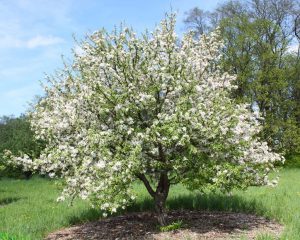 The tree is considered to be of medium height or even slightly below average, since It usually grows no more than 3.5-4.5 meters in heightSometimes apple trees grow somewhat taller, largely depending on the rootstock used. The crown shape is round or broadly oval, occasionally conical, medium to dense, and densely foliated. Branches are medium thick, slightly genuflexed, curved, and extend from the trunk primarily at an acute angle. They droop under the weight of the fruit and are covered with greenish-gray or greenish-brown bark. Fruiting is mixed.
The leaves are large or medium, oval or oval-elongated, with long-pointed tips, sometimes curled into a helix. They are smooth, shiny, glossy, smooth, leathery, and dense; the edges are finely serrated, crenate, serrated, and in some cases folded into a boat shape; they can be somewhat wavy. The root system on most rootstocks is fibrous, well-developed, and branched, with numerous small branches. It is robust, provides good support for the tree, and is adapted to seeking moisture in the soil.
Productivity and pollination
The variety is generally considered high-yielding, but with poor care or extremely unfavorable conditions, the number of fruits may decrease significantly.
Over the course of a season, one mature Golden Delicious tree can easily produce 180-230 kilograms of aromatic and delicious apples.
Apple trees cannot pollinate themselves; they require other varieties to produce fruit. In commercial plantings, it's common to plant one suitable standard per 50-90 square meters of planting, while in private cultivation, one is sufficient for the entire plot. Alternatively, you can simply interplant the trees.
Winter hardiness and disease resistance
The variety's tolerance to low temperatures is average. It tolerates temperatures down to -27-29°C fairly easily, provided they are short-lived. During prolonged cold periods, buds, shoots, and even wood may freeze. Therefore, in harsh regions, timely and high-quality shelter is essential, otherwise the tree will have to constantly wait for recovery. In dry years, the fruit may become significantly smaller and lose flavor; watering is also essential.
Golden Delicious has average disease resistance, and its response to different varieties varies. The most dangerous for it is powdery mildew, which primarily affects foliage, even at moderate humidity levels. fungus It can affect the entire tree, so prevention is essential. This is considered the variety's most significant drawback.
Rootstocks and subspecies
This variety is so popular that it has a huge number of diverse clones and varieties. The most popular are Red Golden Delicious, Golden Vladimirsky, Golden Rangers, as well as the dwarf Golden Sentinel. All of these have long existed as completely independent varieties, so it makes sense to read about each one separately.
Features of growing Golden Delicious
 Landing
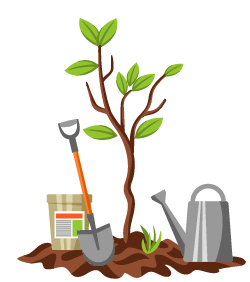 Landing
Basic conditions
- Loamy or sandy loam soil is considered optimal for planting this variety. Apple trees will struggle in heavy, rich black soil; it's best to dilute it with washed river sand and clay. Lack of fertility can always be compensated for by adding fertilizers and supplemental fertilizers.
- Groundwater levels should be deep; if they are higher than 2 meters, the roots may rot and the tree will die. It's best not to plant Golden Delicious near rivers, lakes, streams, ponds, springs, shallow wells, swamps, or floodplain meadows.
- The variety should be planted in a sunny location, not shaded even for a few hours a day. Young seedlings cannot develop without maximum ultraviolet light; they weaken and die.
- It's a good idea to leave about 3-4 meters of space between trees to prevent mature trunks from clashing with their rhizomes or crowns. The row spacing should be similar to this to make it easier to care for and harvest the fruit.
- It's not necessary to dig the holes in advance, although it won't hurt. Experienced gardeners dig holes up to 80 centimeters deep and 1 meter in diameter, then add topsoil mixed with a special rooting agent to the bottom, water the entire hole, and then place the rhizome directly into the mixture.
- If drainage and enrichment of the soil with nutrients is necessary, soil with fertilizer is placed on the bottom, then everything is covered with stone, vermiculite, large screenings or broken brick, watered with plenty of water and left for 1-2 weeks.
- The rootstock's rootstock should always remain above the soil surface if the rootstock's properties are to be preserved. Keep in mind that it may settle slightly after the initial watering, so it's best to leave a distance of 5-8 centimeters from the grafting site.
- Place the seedling on the drainage, straighten the rhizome, sprinkle with soil, water with 30-40 liters of water, and mulch the surface.
- It is necessary to ensure that the used mulch (chopped grass, compost, manure, sawdust, etc.) does not come into contact with the bark of the tree under any circumstances.
Landing dates
Trees in bags or pots, that is, with their own root ball, can be transplanted into open soil at virtually any time during the growing season. Trees with exposed rootstocks can be planted in both spring and fall. Moreover, the further north the region and the harsher the climate, the preferable option is spring planting, when the soil has fully warmed up, the threat of frost has passed, but buds have not yet begun to grow.
Tree care
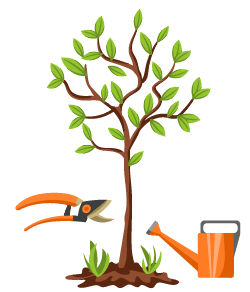 Tree care
Protection from frost and pests
Golden Delicious doesn't require anything extraordinary from the gardener; standard methods of preparing for winter and covering are sufficient. At the end of summer, stop watering, including watering with fertilizer. Trees are covered with a tent-like covering if they are short, while taller trees are simply wrapped around the lower part of the trunk. Straw or hay, spruce branches, or even soil can be scattered around the root zone. All this should be removed in early spring, before the sap has activated in the plants.
Whitewashing with a thick lime solution helps repel insects that nest in the bark. This prevents pests from finding shelter in cracks. It's possible, and even preferable, to use commercially available products, which are now quite safe for both the plant itself and anyone who eats its fruit. Rodents are wary of unpleasant odors, so to prevent them from chewing the bark, you can coat apple trees with lard or fuel oil.
Loosening the soil, watering: proper agricultural technology
It's a good idea to dig around the trunks twice a year to prevent the soil from compacting into a solid lump and to ensure oxygen and moisture reach the rhizomes. This should be done carefully to avoid damaging the shallow roots. The rest of the year, you can lightly loosen the soil with a hoe or mattock, and remove weeds and debris to prevent disease and fungal growth.
Watering will need to be done regularly if natural precipitation falls less than once every ten days; this is the optimal regime for this variety. It's a good idea to set up drip irrigation or a sprinkler system for the tree, so you won't have to worry about adding water at all. Water is convenient for diluting fertilizers and watering along the crown, where the smallest root shoots are located.
Pruning: simple crown shaping
Formative pruning for this variety should begin in the first year, otherwise it will be difficult to maintain the apple tree's shape later. First, cut back the central basal branch by a third, leaving 2-4 scaffold branches in tiers. These branches should be at different heights and spaced far apart. In subsequent years, it will be necessary to constantly maintain the natural branching, pruning any branches that cross, parallel, or protrude upward or inward.
Every fall, a sanitary pruning is performed, removing diseased, broken, and dry shoots. All of these interfere with normal tree growth and negatively impact fruiting. Cuts must be sealed with paint or garden pitch, this will significantly reduce tree stress.
Pollinator varieties
- Ligol.
- Kuban spur.
- Idared.
- Delicious spur.
- Gala.
- Jonathan.
- Golden Vladimirsky.
- Melrose.
Diseases and pests
- Scab.
- Cytosporosis.
- Powdery mildew.
- Black crayfish.
- Scale insect.
- Hawthorn.
- Green aphid.
Ripening and fruiting of Golden Delicious
The beginning of fruiting
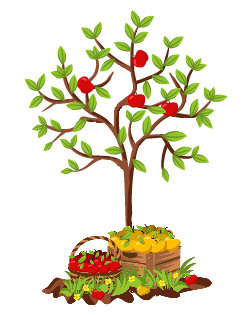 The beginning of fruiting
Apple trees of this variety are surprisingly early fruiting, making them a favorite among those who can't wait years for fruit. Flowers may bloom on the trees in the first year, but it's best to pluck them completely to allow the tree to develop roots and foliage. The first harvests of several kilograms of apples can only be collected in the second or third year. They won't be particularly abundant, but they'll certainly be enough to sample.
Flowering time
The Golden Delicious variety blooms mid-season, around mid-May, when a wide variety of apple trees are in bloom. Therefore, finding and selecting pollinators will be easy. The flowers are large, with delicate, rounded petals, pure white or with a slight pinkish tint. They densely cover the branches and are very fragrant, their scent easily recognizable even from afar. The process lasts at least 10-14 days, so insects and wind usually have time to pollinate, even in inclement weather.
Fruiting and growth
The tree grows tall quite quickly, depending on the variety and timing. Initially, it grows 40-50 centimeters per year before fruiting begins, but then, when harvesting is ready, the rate slows to 2-35 centimeters. Dwarf trees reach their full height faster and begin bearing fruit much earlier, but they are less winter-hardy. Full harvests can be collected from trees as early as 8-10 years old, when they reach full maturity.
Apples are ready for harvest around the end of September, but this is only the technical maturity. Consumer maturity comes later, after they have been stored in a special container for about 30-45 days. refrigerator Or in a cellar. There's no need to rush harvesting; they're fairly tightly packed on the branches and only fall at the first frost, and even then, not always. They can be transported over any distance, even in bulk, and in a regular cellar they can be stored until mid-spring with virtually no loss of flavor.
Top dressing
- Superphosphate.
- Humus.
- Peat.
- Calcium.
- Manure.
- Compost.
- Nitrogen complexes (not in the first 3-4 years).
What to do if it doesn't bloom or bear fruit
- Increase watering.
- Remove insects.
- Cure diseases.
- Fertilize.
- Move to a sunny place.
Why do apples fall?
- They are very overripe.
- Wind, rain, hail, snow.
- Pests or diseases.
Leave a review of the Golden Delicious apple tree variety so that even a novice gardener can receive useful information firsthand.