Golden Rangers apple tree: characteristics of the variety and care
| Color | Greens |
|---|---|
| Ripening season | Winter |
| Size of apples | Average |
| Taste | Sweet |
| Crown type | Average tree height |
| Shelf life | Average shelf life |
| Application | For recycling , Fresh |
| Winter hardiness | Low winter hardiness |
| Fruiting age | Up to 5 years |
 History of origin and regions of growth
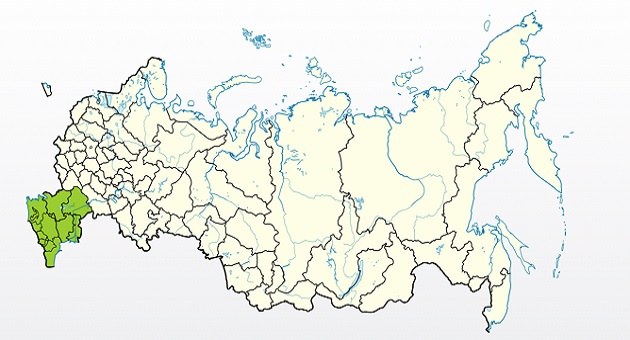
Growing regions
- Crimea.
- North Caucasus.
Origin
The Golden apple variety has many varieties, the most recent of which is Rangers. Developed by Dutch breeders, it has no official zoning in our country. There is no record of it in the State Register of Breeding Achievements.
Content
Description of the Golden Rangers variety
 Gardeners are sure to love this late-fall or winter-ripening apple tree. It retains virtually all the positive qualities of its parent variety, but also boasts additional advantages. The Golden variety is not included in the State Register of Breeding Achievements and has no official zoning. The tree has below-average tolerance to low temperatures, and moderate tolerance to drought periods. It is undemanding and fairly tolerant of environmental pollution.
The fruits are attractive, chiseled, and quite large. They possess high commercial and consumer qualities. These apples are versatile, capable of being transported over long distances and stored for a considerable time in a standard cellar. This variety is recommended for cultivation in private gardens, homesteads, and intensive commercial plantings.
Apples: What do they look like?
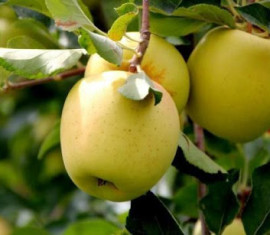
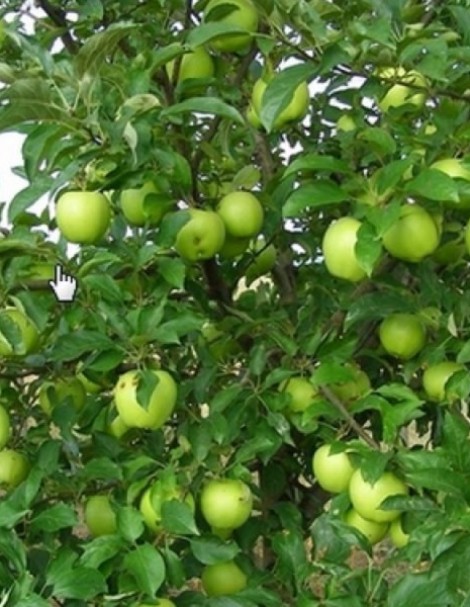
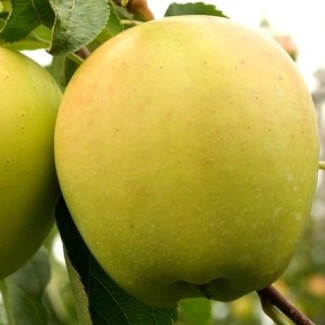
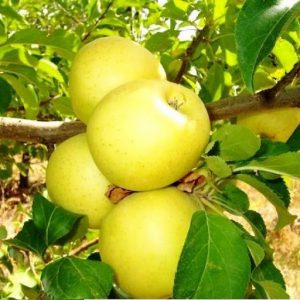 The fruits are round, but most often round-conical, slightly elongated, oblong, and beautifully chiseled. They are medium to slightly larger in size, growing to 140-190 grams, and in favorable years can reach 200 grams or more. The surface is smooth, with barely noticeable ribbing near the calyx.
The fruit skin is dense, smooth, thin, yet firm, and dry. It generally lacks an oily coating, but may develop a bluish-silver waxy coating. Initially, it is a rich green color, becoming more golden or light green-yellow as it ripens. The blush may be completely absent, or it may appear as translucent coral-salmon spots on the sunny side. Subcutaneous spots are gray-greenish, heavily rusted, and randomly distributed, sometimes merging into large spots. The chemical composition is characterized by the following factors:
- P-active substances (catechins) – 243 milligrams.
- Ascorbic acid (vitamin C) – 10.1 milligrams.
- Fructose (total sugars) – 14.7%.
- Pectins – 12.1%.
- Titratable acids – 0.38%.
Rangers have dense, fine-grained, very juicy, crisp, and moderately prickly flesh. It's juicy, with a delicate milky-creamy hue and can be slightly yellowish. The aroma is medium-strong, with distinct melon notes, and the flavor is predominantly sweet, with a pleasant tartness in the aftertaste. It's considered balanced and harmonious, scoring 4.4-4.6 points for appearance and flavor, respectively, according to professional tasting reviews.
Golden Rangers apple tree: characteristics
Crown and root system
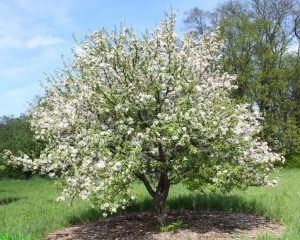 The trees are considered to be of medium height because can grow no more than 4.5-5.3 meters in heightWhen young, the crown has a distinct pyramidal or even conical shape, but with age it becomes more rounded or broadly oval, with a strong or slightly below-average density and foliage. Branches extend from the main stem at right angles, are medium in thickness, slightly geniculate, curved, and covered with light, greenish-brown bark. Fruiting is mixed (spears, rings, and fruiting twigs).
The leaves are large, ovate, with a wide base and a long, thin, pointed tip. The blade is green or deep green, can be emerald, smooth, with a slight matte or sometimes glossy sheen, and leathery. The margins are sometimes keel-shaped, wavy, triple- or double-serrated, and serrate-crenate. The root system is shallow to moderately deep, most often fibrous, highly branched, and, depending on the rootstock, may have a central taproot.
Productivity and pollination
It is believed that with an average tree height, its yield indicators are at an average level.
In favorable years, good growers can harvest 60-80 kilograms of aromatic, unique fruit from a single Golden Rangers tree. At standard planting density in commercial orchards, approximately 280-630 centners per hectare can be harvested..
The variety is completely sterile in itself. Therefore, no fruit will be produced if no other tree with a suitable flowering time grows within a hundred square meters of the plot. During budding, it's advisable to spray the apple trees with diluted sugar or honey to attract bees, and to bring mobile apiaries to the orchard.
Winter hardiness and disease resistance
Apple trees have low or slightly above-low tolerance to low temperatures and various weather conditions. They can tolerate temperatures as low as -18-22°C for short periods. However, if cold weather lasts for more than a few days, buds and sometimes even wood can freeze. With regular watering, trees can survive drought without any problems, but they are prone to UV burn.
To scab, moniliosis, cytosporosis Rangers is moderately resistant to rhizomes and other apple tree diseases. During years of severe epiphytotics, it can be severely affected, affecting not only the leaves but also virtually all the fruit. Parasitic threats to the variety can also be dangerous, so insecticide treatments should be carried out promptly.
Rootstocks and subspecies
Rangers is a clone of the Golden variety and has no distinct varieties of its own. It grows well on standard vegetative rootstock. The trees then grow to only 2-3 meters tall, but begin bearing fruit much earlier.
Features of growing Golden Rangers
 Landing
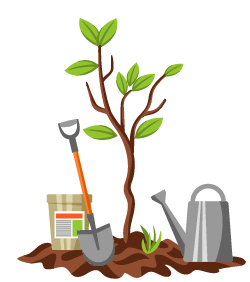 Landing
Basic conditions
- This variety prefers sunny sites with some shade. It won't grow in the shade and may refuse to flower or bear fruit, or even die.
- Rangers thrive in well-drained and well-aerated soils. Ideally, they should be fertile, but proper fertilization is sufficient. The key is low soil acidity and low salinity.
- The depth of underground soils plays a role. They should be at a medium depth, but no deeper than 1.8-2 meters.
- The site should be well-ventilated; stagnant air in the crowns leads to the development of fungal diseases. Therefore, excessive planting density is contraindicated. However, the variety also does not tolerate drafts. A balance must be maintained.
- At least 4.5-5 meters of space should be left between tall trees to prevent crowns and rhizomes from clashing in the future. For trees grown on dwarf rootstocks, 2-3 meters is sufficient. Ideally, 3-4 meters should be left between rows to ensure easy maintenance and fruit picking.
- Planting holes are usually prepared the previous season. If they aren't dug in advance, they can be dug 3-4 weeks in advance. If you're planting in the fall, you can plant the seedlings at a 45° angle and leave them there until spring.
- The holes are dug 60-70 centimeters deep and up to 90-100 centimeters in diameter. The bottom is filled with soil mixed with mineral and organic fertilizers. A 7-10 centimeter layer of drainage is placed on top, such as vermiculite, broken brick, or gravel. The entire mixture is filled with water (25-35 liters).
- The root collar (the grafting site) should always remain above the soil surface. Therefore, it's always important to consider the soil's characteristics. After planting and the first watering, the soil may settle quite significantly. It's a good idea to initially leave the root collar 5-9 centimeters above the soil surface.
- The drainage material in the hole is raked into a pile, and the seedling is placed on top, spreading its roots. The soil is then covered, compacting it in layers. Water is added with 2-3 buckets of water, and the surface is mulched with sawdust, manure, or compost.
Landing dates
The plant is quite heat-loving, and even light frosts can cause significant damage to a young, fragile tree. Therefore, apple trees can only be planted in the fall in the southernmost regions, where the weather is predictable, mild, and warm, without sudden fluctuations. In all other cases, it's best to plant in the spring, when the soil has fully warmed up after the winter cold, in late March or early April.
Tree care
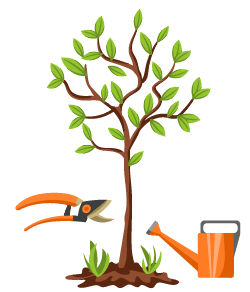 Tree care
Protection from frost and pests
For the winter, it's a good idea to cover seedlings with a tent-like covering, wrapping them in burlap from the ground up. Older trees can be wrapped in suitable materials, such as roofing felt, burlap, old nylon tights, or roofing felt.
To repel insects that like to nest in chipped or cracked bark, the lower part of the tree trunk is whitewashed with a lime solution. This also makes the garden more aesthetically pleasing. Coating apple trees with grease, fuel oil, or old, rancid butter is effective against rodents.
Loosening the soil, watering: proper agricultural technology
Apple trees are typically dug twice a year, after pruning or cleaning. It's best not to dig deeper than half a shovel blade to avoid damaging the fine, branched roots that run close to the surface. Hoeing is recommended throughout the growing season, for example, always the day after watering.
Young apple trees are watered fairly frequently, approximately once every 7-10 days. 15-20 liters of water are applied under each trunk twice (morning and evening). After 2-4 years, fertilizer and other supplements can be added to the water. It's common practice to stop watering until early September to allow the plants to stop sap flowing.
Pruning: simple crown shaping
The Rangers' crown is quite dense, so pruning is usually done from the first year to prevent the tree from becoming overgrown. A guide branch and 2-4 skeletal branches are left at different heights and spaced widely apart. The optimal crown shape is sparse or sparsely layered, pyramidal, high oval, and sometimes even broadly oval.
In the fall, it's customary to perform a sanitary pruning, removing dry, broken, or diseased shoots from the crown. Those that protrude into the crown, cross, or grow upward are pruned, and parallel shoots are removed. All wounds are sealed. garden pitch, oil or water-based paint.
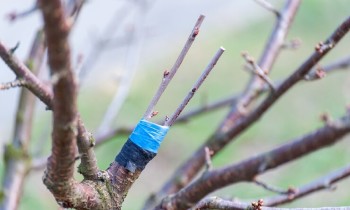
Reproduction
- Cuttings.
- Budding.
- Cloning.
- Kidney grafting.
Pollinator varieties
- Idared.
- Wagner Prize.
- Elstar.
- Jonathan.
- Delicious golden.
- Delicious spur.
- Golden Vladimir.
- Delela.
- Melrose.
Diseases and pests
- Bacterial burn.
- Scab.
- Cytosporosis.
- Powdery mildew.
- Rust.
- Apple moth.
- Scale insect.
- Glass-box.
- Leafhopper.
- Hawthorn.
Ripening and fruiting of Golden Rangers
The beginning of fruiting
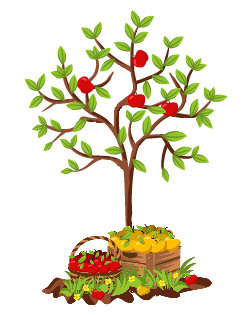 The beginning of fruiting
Golden Rangers are quite early fruiting trees. On tall rootstocks, trees begin producing fruit as early as 4-5 years after planting. On smaller, semi-dwarf or dwarf rootstocks, fruiting begins as early as 2-3 years. Harvests in the first few years are not very abundant, with no more than a few dozen apples harvested.
Flowering time
This late-bearing apple tree begins to bloom only in the third ten days of May. After a long, cold winter and a rainy, sunny spring, the blossoms may not open until early June. The buds are pink, and the flowers themselves are fragrant, snow-white, large, with fleshy and very delicate petals. They densely cover the branches, making the tree look beautiful. The process lasts approximately 12-16 days.
Fruiting and growth
The variety grows quite quickly, reaching 45-60 centimeters in height a season before fruiting begins. Subsequently, the growth rate slows slightly, but not significantly. By the seventh to ninth year, the plants reach their peak height and begin producing quite substantial yields. Fruit production also increases very rapidly, reaching its peak by the eighth to tenth year.
The fruits ripen only by the end of September, but often as late as early October. They hold firmly to the branches and do not fall off even in moderate winds. However, it's best to harvest them early to ensure better storage. The fruits should be transported in boxes, sprinkled with sawdust or sand. In a regular cellar, they can last until spring. The optimal storage temperature is 1-5°C.
Top dressing
- Eggshell.
- Humus.
- Bor.
- Manure.
- Compost.
- Superphosphate.
- Copper.
- Mineral and nitrogenous complexes.
- Ammonium nitrate.
What to do if it doesn't bloom or bear fruit
- Wrap up for the winter.
- Limit or activate watering.
- Eliminate insect infestation.
- Cure diseases.
Why do apples fall?
- Strong wind, hail, rain.
- Pests or diseases.
- Frosts.
Share your own experience with the Golden Rangers apple tree variety, so even novice gardeners have no questions about cultivating these trees.