Kandil-sinap apple tree: characteristics of the variety and care
| Color | Greens , Reds |
|---|---|
| Ripening season | Summer |
| Size of apples | Large |
| Taste | Sweet and sour |
| Crown type | Tall tree |
| Shelf life | Low shelf life |
| Application | For recycling , Fresh |
| Winter hardiness | Low winter hardiness |
| Fruiting age | From 5 years old |
 History of origin and regions of growth
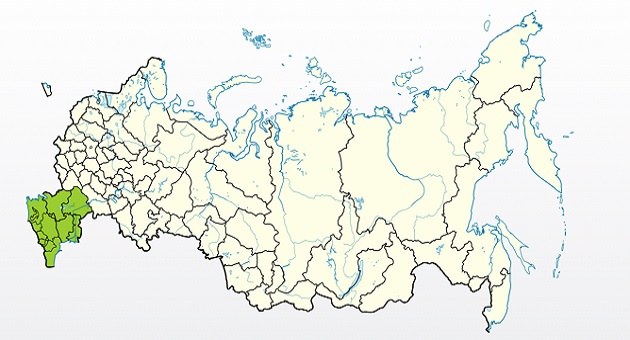
Growing regions
- Crimea.
- North Caucasus.
Origin
Scientists have been unable to determine the origin of the Kandil-sinap apple tree. It is known that it descended from the nearly lost ancient Sara-sinap variety, the result of a random mutation. Until the mid-twentieth century, the variety was widespread in Crimea, accounting for just under 10% of the peninsula's orchards.
Since the mid-1950s, apple trees have been actively displaced by newer, more productive, and more advanced varieties. It is grown commercially exclusively by JSC KFK in the Krasnogvardeisky District of Crimea, near the village of Petrovka. There is currently no information about this variety in the State Register of Breeding Achievements, and it has no official zoning, but it can be cultivated in warm regions with a mild climate and predominantly sunny weather.
Content
Description of the variety Kandil-sinap
 This native Crimean tree has many advantages, but is not readily available for cultivation in every region of our country. The trees are heat-loving, preferring open, sunny locations. They grow in any soil, require little care, and produce good harvests. However, they have several drawbacks: Kandil-sinap fruiting begins late and is markedly irregular, with the apples often falling to the ground before harvest.
The fruits are quite large and attractive, have a pleasant flavor, and good commercial qualities. They can be transported long distances and stored for a while in a regular cellar. This variety is recommended exclusively for private gardens where the owners are willing to wait a long time for the first harvest.
Apples: What do they look like?
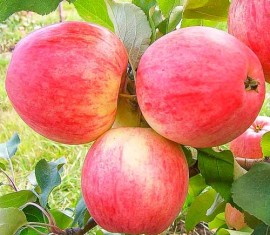
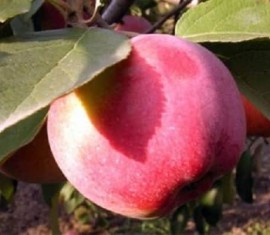
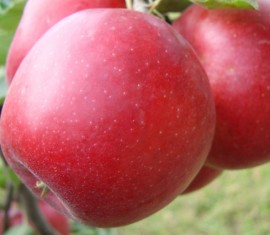
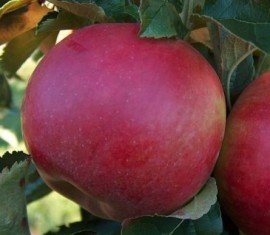
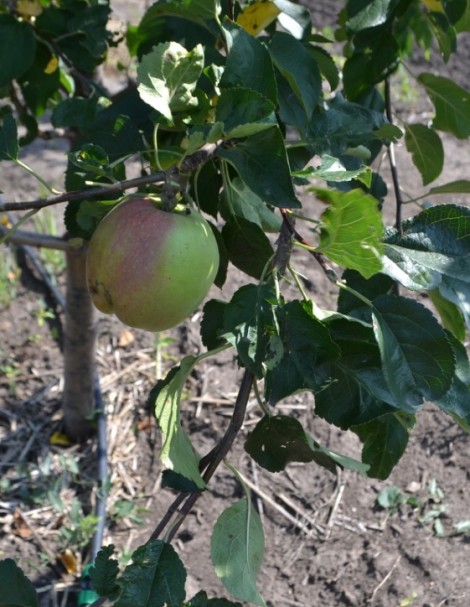
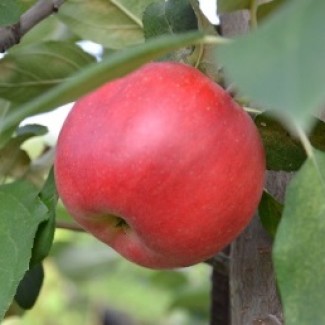
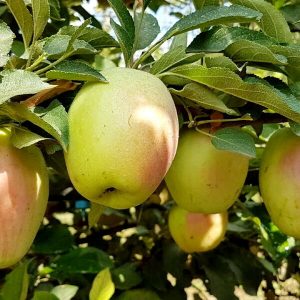 The fruits are distinctive, rounded, elongated, cylindrical, and slightly conical. They grow quite large, weighing from 120-150 to 200 grams in good years. The ribbing is clearly visible, especially at the calyx; the rest of the surface is slightly smoothed.
The primary color of the Kandil is green or, when fully ripe, greenish-yellow, sometimes light green or lemon. The skin is raspberry-red, pink, or bright red, blurred and mottled, translucent, sometimes intensely saturated. The skin is medium-thick, elastic, pliable, and bursts with difficulty, yet thin. There are numerous small green or gray-green subcutaneous dots, visible on the surface without a magnifying glass. Professionals distinguish the following chemical characteristics:
- P-active substances (catechins) – 205 milligrams.
- Ascorbic acid (vitamin C) – 12.1 milligrams.
- Fructose (total sugars) – 12.4%.
- Pectins – 7.3%.
- Titratable acids – 0.37%.
Inside, the fruits are yellowish-white or lemon-colored, firm, and fine-grained. The flesh has a pleasant, slightly spicy, sweet-and-sour flavor, is juicy, crisp, and easily peels off. These are the kind of apples that you can easily break apart with your fingers. According to an unofficial rating, they score 4.6 out of 5.
Apple tree Kandil-sinap: characteristics
Crown and root system
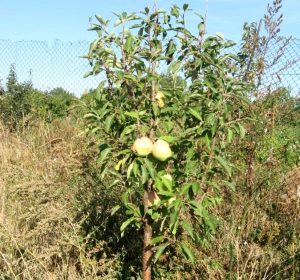 These are fairly large, tall trees, reaching 6-8 meters in height. The crown is pyramidal or narrowly pyramidal. The branches are long, thin, and straight, directed upward, extending from the trunk at almost a right angle, and becoming smaller as they grow higher. They are covered with brown or reddish-brown bark, not pubescent, smooth, and glossy. Fruiting is mixed (complex rings, spears, and fruiting twigs).
The candile tree is densely foliated with small to medium-sized, oval-shaped leaves. They are pubescent, matte, and dense, with tapered and sharply pointed tips. The leaf blades are gray-green, with wavy margins, often folded into a boat-shaped pattern, finely serrated, and slightly serrated. The root system is extensive, often fibrous, but moderately deep and located approximately at the crown's projection. Experienced gardeners say that strong winds can topple the tree.
Productivity and pollination
The late onset of fruiting and its pronounced regularity (once every 2-3 years) is more than compensated for by the high productivity of the tree.
In fruitful years, mature and fully formed trees can produce large yields of up to 200-240 kilograms of fruit or more. According to the records of the renowned Russian breeder Lev Simirenko, a yield of 1,392 kilograms (87 poods) of aromatic fruit was recorded at the end of the nineteenth century..
One of the variety's drawbacks is its self-sterility. To produce fruit, it requires pollinators. These are typically planted at a density of at least one tree per 50-100 square meters. To be on the safe side, spray Kandil with a sugar or honey solution during flowering to attract more bees.
Winter hardiness and disease resistance
The variety's tolerance to low temperatures is generally considered average. However, in reality, it suffers greatly from frosts below -18-20°C. Even the wood can freeze, with the buds being the first to suffer. Sudden temperature fluctuations cause severe stress, requiring a lengthy recovery period for the trees.
Kandil isn't particularly resistant to scab or other apple tree infections or fungi. Regular preventative treatment is necessary. If infected, the leaves and fruit are damaged, making them unfit for consumption. Parasites also readily damage the trees.
Rootstocks and subspecies
The variety's subspecies are so diverse that they are best considered separate. Growing on dwarf and semi-dwarf rootstocks imparts many unique qualities to the trees, while preserving the best characteristics of the parent tree. The most popular are the medium-sized MM106 rootstock (4-6 meters tall) and the dwarf M9 (2.5-3.3 meters tall). These trees begin bearing fruit in 3-4 and 2-3 years, respectively, after planting in open ground.
Features of growing Kandil-sinapa
 Landing
 Landing
Basic conditions
- Trees need sunny, open spaces to thrive. They struggle in shade and can even die if they don't receive the required dose of ultraviolet light.
- The Kandil planting site should be chosen with maximum protection from strong northerly winds and drafts in general. These often cause apple trees to become diseased, wither, and even light frosts can cause their buds to freeze.
- Unlike European varieties, the apple tree prefers shallow groundwater, approximately 1.2-1.5 meters below the surface. Its rhizome is shallow, so the seedling may not receive enough moisture. This tree can be planted near a river or pond without causing any harm.
- Almost any soil is suitable for planting, but it needs to be loose, airy, and permeable. In sandy Kandil, you'll often have to water, it is worth taking this into account.
- The holes don't need to be prepared in advance; they can be dug 1-3 weeks in advance, filling the bottom with fertile soil mixed with fertilizer (minerals and organic matter) in standard proportions. They should be approximately 50-60 centimeters deep and 60-80 centimeters in circumference.
- You need to leave at least 2-2.2 meters between the trunks; this will be enough to prevent them from clashing with their crowns and roots when they mature.
- In a private garden, you should immediately plant stakes to which the trunk is then tied. If the plantings are quite extensive, it's better to install trellises. They will not only help protect the trees from damage by strong winds but also provide protection from the cold.
- The apple tree grafting site (root collar) should always be above ground level. The tree may develop roots higher than this, which is unacceptable for preserving the rootstock's qualities. Some soil subsidence is possible after planting, so it should be raised by 5-8 centimeters.
- The trees are carefully examined, all dry or broken shoots are cut off and placed in water for 4-8 hours.
- A pile of drainage material is collected in the center of the hole, the seedling is placed on it, and covered with soil, lightly compacting it by hand. Care must be taken to ensure there are no voids near the roots, otherwise rot will occur. Water the trees with 30-40 liters of water, and mulch the soil to ensure additional moisture retention.
Selecting seedlings should be done with great care, otherwise you might end up with something completely different from what you expected. The branches of the original Kandil-sinap grow strictly upward. The grafting point should be visible, and the bark on the trunk and below should be distinct in color, and ideally, also in texture..
Landing dates
In warm climates, you can plant this variety in March-April, once the soil has warmed up completely, but it's better to choose the autumn period (September-October), after the leaves have fallen. In cooler regions, the first option is always preferred.
Tree care
 Tree care
Protection from frost and pests
The variety is heat-loving, so it needs to be prepared for winter properly. At the end August By the end of September or early September, watering is stopped completely. Young trunks are covered with a tent, while older trunks are wrapped with burlap, agrofibre, or roofing felt. Rhizome protection is generally not necessary in mild climates, but spruce branches or straw mats can be added.
Whitewashing with thick lime will help repel insects, which often nest in crevices and cracks in the bark. It's also a good idea to whitewash trees in the fall and spring. Repel rodents effectively with lard, fuel oil, or grease. Commercially produced products are also available; they are effective and inexpensive.
Loosening the soil, watering: proper agricultural technology
Kandil prefers loose, airy soil with good aeration. Therefore, it's necessary to dig around the trunk twice a year. However, this should be done no more than half a spade deep to avoid damaging the small roots. You can loosen the soil with a hoe every time after watering, preferably the following morning. This will prevent the soil from hardening and clumping too tightly.
During the first 3-4 years, water seedlings once every 7-10 days, unless there's been rainfall. After rain, wait a week and water again. Watering is also a good time to fertilize and nourish the soil, but not until 2-4 years after planting.
Pruning: simple crown shaping
The crown isn't very dense, but there are other nuances that need to be considered when shaping it. Its shape is tall and pyramidal, and the branches always reach upward, so they will need to be forcibly bent back by tying them to stakes or the trunk.
Gardeners' attempts to create a different form have been unsuccessful, so the only option is to let the tree grow as it grows, regulating its natural branching, which is stimulated by pruning.
Reproduction
- Cuttings.
- Budding.
- Cloning.
- Kidney grafting.
Pollinator varieties
- White rosemary.
- Kandil white.
- Reinette d'Orléans.
- Kandil Orlovsky.
- Chinese Kandil.
- Sarah-sinap.
Diseases and pests
- Scab.
- Black crayfish.
- Cytosporosis.
- Fruit rot.
- Brown spot.
- Powdery mildew.
- Rust.
- Apple moth.
- Green aphid.
- Glass-box.
- Leaf roller.
- Leafhopper.
- Scale insect.
- Hawthorn.
Ripening and fruiting of Kandil-sinap
The beginning of fruiting
 The beginning of fruiting
This variety can safely be called late-bearing, and you'll have to wait quite a while for a harvest. Flowers appear for the first time only in the 9th to 11th year, and fruits even later, around the 12th to 15th year. This late fruiting is considered one of the apple tree's main drawbacks.
Flowering time
Kandil blooms a week or a week and a half later than European varieties, so it's generally frost-resistant. Pollinators are also plentiful, as the apple tree can bloom for 18-21 days. The flowers themselves are quite large, snow-white, with delicate, airy petals, gathered in small inflorescences and/or solitary.
Fruiting and growth
The tree's late start to fruiting is primarily due to its slow growth. It can only reach 20-30 centimeters per year. It will take a considerable amount of time for it to acquire its final appearance. Once the fruit begins to ripen, the apple tree slows down even more. Fruitfulness increases gradually as it grows.
Apples ripen around late August or early April. You can tell they're ready for picking by their distinctive oily, bluish bloom, vibrant skin colors, and flavor. There's no need to wait for them to reach consumer maturity; they're delicious right away. It's important to pick the apples early, otherwise they may fall off. They should be transported with care and stored in the cellar no longer than December or early January.
Top dressing
- Eggshell.
- Humus.
- Manure.
- Compost.
- Superphosphate.
- Mineral and nitrogenous complexes.
- Ammonium nitrate.
What to do if it doesn't bloom or bear fruit
- Wrap up for the winter.
- Limit watering.
- Eliminate insect infestation.
- Cure diseases.
Why do apples fall?
- Overripening.
- Wind.
- Pests or diseases.
- Frosts.
Share your own experience with the Kandil-Sinap apple tree variety so that even novice gardeners have no questions about cultivating these trees.