Apple tree Cinnamon New: characteristics of the variety and care
| Color | Reds |
|---|---|
| Ripening season | Autumn |
| Size of apples | Average |
| Taste | Sweet and sour |
| Crown type | Tall tree |
| Shelf life | Average shelf life |
| Application | For recycling , Fresh |
| Winter hardiness | High winter hardiness |
| Fruiting age | From 5 years old |
 History of origin and regions of growth
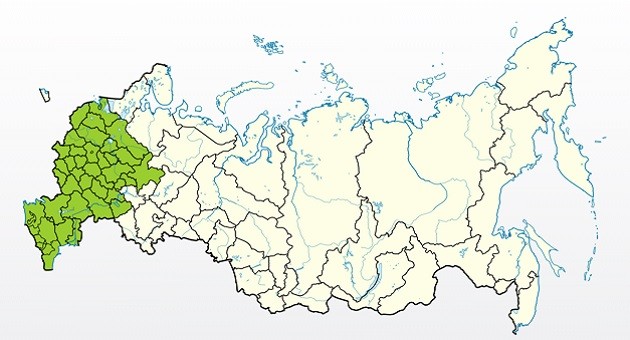
Growing regions
- Bryansk and Ryazan regions.
- Moscow region and Moscow.
- Kaliningrad region.
- Leningrad region.
- Smolensk region.
- Pskov region.
- Middle zone.
Origin
Development began in the 1940s at the Chakinskaya Breeding Experimental Station (now the I.V. Michurin Federal Scientific Center). The variety's creators were Marfa Petrovna Maksimova and Sergei Ivanovich Isaev, prominent Soviet breeders. It is a direct hybrid of the Cinnamon Striped variety and the Welsh variety.
The Great Patriotic War interrupted the apple tree's testing, so the application for elite classification was only submitted in 1949. The variety was sent for field testing, which continued until the mid-1960s. It was added to the State Register of Breeding Achievements in 1956, and at the same time, it received official zoning for the Central and Northwestern regions.
Content
Description of the Cinnamon New variety
 This mid-season apple tree is a favorite among many gardeners in our country. It's vigorous, hardy, and can withstand virtually any weather conditions. The trees are easy to care for, require no feeding, fertilizer, or watering, and don't require much attention during growth and fruiting. They are resistant to pests and fungal infections, especially scab.
The apples are quite large, have a pleasant flavor, a strong aroma, and are easy to transport. If picked in a timely manner, they store well in a standard cellar without special conditions. The only drawback is the crown morphology and branches growing at an acute angle. The apple tree is suitable for commercial plantings and for growing in private orchards.
Apples: What do they look like?
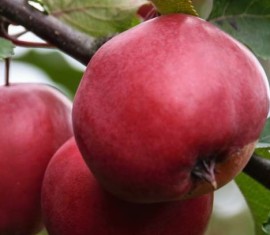
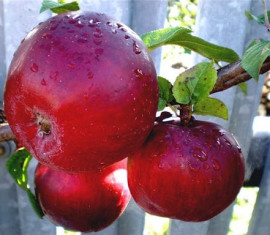
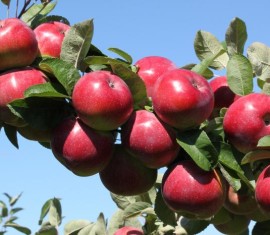
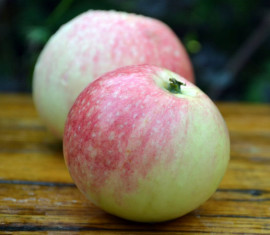
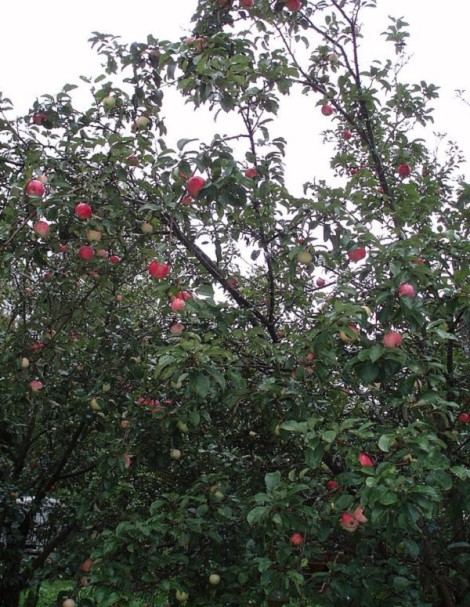
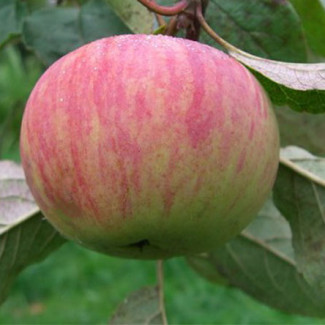
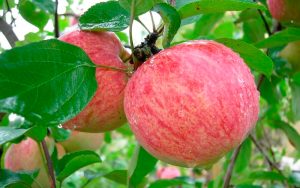 The fruits are medium to slightly larger than average in size, smooth, round, often even spherical, but can be rounded-conical. The maximum fruit weight is 130-170 grams. They are usually symmetrical and uniform in size, but may differ slightly on the lower and upper branches. Ribbing is almost invisible, and there is no lateral suture.
The cinnamon bark has a dense, very thick, and durable skin that is smooth, glossy, and highly shiny. Its primary color is green or yellowish-green. The blush appears on the sunny side and is mottled, striped, and spotted, a rich brown, blood-red, or sometimes burgundy hue, covering at least 75% of the surface. Subcutaneous spots are greenish-gray, rusty, numerous, and clearly visible. Chemical components can be assessed by the following factors:
- P-active substances (catechins) – 115 milligrams.
- Ascorbic acid (vitamin C) – 14.4 milligrams.
- Fructose (total sugars) – 10.35%.
- Pectins – 11.3%.
- Titratable acids – 0.88%.
The fruit has a dense yet tender, creamy-colored flesh. It's crisp, fine-grained, and has a very pleasant texture. The flavor is considered dessert-like, harmonious, and sweet and sour, with a strong sweetness and a hint of wine and spice. Professional tasters have rated the fruit 4.4-4.6 points for appearance and flavor, respectively.
Apple tree Cinnamon New: characteristics
Crown and root system
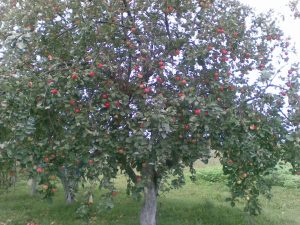 The shape of a young tree is always pyramidal, and this should be taken into account when initially shaping it. Over the years, it can become highly rounded, but not spreading. Branches are densely packed, and branch out from the main stem at an acute angle, often resulting in splitting. They are robust, rounded in cross-section, can be heavily hairy, long, straight, and directed upward, covered with cherry-brown or brown bark. The tree bears fruit primarily on the ring-shaped branches.
The leaves are large, dark green or even emerald, dense, leathery, glossy, and highly lustrous. They are ovate or oval-elongated, with long, pointed tips that sometimes curve downward. The margins are heavily serrated, serrated, and crenate, with coarse ribbing. The root system is very deep, penetrating 2-3 meters into the soil, branched, fibrous, and vigorous.
Productivity and pollination
Overall, the yield of Cinnamon New is assessed as high or medium-high.
A single tree in its prime can produce at least 120-140 kilograms of very aromatic and delicious fruit. Young apple trees produce moderate yields, but with age, the fruit production rapidly increases. Fruiting may occur periodically, every other year or two.
The variety is completely self-fertile and requires no pollination. However, many gardeners believe that having other apple trees with mid-season bloom times slightly increases yield. Therefore, in intensive plantings, it is recommended to plant at least one trunk of another variety per 50-100 square meters.
Winter hardiness and disease resistance
The variety is highly resistant to low temperatures, and most importantly, to unstable weather. It easily withstands the harsh climate of the Moscow, Kaliningrad, and Leningrad regions. Trees can withstand temperatures as low as -29-34°C without bud freezing. At lower temperatures, the apple trees may suffer some damage, but show a fairly rapid recovery.
The Cinnamon New variety is highly resistant to scab, although it has no genetic immunity. Nevertheless, trees show only 1-2 damage points even in years with high rates of epiphytosis. Leaves are more susceptible, while the fruit, after careful inspection, is generally suitable for processing or fresh eating. Other diseases and parasites also rarely affect the variety, and with timely prevention, a completely healthy orchard can be expected.
Rootstocks and subspecies
No subspecies of Cinnamon are known, but they are grown on different rootstocks. On dwarf rootstocks, trees grow more compact, but winter hardiness and yield drop sharply. Therefore, it's preferable to choose standard trees on vegetative rootstocks, especially for gardeners living in harsh climates.
Features of growing Cinnamon New
 Landing
 Landing
To ensure a tree's good growth, it's important to choose the right planting location. This will reduce the need for maintenance to virtually zero in the future.
Basic conditions
- All apple trees dislike shade, and the Brown New is no exception. It won't die in the shade, but it will become stunted, and harvests may become rare.
- Any soil is suitable for this variety, but the best options are loams, floodplain areas, and leached chernozems.
- The groundwater table on the site should be deeper, more than 2.5-3 meters below the surface. If this isn't possible, ensure proper drainage and an artificial embankment are installed, and plant the tree only in this area. Trees grow well on hills and elevated areas.
- Cinnamon is wind-resistant, but drafts can make it more susceptible to various diseases, as can excessive humidity. Therefore, it's best to grow it in a moderately ventilated location.
- Leave plenty of space between trees, at least 5-7 meters, and slightly less between rows. This will prevent them from crowding each other when fully mature. Dwarf varieties can be planted 2-3 meters apart.
- You can prepare the holes a season in advance, but 2-4 weeks of standing will be quite enough.
- Dig holes up to a meter wide and 80-90 centimeters deep, fill the bottom with organic matter and minerals mixed with the fertile topsoil, fill with drainage material, and fill with water. There's no need to cover them, and granite chips, broken brick, nut shells, vermiculite, and even polystyrene foam are all suitable drainage materials.
- It's convenient to insert stakes into the holes immediately for tying. Young seedlings are secured to them with rope or strips of fabric in a figure-eight pattern to prevent the trunk from rubbing against the stakes.
- The root collars should be left 9-12 centimeters above the surface, since after planting, the soil may settle during watering, and the grafting site should not be deepened.
- The seedling should be inspected, dry roots and branches should be removed, and it can be placed in warm water for 7-9 hours.
- Place the apple trees in the hole, first collecting the drainage material in a pile in the center. Straighten the rhizomes and cover with soil, lightly compacting it with your hands or feet. Water with 25-30 liters of water and mulch the surface.
Landing dates
It's acceptable to transplant Cinnamon trees to open ground in the spring, starting in the second ten days of April, and in the fall, from mid-September to early October. Trees tolerate both options well. The main thing is to avoid frost for two to three weeks.
Tree care
 Tree care
Protection from frost and pests
Young standard trees need to be carefully wrapped, despite their winter hardiness. The thinnest and most stunted ones can be covered with a tent-like covering, wrapped from the top to the ground with burlap, agrofibre, spongebond, or other materials. More mature trees can simply be wrapped in fabric, tights, roofing felt, or roofing felt.
To prevent insects from damaging foliage, wood, and fruit, regularly treat trees with specialized industrial chemicals. Whitewashing trunks with lime to a height of 1-1.3 meters is effective. Regular lard, fuel oil, grease, or rancid butter, applied liberally to the base of the trunk, will repel rodents.
Loosening the soil, watering: proper agricultural technology
In the early years, even the most resilient apple trees require care. Therefore, gardeners recommend digging around the trunks at least once a year, removing debris and weeds. Over the years, this need disappears; you can avoid loosening the soil by sowing grass or herbs around the roots. In summer, hoe the soil shallowly, especially the day after watering, to prevent the soil from compacting into an overly dense lump.
Young apple trees should be watered regularly, once or twice a month. Mature trees will benefit from three or four applications per year. Standard feeding and fertilizing methods, applied with water around the crown, are suitable for these plants. It's important to keep the root zone clear of fallen leaves and fruit, as rotting can lead to disease.
Pruning: simple crown shaping
Correct pruning directly affects health Future trunks and abundant fruiting are ensured. Trees are trained from the first year of planting, creating a sparse or open-tiered crown. Subsequently, natural branching should be maintained, avoiding excessive density. Pruning is carried out in late autumn, after the leaves have completely fallen.
Sanitary pruning of the tree is also performed in the fall. Broken shoots should be pruned immediately upon discovery. All cut areas are sealed with tar. Vertically protruding shoots and branches growing inward can be removed without mercy; they are of no use.
Pollinator varieties
- Florina.
- Zhigulevskoe.
- Imants.
- Melba.
- Orlovim.
- Idared.
- Borovinka.
- Lobo.
- Delicious golden.
- Ola.
Diseases and pests
- Scab.
- Cytosporosis.
- Moniliosis.
- Powdery mildew.
- Rust.
- Green aphid.
- Leaf roller.
- Hawthorn.
Ripening and fruiting of Cinnamon New
The beginning of fruiting
 The beginning of fruiting
This apple tree doesn't begin bearing fruit very early, although the first flowers can be seen as early as the fourth or fifth year. However, they usually fall off as empty blossoms, without forming ovaries. The first harvests are only realistically obtained in the sixth or seventh year, and in difficult conditions, sometimes as late as the seventh or eighth. They're unlikely to be abundant, but 4-8 kilograms can be harvested.
Flowering time
The blooming of the Cinnamon New buds coincides with many other varieties, as the timing is mid-season. This means that flowering begins in the first or second ten days of May. The exact dates depend on the weather, the cold of the preceding winter, humidity, and other external factors. It lasts approximately 10-14 days. The flowers are large, impressive, and strongly and pleasantly scented. The petals are fleshy, pinkish-white in color, and may have uneven coloring.
Fruiting and growth
The standard trees grow very quickly, reaching more than half a meter per year, usually before they begin bearing fruit. Then, the extreme growth slows slightly, but not significantly. Fruitfulness increases very gradually, with young trees yielding barely 50-60 kilograms. However, over the years, it grows noticeably, and by the 12th to 15th year, they can produce over 100 kilograms. This lengthy "development" is well worth the long, active lifespan of the apple tree (over 75 years).
Apples begin to ripen in the second ten days of September, if the weather is warm. If the summer is rainy and cold, you can wait until early October for ripeness. However, it's best to pick the fruit early and store it in a cellar; this way, they'll keep for about 2.5-3 months. If they're overripe, it's best to process or eat them immediately, as their shelf life will be reduced to 1-3 weeks. The fruit transports well thanks to its thick, dense skin.
Top dressing
- Eggshell.
- Humus.
- Manure.
- Compost.
- Superphosphate.
- Mineral and nitrogenous complexes.
- Ammonium nitrate.
What to do if it doesn't bloom or bear fruit
- Wrap up for the winter.
- Limit watering.
- Eliminate insect infestation.
- Cure diseases.
Why do apples fall?
- Wind.
- Frosts.
- Pests or diseases.
- Overripening.
Leave a review of the Cinnamon New apple tree variety, and even novice gardeners will have no questions about cultivating the trees.