Apple tree Krasa Sverdlovsk: characteristics of the variety and care
| Color | Reds |
|---|---|
| Ripening season | Autumn |
| Size of apples | Large |
| Taste | Sweet and sour |
| Crown type | Average tree height |
| Shelf life | High shelf life |
| Application | Universal variety |
| Winter hardiness | High winter hardiness |
| Fruiting age | Up to 5 years |
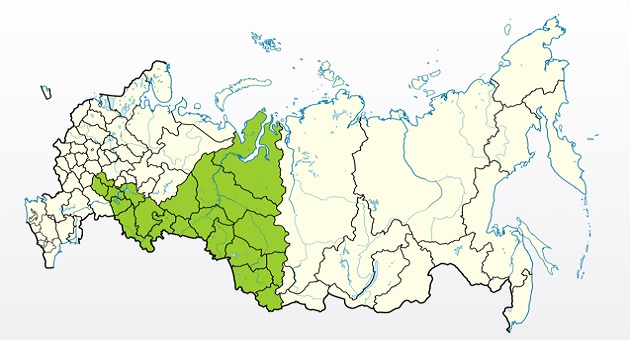 History of origin and regions of growth
Growing regions
- Ural.
- Middle Volga region.
- Bashkortostan.
- Orenburg region.
- Altai and Western Siberia (elastic subspecies).
Origin
Work on this variety began in the early 1970s. A group of breeders (P. A. Dibrov, L. A. Kotov, and L. G. Vengerova) at the Sverdlovsk Experimental Horticultural Station, through extensive selection, developed a variety they decided to call "Krasa Sverdlovska." It proved to be early-bearing, high-yielding, and, most importantly, tolerant of virtually any growing conditions.
This variety was immediately selected for testing, as it possessed all the necessary qualities. In 1979, it was added to the State Register, and it was then zoned for the Southern and Middle Urals. In fact, it is also successfully grown in the Volga region, Altai, and Western Siberia.
Content
Description of the apple tree variety Krasa Sverdlovsk
 Gardeners first evaluate the apple's flavor before choosing seedlings for their orchards. This variety boasts a truly outstanding, unique aroma and pleasant flavor. Furthermore, the trees are frost-resistant, require little care, and produce a consistently high annual harvest, which is why they began to rapidly gain popularity at the end of the last century. Today, Krasa Sverdlovsk is being actively displaced by new varieties, but it shows no signs of losing its position in both large commercial intensive orchards and small home gardens.
Apples: What they look like
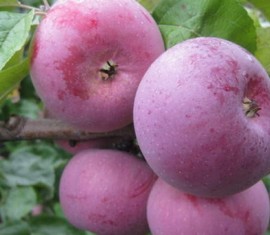
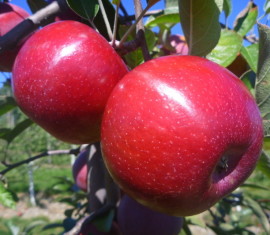
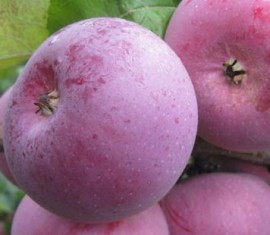
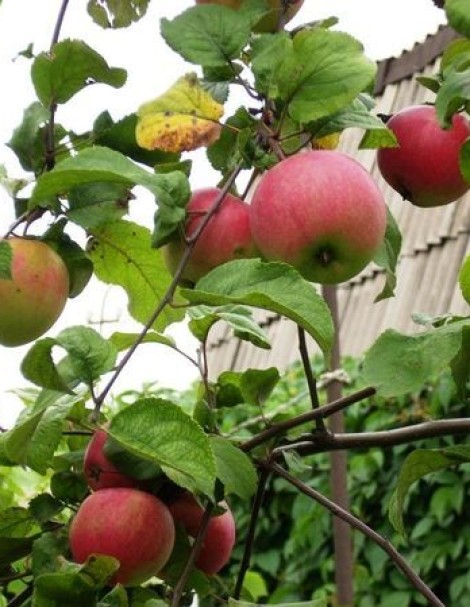
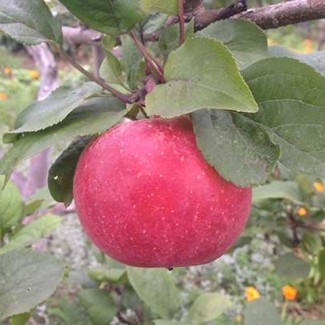
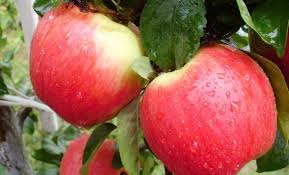 The fruits are generally medium to large, weighing between 150 and 140 grams. They are round, slightly flattened, and irregular in size. Their shape is usually regular, broadly rounded, with subtle or no visible ribbing.
The skin is smooth, glossy, and dry to the touch, and may have a light waxy coating. When young, it is green, becoming more yellow or creamy yellow as it ripens. The blush is a blurry, streaky, clear, bright red, and attractive color, occupying approximately 75-90% of the surface. The chemical composition is characterized by the following indicators per 100 grams:
- P-active substances (catechins) – 301.7 milligrams.
- Vitamin C (ascorbic acid) – 18.1 milligrams.
- Total sugars (fructose) – 12.7%.
- Pectins (fiber) – 15.9%.
- Titratable acids – 1.12%.
The flesh of these apples is unusually dense, yet crisp and crunchy, fine-grained, prickly, and very juicy (after 1-2 months of storage). It has a light creamy hue and a dessert-like flavor that is harmonious and balanced. It is sweet and sour with spicy notes in the aftertaste. The tasting score is 4.5 out of 5 possible points.
Apple tree Krasa Sverdlovsk: characteristics
Crown and root system
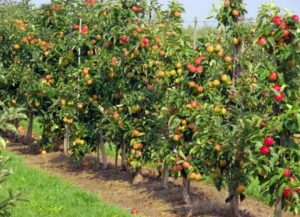 Trees of this variety are considered to be of medium height or slightly taller than average. Without pruning they easily reach 3-4 meters. However, most gardeners prefer to limit this figure for ease of harvesting and care. The shoots are predominantly brown or greenish-brown, geniculate, slightly angular, and extend from the trunk at or near a right angle. Crown medium filling, not prone to thickening.
The leaves of the Krasa are quite large and a rich dark green. They are leathery, smooth, glossy, wrinkled, filled with numerous veins, rather flat, with short, pointed tips and a serrated margin, and pubescent beneath. The root system is shallow and deep, well adapted for seeking and absorbing water, branched, robust, and may have a central taproot, depending on the rootstock.
Productivity and pollination
The variety's fruiting is considered regular, meaning it doesn't exhibit cyclical patterns. However, due to unfavorable weather conditions, the number of apples harvested may decrease slightly.
On average, a single mature tree can produce approximately 80-110 kilograms of aromatic fruit in a single season. Intensive plantings can easily yield over 25 tons.
Apple trees are conditionally sterile. This means you'll get a few solitary apples even if there's not a single tree nearby (50-100 meters) that blooms at the right time. However, those who want a consistently high yield should consider cultivars that allow for cross-pollination. It's also a good idea to locate orchards near an apiary or bring in beehives during the blooming season.
Winter hardiness and disease resistance
Many gardeners are dissatisfied with Krasa's frost resistance. Indeed, with proper care, it thrives in cold conditions. Urals, but beyond that it may not be able to withstand low temperatures. Although in Western Siberia It can also be grown by shaping the crown into a creeping form and covering it completely with snow. In any case, all protective measures to protect apple trees from the cold are essential.
The variety is fairly resistant to fungal infections, which are the most common diseases affecting apple trees. However, damage is possible in high humidity conditions. scab or powdery mildew. Pests are also very prone to damaging leaves, fruits, and even wood. Therefore, it's important to use fungicides and insecticides.
Rootstocks and subspecies
| Rootstocks | Peculiarities |
| Dwarf | On dwarf rootstocks, apple trees grow no more than 2 meters tall and begin bearing fruit as early as 2-3 years after planting. However, the rhizomes of these trees are shallow, making them susceptible to frost damage and requiring adequate winter protection. |
| Creeping | This subspecies possesses all the qualities of its parent variety, bearing fruit well and abundantly. However, its crown can be trained to spread along the ground. This allows the tree to be completely covered with straw mats, spruce branches, and snow for the winter. This will allow it to survive even the harshest winters. |
Features of growing Sverdlovsk Beauty
 Landing
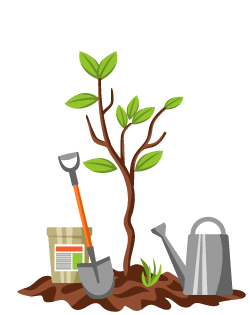 Landing
Basic conditions
- This variety is best planted in dry, sunny areas, preferably at elevated elevations where the groundwater level is fairly deep. Swampy areas and locations directly next to open water are not suitable.
- The tree doesn't like strong winds, and especially doesn't tolerate drafts. Therefore, you need to ensure that nothing of the sort occurs. You can plant Krasa under the protection of hedges, building walls, or larger trees. The main thing is that they don't cast dense shade on your seedlings.
- All planting holes should be prepared in advance, at least 4-5 weeks before planting. To do this, dig holes 60-70 centimeters deep and 1 meter in diameter. The top layer is mixed with manure, humus, or compost, a small amount of mineral fertilizer is added, and then poured back into the hole. The entire mixture is filled with 30-40 liters of water and left to soak for the required time.
- Immediately before planting, dig in stakes for tying and pour a drainage layer of gravel, broken brick or vermiculite, 10-15 centimeters thick.
- The root collar must be at least 8-12 centimeters above the soil surface to prevent the tree from rooting higher, thereby eliminating all the properties of the rootstock.
- The root system is covered with soil, compacted with feet, watered with 40-50 liters of water, and the surface is mulched with humus or chopped grass.
Landing dates
It is acceptable to plant apple trees of this variety in early spring, before the sap begins to flow in the trunks. However, it is better to do this in the fall, after the leaves have fallen, around October. Trees with closed root system planted throughout the growing season.
Protection from frost and rodents
Like other apple trees, this one requires reliable protection, especially since it typically grows in rather challenging climates. The root zone is typically lined with straw mats, hay, or spruce branches, and the trunks are wrapped with roofing felt, agrofibre, roofing felt, or nylon tights. Apple trees can be covered with burlap using a tent-like method. As mentioned earlier, espaliered varieties are covered and completely covered with snow.
To protect young, tender bark from hungry mice and hares, which readily move closer to human dwellings in winter, the trunks are coated with melted lard or grease. Whitewashing with lime in the fall also works well against insects.
Tree care
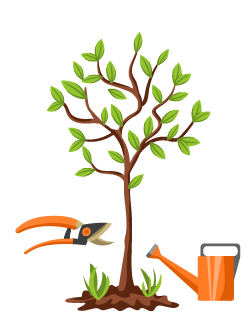 Tree care
Loosening the soil, watering: proper agricultural technology
This variety thrives in airy, oxygen-rich soil, so regular loosening is a good idea. Twice a year, the area around the tree trunk should be dug up, removing root suckers, weeds, and shoots from other trees or shrubs. During the growing season, you can also hoe the soil.
During hot and dry periods, especially young trees, need urgent watering. To avoid overdoing it, you can use the 10-day rule. This means watering only when natural precipitation has not fallen for exactly ten days. If it rains, count down the same amount of time before watering again. Water in two small doses (10 liters) in the morning and evening. In the second half of September, watering should be stopped completely to allow the apple tree time to prepare for winter.
Pruning: simple crown shaping
Crown formation for the Sverdlovsk Beauty is key. In the first year, the central stem should be removed by a third, and the skeletal branches should be spaced widely apart in tiers. They should be 7-12 centimeters shorter than the main stem. Forming a creeping tree requires a more thorough approach, requiring the complete removal of the main trunk down to the second tier and bending the branches to the ground.
Every fall, trees should be inspected and pruned for health and thinning. All dead, diseased, and damaged branches should be removed. Regular pinching of summer shoots and control of fruit production by removing excess shoots are also recommended.
Reproduction
- Clones (offshoots).
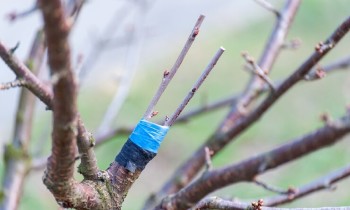
- Grafting by cuttings or buds.
- Rooting cuttings.
Diseases and pests
- Powdery mildew.
- Scab.
- Cytosporosis.
- Black crayfish.
- Codling moth.
- Green aphid.
- Hawthorn.
Ripening and fruiting of the Krasa Sverdlovsk apple tree
The beginning of fruiting
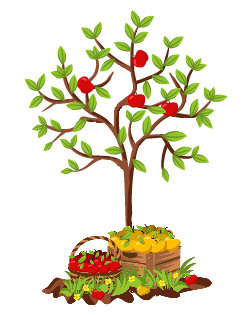 The beginning of fruiting
This apple tree can't be called an overly early fruiting tree. On a vigorous vegetative rootstock, it bears its first fruit only in the 5th or 6th year. Dwarf and semi-dwarf varieties will produce apples as early as the 3rd or 4th year. Apple trees bloom for the first time in the 2nd or 3rd year, but it's best to remove all buds to allow the tree to develop branches first.
Flowering time
Krasa most often begins blooming in May, but the exact timing will need to be determined experimentally for each region. In milder climates, it may produce buds as early as the beginning of the month, while in harsher climates, it may bloom in the middle or even towards the end. The flowers are large, white with a pinkish tint, gathered in small clusters, with a pleasant, medium-strength fragrance.
Fruiting and growth
You'll have to wait a while for this variety to fully bear fruit. In the first few years, the tree produces only 5-10 kilograms of apples. Only by the 7th to 9th year does it gain momentum, and a good harvest is possible.
It's customary to pick the fruit from the tree in September. Don't rely on taste; by then, they're coarse-grained, juicy, and reminiscent of sour cotton candy. The fruit is placed in wooden crates, sprinkled with sawdust, and left for several months. It's believed that apples reach full consumer maturity only in January, having accumulated sugars and developed a beautiful blush. This is when they acquire a crisp, fine-grained texture, a pleasant aroma, and a unique flavor.
Top dressing
- Compost.
- Peat.
- Humus.
- Urea.
- Manure.
- Bird droppings.
- Mineral complexes.
- Superphosphate.
What to do if it doesn't bloom or bear fruit
- Transplant.
- Apply fertilizer.
- Provide watering.
- Eliminate the shadow.
Why do apples fall?
- Natural phenomena (strong wind, rain, hail, frost).
- Pests.
- Diseases.
Please leave your feedback on the Sverdlovsk Beauty variety in the comments and share your experiences with other gardeners.