Bratchud apple tree: characteristics of the variety and care
| Color | Greens |
|---|---|
| Ripening season | Autumn |
| Size of apples | Average |
| Taste | Sweet |
| Crown type | Dwarf |
| Shelf life | High shelf life |
| Application | Universal variety |
| Winter hardiness | High winter hardiness |
| Fruiting age | Up to 5 years |
 History of origin and regions of growth
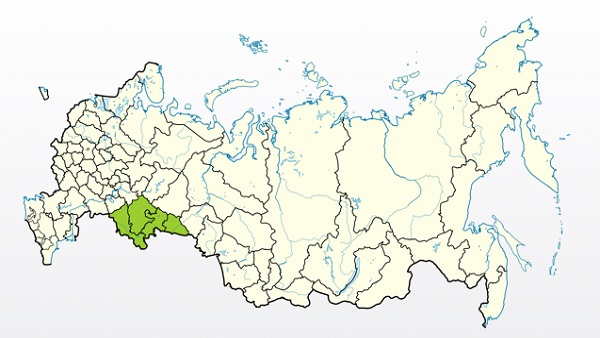
Growing regions
- Orenburg region.
- Bashkortostan.
- Kurgan region.
- Chelyabinsk region.
Origin
In the 1990s, at the experimental station of the South Ural Research Institute of Fruit and Vegetable Growing and Potato Growing in Chelyabinsk, complex hybridization of a new variety was conducted to produce a winter-fruiting apple tree. The mother plants were the Vydubetskaya Weeping and another complex hybrid called Uralskoe Zimnee, crossed with a seedling called 11-20-12. The resulting variety was named Bratchud. The name is an abbreviation of the words "Brother of the Wonderful."
The creators of this new, revolutionary variety were renowned plant breeders M. A. Mazunin and V. I. Putinin. The apple tree demonstrated outstanding winter hardiness and was immediately sent to nearby farms for field trials. In 2001, the decision was made to add the variety to the State Register of Breeding Achievements, and a year later, to zone it for the Ural region.
Content
Description of the Bratchud apple tree variety
 For Urals, SiberiaIn the Far East and other northern regions of our vast country, the availability of frost-resistant fruit trees capable of withstanding the harsh, long winters is crucial. This variety exemplifies winter hardiness, undemanding cultivation, and a compact crown, with high yields and enviable fruit quality. Recommended for commercial intensive orchards and small garden plots.
Apples: What they look like
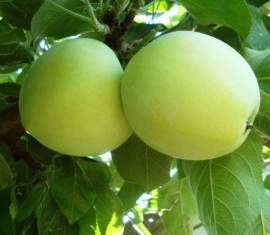
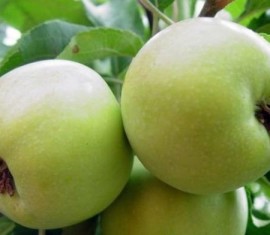
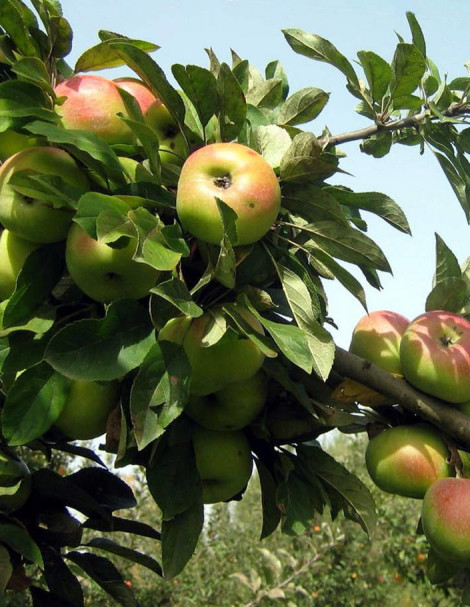
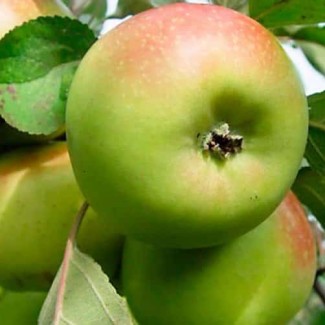
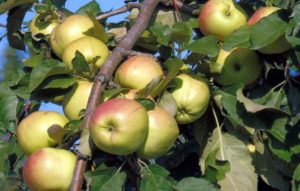 The fruits are typically medium-sized or slightly larger than average, round, slightly oblong-elongated, irregular, symmetrical, and have clearly visible ribbing. Each fruit has a visible "seam" on its side. They grow to approximately 110-220 grams and are distributed unevenly and haphazardly on the branches, making harvesting significantly difficult.
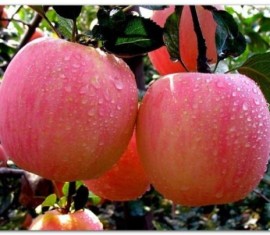
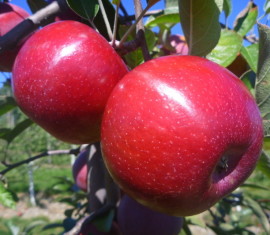
The skin is dense, smooth, glossy, shiny, and dry, with no oily or waxy coating. It is green or greenish-yellow in color, with a pinkish-red blush appearing on 30-55% of the surface depending on lighting. Subcutaneous punctures are large, numerous, and greenish-gray in color, not easily visible against the yellow-green skin. The chemical composition is usually characterized by the following parameters:
- P-active substances (catechins) – 302 milligrams.
- Ascorbic acid (vitamin C) – 11.4 milligrams.
- Total sugars (fructose) – 10.4%.
- Pectins (fiber) – 13.9%.
- Titratable acids – 0.42%.
The flesh is medium-dense, even slightly loose. It's coarse-grained and not particularly juicy, but aromatic. The apples have a sweet and sour flavor, considered a fine-dining, harmonious, and balanced apple. According to professional tasting reviews, Bratchud received 4.7 and 4.4 points for appearance and flavor, respectively.
Bratchud apple tree: characteristics
Crown and root system
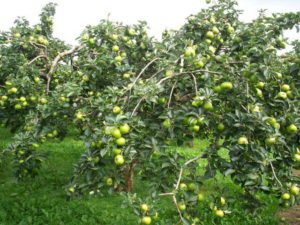 Trees of this variety are considered to be natural dwarfs. The maximum height of a tree on a vegetative seed rootstock can reach no more than 2.5-2.8 meters.Dwarf and semi-dwarf trees grow no more than 1.6-2 meters, or even less, making it much easier to cover during the cold season. The crown has a distinct, flat, rounded shape that becomes more spreading with age. The branches are medium-thick, covered with green or brownish-green bark without pubescence, and extend from the trunk primarily at right angles.
The leaves are numerous, leathery, dense, glossy, shiny, coarsely lobed, medium to large in size, with a short-pointed tip and a wavy margin, sometimes folded into a boat-shaped form. The undersides are lightly pubescent. The root system is superficial or moderately deep, branched, and in most cases lacks a central taproot.
Productivity and pollination
The variety is officially classified as high-yielding and early-bearing, which is highly appreciated by gardeners.
A single mature tree, under favorable weather and climate conditions and proper care, can yield at least 130-160 kilograms of delicious and aromatic fruit during the growing season. The highest recorded yield of 198 kilograms was recorded on a private farm in Bashkortostan in 2016..
Bratchud is self-sterile, meaning that to ensure cross-pollination and fruit production, apple trees of other varieties must be nearby. The trees should bloom at the same time and be no more than 150-200 meters apart, but closer is better. Experts recommend placing apiaries near orchards and spraying the tree crowns with a sugar syrup diluted with water.
Winter hardiness and disease resistance
Apple trees are considered truly frost-hardy, which, coupled with their compact size, which makes them easy to cover during cold spells, makes them a favorite in virtually any Siberian garden. They even tolerate temperatures below -38-40°C without any problems. The duration of the frost, as well as its sudden changes, fluctuations, and swings from thaw to bitter frost, are another matter. If such anomalies are likely in your region, it's important to carefully cover the trees for the winter.
The crop has no resistance to fungal infections of apple trees. Therefore, all standard preventative measures against scabies, powdery mildew, moniliosis, and other diseases will need to be treated promptly and regularly. In addition to spraying with fungicides, it's a good idea to use insecticides against insects, clear the area around the trunk of rotting leaves and fruit, and avoid applying more moisture than necessary.
Rootstocks and subspecies
The variety performed so well that it began to be actively used to create a wide variety of low-growing subspecies.
| Subspecies | Description |
| Superdwarf | This variety doesn't grow more than 90-100 centimeters tall even without formative pruning. It possesses all the qualities of the parent variety and is even more early-bearing, but it builds fruit slowly. Given that the active fruiting period is limited to 13-15 years, this is a significant drawback. |
| Creeping | Grown primarily on seed-bearing vegetative rootstock, it reaches a height of 1.5-2 meters and requires proper crown shaping. The subspecies produces small, slightly more tart fruits that ripen slightly later than the original variety. |
| Naturally low | This subspecies has a compact crown, no more than 1.6-2 meters tall, and branches that grow close to the ground. It tolerates strong winds and produces fruit well within 3-4 years of planting, with fruits weighing up to 160-180 grams. |
Features of growing Bratchud
 Landing
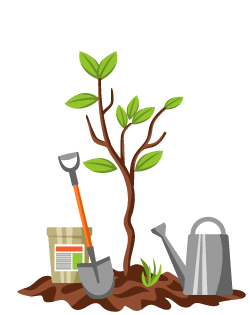 Landing
Basic conditions
- For the tree to thrive, the site must be well-lit and ventilated. However, special care should be taken to avoid drafts, which often kill young seedlings.
- Soil Slightly acidic and slightly saline soils with moderate fertility are best. Highly acidic soils can be quenched with lime. Poor soils will require high-quality fertilizers and regular fertilization, while black soil will require river sand for dilution.
- Planting holes are dug in advance to allow the soil to settle, which will help the trees root better. The hole should be at least 70-90 centimeters in diameter and approximately 60-70 centimeters deep. Add a small amount of fertile soil to the bottom, along with any necessary fertilizer (peat, compost, or other organic matter), a drainage layer, and then top it all off with clean water (25-30 liters).
- The holes are made 2-3 meters apart from each other, depending on the chosen subspecies, so that neither the roots nor the crowns subsequently conflict.
- It's a good idea to immediately dig special stakes into the holes to tie the young trees to after planting. These stakes can be made of wood, metal, or plastic.
- The day before planting, inspect the rhizomes of the seedlings, remove all dried shoots, and soak the trees in water for 6-9 hours.
- The apple tree's root collar should protrude at least 7-10 centimeters above the soil surface to prevent it from rooting higher. If this happens, all the unique qualities of the rootstock will be completely lost.
- Place the seedling in a hole with drainage, carefully spreading the roots so they lie freely. Cover them with soil, compacting it gently with your hands. Create a small earthen ridge around the hole, pour 20-35 liters of water inside, and mulch the surface to retain moisture.
Landing dates
The optimal time to plant the Bratchud is spring, when the risk of frost has completely passed. Find a warm, sunny day in March or early April to plant the trees, and they're almost guaranteed to thrive. However, sometimes there's no choice and the variety must be planted in the fall. In these cases, it's best to proceed quickly and do all the work in September, allowing ample time before the first frosts, as the young tree needs to prepare for the winter.
Protection from frost and rodents
Even though this variety is winter-hardy, it's crucial to protect it during the cold season. Firstly, the tree's roots are shallow beneath the surface, so they need to be protected first. To do this, rake 10-25 centimeters of soil around the trunk and lay straw or dry grass mats. Secondly, the trunk and branches themselves need to be protected by wrapping them with any suitable material. If necessary, the entire tree can be covered with a tent-like structure, fortunately, its height allows for this.
To get rid of insects that have settled near the rhizome, in cracks and chipped bark, whitewash the trunk with lime in the spring and fall, up to a height of 1 meter. Rodents can be repelled by smearing them with melted lard or grease.
Tree care
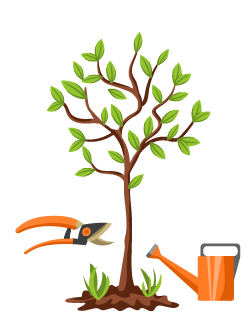 Tree care
Loosening the soil, watering: proper agricultural technology
It's essential to dig the tree's surface once a year to allow oxygen to reach the roots and remove weeds and root suckers. However, this must be done very carefully, keeping in mind the shallow root system. You can also hoe the soil, but be very careful.
Young trees should be watered once every two weeks, at least in the first few years before fruiting. However, moderation is key. If there is natural precipitation, the watering time should be calculated from the last rainfall. 20-25 liters, divided into two doses (morning and evening), is ideal for a seedling.
Pruning: simple crown shaping
Dwarf apple trees must be pruned starting in their first year of growth. Then, remove a third of the central core, leaving two to three skeletal branches, spaced widely apart in tiers and made 5-8 centimeters shorter than the trunk. A trailing variety is formed by cutting off the central core down to the first two buds, and bending the branches down and tying them to stakes driven into the soil.
Every spring and fall, trees are inspected and pruned for health, removing dead, diseased, and damaged shoots. Inward-growing and vertically protruding shoots should also be pruned immediately. Wounds are sealed with garden pitch or even ordinary bog oil or water-based paint. Due to its short lifespan, the tree does not require rejuvenating pruning.
Pollinator varieties
Reproduction
- Rooting cuttings.
- Grafting by buds and cuttings.
- Growing from seeds.
- Clones (layering).
Diseases and pests
- Powdery mildew.
- Cytosporosis.
- Fruit rot.
- Scab.
- Cytosporosis.
- Tinder fungus.
- Green aphid.
- Codling moth.
Ripening and fruiting of Bratchud
The beginning of fruiting
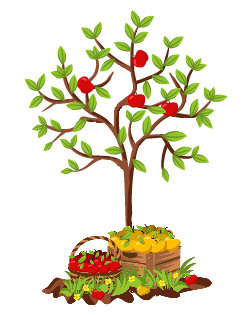 The beginning of fruiting
The variety is considered to be quite early-bearing. It produces its first apples as early as 3-4 years after planting outdoors. However, flowers may bloom in the nursery, but it's best to pluck them immediately before they develop. The first harvests aren't particularly abundant, but you can still harvest 5-8 kilograms of delicious fruit.
Flowering time
Bratchud begins blooming as early as mid-May, sometimes waiting until the end of the month. This depends entirely on the weather and climate; the cooler the weather, the later the plant will bloom. Flowering lasts approximately 12-16 days, so bees and wind usually have time to do their work if suitable pollinators are nearby. The variety's flowers are large, beautiful, and fragrant, gathered in saucer-shaped clusters of white and pink.
Fruiting and growth
The tree grows green mass steadily and rapidly, especially before fruiting begins, and then slows down slightly. It can grow at least 25-40 centimeters per year. Yields also increase gradually, and in some subspecies, even slowly. Only by the 7th to 9th year after fruiting begins do yields rise to over 25-30 kilograms.
The fruits ripen in September, primarily in the second half of the month, but in poor weather, the process can drag on until early October. Don't worry about the fruit falling to the ground; they usually cling tightly to the branches. After picking, apples are best stored in a cool, damp cellar at a temperature no higher than 4-5°C. This way, they can last for more than six months without losing their quality. Otherwise, it's best to process them before then.
Top dressing
- Compost.
- Nitrogen fertilizers.
- Humus.
- Ammonium nitrate.
- Manure.
What to do if it doesn't bloom or bear fruit
- Check for pests and diseases.
- Transplant.
- Limit watering.
Why do apples fall?
- Overripe.
- Natural factors.
- Pests.
- Diseases.
Leave your review of the Bartchoud apple variety below the article to share your experience with professional and amateur gardeners.