Marat Busurin Apple Tree: Variety and Care Features
| Color | Reds |
|---|---|
| Ripening season | Autumn |
| Size of apples | Average , Large |
| Taste | Sweet and sour |
| Crown type | Average tree height |
| Shelf life | Average shelf life |
| Application | For recycling , Fresh |
| Winter hardiness | High winter hardiness |
| Fruiting age | Up to 5 years |
 History of origin and regions of growth
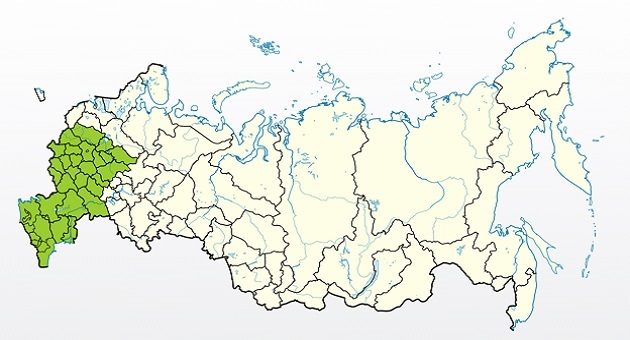
Growing regions
- Middle zone.
- Some northern regions.
- North Caucasus.
- Crimea.
Origin
When beginning work on the new variety, scientists at the All-Russian Scientific Research Institute of Apple Tree Seeds (VSTISP) set themselves the goal of creating an apple tree resistant to infections. They used a hybrid of the Red Melba and Wolf River varieties and a M. atrosanguinea 804 seedling as the basis, from which they derived the SR0523 variety. The development was carried out by a team led by the renowned Soviet breeder V.V. Kichina, including N.G. Morozova, S.F. Agapkina, and L.F. Tilunova. The well-known variety "Osennaya Radost" (Autumn Joy), which is highly resistant to scab and other fungi, was used as the second parent plant.
The variety received such an unusual, "human" name thanks to its creator, Vladimir Valerianovich Kichina. He decided to immortalize the name of his colleague, seed biologist, head of the fruit growing station at the Timiryazev Agricultural Academy, and, moreover, a front-line soldier and recipient of the Order of the Red Star, Marat Yakovlevich Busurin..
In 1997, the variety was fully developed and sent for field trials to farms across the country, where it performed exceptionally well. By 2001, it was decided to classify it as an elite variety, add it to the State Register, and zone it for the Central and Central Black Earth regions. In reality, apple trees with the beautiful name Marat Busurin are grown throughout the central part of the country, in regions with mild climates, and even in the more northern parts of the country.
Content
Description of the apple tree variety Marat Busurin
 Modern gardeners prefer to choose progressive, promising apple varieties, which scientists consider a breakthrough in breeding. The fruits of this variety have excellent commercial and consumer qualities; they are tasty and keep well, and the apple trees themselves demonstrate significantly higher winter hardiness, even compared to the notorious Antonovka. The Marat Busurin tree's compact size significantly facilitates care and harvesting, and also saves space, making it recommended for cultivation in both small private farmsteads and commercial intensive orchards.
Apples: What they look like
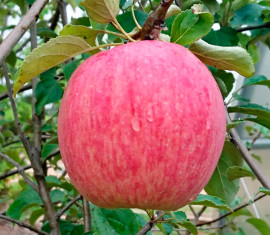
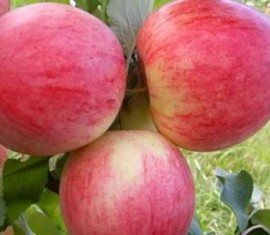
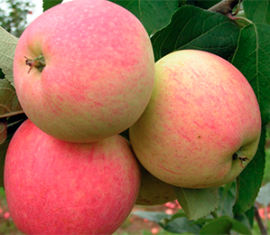
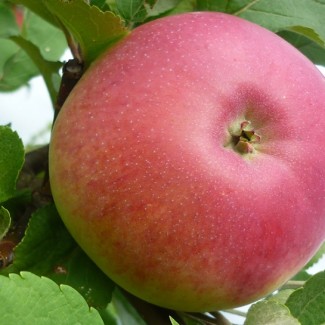
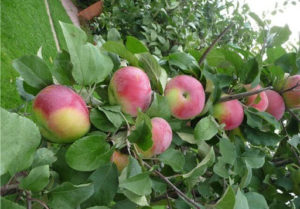 The fruits of this variety are typically medium or even larger in size. With proper care and favorable weather conditions, they can grow to 90-150 grams. In some cases, they reach 160-200 grams, but this requires special conditions. They are uniform, round, and can be slightly flattened, symmetrical, and slightly ribbed.
The fruit skin is dense, smooth, shiny, and glossy. Initially, it is light green, but as it ripens, it turns light green or even greenish-yellow. The blush occupies approximately 65-75% of the surface; it is dotted and marbled, reddish-pink or crimson, with a slight tint of purple or violet. By the time the fruit ripens, it becomes covered with a dense, bluish-gray waxy coating. The subcutaneous spots are light, grayish, and small, although numerous, almost invisible. The chemical composition can be characterized by the following indicators:
- P-active substances (catechins) – 321 milligrams.
- Ascorbic acid (vitamin C) – 11.2 milligrams.
- Total sugars (fructose) – 11.7%.
- Pectins (fiber) – 14.6%.
- Titratable acids – 1.33%.
The medium-dense, fine-grained, juicy flesh has a strong, distinctive aroma. It's crisp, crisp, and white or slightly creamy in color. The flavor is dessert-like, sweet and sour, leaning more toward sweetness with a slight apple tartness. It's harmonious and balanced. A professional taster gives it a 4.4 out of 5 for both flavor and appearance.
Marat Busurin apple tree: characteristics
Crown and root system
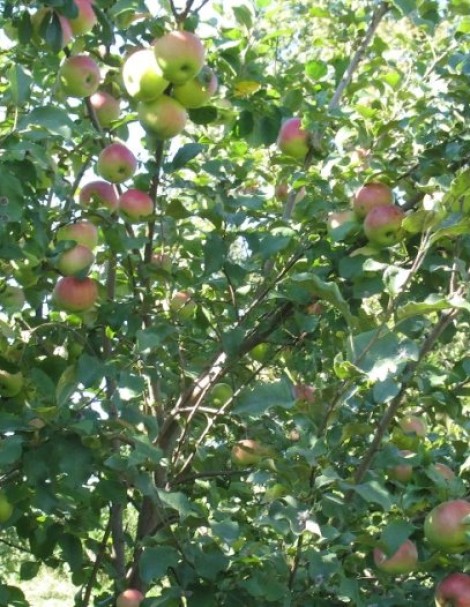
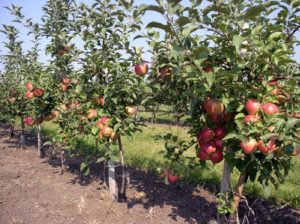 Experts classify this variety as a standard medium-sized tree or a natural semi-dwarf. In reality, they grow no more than 3-3.5 meters even without formative limiting pruning.However, many gardeners achieve a height of 2-2.5 meters to simplify care, winter shelter, and harvesting. The crown is moderately dense, broadly rounded or broadly oval. The branches extend from the trunk at a precise right angle and are covered with dark gray or brownish, dense, smooth bark that may begin to crack and crumble over the years. Fruiting occurs on rhizomes and fruiting twigs.
The leaves of this variety are large, elongated and rounded, light green, succulent, and sometimes slightly yellowish. They are leathery, dense, and matte. They have a finely serrated margin and a short, pointed tip, sometimes folded almost in half along the central axis. The root system is mostly shallow, superficial, and branched, and may have a central taproot, depending on the rootstock.
Productivity and pollination
The variety is considered highly productive, as is its early maturity. By the second or third year, the tree will be covered in beautiful buds in the spring, which are best plucked completely. The first harvests are best in the fourth or fifth year, allowing the tree to develop a healthy foliage beforehand.
With proper care and suitable weather and climate conditions, one mature tree can produce 100-130 kilograms of aromatic, juicy fruits annually.
Marat apples are considered dioecious, meaning they can pollinate themselves. However, gardeners note that self-pollination will not yield maximum yields. Therefore, it is recommended to interplant them with other varieties. It's a good idea to bring mobile apiaries into the garden during flowering, or simply set up a garden near permanent beekeeping facilities.
Winter hardiness and disease resistance
Scientists tout their enviable winter hardiness, but the reality is somewhat different. The trees thrive in southern regions with mild climates, as well as throughout almost the entire temperate zone. However, in more northern regions, they will require various winter protection measures. However, they recover very quickly even after severe frost damage. The most important thing for this variety is protection from drafts and strong winds, which can kill the trees.
Thanks to the Vm gene in the DNA of apple trees of this variety, they are virtually completely immune to apple scab, the main fungal infection of apple trees. The trees are also highly resistant to other diseases. They are very rarely affected, and if they are, the damage is very minor. Pests rarely damage the plants, although regular preventative measures are a good idea.
Rootstocks and subspecies
There are several options for growing Marat Busurin, which are worth discussing in more detail.
| Rootstocks | Peculiarities |
| MM106 | Growing on this rootstock significantly reduces the time it takes to begin bearing fruit. Trees begin bearing fruit approximately 2-3 years after planting in open ground, producing quite substantial yields (20-30 kilograms) of fairly large apples weighing 150-180 grams. |
| Mark | Shows good results in terms of frost resistance, while maintaining all the key characteristics of the mother plant. |
| Hybrid 62-396 | This seedling is best suited for growing in the relatively harsh conditions of the central and northern regions. Trees on this rootstock can easily withstand temperatures as low as -25-27°C. |
Features of cultivation by Marat Busurin
 Landing
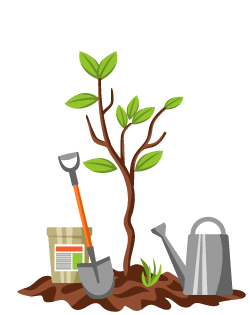 Landing
Key Features
- Planting sites for this variety will need to be carefully chosen, as young seedlings may simply not tolerate strong winds. However, don't overdo it; the main thing is to avoid drafts.
- Sunny open spaces are ideal for Marat to ensure high-quality growth and development for high yields.
- The soil for planting this variety should be loose and well-drained; even sandy loam and loam are suitable, as well as black soil, which is usually "diluted" with river sand. You will need to monitor the acidity, as the trees do not tolerate high levels.
- It's best to choose a site where the groundwater level doesn't rise above 2.5-2 meters. The tree will inevitably reach it with its extensive roots and begin to rot. If there's no other choice, then planting trees on artificial embankments is optimal.
- It's customary to prepare the holes in advance, at least 2-4 weeks before planting. To do this, dig a hole 60-70 centimeters deep and the same in diameter. Fill the bottom with some topsoil mixed with manure, add 8-12 centimeters of drainage material, and then fill with water (20-30 liters).
- It is enough to leave about 2-2.5 meters between trees, and two meters between rows will be enough.
- Stake stakes are driven into the holes immediately for support, and they should not be removed until 2-3 years after fruiting begins. This will prevent the trees from being knocked over by strong winds.
- The seedling is placed vertically in the hole, held by the trunk, directly on the drainage mound, with all the roots spread out and loose. Soil is added gradually, compacting it by hand. The key is not to overdo it, lest the soil become compacted to the consistency of asphalt. Water the top with 35-45 liters of water, and mulch the surface with compost or chopped grass.
The apple tree's root collar should always remain above the surface (10-12 centimeters), otherwise the tree may root above it. This will negate all the original properties and qualities of the rootstock..
Landing dates
For planting in open ground, it's best to choose one-year-old seedlings, as they show the best survival rate. They can be planted either in the spring, around the end of March or the beginning of April, or in the fall, once the leaves have completely fallen and the sap flow in the trunks has ceased. It's important to ensure that the last frosts in the spring have passed, and that there are at least 3-4 weeks left before the last frosts in the fall.
Protection from frost and rodents
Marat Busurin is moderately tolerant of low temperatures. Therefore, it's important to ensure the trunks are adequately covered for the winter, especially in harsher climates, such as the Leningrad Region or Moscow regionPlace mats of straw or dry grass on the root zone, or rake up a 15-20 centimeter layer of soil. Wrap the trunks with agrofibre, roofing felt, burlap, or any other available material. The trees' compact size allows for easy sheltering using the tent method.
To prevent rodents from gnawing the tender bark of young saplings, the trunks are coated with grease, or sometimes even with lard, for a height of 1-1.2 meters. Whitewashing the trunks to the same height in the spring and fall also helps repel insects.
Tree care
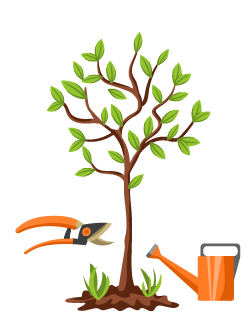 Tree care
Loosening the soil, watering: proper agricultural technology
Like most other apple trees, the Busurin prefers airy, oxygen-rich soil, so it will require regular tillage. Digging the area around the tree trunk is recommended at least twice a year, in early spring and fall. This should be done carefully and gently to avoid damaging the roots located close to the surface. The rest of the year, simply hoeing the soil is sufficient, while removing weeds, root suckers, and shoots from other plants.
It's important to pay attention to timely watering of the trees. Although they have average drought tolerance, regular watering certainly helps, especially during hot and dry summers. Approximately 15-25 liters of water per seedling per calendar month is considered adequate. You can also add various fertilizers and fertilizers at the same time, as they are absorbed more effectively with water.
Pruning: simple crown shaping
To ensure the tree receives adequate light and nutrients, it will need regular pruning, as without care it will begin to overgrow. Experienced gardeners often create a sparse, tiered form, allowing the skeletal branches to be spaced widely apart. In the first year after planting, the central conductor is shortened to approximately 50-70 centimeters, and the remaining shoots are trimmed even shorter in tiers. Subsequently, it will be necessary to regularly remove suckers (shoots that stick straight up) and branches that extend from the trunk at an acute angle.
Sanitary pruning is usually straightforward, as there are usually very few or no damaged or diseased branches. These should be carefully trimmed with pruning shears or a handsaw, and the wound sealed with garden pitch.
Pollinator varieties
- Idared.
- Borovinka.
- Saffron pepin.
- Ligol.
- Gloucester.
- Melrose.
- Simirenko.
- Elstar.
Reproduction
- Clones (layering).
- Rooting cuttings.
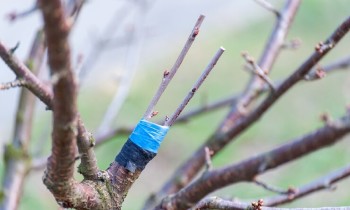
- Grafting.
- Growing from seeds.
Diseases and pests
- Fruit rot.
- Hawthorn.
- Green aphid.
- Leaf roller.
- Codling moth.
Ripening and fruiting of Marat Busurin
The beginning of fruiting
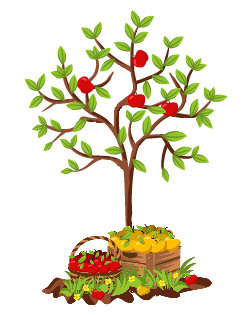 The beginning of fruiting
This variety is considered early-bearing, as it can begin blooming already in the nursery. It's best to remove all buds and fruit sets immediately during this period and for the next 2-3 years, allowing the apple trees to establish themselves. By the 4th or 5th year, you can harvest 5-15 kilograms of aromatic fruit. The apple tree increases its productivity very quickly, so you'll soon reach its peak.
Flowering time
Like most apple trees, this early fall or late summer variety begins blooming around mid-May. Depending on the climate and weather, this timeframe may shift slightly and even extend until the end of the month. Blooming lasts approximately 10-14 days. The flowers are abundant and dense, the blooms themselves are large, gathered in small clusters, fragrant, white or with a slight pink tint.
Fruiting and growth
In a single season, the tree can grow up to 20-25 centimeters of green mass, which is quite impressive and fast for a semi-dwarf tree. In just a few years, it will reach its full potential and begin producing good yields. It will take approximately 4-6 years from the start of fruiting to reach its peak weight of 180 kilograms, but that's not a long time.
Harvesting is typically done around the end of August (rarely), but more often in early or mid-September. It's believed that it's best to harvest the entire crop at once to prevent the fruit from falling to the ground, after which it's only suitable for processing. However, storage is typically expected to last approximately 2-3 months, after which the entire harvest will still need to be processed into preserves (compotes, jams, jellies, and juice).
Top dressing
- Mineral complexes.
- Compost.
- Manure.
- Humus.
What to do if it doesn't bloom or bear fruit
- Check for pests and diseases.
- Transplant.
- Limit or provide watering.
Why do apples fall?
- Overripe.
- Natural factors.
- Pests.
- Diseases.
- Excess or lack of moisture.
Leave your feedback on the winter-hardy Marat Busurin variety to share your experience and knowledge with others.