Orlovskaya Zarya apple tree: characteristics of the variety and care
| Color | Reds |
|---|---|
| Ripening season | Winter |
| Size of apples | Average |
| Taste | Sweet and sour |
| Crown type | Average tree height |
| Shelf life | Average shelf life |
| Application | Fresh , For recycling |
| Winter hardiness | Low winter hardiness |
| Fruiting age | Up to 5 years |
 History of origin and regions of growth
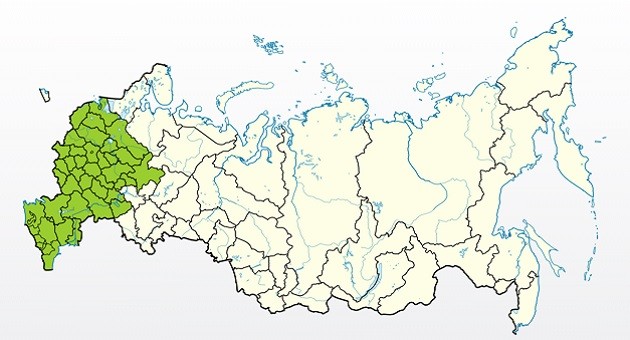
Growing regions
- Middle zone.
- North Caucasus.
- Crimea.
- Some northern regions.
Origin
At the All-Russian Research Institute of Fruit Crop Breeding, work was underway to cross-breed the Bessemyanka Michurinskaya and the American McIntosh varieties. The hope was to produce an early-winter variety that would produce delicious, dessert-like fruit. The efforts were successful, and in 1987, breeders N. G. Krasova, E. N. Sedov, and M. V. Mikheev developed an entirely new hybrid, which was given the beautiful, poetic name of Orlovskaya Zarya.
In the mid-1980s, the variety was classified as elite and officially sent to nearby farms for testing. An application for registration was submitted as early as 1986, but it was not until 2002 that the variety was included in the state register and zoned for the Central Region.
Content
Description of the Orlovskaya Zarya apple variety
 New, early-fruiting, high-yielding apple varieties are attracting modern gardeners, who are eagerly replacing older varieties with them. This makes sense, as with the same amount of care, a given area can yield significantly more fruit than before.
The trees are relatively easy to grow, tolerant of soil and moisture, but lack resistance to low temperatures. They are recommended for growing in both small garden plots and large commercial intensive orchards.
Apples: What they look like
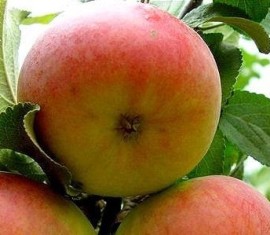
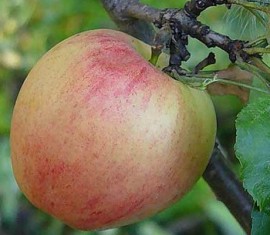
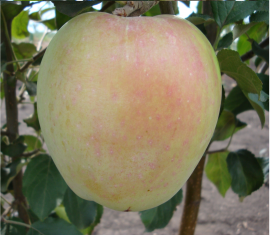
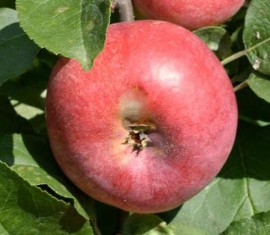
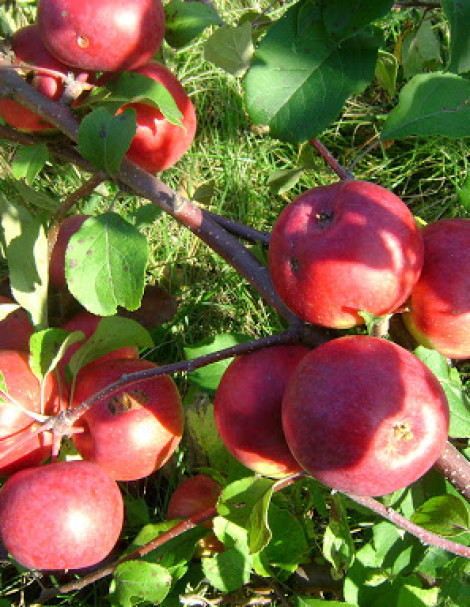
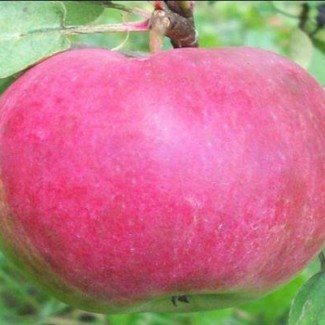
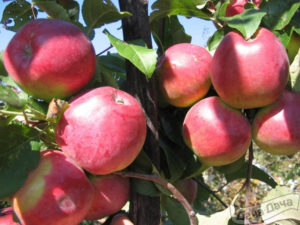 The fruits are generally medium-sized, reaching a maximum weight of 115-135 grams, but occasionally reaching 135-160 grams. They are round, symmetrical, equal-sided, broadly ribbed (with the ribbing clearly visible), and can be slightly flattened or turnip-shaped.
The skin is dense, glossy, and shiny; at full maturity, it can be covered with a thick layer of oily, waxy, bluish-gray. The base color is green, becoming lighter or even yellowish, lemon-colored, at maturity. The blush occupies 75-90% of the surface; it is bright red, slightly crimson, or carmine, with a diffuse undertone and a vibrant, speckled pattern. Subcutaneous dots are numerous, large, and light gray, sometimes with a greenish tint. The chemical composition is most easily assessed by the following indicators:
- P-active substances (catechins) – 213 milligrams.
- Ascorbic acid (vitamin C) – 13.6 milligrams.
- Total sugars (fructose) – 10.6%.
- Pectins (fiber) – 10.5%.
- Titratable acids – 0.78%.
The flesh is fine-grained, crisp, but not too prickly. It's rather tender, with a pleasant consistency, slightly creamy or even lemony, and firm. It's very juicy, with a sweet and sour flavor that's rightfully considered a dessert-like, harmonious, and balanced. Orlovskaya Zarya has been rated 4.8 out of a maximum of 5 for appearance and 4.6 for taste by professionals.
Apple tree Orlovskaya Zarya: characteristics
Crown and root system
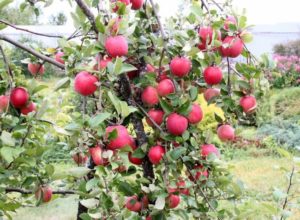 Trees are considered medium-sized, reaching a maximum height of approximately 4-5 meters without formative pruning. Most experienced gardeners achieve results similar to those of natural dwarf trees (3.5-4 meters). This makes harvesting and treating the trunks for diseases and pests much easier. The crown is broom-shaped or inverted-pyramidal when young. With age, it becomes more spreading, sometimes even weeping. The shoots are long, straight, angular in cross-section, strong, and covered with brown, reddish-brown, or reddish-brown bark.
The leaves are large, elongated, rounded, and light or deep green. They are leathery, dense, and glossy, with a slight pubescence on the underside. They are short-pointed, with a propeller-shaped tip and delicate nerves. The root system is branched, moderately deep, and may or may not have a central taproot.
Productivity and pollination
Orlovskaya Zarya is considered an early-ripening and high-yielding variety.
Despite its relatively compact size, a single tree can yield approximately 90-120 kilograms of fragrant, tasty, and juicy fruit per year. If the trees are properly cared for and the weather and climate conditions are favorable, you can expect to harvest up to 150-180 kilograms of apples..
The variety is considered conditionally self-fertile, meaning that even if there are no other apple trees nearby that bloom at the right time, some apples will set and ripen on the tree. However, to increase yield to 100%, it's best to interplant the trees. During flowering, advanced gardeners spray the trees with honey or sugar (syrup) diluted in water, which attracts more pollinating insects.
Winter hardiness and disease resistance
The tree is not very tolerant to low temperatures, and frosts below 22-27°C can easily kill it. Therefore, it is necessary to carefully protect it from frost, especially in harsh climate regions such as Moscow region Or the Leningrad Region. Sudden changes from a thaw to a bitter cold can be fatal for Orlovskaya Zarya. Ideally, it's best to grow them further south or cover them with a tent.
The variety has no genetic resistance to fungal infections or other diseases. However, their resistance is above average, meaning they are affected extremely rarely. However, if fungi do develop, they will infect not only the foliage but also the fruit, which will have to be discarded. Therefore, regular preventative treatments should not be neglected.
Rootstocks and subspecies
The variety is relatively new and young, so no subspecies are known yet, although work is ongoing. Orlovskaya Zarya is grown on various rootstocks, which can significantly alter its properties and physical characteristics. For example, on seedlings, trees grow quite tall, while on semi-dwarf and dwarf varieties, they reach no more than 2.5-3 meters. However, low-temperature tolerance and overall winter hardiness decrease even more significantly. Fruit on these trees can be produced as early as 2-3 years, and their size will be slightly larger, up to 160-180 grams.
Features of growing Orlovskaya Zarya
 Landing
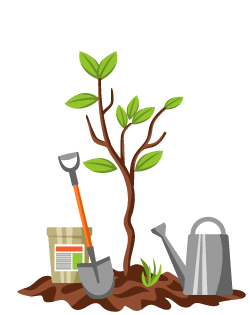 Landing
Basic conditions
- Like any apple tree, Orlovskaya Zarya requires an open, well-ventilated, sunny location. Trees prefer sun-heated crowns evenly; without sun, apples lose their flavor, sweetness, and attractiveness; they become smaller and sour.
- High groundwater levels (2.5-3 meters) can destroy trees, as their roots inevitably reach them. They begin to rot, which inevitably leads to their death. Therefore, it's not recommended to plant Orlovskaya Zarya apple trees, and apple trees in general, near springs, rivers, ponds, and lakes. Lowlands, marshy areas, and floodplain meadows, which are flooded by spring runoff, are unsuitable for these trees.
- The holes should be prepared a season before planting the variety. To do this, dig steep-sided holes approximately 65-75 centimeters deep and 1 meter in diameter. The topsoil is mixed with organic matter and mineral fertilizers, then backfilled into the bottom of the hole, topped with drainage material (rocks, broken brick, gravel, or nut shells). Add 40-55 liters of water and leave the holes directly outdoors.
- It's a good idea to immediately dig in support structures (props, stakes, planks, trellises). The seedling will be tied to these to prevent damage or blowing over.
- The distance between the rootstocks directly depends on the rootstock: for seed rootstocks, 4-4.5 meters are left, and for dwarf and semi-dwarf varieties, 2.5-3 meters is enough.
- Root collar always leave it 5-11 centimeters above the soil surface if you do not want to lose the original properties and qualities of the rootstock.
- Before planting, inspect the rhizome and cut off all dry, damaged, broken or diseased shoots.
- Place the seedling on the drainage surface, supporting it with your hand, then fill it with soil and compact it to eliminate air pockets. Water with 25-40 liters of water, and mulch the soil surface with any available materials (sawdust, grass, compost, manure).
Landing dates
Zarya can be planted either in early spring or in autumn, like most fruit crops. However, in the latter case, there's a high risk of losing the tree, which hasn't had time to prepare for winter, or which may have even begun to leaf out due to warm autumn weather. Therefore, it's preferable to plant it in spring, so that the growing season gives the trunk time to fully adapt to the new conditions before the onset of cold weather.
Protection from frost and rodents
The tree is considered quite delicate, so protective measures will require considerable time each year. Soil is raked onto the root zone, approximately 15-25 centimeters deep, and removed in the spring. Covering the roots beneath the soil with straw bales or dry grass mats is also effective. Trunks are wrapped with roofing felt, tar paper, burlap, or any other available materials. Smaller trees can and should be covered with a tent-like covering.
Rodents damage trees in winter by eating the bark and young shoots. To repel them, simply coat the trunks with grease or lard. Annual insect control is effective. whitewash Cover tree trunks with thick lime. This will prevent pests from settling in cracks and crevices in the bark for the winter.
Tree care
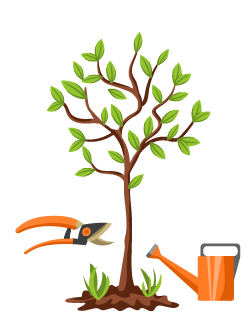 Tree care
Loosening the soil, watering: proper agricultural technology
The tree's trunk area should be dug twice a year, but once a year is sufficient if the soil around the apple tree is regularly hoeed during the growing season. At the same time, weeds, shoots from other plants, and root suckers are removed.
Young trees (in the first year) need to be watered weekly, but only if there's no rain. Zarya likes moisture, but not too much, otherwise you can get fungal infections in all their glory. As the tree matures, watering should be reduced to 6-8 times per growing season, timing it to coincide with flowering, fruit set, and fruit ripening.
Pruning: simple crown shaping
The tree has a moderate tendency to become overgrown, but if done promptly, this shouldn't be a problem. In the first year after planting, the central basal branch should be shortened by one-third. It's recommended to leave only 2-4 skeletal branches, spaced widely apart at different heights. Subsequently, maintain the same shape, promptly pruning any shoots that protrude inward or upward.
Sanitary pruning, which involves removing dry, diseased, and damaged shoots, is essential. This is usually done in the fall and spring, with a thorough inspection of the crown. All cut areas are immediately sealed with garden pitch or simply marsh muck.
Reproduction
- Rooting.
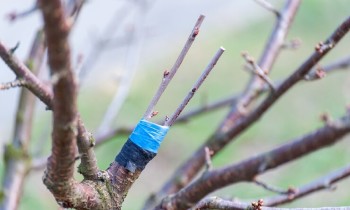
- Grafting.
- Layers (clones).
Diseases and pests
- Rust.
- Cytosporosis.
- Scab.
- Spotting.
- Powdery mildew.
- Green aphid.
- Codling moth.
- Hawthorn.
Ripening and fruiting of Orlovskaya Zarya
The beginning of fruiting
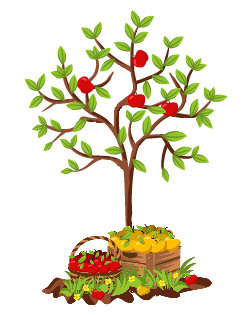 The beginning of fruiting
The variety is called early-bearing because it begins to bloom for the first time as early as the second or third year, but it's best to pluck all the buds at this point, preventing them from developing into apples. Especially since there aren't many of them at this point. A decent, more or less substantial "test" crop can be harvested as early as the fourth or fifth year after planting in open ground. These dates can be considered the start of fruiting.
Flowering time
This variety is considered an early winter or late fall variety, blooming mid-season. In warmer regions, the tree begins to bloom as early as mid-May with beautiful, large, pinkish-white flowers that densely cover the branches. They are large, fragrant, and add a very decorative touch to the tree. Flowering lasts approximately 12-16 days, after which small green apples quickly form.
Fruiting and growth
The tree grows green mass at a good pace, especially before fruiting begins. Then, it can grow at least 25-40 centimeters per year. Afterward, the growth rate slows slightly, but remains quite impressive. Yields also reach acceptable levels fairly quickly, and then peak. By the 9th to 12th year, you can expect full fruiting at full capacity.
The fruits ripen by the end of September, and in colder regions by early October. This is also when the harvest can begin, and it ripens rapidly, almost like an avalanche. If you don't harvest them in time, the apples may fall to the ground, requiring urgent processing into juice or jam. Contrary to expectations, Orlovskaya Zarya cannot be stored for more than 3-4 months. After the New Year, it begins to wilt, losing its flavor and aroma, becoming loose, cottony, sour, and unpleasant, and eventually completely rotting.
Top dressing
- Mineral complexes.
- Ammonium nitrate.
- Manure.
- Humus.
- Superphosphate.
- Peat.
- Compost.
What to do if it doesn't bloom or bear fruit
- Ensure proper watering.
- Check for pests or diseases.
- Transplant to a sunny place.
- Fertilize.
Why do apples fall?
- Natural factors (strong wind, hail, rain).
- Overripe.
- Pest damage.
- Diseases.
Please leave your feedback on the Orlovskaya Zarya variety so that other gardeners can learn about your experiences growing these trees.