Apple tree 'Gift to Grafsky': characteristics of the variety and care
| Color | Reds |
|---|---|
| Ripening season | Winter |
| Size of apples | Large |
| Taste | Sweet and sour |
| Crown type | Tall tree |
| Shelf life | High shelf life |
| Application | Universal variety |
 History of origin and regions of growth
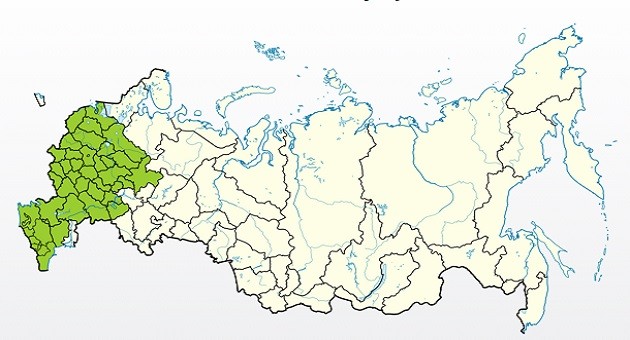
Growing regions
- Middle zone.
- North Caucasus.
- Crimea.
- Some northern regions.
Origin
Many modern varieties, respected and highly valued by gardeners in our country, were developed around the late 1960s and 1970s. At the VSTISP experimental station, a group of breeders led by leading scientist Viktor Valerianovich Kichina created a variety called "Podarok Grafskomu." He used the American hybrid D-101 as the parent variety, crossing it with the good old, well-known Russian Vyaznikovka. The goal was to create a truly "armor-piercing" late-winter variety, frost-resistant and long-lasting, and this goal was fully achieved.
This variety wasn't named after some unknown count. It was named after Mikhail Grigorievich Grafsky, director of the experimental state farm in Vladimir, where the apple trees successfully passed the challenging tests.
After preliminary testing, the seedlings were sent to experimental orchards near Vladimir. The winters of 1978-79 in the region were truly extreme, with severe frosts and temperatures dropping below -42-45°C. Many trees succumbed: Antonovka, Anisy, Streifling, and even some Ranetki perished. However, Podarok fully recovered within a year and bore fruit as if nothing had happened. The apple tree was only added to the State Register in 2001 and zoned for the Central Region.
Content
Description of the apple tree variety Gift to Grafsky
A late-winter variety, resistant to low temperatures, capable of producing good yields, hardy, and undemanding—that's what you need to know about Podarok Grafskomu. These beautiful red apples, with an excellent sweet-and-tart, slightly wine-like flavor, are easy to transport even over fairly long distances, and are loved by almost all gardeners. This variety is undemanding regarding soil or climate, begins bearing fruit quite early, and is resistant to various fungal apple diseases. It is recommended for growing in commercial intensive orchards and small plots near the home.
Apples: What they look like
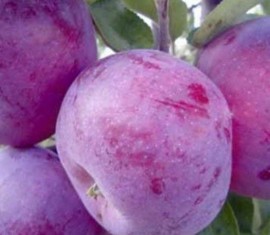
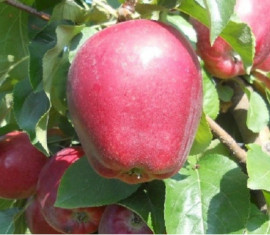
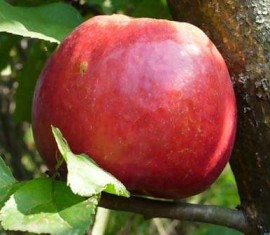
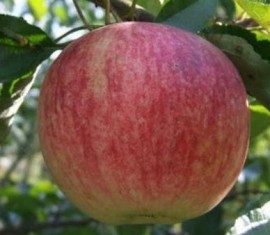
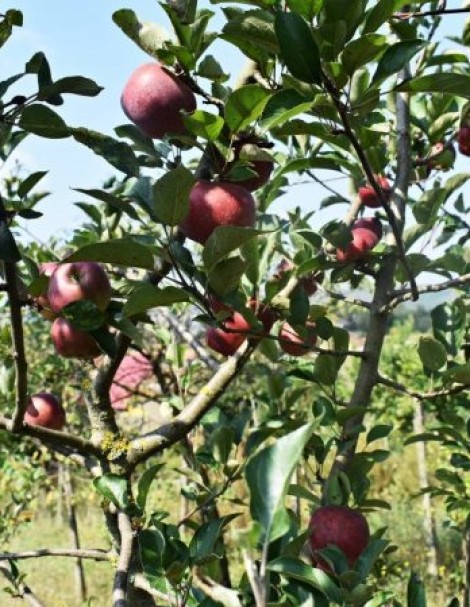
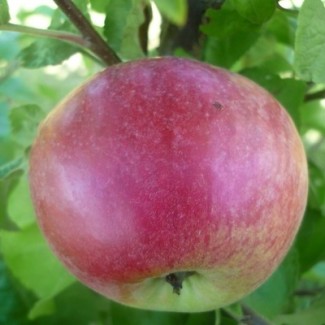
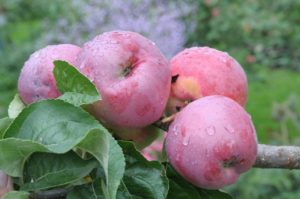 This variety is distinguished by its large to very large fruits, which can reach 300-350 grams in weight. However, they usually grow unevenly on a single tree; some are small, while others are very large. They are round, symmetrical, with subtle ribbing, and can be slightly turnip-shaped or flattened in the center.
The skin is smooth, glossy, shiny, medium-thick, and not brittle. Its base color is green when unripe, becoming increasingly yellow-green or lemon-colored as it ripens. The blush occupies approximately 75-90% of the fruit; it is red or crimson-red, dense, with a blurred, streaky, and mottled appearance. It may have a light waxy coating that does not alter the underlying color. Subcutaneous dots are light, numerous, and moderately visible. The base composition is well characterized by the following parameters:
- P-active substances (catechins) – 253 milligrams.
- Ascorbic acid (vitamin C) – 11.8 milligrams.
- Total sugars (fructose) – 10.2%.
- Pectins (fiber) – 8.4%.
- Titratable acids – 0.47%.
The flesh is medium-dense, fine-grained, juicy, and slightly creamy or light yellow. It is crisp, prickly, and may feel somewhat firm when picked. The flavor is considered balanced, sweet and sour. Professional tasters rate it 4.3 out of 5.
Apple tree 'Gift to Grafsky': characteristics
Crown and root system
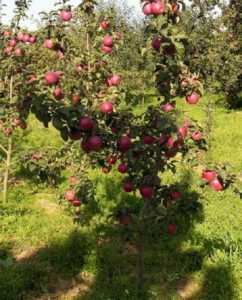 This tree is considered vigorous, as without any shaping, it can reach 6-7 meters or more. It has a standard, oval or rounded crown, which can be inverted pyramidal and tend to become somewhat dense, and with age, can become weeping and runner-like. The branches are medium-thick, short, and covered in light gray bark with a steely sheen. They generally extend from the central core at a nearly 90-degree angle.
The leaves are fairly dense, leathery, medium to smaller than medium in size, shiny and glossy, and may have very light pubescence on the underside. They have a serrate-crenate, wavy, and serrated margin, are short-pointed, and sometimes folded into a boat-like shape. The root system is very robust, deeply rooted, and branched, often with a central taproot, penetrating deeply in search of water and nutrients.
Productivity and pollination
Many people respect these winter apple trees for their high rate of early fruiting, which is unusual for such varieties.
In just one season, you can easily harvest approximately 235-260 kilograms of red, beautiful and delicious fruits from a mature Podarka Grafskomu tree..
The Podar apple is considered self-sterile, meaning it requires other apple trees with suitable flowering times for cross-pollination. It's common to interplant them to ensure a harvest. Thrifty homesteaders bring an apiary into the garden in the spring and even spray the trees with sugar dissolved in water to attract even more insects.
Winter hardiness and disease resistance
These apple trees can withstand growing conditions so harsh that others simply die in similar conditions. Temperatures down to -42-45°C proved unaffected, not only in testing. However, it's worth noting that even this variety dislikes sudden changes, drafts, and damp, excessively wet, and cold weather, although it can survive even in such conditions. In any case, it's important to carry out scheduled winter protection measures promptly to ensure a good harvest next year.
Apple trees of this variety are quite resistant to various fungal diseases and other infections. They are less susceptible to infection than other varieties, even during years of severe epiphytotics. However, it's best not to relax; treat the trees with fungicides and insecticides promptly, keep the area around the trunks clean, and clear it of rotting leaves, fruit, and weeds.
Rootstocks and subspecies
There are currently no subspecies of the Podarok, and most likely there won't be. However, they are grown on a wide variety of rootstocks, which can radically alter the tree's key characteristics while maintaining the same fruit quality. Trees grown on dwarf and semi-dwarf rootstocks grow much smaller, but their winter hardiness is definitely reduced due to their shallow root system. Also, the overall viability and lifespan of the apple tree on dwarf rootstocks is reduced, reaching only 25-30 years.
Features of growing Grafsky's Gift
 Landing
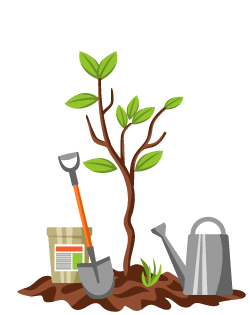 Landing
Basic conditions
- Like all apple trees, the Podarok prefers open spaces that receive most of the sun. Therefore, choosing a shady location for the tree is far from ideal. Moreover, the tree itself will block the sun from all nearby plants, as it has a fairly large and dense crown.
- There's no significant difference in the depth of the groundwater. This variety is one of those that doesn't actively reach for water and then rot.
- The variety grows equally well in loam, sandy loam, or black soil. It's best if the soil isn't overly acidic, which can be corrected with liming, but otherwise, there's no need to worry.
- The holes can be prepared in the fall or spring, but can also be done 2-4 weeks before planting. To do this, dig holes 65-85 centimeters in diameter and 55-75 centimeters deep, fill the bottom with fertile topsoil mixed with organic fertilizer, add drainage, and add 30 liters of water.
- Leave at least 4-4.5 meters between seedlings and about 5 meters between rows. This will prevent branches and roots from interfering with each other in the future.
- Stakes are dug or driven into the holes to support the seedlings. These can be metal, plastic, or wooden, and should not be removed until 4-5 years after planting them in open ground.
- The tree is placed vertically on a drainage mound, the roots are spread out, the trunk is supported, and the soil is filled in, gently shaking the trunk to remove air pockets. The soil is compacted by hand, and an earthen bank is created around the perimeter of the hole, into which 20-45 liters of water are poured. The surface is mulched with available materials (compost, humus, chopped grass, sawdust).
Landing dates
You can plant Podarok Grafskomu in either spring or fall, but avoid frost. Young trees may not have time to adapt and will die. Therefore, it's best to choose a warm, sunny day in late March or early April, when frosts are no longer a possibility, or in September or October, when frost is still at least 2-4 weeks away.
Protection from frost and rodents
Despite the variety's exceptional resistance to low temperatures, it's still a good idea to protect it during the winter. To do this, wrap the trunks in burlap and lay mats of dry grass or straw over the root zone. This is especially true for dwarf and semi-dwarf rootstocks, which are best covered with a tent-like covering.
To eliminate the risk of infestation by insects, which like to spend the winter in cracks and chipped bark, trunks are whitewashed with ordinary lime to a height of 1-1.4 meters in the fall. Hungry rodents (mice, hamsters, hares) A good way to repel them is to lubricate trees with special industrial products, solid oil, or melted animal fat.
Tree care
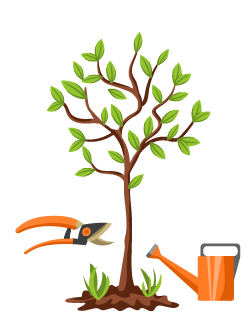 Tree care
Loosening the soil, watering: proper agricultural technology
Providing oxygen to the roots of apple trees is a common gardening practice. Once or twice a year, the area around the tree trunks should be dug up. Hoeing can be done throughout the growing season at your convenience. At the same time, remove weeds, root suckers, and shoots from various plants.
In summer, trees may be in dire need of regular watering. Therefore, it's best to closely monitor soil moisture if you want a substantial harvest. It's helpful to follow the 10-day rule. This means watering ten days after rainfall. If precipitation occurred earlier, the time until the next watering is calculated from that date. 25-45 liters, divided into two doses (morning and evening), is sufficient for one mature tree.
Pruning: simple crown shaping
Pruning Grafskomu's Gift to shape its crown begins in the second or third year after planting in open ground. In the first year, all branches, including the central conductor, are shortened by approximately a third. No more than 3-4 skeletal shoots should be left, spaced at different heights and widely spaced. Subsequently, simply maintain the desired shape by annually pruning away unwanted branches (suckers, those protruding upward and growing inward) and shortening the remaining ones by 20-25%.
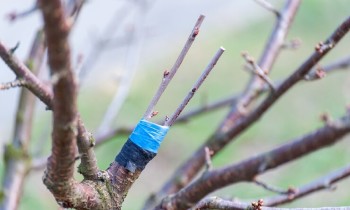
In the fall or spring, it's also a good idea to clear the trees of dead, damaged, and diseased branches. These will need to be ruthlessly cut off, sealing the wounds with garden pitch, drying oil, water-based paint, or at least a mixture of soil and water (marsh).
Reproduction
- Rooting cuttings.
- Grafting by buds and cuttings.
- Clones (layering).
Diseases and pests
- Powdery mildew.
- Scab.
- Black crayfish.
- Pit bitterness.
- Cytosporosis.
- Green aphid.
- Codling moth.
Ripening and fruiting of the Gift to the Count
The beginning of fruiting
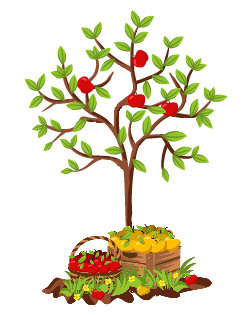 The beginning of fruiting
You can see the first flowers on this apple tree variety as early as 2-3 years after planting in open ground. However, don't let them develop into apples; it's best to pick them off immediately. The first significant fruiting of 5-10 kilograms can be expected in the 4-5 year, when the tree is already more mature. Only trees grown on dwarf and semi-dwarf trees are likely to produce a full crop of fruit in the 2-3 year.
Flowering time
The precise timing of the Podarok's bloom can only be determined through experimentation. Much will depend not only on the region's climate but also on the weather in a given year. This typically occurs in the second half of May, but sometimes the apple trees open their buds only towards the end of the month, and sometimes even as late as early June. The flowers themselves are large, with fleshy petals, pale pink or white in color, moderately fragrant, and densely cover the branches with clusters of 6-8 buds.
Fruiting and growth
Trees of this variety grow at a moderate rate, which is by no means revolutionary. They grow approximately 25-45 centimeters in a single season. The same applies to yield, which increases gradually. Only semi-dwarf and dwarf varieties can produce large quantities of fruit as early as 5-7 years; standard varieties require at least 8-10 years to begin bearing fruit fully.
Apple harvesting begins in September, primarily in the second half of the month, when they reach harvesting maturity. Sometimes, picking may need to be delayed until early October. Don't worry, the fruit will cling firmly to the branches and won't fall to the ground. However, eating them immediately isn't the best idea, as they will be too hard and prickle. For apples to reach consumer ripeness and caramelize, they will require approximately 30-45 days of cellaring. At home, apples are typically stored until around April-May, but in industrial settings, after gas treatment, they can be stored until the next harvest without losing their properties or quality.
Top dressing
- Chicken manure.
- Mineral complexes.
- Wood ash.
- Humus.
- Compost.
- Ammonium nitrate.
- Manure.
What to do if it doesn't bloom or bear fruit
- Provide moisture.
- Check for pests and diseases.
- Transplant to a sunnier location.
- Limit watering.
Why do apples fall?
- Natural factors.
- Pests.
- Diseases.
Leave your feedback on the Podarok Grafskomu variety to share your experience with other gardeners.