Apple tree Rhevena: characteristics of the variety and care
| Color | Reds |
|---|---|
| Ripening season | Autumn |
| Size of apples | Average |
| Taste | Sweet |
| Crown type | Dwarf |
| Shelf life | Average shelf life |
| Application | Fresh , For recycling |
| Winter hardiness | Average winter hardiness |
| Fruiting age | Up to 5 years |
 History of origin and regions of growth
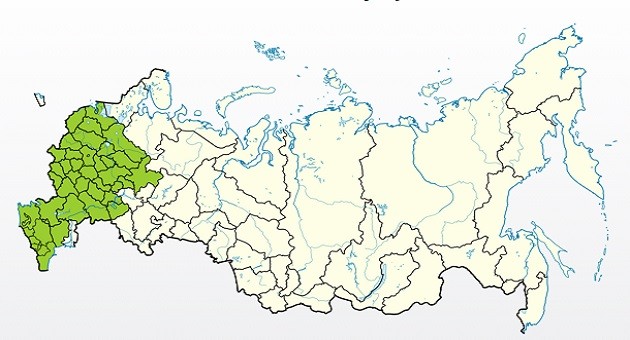
Growing regions
- Middle zone.
- Moscow region.
- Crimea.
- North Caucasus.
Origin
This variety is a German selection and is considered completely new but highly progressive. According to preliminary data, it was developed by the Dresden-Pillnitz Institute of Horticulture in Germany, specifically scientists H. Murawski, S. Fischer, and M. Fischer. Rhubarb has been bred to be disease-resistant, allowing it to be grown completely without the use of fungicides. It is considered one of the most promising and promising apple trees on the global market.
Content
Description of the Rhubarb variety
 This small, compact tree immediately attracts the attention of gardeners worldwide, despite its considerable cost. Its main appeal is its resistance to various fungal and other infections, allowing it to be grown in virtually completely environmentally friendly conditions. Furthermore, the standard trees are quite tolerant of low temperatures, fluctuations, and temperature fluctuations, are undemanding of soil and care, and are very responsive to any manipulation.
The fruits are large, attractive, have high commercial quality, and are easily transported over long distances. They are suitable for fresh eating and for any type of processing, from drying to jam, mousses, and compotes. They are recommended for individual cultivation as well as large, industrial, and commercial intensive gardens.
Apples: What do they look like?
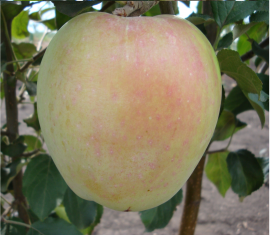
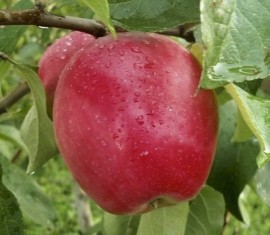
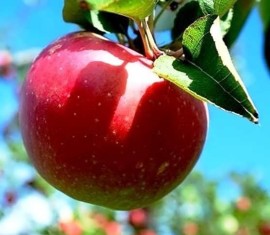
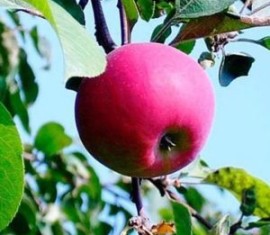
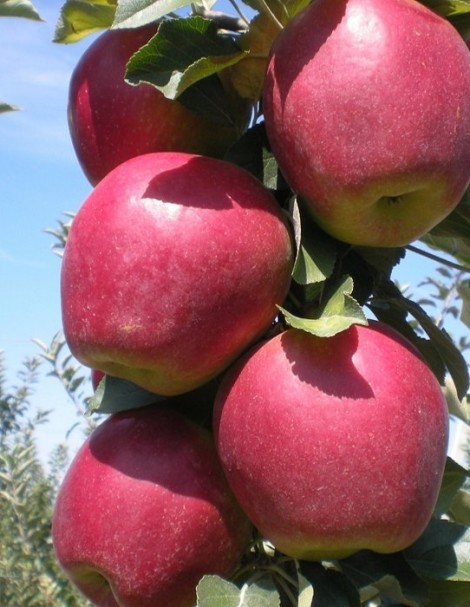
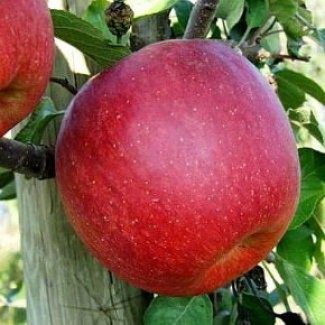
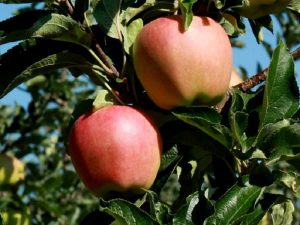 New apples are predominantly medium, larger than medium, and large in size. They easily grow to 160-180 grams, and some specimens even reach 220-240 grams under favorable weather and climate conditions and with proper, timely care. They are round, slightly elongated, barrel-shaped, or cup-shaped, conical, cylindrical, non-uniform, and generally symmetrical, but may also be slightly slanted. Ribbing is subtle, but the side seam may be noticeable.
The skin is dense and elastic, but it's difficult to call it hard or thick. It's smooth, greenish-yellow, or completely golden-yellow when ripe. The blush is carmine-red or bright red, and may have a pinkish undertone. Its color is complex; a striped, streaked, speckled pattern of a darker, brownish hue appears against a bright, spotted, blurred background. Numerous subcutaneous gray-green dots are visible on the skin. Experts advise understanding the chemical composition only after familiarizing themselves with certain indicators:
- P-active substances (catechins) – 335 milligrams.
- Ascorbic acid (vitamin C) – 14.3 milligrams.
- Fructose (total sugars) – 12.9%.
- Pectins – 8.9%.
- Titratable acids – 0.82%.
Rhubarb has dense, slightly firm flesh with a beautiful creamy hue, sometimes lemony or yellowish. It's extremely juicy, with a pleasant texture and consistency, slightly prickly yet tender and refreshing. It has a predominantly intensely sweet flavor with a distinctive apple-like tartness in the aftertaste. These apples are considered dessert apples, harmonious and balanced. On a 5-point tasting scale, they score at least 4.8-4.9 for taste and appearance.
Apple tree Rhubarb: characteristics
Crown and root system
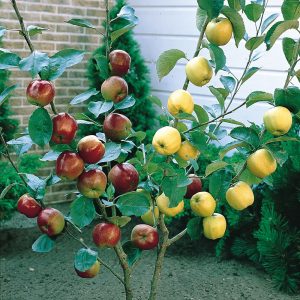 The tree is considered to be dwarfed. Even without any shaping, it grows no more than 2.5-2.8 meters, and even then not often.Therefore, it is very easy to care for, and harvesting can be automated. The crown is typically oval or pyramidal in shape, but may expand slightly over the years, becoming broadly oval and spreading, but not weeping. The shoots are medium-thick, straight, rounded in cross-section, and directed upward, initially at an acute angle to the trunk, but later descending to a straight line. They are covered with bark that is brownish-olive, brown, or slightly cherry-colored. Fruiting is of mixed type.
The leaves are medium-sized to large, green, bright green, or dark green, leathery, highly glossy, and delicately ribbed. They are elongated or ovate, with long, pointed tips and coarsely serrated, crenate, serrated, and sometimes slightly wavy margins. The root system is medium-deep, fibrous on most rootstocks, and has numerous small shoots near the surface, which are easily damaged by deep digging and careless hilling.
Productivity and pollination
The trees are claimed to have a high yield. They can't compare to the "approximate" Antonovka, but the trees are also much more compact, allowing for denser plantings without losing the apple trees' qualities.
A single mature Rhubarb tree can yield at least 75-90 kilograms of very juicy, uniquely aromatic fruit per season. In the most favorable years, with proper and timely care, this yield can be increased to 90-110 kilograms.
Winter hardiness and disease resistance
Rhubarb is considered to be relatively cold-hardy compared to Europe. For our country, its winter hardiness can safely be considered average. It tolerates cold temperatures quite well, with temperatures dropping to -25-27°C for no more than 1-2 weeks at a time. If frosts are more severe or last longer than 3-4 weeks, the trees can suffer serious damage. Careful covering and timely preparation for winter can help avoid problems in temperate climates.
Scab, moniliosis, powdery mildewThis variety is completely immune to blight, fire blight, and canker, as well as a host of other diseases, due to its active genetic immunity. It may occasionally be damaged by insect pests, but this is extremely rare.
Rootstocks and subspecies
There are no known subspecies of the Rhubarb variety. It is grown on various rootstocks, the most popular of which is the medium-sized hybrid 54-118. However, dwarf and semi-dwarf varieties can also be used. Winter hardiness is significantly reduced in these varieties, but the fruit size increases.
Features of growing Rhubarb
 Landing
 Landing
Basic conditions
- Planting sites for the new German variety should be well-drained. Trees are said to thrive even in shade, but may refuse to flower or bear fruit.
- Good crown ventilation allows plants to grow faster. However, they also enjoy drafts. Therefore, it's crucial to strike the right balance to prevent young seedlings from dying.
- The shallow root system isn't very sensitive to groundwater levels. If the groundwater level doesn't rise above 2.2-2.3 meters, there won't be any problems. If there's a risk, it's best to plant apple trees on pre-prepared mounds. Another option is to dig a layer of roofing felt or slate at a depth of 2 meters to direct the roots outward rather than downward.
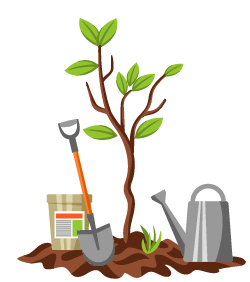
- Dig holes at least 2-3 weeks in advance, at least before fall planting, and six months before spring planting. They should be approximately 65-80 centimeters deep and up to 90 centimeters in diameter. Fertilizer mixed with the topsoil is placed at the bottom, followed by a drainage layer of gravel, broken brick, or even nutshells, and then filled with 20-30 liters of water. The holes are left uncovered until the apple trees are planted.
- It's a good idea to immediately dig supports into the holes, ideally made of wood or plastic. Metal rods can also be used, but they should be removed after 2-3 years, as they can oxidize significantly and damage the soil.
- To preserve the rootstock's quality, the grafting sites of the seedlings should always be kept above the soil surface. The distance should be 9-12 centimeters, as allowance must be made for soil settlement around the trunk. The hole will need to be filled with fresh soil; it's important to keep the root collar from being buried.
- Place the seedling on a drainage trench and straighten the rhizome, ensuring that the shoots don't interfere with each other or bend. Fill the hole with soil, compact it with your hands or gently with your feet, and water with 30-40 liters of water. Mulch the surface for additional moisture retention.
Landing dates
The best time to plant is in the spring, when the soil has warmed completely in the sun and the risk of frost has passed. If you're wrong and a frost does occur, the trees will likely survive the shock without significant damage. If the weather in your region is predictable, you can plant rhubarb in the fall, 3-4 weeks before the first frost.
It's best to purchase seedlings with a closed root system, meaning they come in special pots, bags, or containers that don't require disposal. They can be transplanted into the open ground at any point during the growing season.
Tree care
 Tree care
Protection from frost and pests
Before the beginning of autumn, approximately from the beginning August You should begin reducing watering, eliminating it completely by September. A touch-up watering can be timed for the last leaf fall, but this is unnecessary and even dangerous for beginners. Spruce branches, straw, hay, and well-dried leaves are placed on the root zone for the winter, and the soil is raked up. The trunks are wrapped in various materials, from burlap to old nylon tights or roofing felt.
Rhubarb trees aren't generally bothered by insects, but it's also a bad idea to avoid them settling in bark crevices. Therefore, whitewashing the trees twice a year will help, up to a height of 1-1.2 meters. This will also give the garden a neat and tidy appearance and allow you to immediately identify any problems with the trunks. Rendered lard, fuel oil, or specialized commercial products from a gardening store will help repel rodents.
Loosening the soil, watering: proper agricultural technology
This variety prefers airy, well-moistened soil, so the area around the trunk will require careful and timely care. Twice a year, dig the soil, but don't dig too deep with a shovel to avoid damaging the small shoots near the surface. Hoeing should be done much more frequently, ideally every day after applying water. Otherwise, the soil can compact to the consistency of asphalt.
Watering requires careful attention; rhubarb won't tolerate overly dry areas and may even die. If it's regularly deprived of moisture, fruiting will be negatively impacted, and the apples will grow small and sour. The soil should be moistened to a depth of at least 35-40 centimeters. Sprinkler or drip irrigation is a good idea. watering, if such an opportunity exists.
Pruning: simple crown shaping
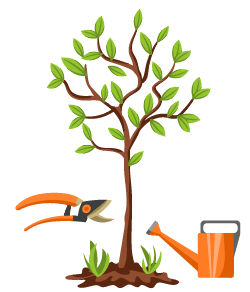
Fruit trees in general, and the Rhubarb variety in particular, require proper pruning. To achieve this, prune the central trunk to a meter in the first year, leaving two to three skeletal branches that are 10-12 centimeters shorter. It's best to choose seedlings from a nursery with a pre-formed crown to make the process as easy as possible. All that's left to do is maintain the correct natural branching.
Every fall, and spring too, inspect the trunks for dry or broken branches. These should be immediately cut flush, and the cut areas should be oiled. garden pitchRemoving more than 25% of the tree's crown at one time is undesirable, as this puts significant stress on the tree and may even cause it to die.
Pollinator varieties
Reproduction
- Grafting cuttings.
- Clones.
- Growing from seeds.
- Kidney grafting.
- Layers.
Diseases and pests
- Green aphid.
- Flower beetle.
- Scale insect.
- Codling moth.
- Hawthorn.
Ripening and fruiting of rhubarb
The beginning of fruiting
 The beginning of fruiting
The variety's early fruiting is another unique feature. It can produce flowers in its first year in the nursery. However, gardeners advise plucking these flowers immediately, preventing them from developing into apples. The tree needs time to develop the rhizomes and branches that will bear the fruit. The first harvest can be as early as the second or third year, yielding approximately 10-15 apples.
Flowering time
Rhubarb begins blooming in late to mid-May, that is, in the second half of May. Under normal, moderate conditions, it opens its buds around the 15th to 20th of May, and the process is complete by early June. However, if the winter was very cold and the spring was prolonged and rainy, the blooming period may shift to mid-June. The tree's flowers are very beautiful, with a strong, spicy scent. They are large, deeply cupped, and their petals are fleshy and delicate, pale pink or snow-white.
Fruiting and growth
Before fruiting, seedlings can easily reach almost a meter in height, but this rate slows as the apples begin to ripen. As a mature tree, before reaching its peak, rhubarb grows at a rate of about 40-55 centimeters per year. It also produces a fairly rapid harvest. By the 7th to 10th year, the harvest is fully mature; the key is to ensure timely watering and fertilizing if the soil is not very fertile.
Harvesting can begin in mid-September in temperate climates. Ripeness is determined by taste, aroma, and the presence of a thick, waxy, oily coating. The fruits are harvested and immediately stored in boxes, sprinkled with sawdust or sand. They can be stored in a special refrigerator until spring, and in a cellar until approximately February.
Top dressing
- Nitrogen fertilizers.
- Superphosphate.
- Ammonium nitrate.
- Manure.
- Compost.
- Humus.
- Chicken, pigeon droppings.
- Urea.
- Minerals.
What to do if it doesn't bloom or bear fruit
- Believe in parasites.
- Increase watering.
- Feed.
- Transplant.
Why do apples fall?
- Wind, hail, hurricane, frost, snow.
- Parasitic lesions.
- Overripening.
Share your own experience with the Revena apple variety so that any gardener can learn about it before planting and achieve maximum results.