Sayanskoye (Martyanovskoye) apple tree: characteristics of the variety and care
| Color | Reds |
|---|---|
| Ripening season | Autumn |
| Size of apples | Small ones |
| Taste | Sweet and sour |
| Crown type | Average tree height |
| Shelf life | Average shelf life |
| Application | Fresh , For recycling |
| Winter hardiness | High winter hardiness |
| Fruiting age | Up to 5 years |
 History of origin and regions of growth
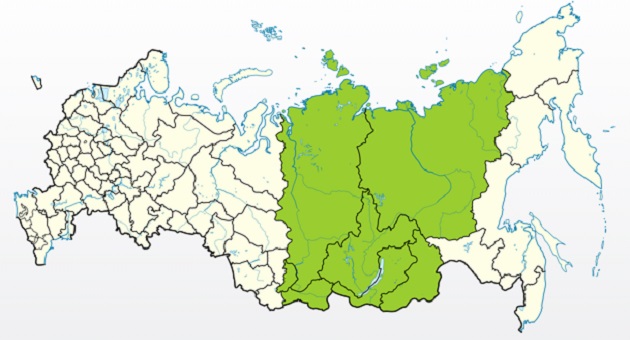
Growing regions
- Sakha.
- Transbaikal Territory.
- Khakassia.
- Irkutsk region.
- Buryatia.
- Krasnoyarsk Krai.
- Tuva.
Origin
A relatively new autumn variety, developed at the experimental station in Minusinsk, which belongs to the Federal Krasnoyarsk Research Center of the Siberian Branch of the Russian Academy of Sciences. Development began in the 1950s. The Laletino variety was pollinated with a mixture of large-fruited apple trees (Borovinka, Bellefleur-Kaitaika, and Bessemyanka Michurinskaya), and by 1956, the first seedling of the new variety, named Sayanskoe or Martyanovskoe, was obtained.
The authors are renowned pomologists Georgy Afanasyevich Muravyov, Vasily Afanasyevich, and Valentina Ivanovna Shevchenko. An application for inclusion in the State Register of Breeding Achievements was submitted only in 1992, and it was approved only at the dawn of the new century, in 2000. The variety was officially zoned for the East Siberian District.
Content
Description of the Sayanskoye variety
 Siberian apple trees are something special, and the Minusinsk varieties are a clear example of this. Martyanovskoye is distinguished by its compact, small size and neat crown, and, most importantly, by its outstanding resistance not only to low temperatures but also to sudden temperature fluctuations. The trees are undemanding to soil conditions, require little maintenance, don't require regular watering, and are early fruiting, resistant to scab and other diseases.
The fruits, although small in size, are of very high commercial quality. They are beautiful, fragrant, and delicious, do not fall from the branches, and are easy to transport. Sayanskoye is recommended for cultivation in private gardens and for commercial plantings.
Apples: What do they look like?
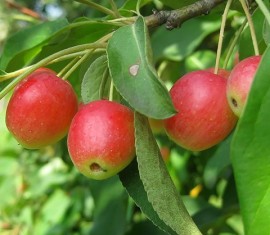
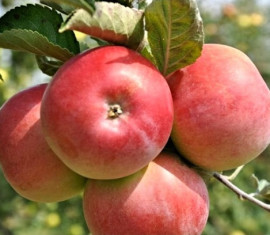
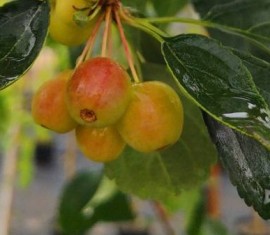
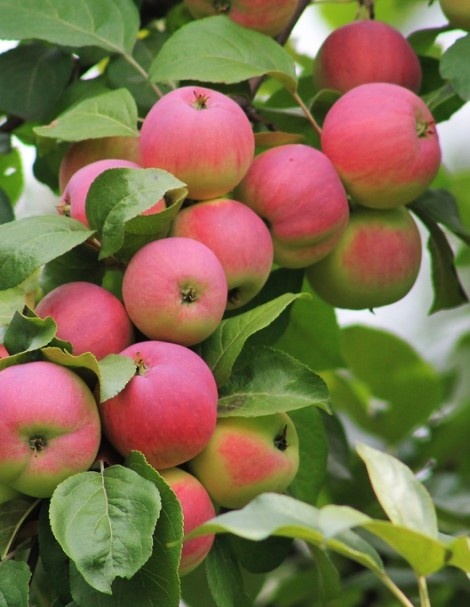
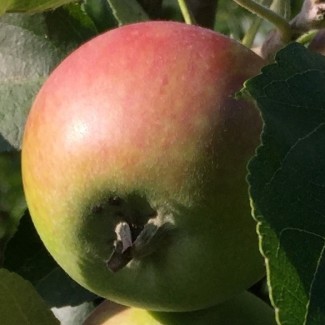
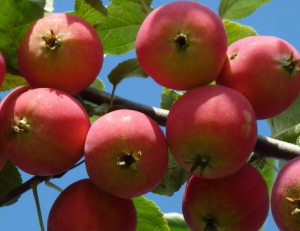 The fruits are usually small or slightly larger than small, weighing a maximum of 35-50 grams. They are round, generally symmetrical and uniform, and can be slightly elongated or, conversely, flattened. Ribbing is virtually invisible, even on the calyx itself, including the side seam.
The skin of the fruit is very strong, bordering on hard, but sometimes tender and brittle. It is smooth and very shiny. Its base color is green or greenish-yellow, similar to lemon. The blush is diffusely mottled, quite dense, beetroot-colored or dark red, possibly burgundy, and covers approximately 75-95% of the surface. Subcutaneous spots are gray or gray-green, clearly visible, numerous, and small. The chemical composition can be estimated using the following data per 100 grams of product:
- P-active substances (catechins) – 227 milligrams.
- Ascorbic acid (vitamin C) – 12.5 milligrams.
- Fructose (total sugars) – 13.6%.
- Pectins – 11.6%.
- Titratable acids – 0.78%.
The apples have medium-dense, fine-grained flesh that's very juicy and has a pleasant, subtle, spicy aroma. It's light green or snow-white, easy to peel, crisp, and has a sweet and sour wine-like flavor. It scores 4.4 out of 5 on a professional tasting scale.
Sayanskoye apple tree: characteristics
Crown and root system
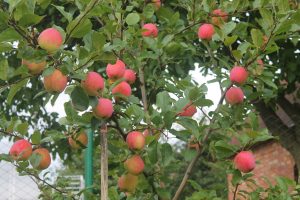 The tree is considered medium-sized and can reach no more than 2.5-3 meters in height without pruning.Therefore, it would be more logical to call it a natural semi-dwarf. It has a compact, rounded crown, which can sometimes become weeping and drooping over the years. Its branches are medium-length, extending from the main stem at right angles, rounded and straight in cross-section, and covered with smooth, hairless bark that is green or greenish-brown, sometimes greenish-gray. Fruiting is concentrated on the 1-2-year-old fruiting shoots, spears, and ring shoots.
The leaves are medium-sized, elongated, oval, and short-pointed. They are bright emerald or dark green, leathery, and smooth. The edges are serrate and dentate, and can fold into a boat shape, with the tip sometimes curling downwards like a propeller. The root system is deep and well-branched, fibrous on most rootstocks, but can be taproot on semi-cultivated plants.
Productivity and pollination
For Siberian and northern apple trees, the yield of Martyanovsky can truly be called high.
From one mature Sayansky tree, good growers can harvest approximately 45-70 kilograms of beautiful and delicious apples per season under favorable weather conditions. With proper care, this can increase to 75-90 kilograms in some years..
The variety is completely self-sterile, so without the right pollinators, no fruit can be expected. It's common to plant Sayanskoye within 50-100 meters of apple trees with suitable flowering times, so the bees can easily do their work. The most advanced practitioners recommend bringing a mobile apiary directly to the garden and treating the trees with sugar or honey syrup.
Winter hardiness and disease resistance
All Mnusinsky varieties boast a high level of winter hardiness, and Martyanovskoye is no exception. The trees even tolerate frosts down to -39-42°C quite well, and even if damaged, they recover quickly. They are also resistant to sudden temperature fluctuations and high humidity. Therefore, some gardeners manage to grow them even in the Primorsky Krai, with its harsh climate and changeable weather.
The apple trees are highly resistant to scab and rarely suffer from it, especially when preventative measures are taken promptly and regularly. Even during years of severe epidemics, the foliage is sometimes affected, but the apples remain perfectly suitable for consumption. Parasites also rarely damage the trees. With regular preventative measures, gardeners generally have no problems with this variety.
Rootstocks and subspecies
No subspecies of Martyanovsky are known. It cannot be columnar or dwarf, so be very careful when purchasing. On different rootstocks, it can acquire some of its unique properties, but this has little effect on fruit quality. However, the crown may become even more compact, but only at the cost of reduced frost resistance. If desired, it can be trained into a creeping tree by tying it to stakes driven into the soil.
Features of growing Sayansky
 Landing
 Landing
Basic conditions
- Apple trees love sunny areas where ultraviolet light will illuminate their crowns for most of the day.
- Ventilation and crown ventilation are important for this variety, so it's best to plant it in a location free from stagnant air. However, careful attention should also be paid to avoiding drafts, otherwise the tree may grow weak or even die.
- It's best to avoid planting trees in areas where groundwater is close to the surface. The roots penetrate deep and can reach water, which would simply cause them to rot. For the same reason, it's not advisable to plant apple trees near ponds, rivers, floodplains, swamps, or shallow wells.
- Sayansky rhododendrons are suitable for almost any soil, from podzolic forest soils to clay and sand. They even thrive on rocky slopes with minimal infertile soil. They also respond well to timely feeding and fertilization.
- Experienced gardeners recommend preparing the holes in advance, the previous season, but if you haven't had time, 2-4 weeks will suffice. Dig holes 60-70 centimeters deep and 80-90 centimeters in diameter, add fertilizer to the bottom, cover with drainage or soil, add 20-40 liters of water, and leave uncovered.
- Leave 2.5-3 meters of space between trees to prevent crown or rootstock conflicts in the future. Allow up to 3-4 meters between rows to facilitate harvesting and care of the apple trees.
- The grafting site (root collar) is always left above the ground level. For Martyanovsky, 4-7 centimeters is sufficient to prevent it from rooting higher.
- Place the seedling on a mound of soil or drainage material, straighten the shoots, and arrange them so they lie freely. Cover with soil, compacting it by hand, being careful to avoid air pockets and voids. Water the apple trees with 35-40 liters of water, and mulch the area around the trunk.
Landing dates
Northern apple trees are best planted in the spring, after the soil has warmed up but before bud break. This is when they show the best survival rate. The optimal time is around late March or early April; in cool weather, it can be delayed until mid- or late April. With their root system closed, that is, in containers, bags, or pots that require no further disposal, trees can be transplanted into the garden at any time during the growing season.
Tree care
 Tree care
Protection from frost and pests
Young trunks are particularly susceptible to freezing, so it's best to cover them with a tent. The height of mature trees also allows for this, and if necessary, there's no need to be shy. However, wrapping the trunk with burlap or tarpaulin, old tights, or roofing felt is generally sufficient. You can pile spruce branches, straw, hay, or even a layer of soil on the roots; all of this must be cleaned and removed in early spring.
To repel rodents, use lard, grease, fuel oil, and other strong-smelling substances. These are smeared on the lower part of the trunk and branches. The bark is not prone to cracking, so there's no need to clean it with your cheek, but whitewashing it with lime is a must to repel insects.
Loosening the soil, watering: proper agricultural technology
The tree trunk circle should be dug twice a year. The first year, dig in early spring, and the second year, in late fall, while the sap is still flowing. Even if you damage the roots, the tree will be minimally stressed. Between diggings, you can lightly hoe the soil, removing weeds and debris. Over the years, you can sow herbs under the trees: calendula, parsley, dill, mint, and lemon balm. All this will provide natural aeration and a pleasant addition to the table.
Young apple trees should be watered once every 10-14 days, but only if there's no rain. If there is precipitation, the specified period should be calculated from that. Mature trees will need approximately 3-6 waterings per season in extremely dry, hot weather. Fertilizer and fertilizer are also added along with water, watering along the crown.
Pruning: simple crown shaping
If not done in a nursery, shaping begins in the first year. The most suitable form for Sayansky is the sparsely layered form. This type of tree has branches growing widely apart, at varying heights. However, the tree is malleable and can be shaped into anything, as long as no more than one-third of the green mass is removed at a time.
In spring and fall, trees are inspected and pruned. This involves cutting off any diseased, cracked, broken, or dry shoots. It's also a good idea to remove any shoots that protrude inward or upward. They're not beneficial, but they drain the tree's sap.
Pollinator varieties
Reproduction
- Growing from seeds.
- Budding.
- Grafting of cuttings (spring).
Diseases and pests
- Scab.
- Cytosporosis.
- Powdery mildew.
- Moniliosis.
- Spotting.
- Hawthorn.
- Aphid.
- Leaf roller.
- Scale insect.
Ripening and fruiting of Sayansky
The beginning of fruiting
 The beginning of fruiting
This variety is very early-bearing, capable of producing its first fruits as early as 3-4 years after planting. However, the yield will be limited. A few dozen apples are the maximum yield. If buds begin to open early, it's best to pluck them immediately; these are mostly barren flowers, which will slow the tree's growth.
Flowering time
Flowering dates can vary significantly, not only depending on the growing region but also on the weather of the particular year. They generally bloom in May, from about mid- to late May. If the spring is dry and warm, Martyanovskoye can bloom as late as late April, while if it's rainy and cold, it can linger until early June. The variety produces medium-sized flowers with slightly elongated, snow-white petals. They are fragrant and densely covered with flowers.
Fruiting and growth
The tree grows at a moderate rate, only 25-40 centimeters per year. However, given its relatively short height, it quickly reaches its full height. Fruitfulness increases gradually, without sudden increases. The largest harvest will take approximately 6-8 years, but after that, the variety bears fruit regularly, with virtually no rest periods throughout its active life.
A characteristic of this variety is that in some years the apples can become slightly bitter. This is not affected by care or fertilizing..
Apples begin to ripen as early as the first or second half of September. Sometimes the fruit may be slightly delayed during cold summers, low sun, and constant rain. They cling firmly to the branches, so there's no need to rush harvesting. They are highly transportable and withstand the rigors of travel well. They can be stored in a cellar for approximately 3-3.5 months, and in a special refrigerator 4-5.
Top dressing
- Manure.
- Compost.
- Humus.
- Mineral and nitrogenous complexes.
- Ammonium nitrate.
What to do if it doesn't bloom or bear fruit
- Transplant into the sun.
- Protect from drafts.
- Eliminate pests.
- Cure diseases.
Why do apples fall?
- Weather phenomena.
- Early frosts.
- Pests or diseases.
Share your own experience with the Sayanskoye (Martyanovskoye) apple tree variety so that even novice gardeners have no questions about cultivating these trees.