Solntsedar apple tree: characteristics of the variety and care
| Color | Reds , Striped |
|---|---|
| Ripening season | Summer |
| Size of apples | Average |
| Taste | Sweet and sour |
| Crown type | Average tree height |
| Shelf life | Low shelf life |
| Application | For recycling , Fresh |
| Winter hardiness | High winter hardiness |
| Fruiting age | From 5 years old |
 History of origin and regions of growth
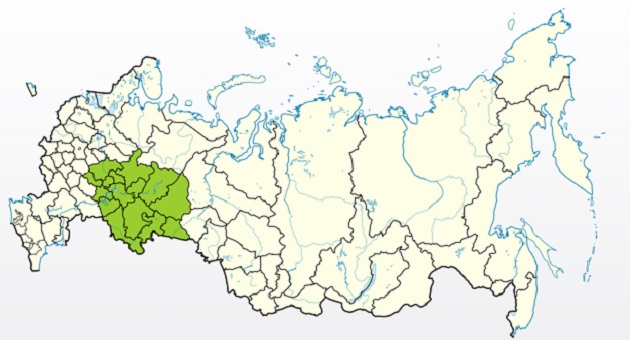
Growing regions
- Volga-Vyatka region.
- Ural.
- Tatarstan.
- Ulyanovsk region.
- Samara region.
Origin
Numerous new frost-resistant apple trees have been developed in the Urals, among which Solntsedar holds a special place. It was developed back in 1974 at the Sverdlovsk Experimental Horticultural Station under the direction of P.A. Dibrov, using open pollination of the scarlet anise (Vorobevsky anise).
These summer apple trees were immediately sent to farms for testing, after which they were added to the State Register. At the end of the twentieth century, it was decided to zone them for the Volga-Vyatka and Ural regions.
Content
Description of the Solntsedar apple variety
 This variety isn't particularly popular, although it has many advantages. These apple trees thrive in urban conditions, making them suitable for planting in gardens and public gardens even in the heart of a metropolis. They produce fruit very well over a long period, with the fruit ripening in several stages, allowing for longer enjoyment of fresh fruit. They are recommended for both large and small private farms.
Apples: What they look like
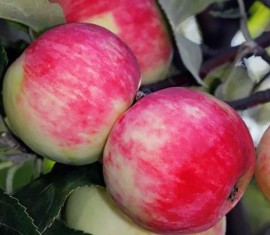
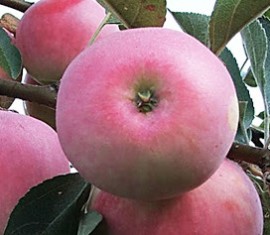
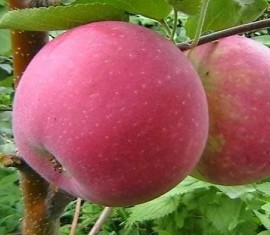
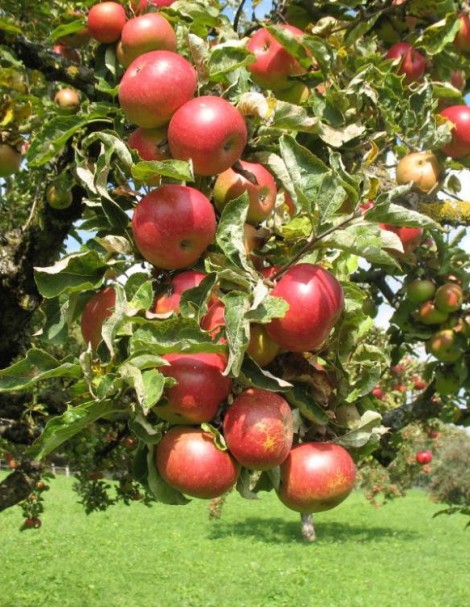
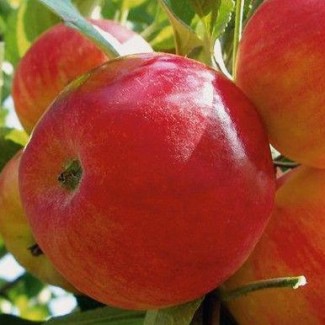
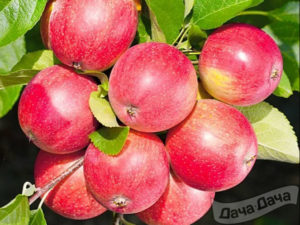 The fruits are usually medium-sized or even small, depending on growing conditions, light, and care. They are round, often flattened, and broadly oval, with distinct, albeit smooth, ribbing.
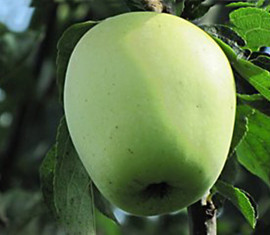
Apple skin is very smooth, naturally glossy, and green when young. As it ripens, it turns creamy white, almost snow-white, and develops a 75-85% translucent, reddish-pink blush. When ripe, the blush becomes pronounced and attractive. The chemical composition of the fruit can be characterized by the following indicators per 100 grams:
- P-active substances (catechins) – 267 milligrams.
- Ascorbic acid (vitamin C) – 22.8 milligrams.
- Total sugars (fructose) – 12.3%.
- Titratable acids – 0.86%.
- Pectins (fiber) – up to 15.7%.
The Solntsedar apple's flesh is snow-white, coarse-grained, yet very juicy. It can have beautiful pink or red veins throughout, giving it a slightly pinkish tint. It has a pleasant, harmonious sweet and sour flavor, sometimes with a slightly tart aftertaste, which isn't at all offensive, but rather adds a piquant flavor. The tasting score is a mere 4.1 out of 5.
Sunnydar apple tree: characteristics
Crown and root system
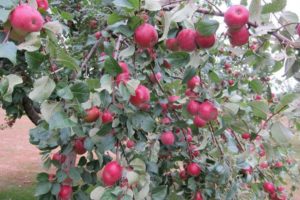 The tree is considered medium-sized; it can grow up to 3-4 meters in height if not pruned in time. Crown The tree is spherical or broadly oval in shape, prone to dense growth at mid-height. When young, it is quite compact, but with age it becomes increasingly spreading and even weeping. The branches extend from the main trunk at approximately right angles; they are of medium thickness, can be straight or geniculate, and are heavily pubescent. The bark is greenish-brown; with time, it can turn brown, crack, and even begin to crumble.
The leaves are medium-sized, oval-elongated, dense, leathery, slightly glossy, and moderately pubescent on the back. They are dark green with a distinct sea-green hue and have rounded serrations along the edges. The root system is branched and may or may not have a central taproot, depending on the rootstock.
Productivity and pollination
Solntsedar is quite prolific, making it a favorite among gardeners. A single mature tree can produce 90-110 kilograms of aromatic and delicious apples.
However, such a yield does not come immediately; young trees are capable of producing no more than 40-60 kilograms, and good results will have to wait a considerable time, 9-12 years.
The variety is completely self-sterile, so to get apples, you'll need to plant it in rotation with other varieties that bloom at the same time. Experienced gardeners also move apiaries to their plantings at this time to help insects find the blooming trees.
Winter hardiness and disease resistance
The variety was specifically bred to be resilient to low temperatures and sudden fluctuations. The apple trees can easily withstand frosts ranging from -30 to -35°C, rising to 3 to 5°C, and then subsequent frosts within a short period, as they underwent special hardening during experimental testing.
It should be noted that the trees have absolutely no resistance to fungal infections. ScabIt can be frequently and heavily affected by mildew, powdery mildew, and fruit rot, which is especially dangerous in high-humidity conditions during snowmelt. Therefore, preventative measures should be taken regularly and this should be given special attention.
Rootstocks and subspecies
| Rootstocks | Peculiarities |
| Creeping | The variety can be grown on a dwarf rootstock as a creeping tree by cutting back the central stem in time. Then Solntsedar becomes suitable for cultivation in the Far East. Siberia and the Far North. In winter, such trees are completely covered with snow, where they successfully endure the cold without losing their fruit. |
| Seedling | This is a seed-grown subspecies, as the name suggests. It is most often grown on the same vegetative rootstock. It may be taller, but its main characteristic is earlier fruiting, beginning as early as 3-4 years after planting outdoors. |
Features of growing Solntsedar
 Landing
 Landing
Basic conditions
- All seedlings before planting, except those sold with closed root system (in special bags or pots that don't require disposal) must be properly prepared. The root system is inspected for damaged or dry roots, which are immediately cut off with pruning shears. After this, the trees are soaked in water for 24 hours to absorb moisture.
- It's best to choose a well-lit or, at a minimum, lightly shaded location for Solntsedar, as well as one protected from drafts. The variety is wind-resistant, but drafts can cause it to become ill and slow its development.
- The groundwater level should be at least 2.5-3 meters, otherwise the roots may rot. Avoid planting apple trees in swampy areas or near open water, as this will significantly increase the risk of fungal infections.
- Planting holes should be prepared at least 2-3 weeks in advance, but it's best to do this in the fall. First, dig holes 60-70 centimeters deep and 1 meter in diameter. Fertile soil is mixed with manure, humus, and other fertilizers, then returned to the hole, then watered and left uncovered.
- Immediately before planting, a 10-20 centimeter layer of drainage material is placed on the bottom. Broken brick, gravel, vermiculite, and even nutshells can be used as drainage material.
- The tree is planted vertically so that the root collar (the grafting point) is approximately 7-12 centimeters above the soil surface. Otherwise, the apple tree may root higher, which will delay development and even delay the first fruiting.
- Stakes are dug in immediately on the north side for tying, which cannot be removed for 3-5 years.
- Cover the rhizome with soil, tamp it down firmly, create a rim of soil around the trunk, and pour 2-4 buckets of water over it. Mulch the surface with available materials: humus, compost, or chopped grass.
Landing dates
For Solntsedar, the planting timing isn't critical if the seedlings were purchased with a closed root system. They can be planted anytime, from early April until late September or early October. They thrive because they don't really need to adapt; they're already in their natural environment.
Bare-root trees are recommended to be planted in the spring, before the sap begins to flow and the buds begin to open. Optimally, this should be done in late March or early April, but the exact time will have to be determined independently, depending on the region and its climate and weather conditions.
Protection from frost and rodents
Although this variety is quite frost-resistant, it's unlikely to survive the winter without protection, especially for two- or three-year-old trees. To do this, line the root zone with mats of straw or hay, roofing felt, tar paper, burlap, or agrofibre. For more northern regions, the trees can be completely covered using a tent-like method. Creeping and bushy varieties can be covered with snow, creating a small drift where they will overwinter without harm.
To prevent hungry rodents from damaging the delicate bark during the winter, the trunks are coated with grease, lard, or specialized products from a gardening store. Whitewashing the trunks with lime in the fall will help against insects that settle in the root zone during the winter and then begin actively damaging the trees in the spring.
Tree care
 Tree care
Loosening the soil, watering: proper agricultural technology
Loosening the soil after watering is a standard gardening practice. This variety also requires a full range of necessary measures. You can dig around the tree's trunk once or twice a year, but you can also hill the tree more frequently, removing weeds, shoots from other trees and shrubs, and root suckers. This will help the soil remain airy and prevent it from compacting into a solid lump.
It's recommended to water trees infrequently, preferably during dry periods, no more than 5-6 times per growing season. Watering can be timed to coincide with bud formation, flowering, fruit set, and apple ripening.
Pruning: simple crown shaping
To ensure a good harvest and proper tree development, proper pruning is essential. The main stem is shortened by a third in the first year after planting. Only a few side branches are left, spaced widely apart. They should be lower than the main stem and arranged in tiers. In subsequent years, the same pruning process is continued, with two of the three branches removed, leaving the strongest one. This will prevent the crown from becoming overly dense.
Sanitary pruning is usually done in the fall, after the harvest and the leaves have fallen. All damaged, dead, old, and diseased branches should be removed, allowing the young ones to develop and bear fruit. After 15-17 years, the tree can be rejuvenated by pruning older branches, 2-3 per year. All cut areas should be sealed with garden varnish or painted with water-based paint.
Pollinator varieties
- White filling.
- Suislepskoe.
- Wine.
- Kate.
- Mantet.
- Melba.
- Chinese golden.
Reproduction
- Clones (layering).
- Rooting by cuttings.
- Grafting by cuttings or buds.
- Growing from seeds.
Diseases and pests
- Powdery mildew.
- Scab.
- Moniliosis.
- Cytosporosis.
- Fruit rot.
- Leaf roller.
- Codling moth.
- Green aphid.
- Hawthorn.
Ripening and fruiting of the Solntsedar apple tree
The beginning of fruiting
 The beginning of fruiting
This apple tree can be called late-bearing because it begins bearing fruit around the 7th or 8th year of life. A few tasty, attractive fruits can be produced earlier, starting in the fifth year, but this is by no means a full harvest.
Flowering time
The Solntsedar apple tree typically begins blooming around mid-May. The blooming period lasts for quite a long time, from two to three weeks. This allows for a harvest even in the event of late frosts, a feature particularly appreciated by gardeners.
Fruiting and growth
The tree reaches its full potential around the 10th to 12th year, when 100-120 kilograms of apples can be harvested from the branches. They begin to ripen as early as mid-August, and they don't ripen all at once, but in stages over several weeks. While this is good, it's also possible to miss the right moment and have them fall to the ground. Therefore, the harvest is carried out in 2-3 stages, picking the fruits as they ripen.
These apples don't last very long. Under normal conditions, they can last no more than 3-4 weeks. In a well-ventilated, humid cellar at a temperature of 1-5°C, they can last up to 2-3 months. However, after that, even if they don't spoil or wilt, the apples will lose their flavor and juiciness and become soft.
Top dressing
- Manure.
- Bird droppings.
- Peat.
- Compost.
- Humus.
- Mineral complexes.
- Urea.
- Ammonium sulfate.
- Superphosphate.
What to do if it doesn't bloom or bear fruit
- Wait for the allotted time.
- Replant in a sunnier or drier location.
- Check for diseases or pests.
- Provide or stop watering.
- Apply fertilizer.
Why do apples fall?
- Overripe.
- Natural weather phenomena.
- Pests.
- Diseases.
- Excess moisture.
Please share your feedback on Solntsedar apple trees in the comments section of this article so that other gardeners can learn about your experience.