
Silver Hoof Apple Tree: Variety Features and Care
| Color | Striped , Whites |
|---|---|
| Ripening season | Summer |
| Size of apples | Average |
| Taste | Sweet and sour |
| Crown type | Average tree height |
| Shelf life | Average shelf life |
| Application | For recycling , Fresh |
| Winter hardiness | High winter hardiness |
| Fruiting age | Up to 5 years |
History of origin and regions of growth
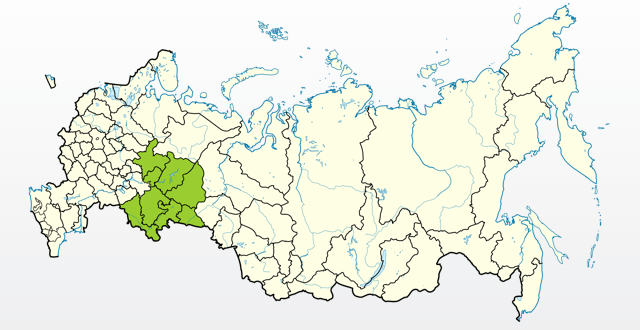 Growing regions
- Kurgan region.
- Chelyabinsk.
- Kirov region.
- Northern Kazakhstan.
- Perm region.
- Udmurtia.
- Sverdlovsk region.
- Orenburg.
- Perm region.
Origin
This variety was developed by the renowned Russian breeder Leonid Andrianovich Kotov at the Sverdlovsk (now Yekaterinburg) Experimental Horticultural Station. He is the creator of over forty winter-hardy varieties, including "Silver Hoof."
The Snezhinka and Raduga varieties were used for breeding, and by 1979, the resulting variety was classified as elite and sent for farm testing. By 1988, it had already been zoned and entered into the State Register.
Content
Description of the Silver Hoof apple tree variety
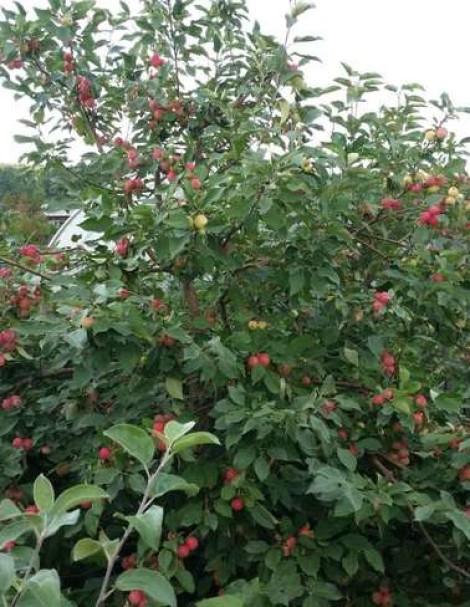
When discussing outstanding regional apple varieties, it's impossible to ignore the Serebryanoe Kopyttse, developed by a Ural breeder. These summer apple trees are indispensable for regions with relatively harsh winters, as they produce good yields of delicious fruit without requiring any special care. Their high yields and extreme ease of maintenance make them ideal for growing not only in small home gardens but also on an industrial scale, including in intensive orchards.
Apples: size, color, weight
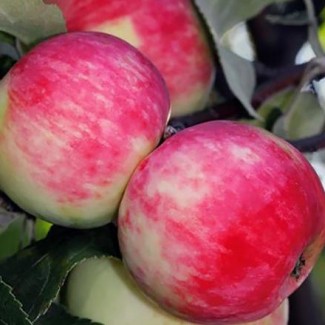
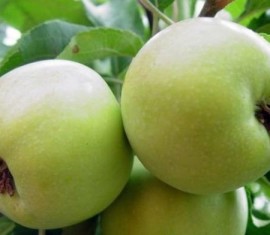
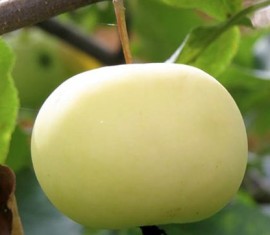
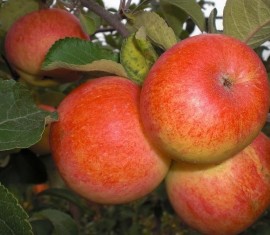
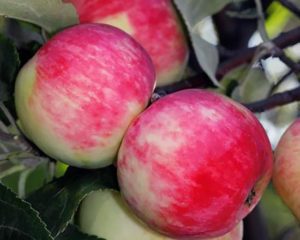 Usually the fruits of this variety are not large in size, they are medium or even smaller than average (60-110 grams). They have a regular, rounded shape and subtle ribbing. The apple skin is not very thick, has a light oily coating, and is dry and glossy. As the fruit ripens, its color changes from green to a light cream, even slightly beige, with a bright red blush present, which can be streaked or appear as diffuse spots, covering approximately 70-85% of the surface. Subcutaneous punctures are numerous but barely visible to the naked eye.
The chemical composition is characterized by the following indicators per 100 grams of product:
- Catechins (P-active substances) – 112.2 milligrams.
- Ascorbic acid (vitamin C) – 12.5-13 milligrams.
- Dry soluble substances (pectins) – from 12.5% to 17.9%.
- Titratable acids – 0.8%.
- Total sugars (fructose) – from 10.2% to 12.9%.
The flesh is mostly firm, with a light creamy hue. It is fine-grained and extremely juicy, with a harmonious sweet and sour flavor. The fruit's aroma is not pronounced, but pleasant, slightly candy-like. The tasting score for appearance and flavor is 4.5 out of 5.
Apple tree Silver Hoof: characteristics
Crown and root system
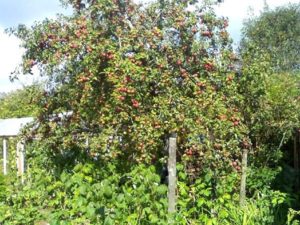 Trees of the Silver Hoof variety have a rounded, sometimes somewhat spreading, well-filled crown. They are most often of average height or below average. Even without proper pruning, the trees don't grow taller than 3-4 meters. Their branches are straight, often positioned at right angles to the trunk, and spaced closely together. Crown It takes up no more than 3 meters of space, so trees can be planted quite close together, which saves a lot of space.
The shoots are brownish in color and have smooth bark that begins to crack and crumble over time. The leaves are rounded, ovoid, slightly rough and matte. The variety's root system is well-branched, allowing it to tolerate drought well, and the presence of a central taproot depends entirely on the rootstock used.
Productivity and pollination
Experts say that Silver Hoof is a variety with a consistently above-average annual yield.
That is, every year without fail it will be possible to pick approximately the same number of apples from the tree (about 150-160 kilograms).
However, it should be taken into account that if agricultural technology is not properly organized, harvests can seriously decline.
This variety is considered completely self-sterile. This means that for fruit to form, other apple varieties must be within reach (no more than 150-200 meters). It is recommended to plant this variety near an apiary, as the weak aroma during flowering is unlikely to attract pollinators from far away.
Winter hardiness and disease resistance
These apple trees can easily withstand frosts down to -35-38°C, but only with the right approach and a continental climate. They only need to be protected from frost for the first few years, after which you can simply wait for the next harvest. Thanks to these qualities, this variety is recommended for growing in northern regions.
This apple tree has average resistance to fungal diseases. However, if it's constantly overwatered, it will inevitably develop scab or powdery mildew, and root rot may occur. Therefore, proper care and timely preventative measures are essential.
Subspecies and rootstocks
There are no subspecies of this variety, but diversity can be achieved by growing it on different rootstocks. For example, on dwarf and semi-dwarf rootstocks, the tree will be even more compact. It is not grown on vigorous or columnar rootstocks. Some recommend grafting onto creeping rootstocks for northern regions to ensure maximum winter hardiness.
Features of growing Silver Hoof
Landing
Key Features
- Apple trees prefer light, loose soil that's not overloaded with nutrients. Loam or sandy loam is the optimal choice. You can also add river sand and clay to the black soil without any problems.
- The place should be well lit, wind-blown, but without drafts.
- The hoof does not like the proximity of groundwater or open water bodies, so this factor must be taken into account first and foremost.
- Planting holes are dug in advance, 2-3 weeks in advance, and sometimes even in the fall. They should be 50-60 centimeters deep and up to 1 meter in diameter. Soil mixed with fertilizer is placed at the bottom, filled with water, and left uncovered. The reason for preparing the holes is so that the rhizomes can become damaged by contact with the fertilizer. burn, and the weak tree will die.
- It's customary to immediately dig in the stakes to which the apple trees will be tied. They can't be removed until three years after planting.
- The apple tree is carefully sprinkled with soil, without tamping it down, and then watered with clean, settled water until soil will not stop absorbing moisture.
The timing of the first harvest of a variety, as well as the stability of fruiting in the future, directly depend on proper agricultural practices and the timeliness of care.
Landing dates
These apple trees can be planted not in the usual fall or spring, but even in the summer; they root well and thrive. In the spring, April, early or mid-April, depending on the climate and weather, is a good time; in the summer, July is a good time; and in the fall, October is a good time. Experienced gardeners say that it's best to plant young apple trees in the fall, as this increases the chances of producing a good, cold-resistant crop.
Protection from frost and rodents
First-year trees and their second year require adequate frost protection to allow them to establish roots. To achieve this, the trunks are lined with bales of straw, hay, and spruce branches. There's no need to overdo it, as the tree is already resistant to low temperatures. However, if there is any damage, you'll need to wrap it up to prevent sunburn.
Timely fungicide treatments, as well as limewashing of trunks and skeletal branches in the fall, are effective against insect pests. To discourage rodents from eating the delicate bark, gardeners recommend treating the lower part of the trunks with lard or grease.
Tree care
Loosening the soil, watering: proper agricultural technology
The soil around the trees will need to be loosened several times per season, as trees of this variety prefer airy, oxygen-rich soil. Various organic materials (humus, peat, compost) can be used as mulch around the trunks. Three fungicide treatments are recommended per season, all at the very beginning of the growing season: the first before the sap begins to flow, the second after the leaves have opened, and the third just before flowering.
Watering is also important for these apple trees, although they don't like excessive moisture. However, in dry years, the trees need to be watered generously, especially when the fruit begins to ripen on the branches. Otherwise, they may simply not grow to the desired size.
Pruning: simple crown shaping
The yield and size of the fruit will depend on how correctly and efficiently you prune the tree's crown. The first pruning should be done only in the spring of the year after planting. All branches are cut back by more than two-thirds, leaving the trunk exposed. Each subsequent year, the branches will need to be pruned again, but less drastically, by only a third or even a quarter. The main goal is to prevent the lower tiers of scaffold branches from becoming crowded.
Sanitary pruning is usually done in the fall, when the sap flow in the tree has completely stopped. All damaged, dead, or diseased branches are removed. All "wounds" are then sealed with garden varnish or regular water-based paint.
Pollinators
Reproduction
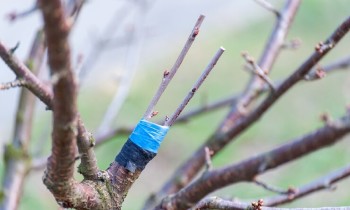
- Grafting by cuttings or buds.
- Layers (clones).
- Growing from seeds.
- Rooting by cuttings.
Diseases and pests
- Scab.
- Fruit rot.
- Powdery mildew.
- Green aphid.
- Leaf roller.
- Flower beetle.
Ripening and fruiting of the Silver Hoof apple tree
 The beginning of fruiting
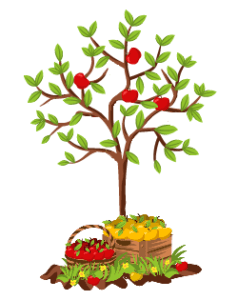 The beginning of fruiting
The Silver Hoof tree's first fruiting doesn't occur until the third year after planting. However, don't expect anything extraordinary; the apple tree will produce a maximum of 10-15 fruits. Therefore, you'll need to wait another 2-3 years for a good harvest, with the yield increasing exponentially.
Flowering time
This summer apple tree blooms early. By early May, it produces beautiful, large buds that open into white flowers with a slightly pinkish tint and fleshy, half-closed petals.
Fruiting and growth
After you've harvested your first sample crop, you can expect a significant increase by the following year. A mature tree typically yields around 160 kilograms of delicious apples, which store well for 2-4 months. Annual tree growth is modest, only 5-9 centimeters.
In their native Sverdlovsk region, the fruits usually ripen by the end of August, and they need to be picked immediately. In September, they become plump, that is, translucent. This doesn't affect the flavor; in fact, it improves it, but these apples are completely unsuitable for storing.
The best feeding:
- Compost.
- Manure.
- Peat.
- Nitrogen and potassium mixtures.
Why the hoof does not bloom and bear fruit:
- Inappropriate location or soil.
- Proximity to groundwater.
- Pests, in particular the flower beetle
- Diseases.
- Lack of pollinators nearby.
- Incorrect pruning.
What causes apples to fall off?
- Pests.
- Diseases.
- Insufficient watering.
- Natural phenomena.
- Overripening.
Share your thoughts on Silver Hoof in the comments so other gardeners can learn from your experience.


Comments
I adore this variety – it’s my favorite: delicious, juicy, beautiful!