
Surkhurai apple tree: characteristics of the variety and care
| Color | Reds |
|---|---|
| Ripening season | Summer |
| Size of apples | Small ones , Average |
| Taste | Sweet and sour |
| Crown type | Average tree height |
| Shelf life | Low shelf life |
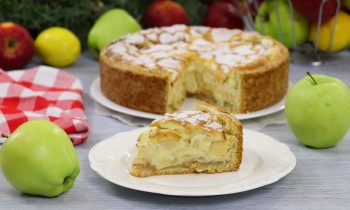
| Application | Fresh , For recycling |
| Winter hardiness | High winter hardiness |
| Fruiting age | Up to 5 years |


Wednesday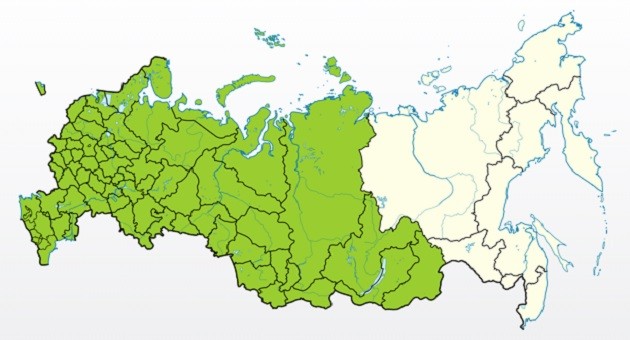 History of origin and regions of growth
Growing regions
- Western Siberia.
- Crimea.
- Altai Krai.
- North Caucasus.
- Ural.
- Middle zone.
- Some northern regions.
Origin
The development of this new apple tree began around the late 1990s at the M. Lisavenko Research Institute of Strawberry and Apple Cultivation. At an experimental station near the city of Gorno-Altaisk, the first hybrid was developed that combined all the best qualities of Siberian apple trees: the Phoenix and the Gornoaltaisk. Its creators are considered to be Z. S. Yashchemskaya, I. P. Kalinina, and N. V. Ermakova, who submitted the variety for state trials.
An application for state testing was submitted in 2003 by the Federal Scientific Research Altai Center for Biotechnology. By 2007, the variety was classified as an elite variety, included in the State Register of Breeding Achievements, and zoned for the West Siberian region. In fact, it can be grown almost anywhere in the country, with the exception of the Far East and the Far North.
Content
Description of the Surkhurai apple variety
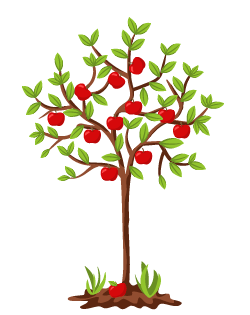 This new summer apple variety has immediately caught the fancy of gardeners in our country, and is also quickly catching on in neighboring countries. The trees are very winter-hardy, resilient, and tolerant of moisture, soil, fertilizer, and fertilization. They easily withstand even severe droughts, produce excellent yields, and have strong immunity to all five races of apple. scabies, pit bitterness, spotting, have a compact size, which saves space in the garden.
Surkhurai's fruits are small but can grow to medium size, a disadvantage more than offset by their pleasant flavor. They are very juicy and aromatic, and are considered a dessert variety. Despite their small size and short shelf life, they are recommended for both large commercial plantings and small home gardens.
Apples: What they look like
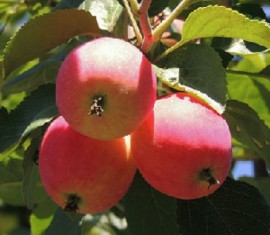
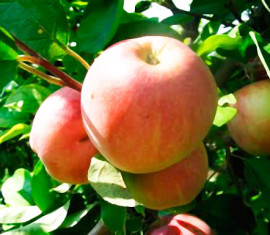
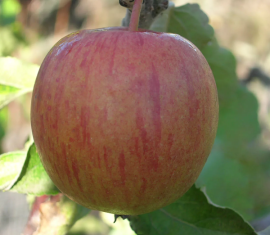
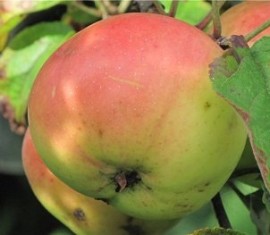
 The fruits are usually small to medium (rarely) in size. They can reach a maximum weight of 65-96 grams, but can reach 110-130 grams in favorable conditions. They are round, slightly flattened and slanted, and generally uniform in size, but this depends on lighting, care, and weather. The ribbing is almost invisible to the naked eye, but the side seam of the apples may be visible.
The skin is firm, dense, elastic, thick, smooth, glossy, and covered with a dense, oily bloom during ripening. It is yellow or golden in hue, but 75-90% of it is hidden under a blush of crimson, carmine, raspberry, or even beetroot red. This blush is striped and blurred, and may be slightly mottled, but not streaked. Subcutaneous punctures are few in number; they are green or greenish-gray, small, barely noticeable, and pale. The chemical composition is usually assessed based on the following factors:
- Ascorbic acid (vitamin C) – 11.9 milligrams.
- Pectins (fiber) – 12.4%.
- Total sugars (fructose) – 9.5%.
- Titratable acids – 0.87%.
- P-active substances (catechins) – 189 milligrams.
The fruit's flesh is dense, fine-grained, and juicy, with a very pleasant, slightly spicy aroma. It's not prickly, but rather tender, with a bite-friendly consistency. It has a characteristic creamy hue, but can also have a slightly greenish or lemony tint. The flavor is sweet and sour, harmonious, and considered a table fruit. According to the tasting scale, Surkhurai receives a 4.4 out of 5 points.
Surkhurai apple tree: characteristics
Crown and root system
 The trees are considered to be moderately or medium-sized, as they barely reach 3.1-3.6 meters in height., if not pruned promptly. The crown is oval or even pyramidal when young, but with age it becomes increasingly spherical and rather sparse. The branches are straight, long, and covered with brown or reddish-brown bark, slightly pubescent in some areas. They extend from the trunk mostly at right angles, and fruiting is mixed.
The leaves are medium-sized, oval, elongated, and short-pointed. They are matte, green or light green, coarsely ribbed, and leathery. They can be curved downwards, folded like a boat, and have a moderately pubescent underside. The root system is shallow-to-deep, highly branched, and adapted to seeking water.
Productivity and pollination
Compared to other varieties, it produces few fruits, but against the backdrop of many Siberian apple trees, it looks quite attractive.
In one season, under favorable growing conditions (weather, climate, fertilizers), Surkhurai can easily produce approximately 18-25 kilograms of small but very juicy fruits..
The variety is self-fertile, but without suitable flowering trees, you won't be able to get many fruits. It's best to grow other varieties no further than 40-50 meters from the trunk, otherwise cross-pollination may not occur. Otherwise, there are no restrictions; any other varieties that bloom at the same time will do.
Winter hardiness and disease resistance
Surkhurai's high resistance to low temperatures protects it even at temperatures as low as -37°C to -42°C. If apple trees do freeze, usually due to excessive humidity and sudden temperature changes, the damage is minor and they recover very quickly. However, covering them for the winter won't hurt; this won't "spoil" the trees, as some believe.
The trees have strong immunity to scab, powdery mildew, and pit bitterness, and are rarely affected by other common apple diseases. During years of severe epiphytotics, they may experience a slight "downturn," after which they continue to bear fruit normally.
Rootstocks and subspecies
This variety is completely new, so no subvarieties have yet been developed, although many talk about semi-cultivated, dwarf, and semi-dwarf varieties. In reality, these are simply the same variety, but grown on a corresponding rootstock. A reduction in size usually also entails a decrease in cold tolerance, but an increase in fruit size. There are no columnar varieties; the apple tree will still have branches.
Features of growing Surkhurai
 Landing
 Landing
Basic conditions
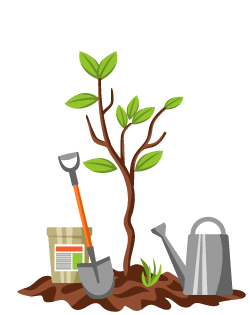
- In all regions except those with harsh northern climates, standard apple tree planting requirements can be followed. A sunny, draft-free, spacious location with holes 60 x 80 centimeters in size is sufficient.
- For Siberia, Urals In some northern regions, this isn't enough; the optimal method is to plant trees in a specially prepared mound. This should be done almost like a hole, but in the form of a mound. First, add soil mixed with fertilizer, cover with drainage, then water, and then add a second layer of soil. Trees are planted on this mound, covering them with a generous amount of soil to prevent water stagnation near the root system. Surkhurai can also be planted on hills and raised areas.
- It is necessary to leave at least 4-5 meters between trees so that when they mature, they do not interfere with each other’s growth with either roots or branches.
- The root collar, if you do not want to lose the properties of the rootstock, should protrude 5-6 centimeters above the surface.
- Be sure to drive a stake into the north side of the tree trunk for support. This will help the apple tree remain upright, regardless of any gusts of wind.
- After planting, the trees are watered with 25-30 liters of water, and the soil surface is mulched with compost, sawdust, manure, or whatever is available.
Landing dates
The further north you are in the latitude where you plan to plant your apple trees, the better time to plant them is in the spring. In warmer regions, it doesn't matter when the seedlings are placed in their permanent location; this can be done in late fall, at least 3-4 weeks before the first frost, after the leaves have fallen. In Siberia, it's best to plant the trees in the spring, so the apple trees have time to adapt to the surrounding environment before the frost sets in.
Protection from frost and rodents
Trees are very resistant to low temperatures, so in warmer regions, only young seedlings require frost protection. Further north, it's best to take all the standard precautions: cover the root zone with dry grass, straw bales, spruce branches, or soil, wrap the trunks with suitable materials, and even cover the trunks with a tent-like covering.
To scare away hungry mice, hamsters and haresTo prevent insects from coming closer to human habitation in winter, apple tree trunks are coated with a thick layer of grease or lard. The insects nest in the cracks of the bark and, in the spring, damage the trees, leaves, and fruit. To repel them, the trees are whitewashed with lime.
Tree care
 Tree care
Loosening the soil, watering: proper agricultural technology
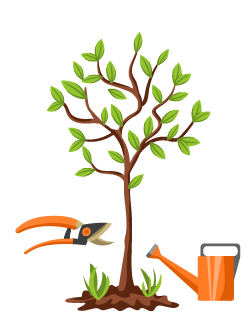
All fruit crops benefit from well-aerated soil, so you'll need to dig around the tree trunks twice a year: in spring and fall. The rest of the year, except for winter, you can simply hoe the soil, removing root shoots and weeds.
Watering Surkhurai is not necessary unless the weather is extremely dry and hot for an extended period. Young trees also require additional watering once every week or week and a half. In arid regions, 6-8 waterings per season of 35-50 liters per mature tree are sufficient.
Pruning: simple crown shaping
Most seedlings from the nursery already have a formed crown, often sparsely layered. Therefore, all that remains is to maintain the desired parameters by pruning excess branches, those growing inward or at an acute angle to the trunk. The shoots should be spaced far apart to ensure good ventilation and adequate sunlight.
Sanitary pruning is best done in early spring, but if the trees have been even slightly frost-bitten, it's best to postpone it until April or early May, when the buds have already opened. This will allow you to see how much shoots are growing, which ones are still viable, and how much needs to be pruned.
Pollinator varieties
- Pervouralskoe.
- Gorno-Altaisk.
- Ranetki.
- Bellefleur the Chinese.
- Melba.
- Minusinsk.
Reproduction
- Rooting.
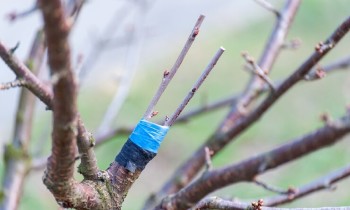
- Grafting of buds and cuttings.
- Layers (clones).
Diseases and pests
- Rust.
- Green aphid.
- Codling moth.
- Hawthorn.
Ripening and fruiting of Surkhurai
The beginning of fruiting
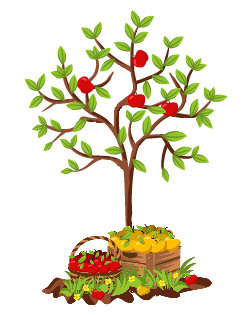 The beginning of fruiting
Apple trees begin to bloom for the first time as early as the second or third year, even on seed-grown vegetative rootstocks. However, it's best to pluck these buds immediately, preventing them from developing into apples, especially since the yield will be meager. The first apples are best harvested in the fourth or fifth year, when they already weigh up to 4-7 kilograms.
Flowering time
The trees begin to bloom in mid- to late May, but much depends directly on the weather and the region's climate. In warmer climates, Surkhurai can bloom even in early May, which significantly accelerates all subsequent processes. The process typically lasts 14 to 18 days, but can extend until mid-June. The tree's flowers are medium-sized, pure white or slightly pink, and intensely fragrant with spicy notes.
Fruiting and growth
The tree is considered to grow very quickly, capable of reaching approximately 55-70 centimeters in a single season. Therefore, it reaches its final height in just a few years and then stops growing. By this time, fruiting has almost fully established, which occurs no later than 8-10 years after planting in open ground. At this point, the trees can yield 15-25 kilograms of juicy and delicious apples, which produce excellent juice.
The fruits begin to ripen as early as mid-August, and sometimes, during cold weather or prolonged rains, they can be delayed until the end of the month. It's best to pick them early to prevent them from falling to the ground, which would require immediate processing. Apples can be stored for no more than 20-35 days. After that, they lose flavor and juiciness, become loose and sour, and then wilt and rot, even in ideal cellar conditions.
Top dressing
- Ammonium nitrate.
- Mineral complexes.
- Chicken manure.
- Manure.
- Humus.
- Superphosphate.
- Compost.
What to do if it doesn't bloom or bear fruit
- Provide or stop watering.
- Check for pests or diseases.
- Transplant into the sun.
- Feed and fertilize.
Why do apples fall?
- Overripe.
- Natural factors (hail, hurricane, rain).
- Pest damage.
- Diseases.
Please leave your feedback on the Surkhurai variety so that other gardeners can learn something similar from it to enhance their experience.

Comments
The apples are beautiful, but not very juicy, the taste is not high, like the Gornoaltaisk ones, I expected more.
I still don't understand what shape the root system is, since I'm planning to transplant it to another location (as carefully as possible when digging it up)? It's apparently three years old, purchased and planted in our garden in the spring of 2021.