Tolunay apple tree: characteristics of the variety and care
| Color | Reds , Striped |
|---|---|
| Ripening season | Summer |
| Size of apples | Average |
| Taste | Sweet and sour |
| Crown type | Average tree height |
| Shelf life | Low shelf life |
| Application | For recycling , Fresh |
| Winter hardiness | High winter hardiness |
| Fruiting age | Up to 5 years |


 History of origin and regions of growth
Growing regions
- Siberian Federal District.
Origin
Attempts to develop apple varieties resistant to the harsh conditions of the Russian North were already underway when the first settlers set foot on these lands. However, most of these attempts were doomed to failure, as the trees simply couldn't withstand the harsh climate, and nothing could be grown beyond the notorious Ranetki or wild apples. Only in the second half of the twentieth century did research at Altai breeding stations begin to yield significant results.
The new standard was created by pollinating the Altai Pepinka and the selected variety 4-65-7869 with a mixture of pollen from the saffron Pepin, the famous Welsi, and the Chinese Bellefleur. This new variety, named after the Altai female name Tolunai (literally "Full Moon"), was developed in the mid-1980s. It is not yet considered an elite variety, has not won any awards, and research into its properties and qualities is still ongoing.
Description of the Tolunai apple variety
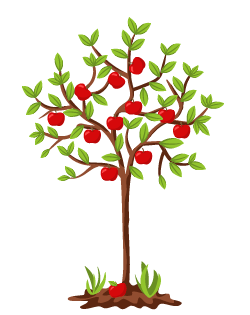 Weather conditions Siberia These regions are well known to people all over the world – their short, hot summers quickly give way to long, cold winters, with powerful winds and heavy snowfalls, blizzards, and bitter frosts. Therefore, any local would love to have an apple tree in their garden that can withstand all these hardships. The Tolunai apple variety is just the thing: it has a pleasant flavor, begins bearing fruit quickly, and by early autumn produces fragrant, fairly large fruits.
Apples: What they look like
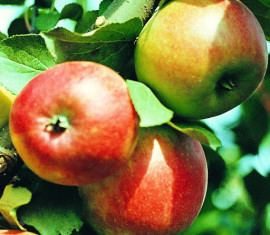
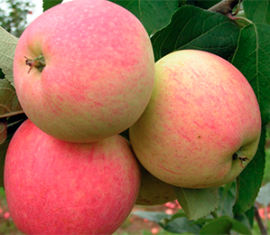
 The fruits of this variety are quite large for Siberian apples, but are actually considered medium-sized (80-130 grams). They are round, sometimes slightly conical or truncated, and grow on branches in clusters of several from a single location.
The surface is smooth, glossy with slightly defined ribs, green in colour when unripe, becoming yellow or golden-yellow as it ripens, covered with a streaky blush of burgundy or red-brown hue.
The subcutaneous dots are numerous and quite light in color, making them easily visible on the skin. The chemical composition can be characterized by the following indicators per 100 grams of product:
- P-active substances (catechins) – 123 milligrams.
- Ascorbic acid (vitamin C) – 11 milligrams.
- Total sugars (fructose) – 13%.
- Pectins (fiber) – 16.4%.
- Titratable acids – 0.4%.
The flesh, like the skin, is initially green with a light green tint, but over time it acquires a soft creamy hue. It is moderately dense, crisp, prickly, with a pleasant texture, fine-grained, and juicy. The flavor is harmonious, balanced, and sweet and sour. The fruit scores 4.7 points for appearance and 4.8 points out of a possible five for taste, according to a professional tasting panel.
Tolunay apple tree: characteristics
Crown and root system
 The tree is considered to be of medium height, but it can rather be classified as a natural semi-dwarf, because Under normal conditions it does not grow higher than 2.5-3.5 meters. Crown It is characterized by a particularly rounded, compact, and sparse growth habit, but regular pruning is necessary. Over the years, apple trees can become sprawling, covering an area over 3 meters in diameter.
Tolunay branches are usually long and straight, but can have joints, and fruiting can occur erratically. They usually extend from the trunk at an acute angle, which can cause them to break off during fruiting. Therefore, they require staking and support. The bark is dark brown or grayish-brown, cracking and may begin to crumble over time.
The leaves are green or light green, rounded, leathery, and rather matte. They are slightly pubescent, with a slightly serrated edge and a pointed tip. The apple tree's root system is highly branched and deep, allowing it to withstand freezing temperatures during winter. Depending on the rootstock, it may or may not have a central taproot.
Productivity and pollination
Experts classify this variety as early-bearing; after just 4-5 years, it begins to produce quite good harvests, especially considering that these are Siberian apple trees growing in extremely harsh conditions.
At the beginning of the fruiting period, Tolunai owners harvest 13-15 kilograms, but by the 7th-9th year, you can already get up to 35 or more kilograms of fruit from one trunk..
Tolunay is considered a self-fertile variety, meaning it doesn't require other apple trees nearby to act as pollinators to produce a harvest. However, many gardeners note that having Kitayka or Ranetki nearby increases yields, and if an apiary is brought into the garden during flowering, the yields almost double.
Winter hardiness and disease resistance
The standard tree has a fairly high tolerance to low temperatures, although it is technically considered average. Apple trees do not tolerate drafts well, so covering them will require careful consideration. The bark, buds, and even the wood can freeze, but only when the temperature drops below 23-27°C.
Resistance to the main disease of apple trees, scab, is quite high, but if improper care is provided, trees become sick profusely and immediately. Powdery mildew, moniliosis and other diseases, as well as pests, threaten these varieties, as well as others.
Rootstocks and subspecies
Since this variety is considered new and has not yet been added to the State Register, no varieties or subspecies exist yet. It is known that it is most often grown on vegetative rootstock, as well as on dwarf and semi-dwarf varieties, which adds winter hardiness to the apple tree, and most importantly, low-growing trunks are much easier to protect from frost.
Features of growing Tolunai
 Landing
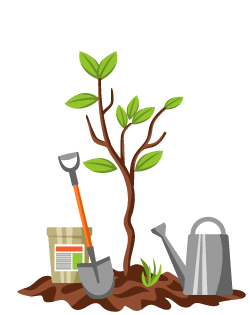 Landing
Basic conditions
- By choosing the right soil for planting, you can ensure rapid growth and early fruiting. The tree doesn't like clayey or acidic soils, but sandy loam or loamy soils are best.
- The planting site should be sunny and not exposed to strong winds. Choose a site sheltered by the walls of buildings or taller trees, fences, hedges, or natural elevations.
- Tolunay should not be planted in close proximity to wells or natural bodies of water, as it does not tolerate excessive moisture and its roots may rot, which will kill the tree.
- It's best to prepare holes for planting young trees in advance: in the fall or at least a few weeks before gardening. Dig them 80 centimeters deep and the same diameter, add drainage material (gravel, nut shells, vermiculite) to the bottom, then add some soil, mixed with fertilizer, add two buckets of water, and leave uncovered.
- There should be a distance of at least 2.5-3 meters between trees in a row, and two meters between rows is enough.
- Before planting, the material should be thoroughly inspected and any damaged or dried roots should be immediately cut off with garden shears, otherwise this could lead to tree disease in the future.
- It's a good idea to place stakes in the hole right away to serve as support later. They shouldn't be removed until the second year of fruiting.
- The apple trees are lowered into the hole, directly onto the drainage surface, spreading the roots, and then covered with soil, lightly compacting it by hand. Avoid packing the soil too tightly. A rim of soil is created around the hole, 30-60 liters of water is poured into it, and the surface is mulched with available materials (humus, peat, manure, chopped grass).
The apple tree's root collar should always be at least 5-7 centimeters above the ground. Otherwise, the tree may root above it, completely destroying the rootstock's original qualities.
Landing dates
In most cases, it's recommended to plant apple trees in the fall, but with Tolunai, things are different. Young, year-old seedlings may not survive excessively harsh weather conditions and die. Therefore, it's recommended to plant the variety in the spring, around early April, when the threat of frost has passed and the buds have not yet opened. Trees with closed root system They can be planted at any time during the growing season from spring to autumn, and they will most likely take root well.
Protection from frost and rodents
All trees of this variety, especially young ones, must be covered for the winter; otherwise, they will likely die, despite their winter hardiness. The trunks and root zone are lined with straw mats and wrapped in special materials, such as burlap, roofing felt, or roofing felt. You can cover the roots with 10-15 centimeters of soil for the winter to prevent them from freezing.
Such tricks usually attract hungry rodents or insect pests, which remain overwintering near the rhizomes and then attack the young foliage in the spring. To protect trees, whitewash the trunk and lower skeletal branches with lime in the fall and coat them with grease or special compounds. You can even use lard, which is sure to repel all rodents.
Tree care
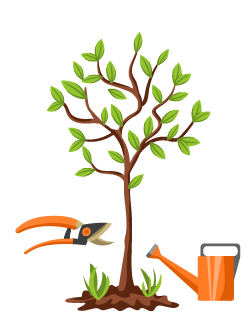 Tree care
Loosening the soil, watering: proper agricultural technology
Apple trees don't require any special care, but it's still a good idea to remove weeds and dig around the trunks once a year. At the same time, you can water and fertilize the trees to promote better development, growth, and fruiting.
Tolunay should be watered carefully, and only during the driest periods. If temperatures remain fairly high for 10-14 days and there's still no precipitation, then you can apply about 20-30 liters per tree, no more, in two doses, one morning and one evening.
Pruning: simple crown shaping
Most often, owners of this variety shape the crown into a round or oval shape, due to its natural characteristics. However, it should be immediately shaped so that the branches grow sparsely.
- The first pruning involves shortening the central trunk by 20-35 centimeters, as well as cutting off the skeletal branches in layers to create the correct shape.
- All branches growing upwards (water sprouts) are mercilessly cut off.
- It wouldn't hurt to remove those that are directed inward into the crown or that hang down to the ground.
- Sanitary pruning includes cutting off dry, damaged or diseased shoots.
There won't be much fuss with pruning, so formative and even maintenance pruning can be carried out no more than once every two years, and sanitary pruning can be carried out as problems arise.
Pollinator varieties
- Pepinka.
- Bellefleur the Chinese.
- Saffron pepin.
- Dobrynya.
- For a long time.
- Welsey.
Reproduction
- Clones (layering).
- Rooting cuttings.
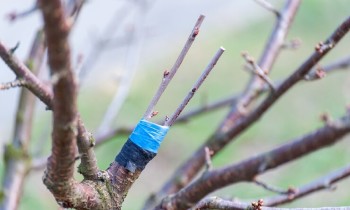
- Grafting
- Growing from seeds.
Diseases and pests
- Powdery mildew.
- Black crayfish.
- Moniliosis.
- Fruit rot.
- Hawthorn.
- Scale insect.
- Leaf roller.
- Codling moth.
Ripening and fruiting
The beginning of fruiting
 The beginning of fruiting
This is an early-ripening variety, so it can produce flowers as early as one or two years after planting outdoors. However, it should never be allowed to bloom. All inflorescences should be removed to allow the tree to develop foliage and strengthen. The first fruits are best harvested in the fourth or fifth year, when the yield will be no more than 10-15 kilograms.
Flowering time
The apple tree, like most other varieties, blooms in mid- to late May. However, the timing can vary significantly depending on weather conditions. The blooming period is short, typical of a Siberian apple tree, and will be fully completed in just 3-5 days. The variety produces very abundant flowers, with a slight pink tint, fleshy, and extremely fragrant, attracting insects from afar.
Fruiting and growth
The tree immediately begins to actively grow foliage and stretch upward. In the first few years, it reaches 1.5-2 meters, reaching its maximum height by the age of five. Maximum fruiting occurs around the eighth to tenth year, and the apple tree's lifespan has not yet been determined, but is certainly at least 30-50 years. During this period, with proper care and favorable weather conditions, it is possible to harvest 40-45 kilograms of aromatic fruit.
Apples begin to ripen at the end of August, all at once and very quickly, so it's important not to miss the moment when they're ready for storage. Tolunai has an average shelf life, although it could even be considered poor. Under ideal conditions, with the right humidity and temperatures no higher than 1-5°C, they can be stored until early January at the latest. If these aren't available, the fruit can only be stored for a month or a month and a half.
Top dressing
- Superphosphate.
- Mineral complexes.
- Peat.
- Compost.
- Manure.
- Humus.
What to do if it doesn't bloom or bear fruit
- Check for pests and diseases.
- Transplant.
- Limit watering.
Why do apples fall?
- Overripe.
- Natural factors.
- Pests.
- Diseases.
- Excess moisture.
Leave your feedback on the winter-hardy Tolunai variety to share your experience and knowledge with others.