Apple tree Vostochnoe (Tubinskoe): characteristics of the variety and care
| Color | Reds |
|---|---|
| Ripening season | Summer |
| Size of apples | Small ones |
| Taste | Sweet and sour |
| Crown type | Average tree height |
| Shelf life | Low shelf life |
| Application | Fresh , For recycling |
| Winter hardiness | High winter hardiness |
| Fruiting age | From 5 years old |
 History of origin and regions of growth
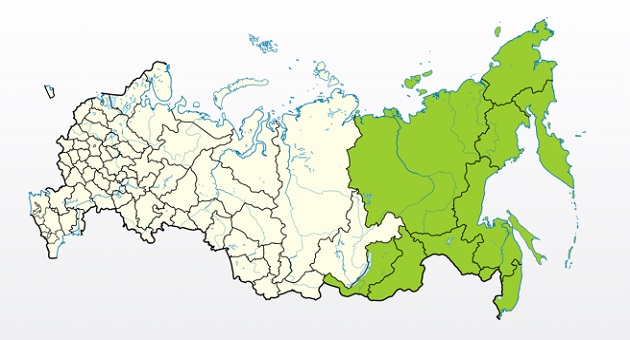
Growing regions
- Khakassia.
- Tuva.
- Krasnoyarsk Krai.
- Sakha.
- Siberia.
Origin
One of the achievements of the Minusinsk Experimental Station of Horticulture and Melon Growing at the Krasnoyarsk Research Institute of Agriculture is the Vostochnoye or Tubinskoye apple tree variety. The variety was developed by breeders V. I. Shevchenko and V. A. Shevchenko, who first crossed the Minusinskoye Orange and Limonka varieties.
In 1985, the variety was recognized as elite and sent to nearby farms for final variety testing. It was only in 1988 that it was approved, included in the State Register of Breeding Achievements, and zoned for the East Siberian region. In fact, it can be successfully grown across much larger areas of our vast homeland.
Content
Description of the Vostochnoe variety
 This medium-growing, late-summer-ripening variety immediately attracted the attention of gardeners in the harsh conditions of Eastern Siberia and far beyond. Vostochnoye (Tubinskoye) is distinguished by its extremely high frost resistance, and is resistant to prolonged periods of drought and sudden temperature fluctuations. It is easy to care for and tolerant of soil conditions, requiring no constant fertilizing, and regularly yields good harvests.
The apples are small, yet they are in demand. The fruits are beautiful, rosy, aromatic, and delicious. They are easy to transport and can even be stored in a cellar for some time. The main drawback of this variety is its irregular fruiting cycle, meaning yields may temporarily decline during dormant years. It is recommended for both individual cultivation and commercial production.
Apples: What do they look like?
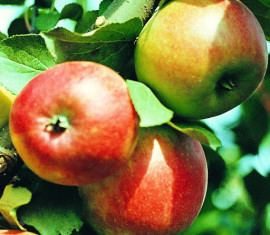
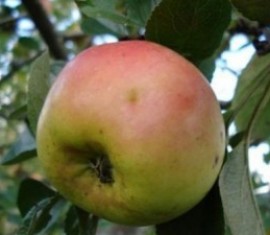
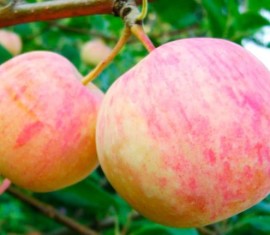
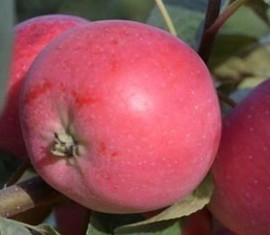
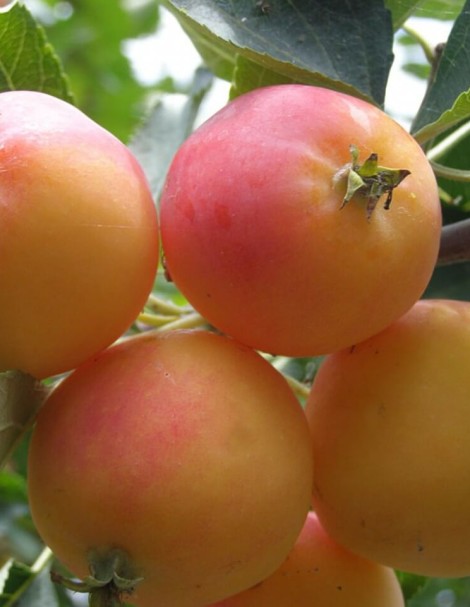
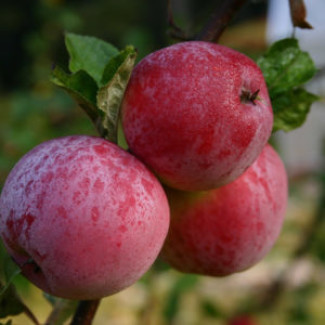
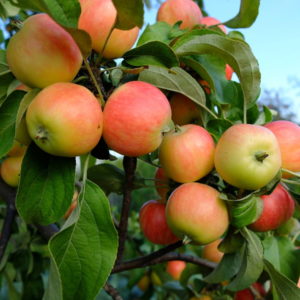 The fruits are small or slightly larger than small, rarely reaching 25-40 grams in weight, and even then, only under favorable weather and climate conditions. The fruits are round, generally symmetrical and uniform, with rare exceptions. They are smooth, broadly ribbed, and can be slightly flattened along the central axis or turnip-shaped, and sometimes slightly conical. The lateral seam is completely invisible.
The skin is smooth, shiny, dense, and elastic, effectively protecting the flesh from mechanical damage. When ripe, it develops a noticeable oily coating that doesn't affect the color, but simply makes the apples appear greasy. The underlying skin color is yellow or golden-yellowish. The underlying blush is bright red, dense, and vaguely translucent, occupying at least 75-85% of the surface. At maturity, it completely obscures the underlying color. Subcutaneous punctures are numerous, light, and not very visible; they are small, greenish, or grayish-green. The chemical composition is most easily monitored by the following set of unique indicators:
- P-active substances (catechins) – 344.3 milligrams.
- Ascorbic acid (vitamin C) – 19.5 milligrams.
- Fructose (total sugars) – 13.4%.
- Pectins – 12.2%.
- Titratable acids – 0.8%.
The Tubinsky apple's flesh is very tender, fine-grained, medium-dense, extremely juicy, crisp, not prickly, and has a pleasant texture. It's aromatic and has a sweeter flavor with a characteristic wine-spicy acidity. It's considered harmonious, dessert-like, and balanced. Experts rate the apples 4.5 out of 5 for appearance and taste.
Apple tree Vostochnoe (Tubinskoe): characteristics
Crown and root system
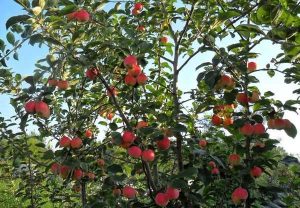 The tree is not only of medium vigor, but also of medium height. It can stretch to a maximum of 2.7-3.2 meters., and even then, with no formative pruning. The crown is round or oval, with moderate density. The shoots are medium thick, long, straight, and directed upward, set at a nearly 90-degree angle from the trunk, and covered with green or greenish-brown bark. Fruiting occurs on fruiting canes in one to two years.
The leaves are medium to large, oval, slightly elongated, short-pointed, dense, and leathery. The tip is twisted like a propeller, and the edges are serrate-crenate, wavy, and serrated. The blade is delicately nerved, matte, and has a light felt-like pubescence on the underside. The root system is deeply buried, robust, and branched, primarily fibrous, but can also be taproot, depending on the rootstock.
Productivity and pollination
Compared to European apple trees, those from the Far East and Northern Russia seem unimpressive. However, it's important to take into account, firstly, the compactness of their trunks, and secondly, the harsh conditions of the growing region, since fruit trees rarely survive in them.
One mature Vostochnoye tree can yield approximately 14-19 kilograms of small, yet beautiful and delicious, fruit per year. In the best years, the yield increases to 19-22 kilograms, but more is unlikely.
Apple trees are completely sterile to themselves, so they absolutely need external pollinators to bear fruit. If possible, it's best to plant the trees interspersed or at least within 50-150 meters of other varieties blooming at the same time.
Winter hardiness and disease resistance
This variety is exceptionally winter-hardy, withstanding not only low temperatures but even harsh winds, even in high humidity, which most apple trees cannot withstand. Frosts down to -40-43°C are completely unaffected by Tubinsky, provided it is properly protected and prepared for winter.
The tree's resistance to scab is consistently high, although it is not immune. Even during years of severe epidemics, it is primarily the leaves that are affected, while the fruit remains generally edible. Parasites can attack the variety, and bacterial threats are also present. Therefore, timely preventative measures are essential to reduce the risks to zero.
Rootstocks and subspecies
The Eastern variety has no subspecies, but it is grown on various rootstocks. The standard variety is the most popular, but dwarf and semi-dwarf varieties are also in constant demand. However, winter hardiness is significantly reduced, requiring even more careful covering. This variety can easily be trained into a creeping tree, which can be covered with soil or snow for the winter.
Features of growing Eastern
 Landing
 Landing
Basic conditions
- A sunny location is the key to good growth and rapid development of the Vostochnoye apple variety. They thrive in full sun, but in the shade they grow weak, fail to bloom or bear fruit, and sometimes even die.
- It's best to have good ventilation in the tree canopy, but avoid drafts. A strong wind will kill the trees very quickly, even before they have time to fully develop.
- The depth of the groundwater table doesn't matter much unless it's very close to the surface. Therefore, apple trees should not be planted near streams and rivers, shallow wells, marshy lowlands, or floodplain meadows.
- It's best to choose soils that are low in silt and non-salty. Otherwise, there are no specific requirements; it can be clay or sand, black soil or podzolic soil, rocky slopes, or anything else.
- Preparing the holes in advance is advisable, but not necessary. You can dig holes 60-75 centimeters deep just 3-4 weeks in advance, add fertilizer to the bottom, add drainage on top, then fill with water and let them sit outdoors.
- Leave approximately 2.2-2.5 meters between trunks, and the same or slightly more between rows, up to 2.5-3. The trees are compact and will not interfere with each other.
- You can immediately dig stakes or special slats into the holes for tying. They can be made of metal, wood, or plastic—it makes no difference.
- The root collar of the tree must always remain above the soil surface if the qualities and properties of the rootstock are to be preserved.
- The tree is inspected, dry or damaged roots are cut off, and the tree is placed in warm water for 5-9 hours.
- Place the seedling directly on the drainage mound, positioning the rhizome so that the shoots can grow freely. The hole can be widened slightly if needed. Cover with soil, compact it with your feet, but not too much, and water with 35-40 liters of water. If necessary, the surface can be mulched to retain moisture.
Landing dates
All Far Eastern apple trees are best planted in the spring, when the soil has completely thawed and warmed. You can choose a nice, warm day in late March or mid-April, before the sap starts to flow. When planting in the fall, there's a risk of timing the first frosts too early, and if they arrive prematurely, all the seedlings could die.
Tree care
 Tree care
Protection from frost and pests
To prevent the tree from freezing in the winter cold, its watering should be stopped completely before September, and ideally in the middle AugustAfter completing the fall pruning and cleaning the tree trunks, trees are wrapped with various materials, such as burlap, old tights, or agrofibre. Soil can be piled onto the roots, along with spruce branches, straw, hay, or well-dried leaves.
To repel insects from bark cracks and the root area, tree trunks are whitewashed with lime to a height of approximately 1-1.1 meters. Strong-smelling substances, such as fuel oil, lard, and grease, help repel rodents. However, it's still undesirable to neglect regular treatments with insecticides and fungicides.
Loosening the soil, watering: proper agricultural technology
Apple trees need to be dug twice a year, removing weeds and root suckers. However, don't dig too deep with a shovel, as this can damage the surface roots. Hoeing is recommended 4-7 times per season, loosening the soil, for example, the day after applying water, to prevent it from compacting into an overly dense lump.
You won't need to water the tree too often, as it has an enviable tolerance for dry periods. It can find moisture in the soil on its own, so there's little need for artificial irrigation under normal natural rainfall. However, young seedlings can be watered 4-5 times per season or during severe droughts to avoid losing their garden.
Pruning: simple crown shaping
To prevent the tree from becoming overgrown, gardeners create a sparse, tiered crown. Branches are spaced at different heights and widely apart. It's best to prune all excess shoots immediately, leaving a central conductor and 3-4 main branches; any more would be unnecessary. In the first year, shaping is done, and subsequently, the correct natural branching is simply maintained.
Every fall, and if necessary, in the spring, trees should be cleaned. This involves removing all branches growing inward, broken, diseased, and dry. These will interfere with the apple tree's proper development. It is also recommended to trim off any shoots that protrude vertically. All cuts (wounds) should be sealed with available materials.garden var, swamp, water-based paint).
Pollinator varieties
- Minusinsk red and dessert.
- Sakhalin pendula.
- Ostankino.
- Ranetka Ermolaeva.
- Aborigine.
- Reliable.
- Wem pink.
- Stella.
- Cascade.
Reproduction
- Layers.
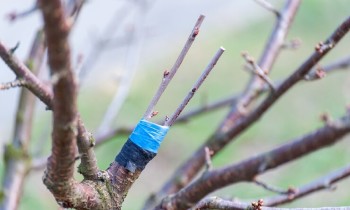
- Grafting cuttings.
- Clones.
- Growing from seeds.
Diseases and pests
- Powdery mildew.
- Scab.
- Fruit rot.
- Pit bitterness.
- Green aphid.
- Flower beetle.
- Scale insect.
- Codling moth.
- Hawthorn.
Ripening and fruiting of the Eastern
The beginning of fruiting
 The beginning of fruiting
The variety is fairly early-bearing, beginning to bear fruit as early as the third or fourth year. However, flowers can be found on the branches as early as the first or second season. It's recommended to pluck them immediately, preventing them from drawing excess sap from the tree. The first harvests are best harvested in the fourth or fifth year, when the tree has successfully developed foliage and rhizomes. They won't produce a particularly abundant crop, but you can still harvest a dozen or two apples for sampling.
Flowering time
Tubinsky's bloom begins no later than late April or early May. The tree needs time to produce apples and allow them to ripen during the short Siberian summer, so it opens its pink buds early. Once open, they transform into large, fragrant, snow-white flowers, sometimes with a slight reddish tint, gathered in clusters of 4-6.
Fruiting and growth
Standard trees grow at a moderate rate, adding 15-25 centimeters per year, sometimes a little more. Therefore, you'll have to wait until the tree reaches its full height and begins bearing fruit in full. By around the tenth year, you'll be able to harvest 12-15 kilograms, and by the fifteenth, 25-30 kilograms. However, such results are usually only achieved in the most favorable years.
The fruits begin to ripen as early as mid-August, but most often by the end of the month. This is when they are at their most delicious and juicy, acquiring a unique flavor and color. Keep in mind that if they become overripe, they can fall to the ground en masse, requiring urgent processing. While they are easy to transport, the shelf life of Vostochny is only 2-4 weeks in a special refrigerator or 1-3 weeks in a cellar.
Top dressing
- Superphosphate.
- Ammonium nitrate.
- Manure.
- Compost.
- Humus.
- Chicken or pigeon droppings.
- Mineral complexes.
What to do if it doesn't bloom or bear fruit
- Inspect for diseases or pests.
- Limit or increase watering.
- Feed or apply fertilizer.
- Transplant to a sunny place.
Why do apples fall?
- Natural weather conditions (wind, rain, hurricane, hail).
- Pest damage.
- Diseases.
- Overripening.
Share your own experience with the Vostochnoye (Tubinskoye) apple variety so that any gardener can learn about it before planting and achieve maximum results.