Apple tree Zvezdochka: characteristics of the variety and care
| Color | Reds |
|---|---|
| Ripening season | Autumn |
| Size of apples | Small ones |
| Taste | Sweet and sour |
| Crown type | Tall tree |
| Shelf life | High shelf life |
| Application | Fresh , For recycling , Storage |
| Winter hardiness | High winter hardiness |
| Fruiting age | From 5 years old |
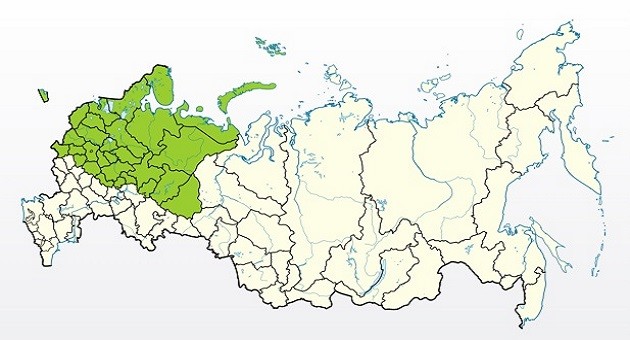 History of origin and regions of growth
Growing regions
- Samara region.
- Mordovia.
- Arkhangelsk region.
- Saint Petersburg and Leningrad region.
- Nenets Autonomous Okrug.
- Kaliningrad region.
- Vologda Oblast.
- Volga-Vyatka region.
- Komi.
- Karelia.
- Murmansk region.
- Pskov region.
- Novgorod region.
- Mari El.
- Chuvashia.
- Kirov region.
- Nizhny Novgorod region.
- Central region.
Origin
In 1926, the pome fruit section of the I.V. Michurin Central Genetic Laboratory was transferred to the leadership of the renowned Russian fruit breeder Semyon Fedorovich Chernenko. It was then that work on developing new apple varieties began. A year later, by crossing the Lithuanian Pepinka and Anis, a new apple tree was created, perfectly suited in its properties and qualities for cultivation in the northwestern region of our vast country.
The variety was immediately sent to various farms to test its frost resistance, hardiness, and fruiting capacity. Even before the start of WWII in 1940, it was awarded the title of elite, and a few years later, it was finally zoned for the aforementioned regions.
Content
Description of the Zvezdochka apple tree variety
 Moscow region The northern and northern regions of our country are characterized by challenging climate conditions. They experience frequent temperature fluctuations, frosty winters, and hot, often short, summers, making it difficult for fruit crops to thrive. The Zvezdochka apple variety is perfectly suited to these conditions, thrives quite comfortably, and produces regular, reliable harvests.
Apples: color, size and weight
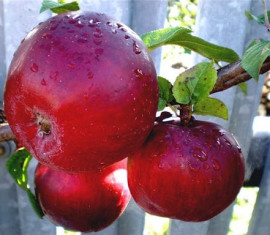
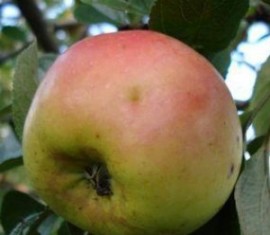
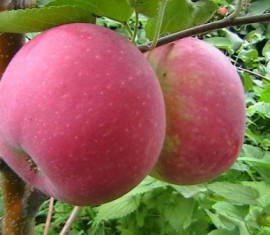
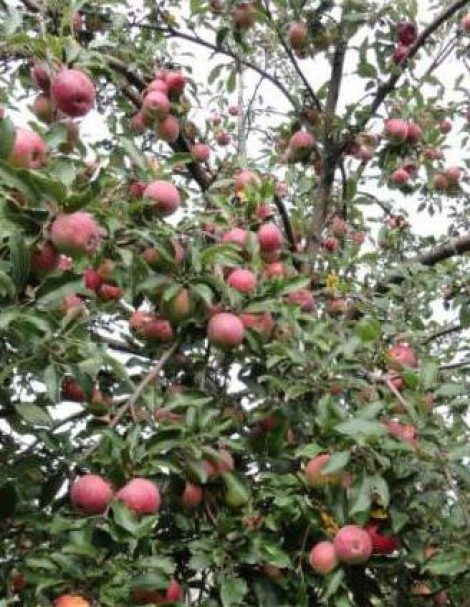
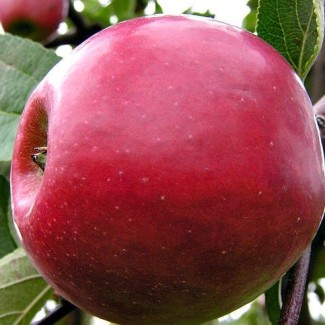
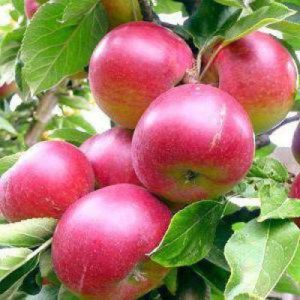 The fruits are usually medium or even small, barely reaching 80-145 grams. The apples are round, sometimes slightly flattened, with a slight hint of ribbing that is barely noticeable.
Their skin is glossy, shiny, and may have a light waxy-oily coating. It's green, covered with a diffuse red or bright crimson blush, sometimes covering up to 75-90% of the fruit. The chemical composition is characterized by the following indicators per 100 grams of product:
- P-active substances (catechins) – 134.8 milligrams.
- Ascorbic acid (vitamin C) – 15 milligrams.
- Total sugars (fructose) – 10.3%.
- Titratable acids – 0.64%.
- Pectins (fiber) 13.2%.
The fruit's flesh is very juicy, crisp, dense, and white with a slight greenish tint. If the blush is pronounced, it may acquire a pink tint under the skin. The graininess is low, and the flavor is balanced, harmonious, dessert-like, and sweet with a characteristic apple tartness. The tasting score for the appearance matches the taste score and is 4.8 out of 5.
Apple tree Zvezdochka: characteristics
Crown and root system
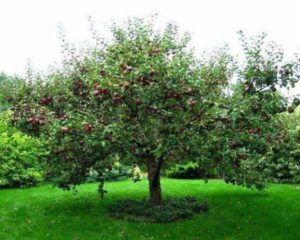 This variety is considered to be vigorous. If you don't prune it in time, by the time it's twenty years old it can easily reach 7-8 meters in height, which will make it much more difficult to care for and harvest. In young trees crown It has a spherical shape that becomes more spreading, drooping, and weeping with age. The skeletal branches extend almost at right angles, and fruiting is usually concentrated on the spears and thin fruiting twigs. The tree's shoots are thin and long, strongly drooping, with reddish-brown bark. With age, the bark becomes more brown and rough, and begins to crack and crumble.
The crown is often very large, especially in older trees, easily covering an area 7-8 meters in diameter, which must be taken into account when planting. The leaves of the Zvezdochka are quite small, oval-rounded, and dark green. They are matte, slightly pubescent on both sides, and may have serrations and dentations on the sides. The root system, like most apple trees, is branched, but still more superficial than deep. The presence of a central taproot depends on the rootstock.
Productivity and pollination
Zvezdochka is a high-yielding variety that bears fruit consistently without resting.
On average, without much effort, one mature tree can yield between 90 and 170 kilograms of aromatic fruit that are easy to store and excellent for processing (jams, preserves, dried fruit, compotes).
There are officially recorded cases of trees harvesting 200-240 kilograms of apples in a single season. Of course, these are isolated cases, but with proper care, such results are entirely achievable.
Zvezdochka is a conditionally self-fertile variety, meaning cross-pollination with other varieties is not necessary to produce apples. However, the yield will be low. Therefore, it is recommended to alternate plantings of different apple trees, both in small and commercial intensive orchards. It is also a good idea to have an apiary within 50-100 meters, as the variety does not have a strong scent.
Winter hardiness and disease resistance
The variety was bred to be resistant to abnormally low temperatures, but it doesn't possess any unique qualities. It adapts easily to variable climates, but without proper care, even at temperatures of -22-25°C, which can last for a long time, it will freeze and die. This is due to the delicate wood and, most importantly, the shallow root system. Therefore, it is essential to cover the trees during the cold season; then they can withstand temperatures as low as -35°C.
The tree is particularly resistant to scab, the main fungal disease of apple trees, making it highly prized by gardeners. However, other diseases affect the Zvezdochka just as frequently and extensively as other varieties. Rodents and insect pests, while not particularly fond of attacking the apple tree, can still damage it if preventative measures aren't taken in advance.
Rootstocks and subspecies: features
| Rootstocks | Peculiarities |
| Dwarf | Apple trees grow no more than 2.5-3 meters tall, and have a much more compact crown. They retain all the qualities and properties of the parent variety. They begin bearing fruit as early as the second or third year, making them attractive to many gardeners seeking quick results in the shortest possible time. |
| Semi-dwarf (winter) | Although the tree can grow over 3 meters, it is better adapted to cold climates than other species. The first fruits are harvested only 4-5 years after planting. However, the tree can tolerate temperatures of -35-37°C without significant damage or loss of fruit. The apples of this tree are small, no more than 100 grams, but they are abundant, and up to 200 kilograms can be harvested annually. |
Features of growing Zvezdochka
 Landing
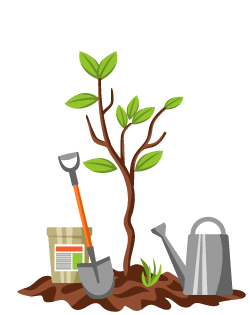 Landing
Basic conditions
- Soil The soil should be slightly acidic for the variety, otherwise the tree may die. If you don't have suitable soil, you can "quench" the soil with lime.
- For a young seedling, a small hole 50 centimeters deep and the same in diameter is sufficient.
- The holes can be prepared in advance by removing some of the soil and mixing it with fertilizer. The mixture is then returned to the hole and filled with several buckets of water. Trees can be planted in 2-3 weeks. This preparation can be done as early as fall, which is even better.
- Staking stakes are immediately driven in, extending approximately one to one and a half meters above the ground on the north side. They should not be removed until the third year after planting.
- The tree's crown is spreading at maturity, so the Zvezdochka should be planted no closer than 5-5 meters to other trees or shrubs.
- If the root system has dried out during transportation, you can revive the trees by allowing them to soak in moisture. To do this, soak the seedlings in a bucket of warm water for 6-8 hours.
- The roots are carefully covered with soil, shaking the trunk to remove air pockets and voids. A small rim is created around the trunk circle and 2-3 buckets of water are added. To protect against insects and excessive moisture evaporation, the top is mulched with compost, humus, or chopped grass.
The survival rate of Zvezdochka seedlings directly depends on the planting site. It should be well-ventilated and receive at least 6-8 hours of sun per day during the growing season.
Landing dates
It's not common to plant starflowers in the fall; spring is the best time. The optimal time is April or early May. It's important that the threat of night frosts has completely passed, otherwise the tree may become ill and even die.
Protection from frost and rodents
Trees of any age need frost protection if winter temperatures in your climate drop below -22°C. This can be achieved by simply covering the trunk and root zone with spruce branches, roofing felt, straw bales, hay, or roofing felt, or using special covering materials.
To protect against insects, trunks and lower skeletal branches are whitewashed with lime in the fall. To repel rodents, who happily feast on the delicate apple tree bark, you can coat the tree trunk with lard, grease, or treat it with industrial chemicals.
Tree care
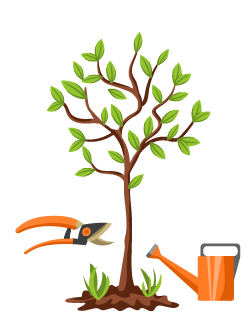 Tree care
Loosening the soil, watering: proper agricultural technology
This unpretentious apple tree doesn't require any special care. A standard set of maintenance measures is sufficient to ensure it produces abundant yields. To do this, you can dig around the tree's trunk once a year, but don't dig too deeply, as the tree's root system is shallow and easily damaged.
Weeding, removing root suckers, and removing shoots from shrubs and other trees is a common gardening task. The tree only needs watering in very dry years, and even then, not very abundantly. Twice during the summer, you can water it along with fertilizer, applying 10-15 liters morning and evening.
Pruning: simple crown shaping
This variety is very prone to becoming dense, so pruning is essential. The first formative pruning is performed immediately after planting, removing about a third of all existing branches. Experienced gardeners prefer to perform a "ring pruning," which involves removing the entire trunk, right down to the first fork. However, this method is very traumatic, and if performed incorrectly, the seedling will likely die.
Sanitary, thinning, and rejuvenating pruning will also need to be done regularly. All dry, diseased, and damaged branches should be trimmed off, and those growing deep into the crown should be removed. Ideally, the cut areas should be immediately sealed with garden varnish or water-based paint.
Pollinator varieties
- Ladoga.
- Bogatyr.
- Belarusian raspberry.
- Antonovka.
- Zhigulevskoye.
- Striped anise.
- Cinnamon new.
Reproduction
- Clones (layering).
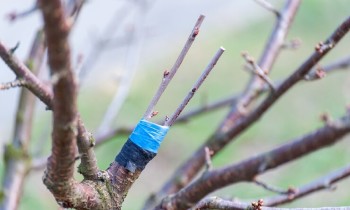
- Grafting by cuttings or buds.
- Growing from seeds.
Diseases and pests
- Powdery mildew.
- Fruit rot.
- Cytosporosis.
- Scale insect.
- Green aphid.
Ripening and fruiting of the Zvezdochka apple tree
The beginning of fruiting
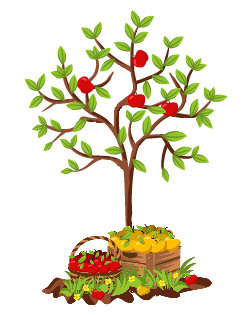 The beginning of fruiting
The main variety, grown on a vegetative rootstock, can begin to bear fruit as early as the third year, but these can be counted on the fingers of one hand. Full fruiting occurs only in the fifth to seventh year after planting. Dwarf rootstocks produce fruit more quickly, which is why many prefer them.
Flowering time
This apple tree blooms after other trees have finished blooming, so choosing pollinators requires careful consideration. It begins to open its buds in late May, and sometimes as early as early June. This depends largely on the region's climate and the prevailing weather conditions in a given year.
Fruiting and growth
A full harvest of 100 kilograms of beautiful and delicious apples will only be achieved by the 8th to 10th year of life. Starting from the fifth year, they will grow noticeably, which is why gardeners often appreciate this inconspicuous apple tree, which can surprise. Its growth is modest, only 5-10 centimeters per year, but by the age of 10, it is fully formed.
The fruits ripen by the end of September or the beginning of October. It's crucial to pick them quickly, as they fall to the ground when they're overripe. Then the entire harvest will have to be processed at once; they can't sit around. It's even better to pick the apples from the vines in mid-September and let them ripen in suitable conditions, such as a well-ventilated cellar. It's believed they can retain all their commercial and consumer qualities for at least six months, which is a long time.
Top dressing
- Humus.
- Manure.
- Phosphorus-potassium mixtures.
- Mineral complexes.
- Compost.
What to do if it doesn't bloom or bear fruit
- Check for diseases.
- Look for pests, in particular flower beetles.
- Provide watering or stop applying moisture.
- Perform pruning.
Why do apples fall?
- Overripe.
- Excessive humidity.
- Natural phenomena (wind, rain, hail).
- Pests or diseases.
Leave your feedback on the Zvezdochka apple tree in the comments below and share your experience with other gardeners.