Bayana apple tree: characteristics of the variety and care
| Color | Reds |
|---|---|
| Ripening season | Autumn |
| Size of apples | Average |
| Taste | Sweet and sour |
| Crown type | Average tree height |
| Shelf life | Average shelf life |
| Application | Universal variety |
| Winter hardiness | High winter hardiness |
| Fruiting age | Up to 5 years |
 History of origin and regions of growth
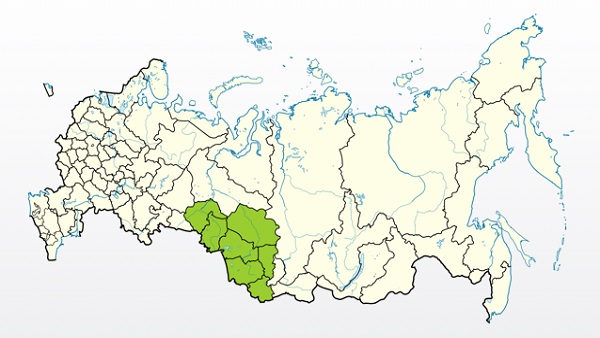
Growing regions
- Kemerovo region.
- Altai Republic and Altai Krai.
- Tomsk and Omsk regions.
- Tyumen Oblast.
- Novosibirsk region.
Origin
Almost all Siberian apple trees produce relatively small fruits. This is frustrating for gardeners, as fruit production in harsh regions is already under constant threat. Therefore, the primary goal of breeders in developing the Bayana variety was to create a winter-hardy, robust, and resilient plant that would produce beautiful, large, and tasty fruits. In 1984, scientists from the Gorno-Altai Institute of Breeding (Federal Altai Scientific Center for Agrobiotechnology) developed hybrid seedling 11-61295, using the Bellefleur-Kitayka and Gornoaltayskoye varieties as parent varieties.
In 2003, the variety finally received its own name, was classified as an elite variety, and sent out for field trials to various nearby and distant farms. The apple tree performed extremely well and immediately became a favorite among both amateur and professional gardeners. In 2007, it was included in the State Register and zoned for the aforementioned regions.
Content
Description of the Bayana apple variety
 Every Siberian gardener dreamed of having a frost-hardy apple tree with so many advantages in their garden. With the advent of the Bayana variety, this dream has become a reality. The tree is easy to care for, easily tolerates harsh climates and weather conditions, is highly productive, and begins bearing fruit quickly, and is also resistant to all five races of apple trees. scabies at the genetic level. Recommended for growing in home gardens and intensive commercial gardens.
Apples: What they look like
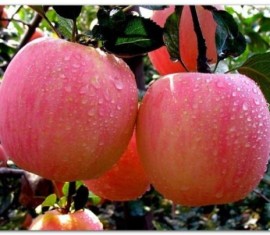
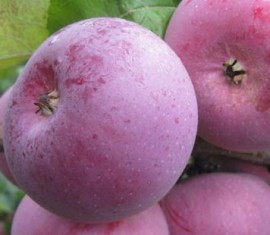
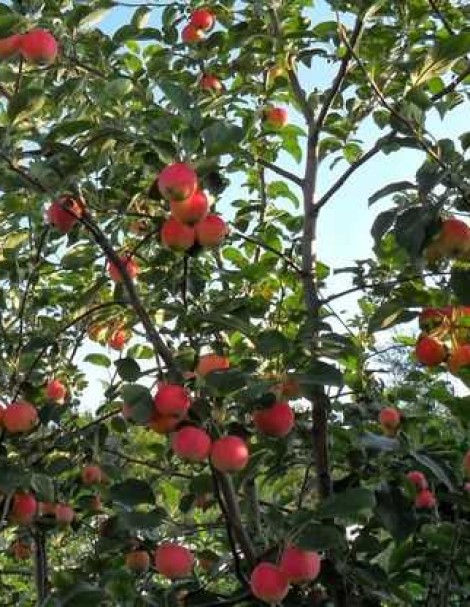
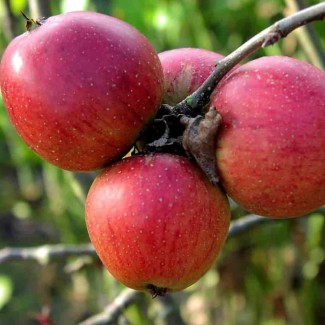
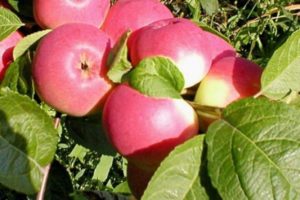 The fruits are mostly round, flattened, and uniform in size, with subtle ribbing. They are medium-sized, weighing approximately 90-130 grams, but can reach 140-180 grams in favorable conditions.
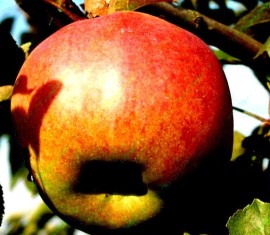
The fruit skin is smooth, dense, but dull in appearance, lacking either an oily or waxy coating. Its base color is green when unripe, turning golden yellow as it ripens. The surface is covered with a dense, carmine-red or purple blush, covering approximately 75-90% of the surface. Subcutaneous spots are grayish-green, very small, sparse, and poorly visible on the surface. The chemical composition is characterized by the following indicators per 100 grams of product:
- P-active substances (catechins) – 234 milligrams.
- Ascorbic acid (vitamin C) – 21 milligrams.
- Total sugars (fructose) – 13.9%.
- Pectins (fiber) – 18%.
- Titratable acids – 0.54%.
The flesh is medium-dense, fine-grained, very juicy and tender, with a pleasant sweet-tart flavor edging toward sweetness. It has a distinct creamy hue. The flavor is harmonious, dessert-like, and balanced, with a medium-bodied aroma. According to a professional taste test, the apples scored 4.6 points for appearance and 4.5 points for taste out of a possible 5.
Bayana apple tree: characteristics
Crown and root system
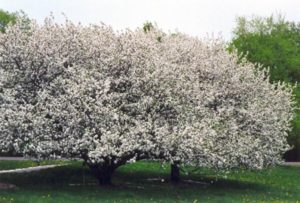 The Bayana variety is considered to be of medium height, since in the first ten years it can grow no more than 3-3.5 meters.The tree can reach a maximum height of approximately 5 meters, but most gardeners do not allow it to reach this height. The crown is usually moderately dense, broom-shaped or inverted pyramidal, but may become more spreading over the years. Branches extend from the trunk at an acute angle, with their tips mostly pointing upward. The shoots are covered with gray-green or steel-gray bark, lightly pubescent.
Bayana's leaves are medium-sized, oval, leathery, smooth, glossy, delicately ribbed, slightly elongated, and have short, pointed tips. They are green or light green in color and pubescent on the back, with a serrated, serrated edge. The root system is highly branched, medium-deep, and, depending on the rootstock, may or may not have a central taproot.
Productivity and pollination
At a young age, for approximately 10-15 years, the apple tree's yield remains at an average level, although for a Siberian variety, even 75-90 kilograms is quite a significant result.
When the trees come into shape, mature and begin to bear fruit fully, they can yield 90-120 kilograms of tasty and aromatic fruits per season..
Bayana is considered self-fertile, meaning it can cross-pollinate independently with the help of insects and wind. However, experienced gardeners note that if other apple varieties with suitable flowering times are nearby, this variety produces fruit much more vigorously. They recommend bringing mobile apiaries directly to the plantings during flowering to further increase the yield.
Winter hardiness and disease resistance
These apple trees have a high tolerance for low temperatures. They can even withstand severe frosts down to -32-37°C with virtually no damage. If they do suffer frost damage, they recover very quickly, within just one season, and continue to produce fruit fully. The only thing you'll need to be careful of is drafts; the trees don't like them and may become ill.
Bayana has strong genetic immunity to powdery mildew and scab. This means they are never affected by these diseases, but the same cannot be said for cytosporosis or black canker. It's advisable to treat apple trees with fungicides and insecticides in a timely manner to avoid future problems.
Rootstocks and subspecies
This variety is considered relatively new, so it doesn't yet have any subspecies. However, it is grown on dwarf, semi-cultivated, and standard clonal rootstocks. Furthermore, in even more northern regions with harsh and long winters, many choose to grow the semi-cultivated Bayana on seedling rootstock. It grows primarily as a bush, produces fruit no more than 100-120 grams in weight, is compact, and can withstand temperatures as low as -40-42°C. The only drawback of this variety is cracking of the fruit skin in persistently rainy weather or simply excessive moisture, such as from overwatering.
Features of growing Bayana
 Landing
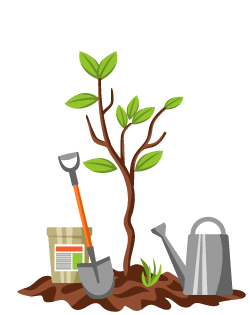 Landing
Basic conditions
- For planting this weed, it's best to choose open locations that receive full sun for most of the day. Otherwise, the trees may grow very weak, thin, and unhealthy, and the fruits will become small, weighing no more than 50-60 grams.
- A location protected from drafts but well-ventilated is the second condition for successfully growing Bayana. It can be planted on southern, southwestern, or southeastern slopes, but northern ones are best avoided. The tree thrives under the protection of tall buildings, plants, and fences that don't shade it.
- High groundwater levels are not the best place to plant apple trees. They should be at least 2-2.5 meters below the surface, otherwise the seedlings will reach the water with their roots, rot, and eventually die.
- Many people prepare holes in advance, in spring or autumn, but in reality, they can be dug just 2-3 weeks before planting.
- Dig holes 70-80 centimeters deep and the same in diameter, making their sides steep. Add some fertile soil mixed with a small amount of fertilizer to the bottom. Add drainage material on top, then fill with 20-45 liters of water. The holes don't need to be covered.
- Before planting, the root system should be inspected, all dry or broken shoots should be cut off, and the root system should be immersed in warm water for 5-7 hours.
- It is necessary to leave at least 3.5-4 meters between trees to avoid conflict between rhizomes or crowns in the future.
- The root collar should always be left approximately 9-15 centimeters above the surface to prevent the tree from rooting above it. If this happens, all the properties of the rootstock will be lost.
- Place the seedling upright, cover it with soil, and compact it layer by layer to ensure the tree holds firmly. Stake the trees immediately on the north side and tie them in place. They can be wooden, metal, or even plastic. They can be removed no earlier than 4-5 years.
- The tree is watered with 35-45 liters of water, and the surface of the trunk circle is mulched with any available materials, from chopped grass to compost.
Landing dates
All seedlings with closed root system They can be planted at any point during the growing season; they usually take root well. In other cases, it's better to choose the standard timing for all apple trees—early spring or late fall. In the former case, you'll need to wait until frosts return, and in the latter, until the leaves have completely fallen. However, it's important to remember that there should be approximately 3-4 weeks left before the first frost in the fall, otherwise the tree won't have time to adapt and prepare for winter.
Protection from frost and rodents
Although apple trees tolerate low temperatures quite well, they still need to be covered for the winter. In harsh conditions, the area around the trunk is covered with a 10-15 centimeter layer of soil, which is removed in the spring. Mats of dry grass or straw can also be added. The trunks are wrapped with burlap, roofing felt, or agrofibre. In some cases, young trees are covered with a layer of soil.
To protect trees from bark-eating rodents, coat the trunks with commercially available grease or lard; this will repel them. Regular whitewashing with ordinary lime, applied to a height of approximately 1-1.3 meters, also works well against insects.
Tree care
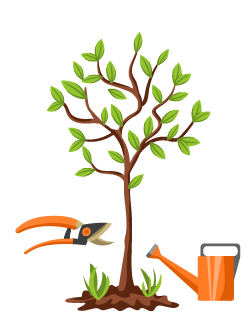 Tree care
Loosening the soil, watering: proper agricultural technology
This tree is easy to grow, so it doesn't require any special cultivation techniques. It only needs to be dug around the trunk once a year, and only when young. Weeds and root suckers can be removed at the same time. In the future, you can simply cover the apple trees with sod to save yourself the trouble of digging.
Bayana should only be watered during truly dry and hot periods. If there has been no natural precipitation for more than three weeks, water can be applied in two stages, 10-15 liters each, morning and evening. At the same time, feed and fertilize the apple trees, as moisture helps them absorb nutrients much more effectively.
Pruning: simple crown shaping
To ensure future high yields, pruning to shape the crown is carried out from the first year after planting in open ground. To do this, shorten the central conductor by a third and form 2-3 skeletal branches, spaced widely apart, in tiers. Subsequently, it is essential to maintain the shape, as Bayana tends to become dense.
Trees should be pruned in the spring and fall, when the sap in the trunks has died down. All dead, damaged, and diseased branches should be trimmed, and any growing inward or vertically upward branches (suckers) can also be removed.
Pollinator varieties
- Borovinka.
- Antonovka.
- Bellefleur the Chinese.
- Gorno-Altaisk.
- Simirenko.
- Ranetka purple.
- Alyonushka.
Reproduction
- Rooting cuttings.
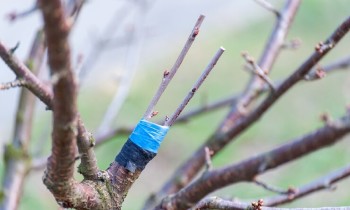
- Grafting by buds and cuttings.
- Clones (layering).
- Growing from seeds.
Diseases and pests
- Moniliosis.
- Fruit rot.
- Black crayfish.
- Cytosporosis.
- Tinder fungus.
- Green aphid.
- Codling moth.
Ripening and fruiting of Bayana
The beginning of fruiting
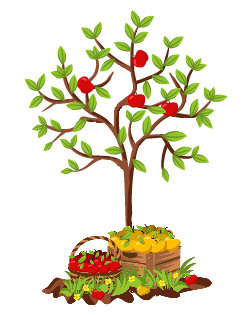 The beginning of fruiting
Among Siberian apple trees, this variety is distinguished by its enviable early fruiting. Already in the third or fourth year after planting, it produces a good harvest of 5-10 kilograms of beautiful, delicious fruit. The first fruits are no different from those that will follow, so they can be used in any way: stored, made into compotes, jams, and preserves.
Flowering time
This figure can vary significantly depending on the growing region and the prevailing weather and climate conditions. However, in most cases, large and beautiful, snow-white buds with a light green tint bloom in late May. Flowering lasts approximately 10-14 days, long enough for the bees to complete their work.
Fruiting and growth
This apple tree grows slowly, gaining approximately 7-15 centimeters per year after fruiting begins. Therefore, it may only reach 3-3.5 meters by the age of 10-12 years, at which point it's best to limit its height for ease of care and harvesting. At the same time, its fertility also increases gradually. A full harvest can only be obtained by the age of 9-11 years.
Apples ripen around early to mid-September, but this depends entirely on the weather. When it's dry and warm, the fruit ripens earlier and can be picked as early as mid-September. It's easy to tell when it's time to pick apples to prevent them from falling to the ground: a distinct purple tint appears on the skin. These apples can be stored for about 4-5 months, after which they become soft, sour, and begin to wilt and rot.
Top dressing
- Superphosphate.
- Potash fertilizers.
- Compost.
- Humus.
- Manure.
What to do if it doesn't bloom or bear fruit
- Check for pests and diseases.
- Transplant.
- Limit watering.
Why do apples fall?
- Overripe.
- Natural factors.
- Pests.
- Diseases.
Leave your feedback on the winter-hardy Bayana variety to share your experience with others.