Apple tree Bessemyanka Michurinskaya: characteristics of the variety and care
| Color | Reds |
|---|---|
| Ripening season | Autumn |
| Size of apples | Average |
| Taste | Sweet and sour |
| Crown type | Average tree height |
| Shelf life | Average shelf life |
| Application | For recycling , Fresh |
| Winter hardiness | Average winter hardiness |
| Fruiting age | From 5 years old |
 History of origin and regions of growth
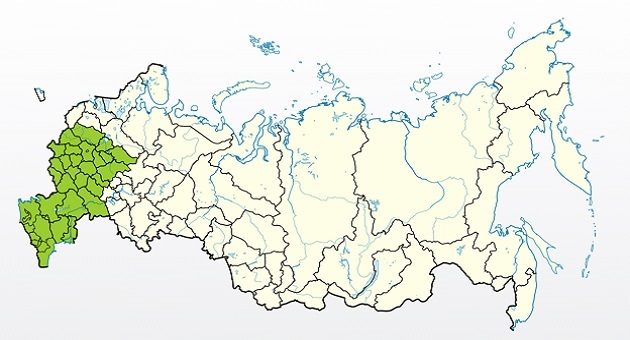
Growing regions
- Middle zone.
- North Caucasus.
- Crimea.
- Some northern regions.
Origin
The great Russian biologist and world-renowned plant breeder Ivan Vladimirovich Michurin gave the world many new varieties of fruit trees, including apples. Around 1912, he pollinated Skrizhapel seeds with Komsin pollen, which within a year produced a hybrid tetrasomenodobed seedling, which was grafted onto the crown of a mature apple tree. As a result, the first harvest was obtained by 1921.
In 1939, the variety was sent to various farms for field trials, which it passed with flying colors, and immediately became a favorite among gardeners. In 1947, it was included in the State Register and zoned for the Central, Northwestern, Central Black Earth, and East Siberian regions. In reality, it was most commonly grown throughout the central part of the country, in the Moscow and Leningrad regions, as well as in more southern regions with mild climates.
Content
Description of the Bessemyanka Michurinskaya apple variety
 Its high ecological properties, consistent annual yield, low maintenance, and ease of cultivation have made this variety popular among gardeners across the country for many years. Previously, Bessemyanka Michurinskaya was grown commercially, as its high commercial value and taste are widely appreciated. However, younger, more promising varieties are rapidly displacing it from the market. These days, these apple trees are cultivated only in private gardens.
Apples: What they look like
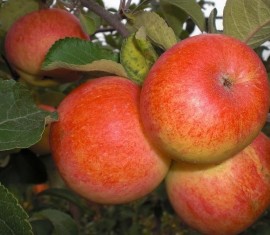
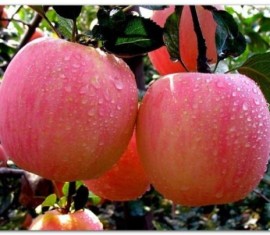
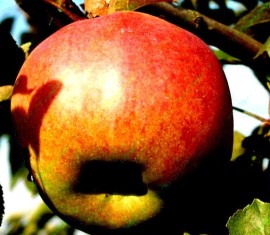
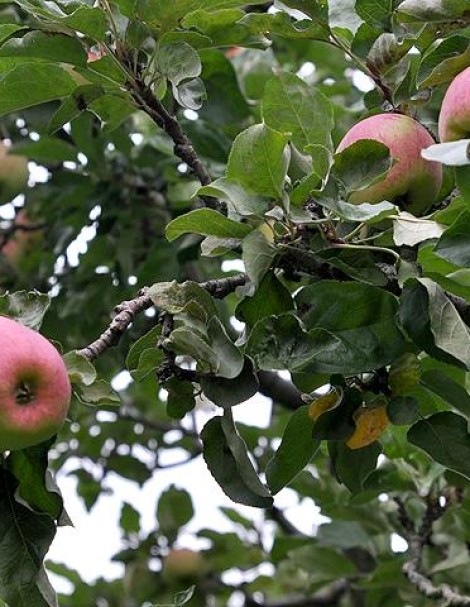
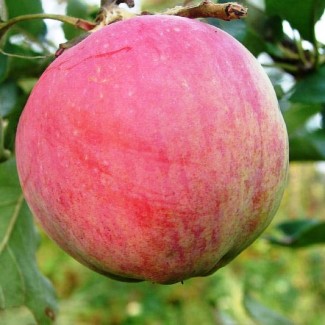
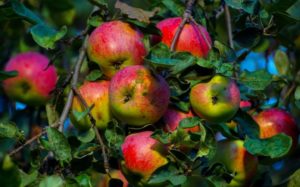 The fruits are medium to above-medium in size, symmetrical, round, and flattened. They grow to approximately 170-220 grams, but can be smaller in cold and rainy years and under unfavorable growing conditions. They are smooth, mostly uniform in size, with slight ribbing.
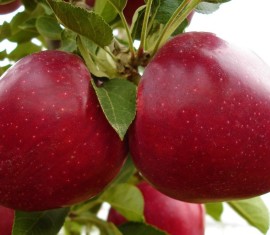
The skin is dense, thick, glossy, shiny, and green when unripe. As it ripens, it becomes increasingly yellow and has a rich, waxy coating that rubs off easily. The blush is continuous and diffuse on one side, then fades to a mottled, striped pattern of crimson or carmine red on the other. Subcutaneous punctures are numerous, small, light green or slightly grayish, and not very visible. The chemical composition can be characterized by the following indicators per 100 grams:
- P-active substances (catechins) – 228.9 milligrams.
- Ascorbic acid (vitamin C) – 21.4 milligrams.
- Total sugars (fructose) – 11.6%.
- Pectins (fiber) – 13.8%.
- Titratable acids – 0.7%.
The flesh is dense, coarse-grained, very juicy, and aromatic, with a beautiful, uniform creamy hue. It's tender, with a sweet-tart, slightly winey flavor, and is considered a dessert-quality, balanced, and harmonious fruit. According to professional tasting reviews, Bessemyanka received 4.7 points for flavor and 4.6 points for appearance out of a possible 5.
Apple tree Bessemyanka Michurinskaya: characteristics
Crown and root system
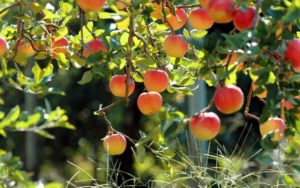 Trees of this variety are deservedly considered tall, as they can easily reach 6-8 meters in height if not limitedHowever, gardeners recommend adjusting the size through pruning to make harvesting and various maintenance activities much easier. The crown is typically oval when young, but with age it becomes increasingly rounded, becoming broadly oval or spreading. The shoots are strong, thick, short, and covered with light brown or slightly greenish bark.
The leaves are dark green or emerald, leathery, smooth, glossy, and wrinkled, usually slightly drooping on the back. They are oval, short-pointed, with an upward-curving tip, and the leaf margins are finely serrated, serrated, and wavy. The root system is very robust, branched, and deeply buried, well adapted for water-seeking.
Productivity and pollination
This is a truly productive variety, which is why gardeners love it so much; it is precisely because of this that, throughout its century-long existence, it has never lost its popularity.
One mature Michurin's Bessemyanka tree can produce approximately 170-230 kilograms of tasty and aromatic fruits in one season, depending on the climate, care, and weather conditions in a given year..
One of the drawbacks is considered to be the variety's self-sterility. Therefore, there must be apple trees in the area that bloom at the appropriate time to ensure cross-pollination. These trees should be no more than 50-100 meters away from the plantings. Spraying the trees with sugar syrup during the blooming period and using mobile apiaries can improve yields.
Winter hardiness and disease resistance
Bessemyanka's tolerance to low temperatures is average. It easily tolerates temperatures down to -25-27°C, even without special shelter. However, it's less tolerant of fluctuations between extreme cold and thaw. Even a mature tree may not withstand frequent and severe fluctuations. Therefore, it needs to be prepared for winter carefully and methodically, taking every precaution.
The variety is quite resistant to diseases, especially scab and powdery mildew. It rarely becomes infected, and the disease progresses slowly, typically affecting only the leaves, while the fruit is edible, especially if properly cared for. Insects can attack the trees, damaging not only the fruit but also the bark and even the wood. Therefore, it's important to treat the trees with fungicides and insecticides promptly and regularly.
Rootstocks and subspecies
Bessemyanka can be grown on various rootstocks, but vegetative seed rootstocks have been and remain the most popular. However, a variety on a dwarf rootstock has recently gained popularity, yielding a rather unusual result. Firstly, such trees begin bearing fruit much earlier, as early as the second year after planting. Secondly, the plant itself is much smaller and more compact, which not only simplifies care and harvesting, but also makes winter sheltering easier, as it can even be covered with a tent. Moreover, the quantity and quality of fruit can significantly exceed that of the parent variety.
Features of growing Bessemyanka Michurinskaya
 Landing
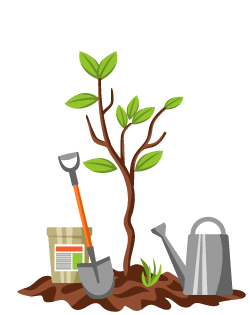 Landing
Basic conditions
- Like most apple varieties, this one prefers open, well-ventilated areas with full sun most of the day, but without drafts. If planted on a slope, it should be on a south-facing one; trees on a north-facing slope can become diseased and even die.
- It's highly recommended that the groundwater level be at least 3-3.5 meters deep, otherwise the seedlings will reach it with their powerful, branching roots and begin to rot. For the same reason, it's not recommended to plant Bessemyanka near rivers, lakes, ponds, shallow wells, springs, or in lowlands or marshy areas.
- It's best to prepare the holes in advance, but if you can't do this in the fall or spring, no problem—you can dig them 2-4 weeks before planting. Dig the holes, then add a small amount of fertile topsoil mixed with organic or mineral fertilizer to the bottom, fill with any drainage material, and then add plenty of water (35-55 liters). Leave them outdoors until planting time.
- The optimal hole size is 75-85 centimeters deep and 80-90 centimeters in diameter—that's plenty. Leave at least 4.5-5 meters between rows, and at least the same distance between trees. Otherwise, mature trees will clash with their roots and crowns, resulting in reduced yields.
- Before planting, check all roots for damaged, dry, or diseased ones; these should be removed immediately. Soak the trees in warm water for 4-7 hours to ensure better rooting.
- Special support stakes, made of wood, plastic, or metal, are driven into the holes. The seedling is tied to these stakes after planting and removed only three to four years after fruiting begins.
- Place the seedling vertically in the hole, supporting it by the trunk with your hand, and spread the rhizome over the drainage mound. Fill the hole with soil, lightly compacting it to ensure the tree is firmly anchored, but not too tightly packed. Form a small earthen mound around the perimeter, and pour 25-50 liters of water into it. Mulch the surface with any suitable material, from sawdust to compost.
Landing dates
Experts say this variety can be planted in both spring and fall. In the former case, choose a sunny, dry, and warm day in late March or early April, when the threat of frost has completely passed. In the latter case, it's best to wait until the leaves have completely fallen, around late September or early October. In both cases, the trees show approximately the same survival rate.
Protection from frost and rodents
In mild climates, the Bessemyanka won't require any shelter at all; it will easily withstand the cold season without sustaining any damage. However, in harsher regions, it's best to ensure the trees don't lose their fruit and that the bark and even the wood aren't damaged by frost. To do this, line the root area with straw or dry grass mats, and wrap the trunks with burlap or other available material.
To prevent rodents from gnawing the tender young bark of saplings during the lean winter, the trunks are coated with melted lard or grease. To eliminate insects that like to overwinter in bark crevices and at the roots, they are whitewashed to a height of 1-1.4 meters with ordinary lime.
Tree care
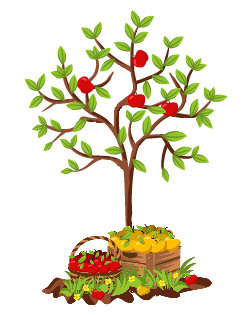 Tree care
Loosening the soil, watering: proper agricultural technology
It's recommended to loosen the soil around the trunk at least once a year by digging it up. However, hoeing, while removing root suckers, various plant shoots, and weeds, can be done much more frequently. Care must be taken to avoid damaging the roots. Over time, you can lay sod around the trunk, which will make maintenance much easier.
Watering should be done only in dry and hot weather, but no more than once a week. Approximately 10-20 liters should be added at a time, which is sufficient for a mature, established tree. In general, with normal natural rainfall, 3-6 waterings should be sufficient. Fertilizers and fertilizers can be added at this time; they will be absorbed much more quickly and efficiently by the tree.
Pruning: simple crown shaping
Bessemyanka doesn't require any special pruning. Standard formative pruning is sufficient. For this, the central conductor is shortened by about a third between the 2nd and 4th years, and all skeletal branches (2-3) are spaced widely apart, and they should be correspondingly shorter by 5-7 centimeters.
Sanitary pruning is carried out in the fall and spring. All dry, damaged, or diseased shoots are removed. Don't forget about those growing inward or sticking out vertically. These aren't helpful; they only make the tree appear denser.
Pollinator varieties
- Mantet.
- Idared.
- Melba.
- Spartan.
- Ottawa.
- Anise.
- Cinnamon Striped.
Reproduction
- Rooting cuttings.
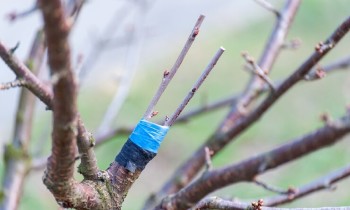
- Grafting by buds and cuttings.
- Growing from seeds.
- Clones (layering).
Diseases and pests
- Cytosporosis.
- Powdery mildew.
- Fruit rot.
- Scab.
- Cytosporosis.
- Tinder fungus.
- Green aphid.
- Hawthorn.
- Codling moth.
Ripening and fruiting of Bessemyanka Michurinskaya
The beginning of fruiting
This apple tree isn't considered an early fruiting tree, but it begins bearing fruit as early as the fifth or sixth year, though very lightly at first. In the first few years, you'll only be able to harvest a few kilograms of fragrant and delicious fruit. However, by the seventh or eighth year, the yield increases dramatically. Until the fifth year, even if blossoms appear, don't allow them to develop; it's best to pick them off immediately.
Flowering time
Autumn varieties usually bloom immediately after summer ones, so blooming can be expected around the second half of May, or sometimes even as early as June. Trees can change their own "schedule" depending on weather and climate conditions. Flowering lasts approximately two weeks, during which time bees must complete the task of pollination. The trees produce medium-sized, saucer-shaped flowers, gathered in clusters of pale pink, delicate, and fragrant.
Fruiting and growth
The tree grows quite quickly, reaching its full height in just 8-12 years. It can reach approximately 40-60 centimeters per year, which is very impressive. The variety also increases its yield rapidly, and by the 9th or 10th year, you can harvest over 50-70 kilograms of apples. Fruiting peaks between the 12th and 14th years and remains at this level for virtually the entire active life of the apple tree, which is over 50-75 years.
Apples should be harvested in the second half of September, as soon as the waxy coating on the skin gives them a slightly bluish tint. This must be done with extreme care, otherwise the apples will simply fall to the ground. At that point, they will only be suitable for immediate processing, and will no longer be suitable for storage or transportation. In any case, even under ideal cellar conditions, they can only last for 3-3.5 months, after which the entire harvest must be processed.
Top dressing
- Superphosphate.
- Compost.
- Nitrogen fertilizers.
- Humus.
- Potassium complexes.
- Ammonium nitrate.
- Manure.
What to do if it doesn't bloom or bear fruit
- Check for pests and diseases.
- Transplant to a sunnier location.
- Limit or increase watering.
Why do apples fall?
- Overripe.
- Natural phenomena.
- Pests.
- Diseases.
Leave your feedback on the winter-hardy Bessemyanka Michurinskaya variety to share your experience with others.