Stroevskoye apple tree: characteristics of the variety and care
| Color | Reds |
|---|---|
| Ripening season | Winter |
| Size of apples | Average |
| Taste | Sweet and sour |
| Crown type | Average tree height |
| Shelf life | Average shelf life |
| Application | Fresh , For recycling |
| Winter hardiness | High winter hardiness |
| Fruiting age | From 5 years old |
 History of origin and regions of growth
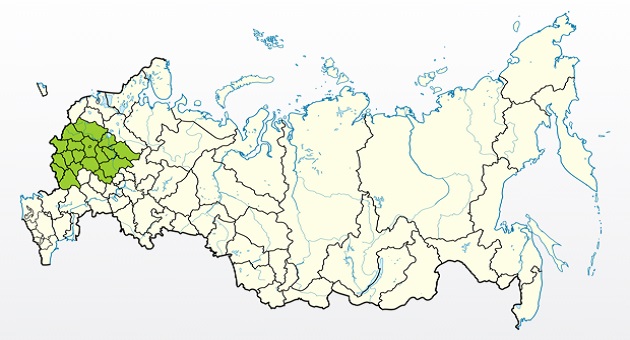
Growing regions
- Central region.
- Central Black Earth Region.
- Lower Volga region of Russia.
Origin
Work on this variety began in the late 1970s. By 1981, the first hybrid seedling, 814, was obtained at the experimental station of the All-Russian Research Institute of Fruit Crop Breeding. After open pollination, it would be singled out as a distinct variety. The authors of Stroevsky are generally considered to be E. A. Dolmatov, E. N. Sedov, Z. M. Serova, and V. V. Zhdanov. In 1991, the first fruits were obtained, which were highly praised by experts.
By 1995, the variety was classified as elite, and three years later, it was accepted for field trials at various farms in the central part of the country. In the fall of 1999, at the VDNKh-EXPO exhibition, Stroevskoye received a finalist diploma and a gold medal, and two years later, it was included in the State Register for the aforementioned regions.
Content
Description of the Stroevskoye apple variety
 This winter variety, genetically immune to scab and some other forms of fungal infections of apple trees, immediately caught the eye of many gardeners in our country. It is easy to grow and maintain, exhibits relatively high winter hardiness, and produces large, regular harvests. The fruits have excellent marketable and consumer qualities, and have a very long shelf life without losing their flavor. However, you'll have to wait more than five years for the harvest. Stroevskoye is suitable for both commercial intensive orchards and small home gardens.
Apples: What they look like
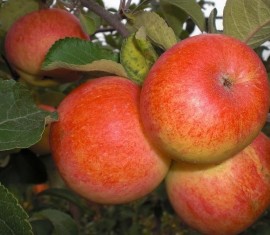
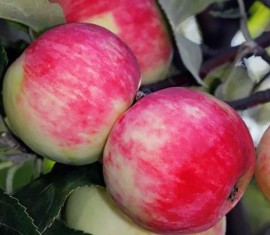
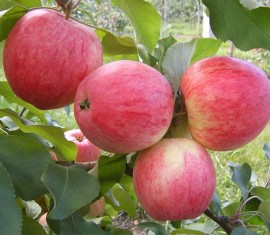
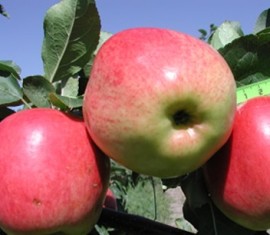
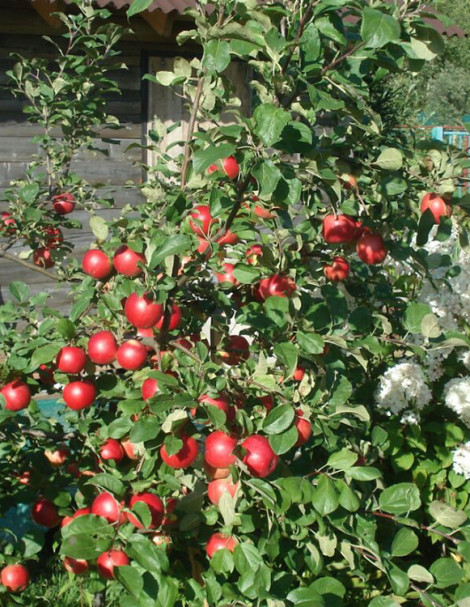
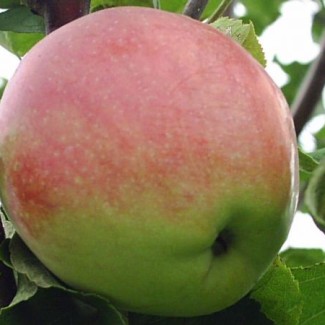
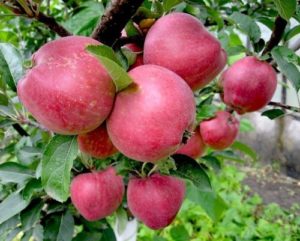 The fruits of this variety are uniform, medium-sized, slightly flattened, with subtle ribbing and may be slightly tapered. The average fruit weight is approximately 120-130 grams, but with proper care and favorable weather conditions, they can grow to 180-200 grams.
The skin is usually smooth, glossy, and covered with a dense waxy coating. It is dense, elastic, yet fragile. It has a green tint when unripe, acquiring a yellowish tint as it ripens. The blush covers 65% to 85% of the entire surface. It is vaguely striped, not streaked, but appears in patches of raspberry or raspberry-pink. Subcutaneous dots are light gray, numerous, and clearly visible on the surface. The chemical composition is characterized by the following indicators per 100 grams:
- P-active substances (catechins) – 434 milligrams.
- Ascorbic acid (vitamin C) – 8.7 milligrams.
- Total sugars (fructose) – 9%.
- Pectins (fiber) – 11%.
- Titratable acids – 0.54%.
The flesh is dense, crisp, prickly, coarse-grained, and very juicy. It is white but may be slightly greenish or yellowish at maturity. The flavor is sweet and sour, considered harmonious, dessert-like, and balanced. Experts rate it 4.5 for appearance and 4.2 for taste out of a possible 5.
Stroevskoye apple tree: characteristics
Crown and root system
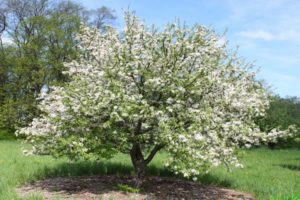 The trees are of medium size, they grow without pruning to a maximum of about 3.5-4 meters, Stroevskoe tends to stretch very quickly during the first few years in open ground. Therefore, many gardeners say that Stroevskoe can safely be called a natural semi-dwarf. Its crown is dense and prone to overgrowth, so pruning will require some effort. It is pyramidal or oval in shape and can expand and become spreading over the years. The shoots are thin, long, and can be geniculate or straight, arching. The bark is generally light steel-gray, smooth, and bears fruit in a mixed manner (on both rings and spears).
The tree's leaves are large, light green or light green, leathery, wrinkled, glossy, and concave. They have a long, spirally curled tip, and can be folded into a boat shape, with a coarsely serrated, wavy, and highly serrated crown. The root system is highly branched, deep-shallow, and easily penetrates several meters deep in search of moisture.
Productivity and pollination
You can’t expect a large offspring from this variety, because with such representatives as Antonovka, it can't be compared exactly.
In one season, a mature tree can yield more than 50-60 kilograms of fruits with an unusual taste and appearance, which experts call a real treasure trove of catechins and other beneficial substances.
The variety is considered self-sterile (self-infertile). This means that if there are no apple trees in the area that bloom at the right time, there will be no harvest at all. To produce fruit set and ripen, other varieties are needed, growing no more than 100-150 meters from Stroevsky. Experienced gardeners recommend bringing mobile apiaries to the planting sites during blooming.
Winter hardiness and disease resistance
When developing this variety, breeders focused on low-temperature tolerance. As a result, the resulting apple trees truly withstand harsh Russian winters well. They survive frosts down to -37-40°C very well. However, it's advisable to avoid placing the trees in drafts, otherwise they may become diseased and even freeze during the cold season. SiberiaThe variety is not suitable for the Far East and especially the Far North, as it will not be able to withstand severe cold lasting more than 1-2 months in a row, even with high-quality shelter.
This apple tree has a special Vf gene, which makes apple trees resistant to scab and other fungal infections. Therefore, gardeners shouldn't encounter this problem. However, in years of exceptional moisture, the trees can be attacked by moss, and insect pests also attack the juicy fruits, leaves, bark, and even the wood.
Rootstocks and subspecies
Stroevskoe is most often grown on standard vegetative rootstock. However, dwarf and semi-dwarf varieties can also be used. For example, in commercial and intensive orchards, seedlings 134 and 3-17-38 are most often used. This allows the apple trees to begin bearing fruit two to three years earlier, significantly reducing orchard maintenance costs and simplifying harvesting.
Features of growing Stroevskoe
 Landing
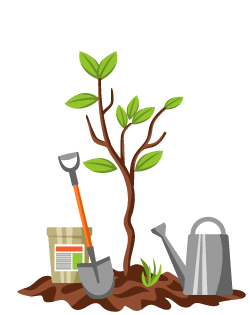 Landing
Key Features
- It's best to choose a planting site where the tree will receive full sun for most of the day. It's also a good idea to protect it from drafts and strong winds. The Stroevsky's height allows it to be planted under the protection of taller plants, building walls, hedges, and fences.
- Avoid planting trees near open water sources such as ponds, lakes, rivers, marshy areas, or floodplains. Near a well is also not a good option. Their roots will inevitably rot and eventually die.
- The holes should be prepared in advance, at least 2-4 weeks, but preferably the season before planting. For this, dig steep-sided holes 1 meter in diameter and 60-90 centimeters deep, depending on the size of the root system. The topsoil is mixed with fertilizer and added to the bottom. Then, add 10-15 centimeters of drainage material (rocks, gravel, or broken brick), fill with water (20-40 liters), and leave uncovered.
- Before planting, the roots should be inspected, rotten, dry or diseased ones should be cut off, and they should be immersed in water for 4-7 hours.
- It's recommended to leave no more than 3-5 meters between trees in a row for vegetative rootstocks and 2.5-3 meters for dwarf rootstocks. Between rows, 3-4 meters is sufficient.
- It's best to leave the root collar approximately 7-12 centimeters above the soil surface to prevent the tree from rooting higher. If this happens, all the qualities of the rootstock will be completely lost.
- Drive stakes into the holes immediately for tying. If you're using two stakes, it doesn't matter which side they're on, but if you're using a single stake, it's best to place it on the north side of the tree trunk.
- Place the trees vertically in the holes, supporting them by the trunk with your hand. Carefully fill in the roots, compacting each layer of soil. Create a small ridge around the perimeter of the hole, add 20-30 liters of water, and mulch the soil surface with suitable materials (compost, manure, chopped grass).
Landing dates
There are two main options—spring and fall—both work well for Stroevsky. In spring, you should plant before the buds begin to open—in late March or April—but be careful that recurrent frosts don't kill the trees that haven't yet established themselves. In fall, it's best to choose sunny days in late September or early October, while the first frosts are still at least 3-4 weeks away.
Protection from frost and rodents
Trees of this variety are very frost-resistant, but that doesn't mean they shouldn't be protected from frost. In mild southern climates, this is a relatively unconcerning issue, but in harsher winters, such as in the central part of the country, it's best to take precautions. The root zone should be covered with mats of dry grass or straw, the trunks should be wrapped with roofing felt or old tights, and the Stroevskoye tree shouldn't be covered with a tent.
To repel insects that tend to nest at the roots, trees should be whitewashed in the fall and spring. Rodents, who enjoy feasting on tender bark in winter, will avoid trees whose trunks are coated with lard or grease.
Tree care
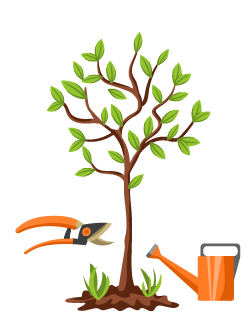 Tree care
Loosening the soil, watering: proper agricultural technology
All trees love oxygen-rich soil, and Stroevskoye is no exception. Therefore, the area around the tree trunks should be dug up once or twice a year. Hoeing the soil and removing weeds, root suckers, and other plant shoots can be done more frequently, 4-5 times per season, if necessary.
The tree appreciates watering, but in moderation; it should never be overwatered. It's generally capable of providing its own moisture, unless the year is extremely dry. If there's been no precipitation for 12-14 consecutive days and the temperature is high, then it's worth watering the tree and repeating the application regularly. Under normal conditions, 3-5 waterings during the growing season are sufficient, no more. Fertilizer can be added along with water; this is very convenient, as it improves root absorption.
Pruning: simple crown shaping
Since apple trees tend to develop an excessively dense crown, proper skeletal formation should be initiated from the first year. The main trunk is pruned to a height of approximately 1 meter, or even better, 70-80 centimeters, but only if more than two-thirds of the tree's length remains. Skeletal branches are trimmed 5-9 centimeters shorter than the main trunk. They should be arranged in sparse, tiered branches.
Every spring and fall, perform sanitary pruning, removing dead, diseased, and damaged branches. Anything growing inward or vertically upward (suckers) should also be pruned. Starting in the 10th to 12th year, rejuvenation pruning can be performed; it is very effective for this variety. This involves removing 2-3 mature shoots annually to allow new branches to develop.
Pollinator varieties
- Spartan.
- Veteran.
- Ligol.
- Memory of the warrior.
- Jonathan.
- Gloucester.
- Orlovsky kandil.
Reproduction
- Clones (layering).
- Rooting cuttings.
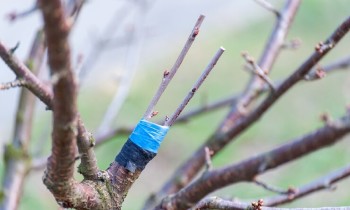
- Grafting.
Diseases and pests
- Fruit rot.
- Hawthorn.
- Leaf roller.
- Codling moth.
Ripening and fruiting of Stroevsky
The beginning of fruiting
 The beginning of fruiting
This apple tree is considered to be relatively late in bearing fruit. The first fruits, which can be counted on one hand, appear only in the fourth or fifth year. Experienced gardeners recommend removing buds immediately, preventing them from developing into ovaries, so the tree can develop foliage and root system. The first harvest of 10-15 kilograms can be harvested in the eighth or ninth year after planting in open ground.
Flowering time
Like most apple trees, the Stroevskoye apple tree blooms in May. The timing of bud opening is influenced by climate and weather conditions. Flowers generally open in the first and second ten days of the month, but if it's cold, they can linger until the very end of the month. Flowering lasts approximately 10-14 days, giving bees plenty of time to pollinate the flowers.
The flowers themselves are large, gathered in small, flattened clusters with fleshy petals. They are white with a pink tint, fragrant, and densely cover the tree's branches, making it very beautiful.
Fruiting and growth
Trees grow very quickly, reaching their maximum height in just a few years. Approximately 45-60 centimeters of growth during the growing season is the average growth rate. Fruit production increases even faster. By the 10th to 12th year, the trees will be able to harvest a full crop, yielding at least 60-65 kilograms of apples.
It's customary to pick fruit from trees around the second half of September or even the very beginning of October. There's no need to rush; they cling very tightly to the branches and only fall if damaged by pests, but they don't store for very long. They can be stored in special boxes until March, but if you don't have one, then it's best to leave them until the end of December. recycle or eat apples. By then, they become loose, "cottony," and tasteless.
Top dressing
- Superphosphate.
- Mineral complexes.
- Compost.
- Manure.
What to do if it doesn't bloom or bear fruit
- Check for pests and diseases.
- Transplant.
- Limit watering.
Why do apples fall?
- Natural factors.
- Pests.
- Diseases.
Leave your feedback on the winter-hardy Stroevskoye variety to share your experience and knowledge with others.