Sverdlovchanin apple tree: characteristics of the variety and care
| Color | Greens |
|---|---|
| Ripening season | Autumn |
| Size of apples | Average |
| Taste | Sweet and sour |
| Crown type | Tall tree |
| Shelf life | Average shelf life |
| Application | Fresh , For recycling |
| Winter hardiness | High winter hardiness |
| Fruiting age | From 5 years old |
 History of origin and regions of growth
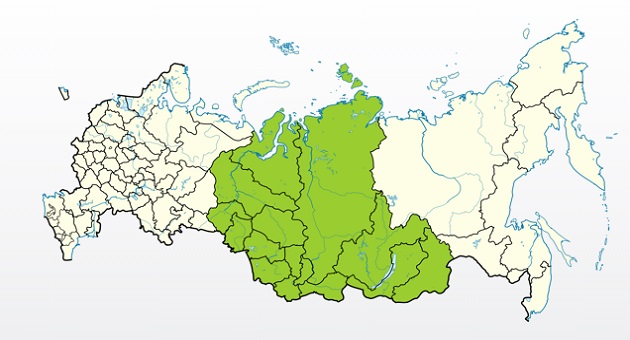
Growing regions
- Kurgan region.
- Yamalo-Nenets Autonomous Okrug.
- Tyumen Oblast.
- Chelyabinsk Oblast
- Yugra.
- Sverdlovsk region.
Origin
This early winter variety was bred by Leonid Andrianovich Kotov at the Yekaterinburg Experimental Breeding Station of the Ural Federal University Research Center of the Ural Branch of the Russian Academy of Sciences. It is a hybrid obtained by pollinating Yantar apple trees with a mixture of pollen from other varieties: Orange, Zvezdochka, and Samotsvet.
The new apple tree, with the interesting name Sverdlovchanin, was first registered in 2009. At that time, it was classified as an elite variety and sent for official field trials. It was only in 2018 that it was decided to include it in the State Register of Breeding Achievements.
Content
Description of the Sverdlovchanin variety
 This completely new apple tree immediately caught the attention of gardeners across the country living in challenging climates. With high-quality fruit in terms of flavor, size, and appearance, it is one of the most resistant to low temperatures. The tree is resistant to severe, prolonged frosts, and even after them, good fruit production can be expected. It regularly produces good harvests, has moderate resistance to scab, is hardy, and requires little soil or care.
The fruits are large, juicy, and delicious. They store well until spring or even the next harvest, and are easy to transport. The Sverdlovchanin apple tree is suitable for frequent cultivation and for commercial, intensive orchards.
Apples: What do they look like?
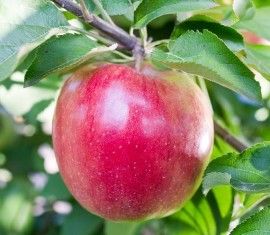
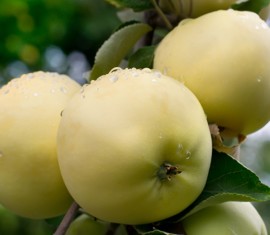
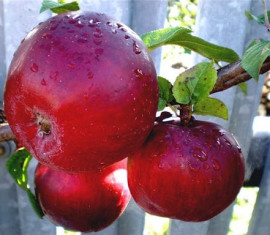
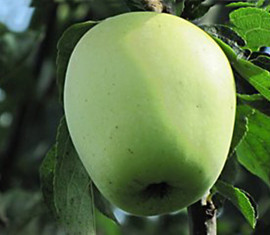
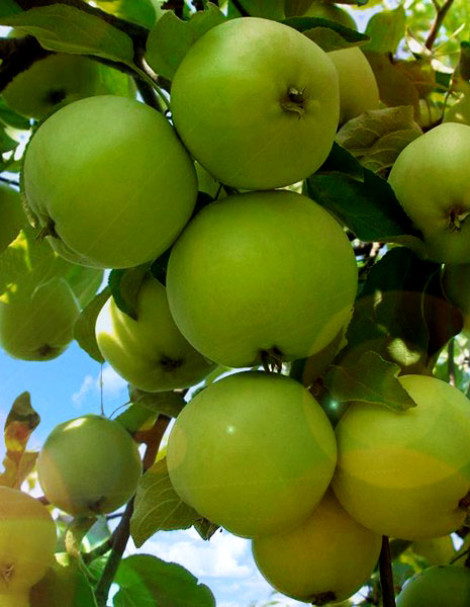
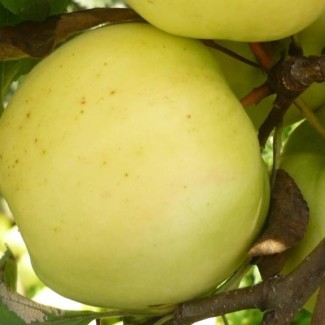
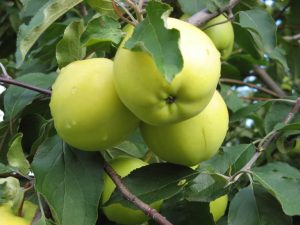 The fruits are medium to medium-large in size, growing to a maximum weight of 110-140 grams, depending on the specific year, the quality of fertilizer, care, and fruiting regulation. They are round and smooth, with barely noticeable ribbing and a smooth texture. They are usually uniform and symmetrical, but can sometimes be slightly slanted to one side.
The skin is dense, elastic, and of medium thickness, generally with a subtle matte-glossy sheen. Upon ripening, it becomes covered with a light waxy coating of a silvery-blueish hue. The ovaries are a rich green, eventually developing into greenish-white or yellow-green apples. Sverdlovchanin apples typically lack a blush, but sometimes, with cross-pollination, the fruit may develop a light pinkish haze on the sunny side. Small, light-colored dots are barely visible on the surface. Experts recommend assessing the chemical composition using the following parameters:
- P-active substances (catechins) – 252 milligrams.
- Ascorbic acid (vitamin C) – 15.2 milligrams.
- Fructose (total sugars) – 11.4%.
- Pectins – 14.3%.
- Titratable acids – 0.56%.
The apples have fairly dense, fine-grained flesh, very juicy, crisp, and piercing. It breaks easily when bitten into, and has a pleasant, sweet-tart flavor and a light, spicy aroma. Professional tasters rate Sverdlovchanin apples 4.9-5 points for appearance and flavor on a 5-point scale.
Sverdlovchanin apple tree: characteristics
 Crown and root system
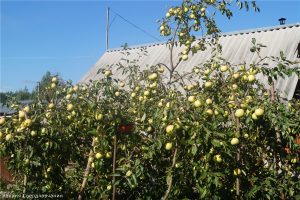 Crown and root system
The variety can be called tall because it can stretch up to 7-9 meters without formative pruning Under favorable conditions. The crown is broadly oval even when young, becoming more spreading with age, sometimes weeping, with low to medium density. The shoots are straight, long, and smooth, covered with reddish-brown or reddish-brown bark. Fruiting is mixed (rings, fruiting twigs (2-3 year old growth), and spears).
The leaves are ovate, oval, elongated, and long-pointed, with serrated and crenate margins, doubly serrated. They are very dense, smooth, leathery, shiny, and glossy, with delicate nervation. The leaf blade color can vary from green to dark emerald. The margins can be folded into a boat shape, curled, or wavy. The root system of Sverdlovchanin is well-developed, branched, and fibrous, but on some rootstocks it may have a central taproot.
Productivity and pollination
This one cannot be compared with more southern varieties, but among Sverdlovsk apple trees it stands out.
A mature Sverdlovchanin tree can yield over 100 kilograms of aromatic and delicious apples. With a standard planting, approximately 35-40 centners of fruit can be harvested per hectare per year..
The variety is self-fertile, but yields may be low. Therefore, it's advisable to provide at least one apple tree of a different variety with active pollen per 50-100 square meters to ensure cross-pollination.
Winter hardiness and disease resistance
Apple trees are very resistant to low temperatures, as they were bred specifically for cooler regions. They can easily withstand temperatures as low as -39°C to -41°C if properly prepared and protected. Even prolonged cold spells, with periods of thaws and cold snaps, won't seriously harm the trees. Just be sure to completely avoid watering before the end of August.
The variety has quite good resistance to fungal apple infections, but it is resistant to ultraviolet burns He might not survive. Parasites don't damage trees very often, but if they do, they can cause serious damage. With proper, timely prevention, there's no need to worry about any threats.
Rootstocks and subspecies
Sverdlovchanin can be grown on a wide variety of rootstocks. There are no subvarieties of this apple tree yet, nor is there a columnar variety. It grows well on dwarf, semi-dwarf, and standard rootstocks. This may alter the tree's height and crown density, but has little effect on the quality and quantity of fruit.
Peculiarities of growing Sverdlovsk
Landing
 Landing
Basic conditions
- The tree thrives in a wide variety of soils, from rich, fertile black soil to sandy loam. The key is to apply fertilizer and fertilizer regularly.
- It's best to choose a planting site where the groundwater level is no higher than 2-3 meters. Otherwise, the apple trees' roots will reach the surface and begin to rot. For higher elevations, it's best to plant apple trees on specially created mounds.
- It's common to dig holes in advance, the previous season. They're up to 1 meter in diameter and 70-75 centimeters deep. I add fertilizer to the bottom, then drainage, and then fill it all with plenty of water. The holes aren't covered with anything for standing.
- Leave approximately 3.5-4 meters between trees, and 5 meters between rows. This will prevent crowns and rhizomes from clashing in the future, and will also significantly simplify harvesting.
- Before planting, carefully inspect the seedling for any dry or broken shoots (roots, branches). These should be trimmed off. The rhizome can be soaked in warm water for 4-7 hours.
- It's convenient to drive planks or stakes directly into the holes, to which the tree can then be tied until it's about 4-5 years old. If placed on the north side, they will also provide protection from cold weather for the young seedlings.
- Place the apple tree in the hole, carefully spreading out the roots. Be careful not to allow them to become crushed or bent. Widen the hole if necessary. Cover with soil, shaking it constantly to eliminate any air pockets that could lead to rot. Water the tree with 15-20 liters of water and mulch with sawdust.
Landing dates
Although Sverdlovskchanin is cold-hardy, it can be seriously damaged by early frosts when young. Therefore, it is recommended to plant it in the spring, when the soil has warmed up completely. Be careful to avoid the threat of returning frosts. Choose a bright, dry, and warm day with no precipitation the day before; early afternoon is best.
Tree care
 Tree care
Protection from frost and pests
It's important to properly prepare the trees so they won't be affected by even the most severe frosts. To do this, cover the roots with spruce branches, straw bales, or hay mats. If these aren't available, simply rake a thin layer of soil onto the roots. Younger, one-year-old seedlings can be covered with a tent.
To prevent insects from settling in bark cracks and causing damage, two-thirds of the trunk is whitewashed with a thick lime solution. To repel rodents, you can apply grease, fuel oil, or lard. Commercial products, readily available at garden stores, are also effective against diseases, pests, and fungi.
Loosening the soil, watering: proper agricultural technology
It's best to dig around the trunk only in early spring and late fall, removing any accumulated debris, dry leaves, fallen fruit, and shoots from other plants. Throughout the summer, you can lightly loosen the soil, for example, the day after watering or heavy rainfall, especially in hot weather. After 6-10 years, you can sow the root zone with grass or herbs.
Young seedlings need to be watered generously so that the root ball never dries out completely. Once or twice a week, depending on natural precipitation, apply 15-25 liters of water around the perimeter of the crown. Until the fourth year, it's best to mulch the surface with manure to prevent water evaporation. Watering should be stopped in late August to allow the trees time to prepare for the end of the growing season. In the spring, it's essential to add organic matter, otherwise the yield will suffer.
Pruning: simple crown shaping
Pruning is carried out in the first year after planting. It's best to create a sparse, tiered crown, placing shoots at different heights and spaced apart. Subsequently, all that remains is to maintain natural branching, removing suckers and branches that protrude into the crown.
In the fall, dry, diseased, and broken shoots are pruned or trimmed, sealing the cuts with garden pitch. It's advisable to limit the number of fruits in a timely manner, picking 35-50% of the ovaries to avoid overloading the branches. Otherwise, they may break.
Diseases and pests
- Cytosporosis.
- Scab.
- Moniliosis.
- Powdery mildew.
- Hawthorn.
- Green aphid.
- Leaf roller.
- Scale insect.
Ripening and fruiting of Sverdlovchanin
The beginning of fruiting
 The beginning of fruiting
This variety doesn't ripen early; you'll have to wait about 6-8 years for fruit to appear. If flowers appear earlier, it's best to pluck them, allowing the apple tree to develop a crown and rhizome. Most likely, the majority of them will be barren, so draining the tree of its sap will be a waste of time. In the first few years, the yield will be approximately 4-10 kilograms.
Flowering time
Buds can be found on the branches of the Sverdlovchanin by the end of April. They begin to bloom only in mid-May. Sometimes, after cold, prolonged winters, the blooming period can shift closer to June. The process lasts about ten days, sometimes a little longer. The flowers are beautiful, large, white, and fragrant, gathered in small inflorescences densely arranged on the branches.
Fruiting and growth
Trees grow quite quickly, reaching their peak growth by the 8th or 9th year. Once fruiting begins, growth slows slightly, but not significantly. They increase their fruit production quite rapidly, reaching full fruit production by the 10th or 12th year, yielding over a hundred kilograms.
The fruits begin to ripen by the end of September, and sometimes even in early or mid-October. They are immediately ready for fresh consumption. The apples are suitable for long-distance transport, and they tolerate shipping in regular wooden crates well. They can be stored in a cellar or special refrigerator until March or April.
Top dressing
- Dolomite flour.
- Eggshells (calcium-containing complexes).
- Humus.
- Manure.
- Compost.
- Superphosphate.
- Mineral and nitrogenous complexes.
- Chicken or pigeon droppings.
- Ammonium nitrate.
What to do if it doesn't bloom or bear fruit
- Wrap up.
- Limit or increase watering.
- Remove insects.
- Cure diseases.
Why do apples fall?
- Weather troubles.
- Early frosts.
- Pests or diseases.
- Overripening.
Please share your experience with the Sverdlovchanin apple tree variety so that other gardeners have no questions about cultivating these trees.